
In Kenya, growing numbers of survivors champion cancer-blocking HPV vaccine
Having won their own hard-fought battles with cancer, these survivors know that prevention is better, cheaper and easier than cure.
- 28 May 2026
- 6 min read
- by Victoria Amunga
At a glance
- Survivors like Monica Njeri know better than anyone what an opportunity the human papillomavirus vaccine – a one-off jab that can block more than 95% cases of cervical cancer – really is.
- Now Njeri and others are putting their suffering and their stories to work, by urging families to make sure their girls are protected
- “There was no hope for me,” said Edna Moraa, recalling her feelings upon hearing her diagnosis. Today she says she “loves” to be on hand to offer families the “right information” so they can confidently choose prevention.
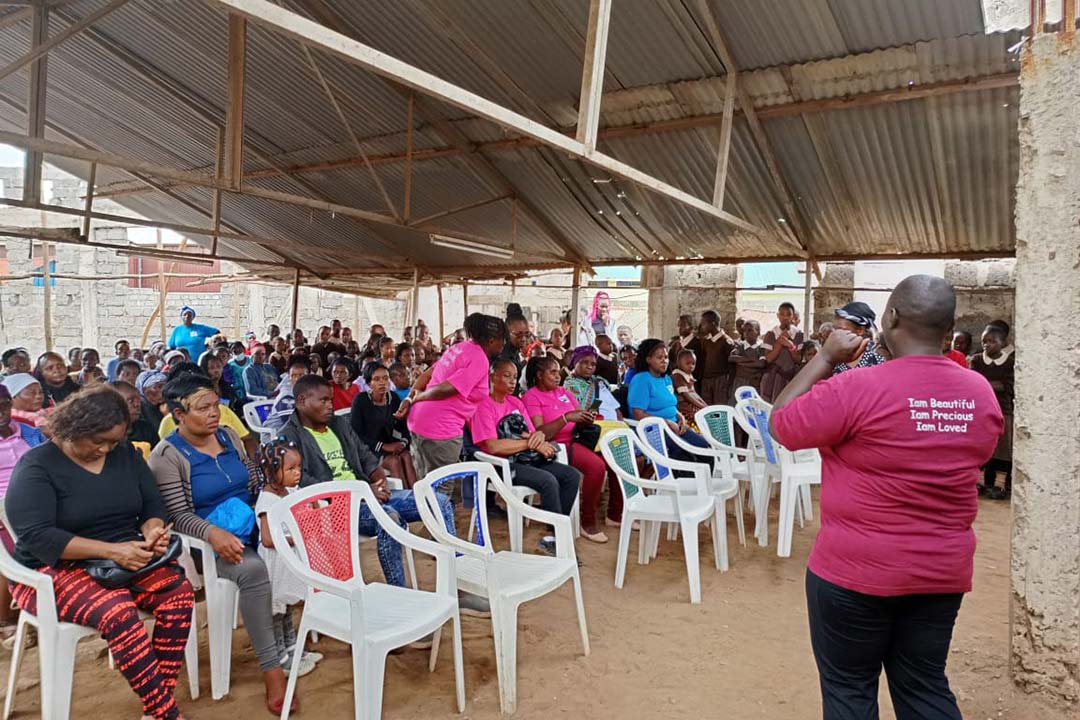
On a sunny Tuesday afternoon in Nairobi’s Umoja estate, dozens of women gather in a public social hall for their routine self-help group meeting. At the podium, a special guest, 56-year-old Monica Njeri, begins to tell her story.
It began in 2016, she tells the group: persistent menstrual bleeding and unusual discharge. Her periods would end, and then begin again just three days later.
“I had so much pain in my abdomen and back, it was very uncomfortable,” she says.
A series of tests at the local health facility produced a diagnosis that devastated the mother of four: she had cervical cancer.
Her condition deteriorated further, and in 2018, her doctors resolved to perform surgery to remove her uterus in an effort to stop the cancer from spreading. The surgery was successful, but she was suffering. Wounds had opened up around her genitals, which she recalls emitted a strong smell.
“Walking was difficult, and every time I would eat, I just vomited constantly,” said Njeri.
Next came the anguish of stigma. “When the neighbours knew that I had cancer, [that] I was bleeding and smelling, they protested that I should be kicked out of the compound. The landlord even approached to say I should move.” Though she resisted the eviction, there was no resisting her social isolation.
With continued medical care and support from her family, her condition gradually improved. Today, she gets to call herself a survivor, not a patient.
“I’m good now: I don’t go for treatment. I just go for a check-up once per year. I am cancer-free.”
What motivates Njeri now, is the knowledge that the next generation can avoid experiences like hers.
She says it’s her aim to use her story to sensitise women and girls on the life-saving human papillomavirus (HPV) vaccine, which blocks infection with the virus that causes more than 95% of cervical cancers.
“My life changed completely because of the cancer, and I do not want those young girls to go through what I went through. That is why I speak to parents and communities about the HPV vaccine: I feel it’s a chance to protect them early,” she says.
A passion for protection
For 42-year-old Edna Moraa, too, surviving cervical cancer sparked a passion to protect the younger generation. Moraa says she was diagnosed in 2015.
“I was suffering from abnormal bleeding and vaginal discharge. I didn’t know what was wrong with me,” she remembers.
She decided to go for screening after watching a television interview in which a doctor spoke about signs of cervical cancer.
“I found out that I had stage four cancer. At that point I just wanted to commit suicide. There was no hope for me. I did not want to leave my children and thought about ending our lives.”
Have you read?
Her then-employer supported her to begin treatment, and in the process, she found a community of other cancer patients. With some 400 other women, she has since joined Symbol of Hope Support Group, which champions the HPV vaccine, reaching out to eligible young girls in schools.
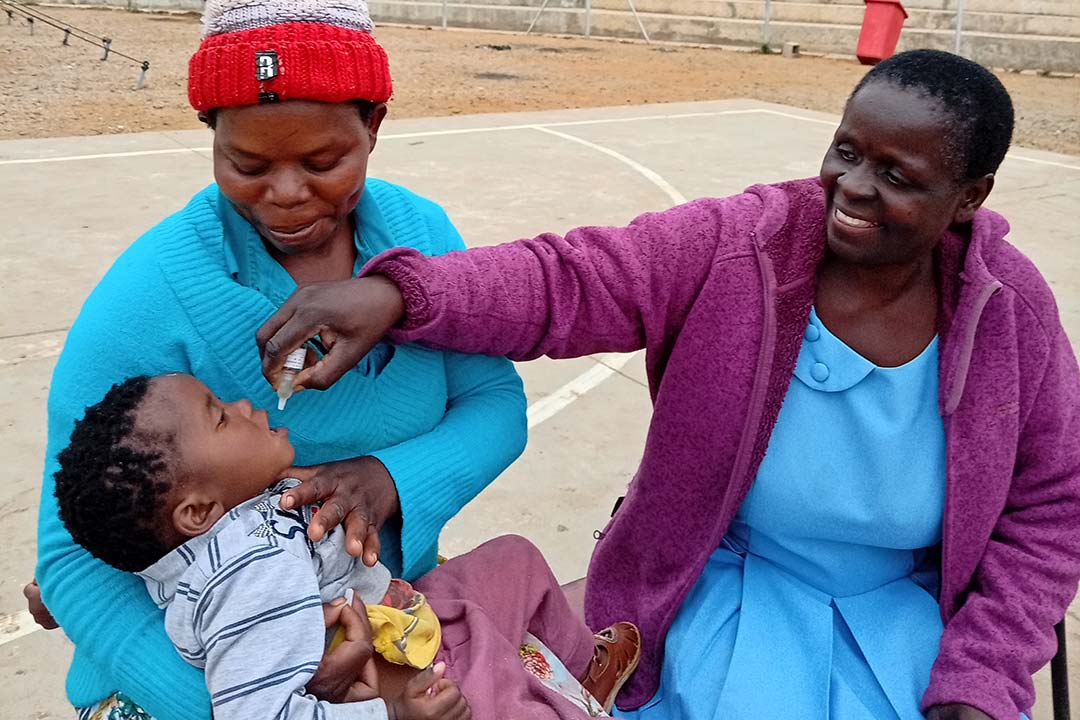
“I’ve met people who were not ready to vaccinate their girls, but when I talked to them, I told them the right information and they allowed their daughter to get the HPV vaccine. So the reason why am doing the advocacy in the social media and also one-on-one – I love one-on-one mostly in schools – is because I know that I’m going to give them the right information, and also going to be there to answer all the questions, especially me being a survivor,” she explains.
“The most powerful tool”
Kenya introduced the HPV vaccine into the routine immunisation schedule in 2019, making it freely available to eligible adolescent girls. By 2024, 79% of eligible girls had received at least one of the then two-dose regimen. In 2025 Kenya switched a single dose of the vaccine, in line with World Health Organization recommendations.
Kenya's Minister of Health Aden Duale said in a press briefing that a switch to the single-dose vaccine would expedite the fight against cervical cancer, calling the jab the “first pillar” in the country’s fight to eliminate cervical cancer.
“It’s the most powerful tool in our arsenal,” he said.
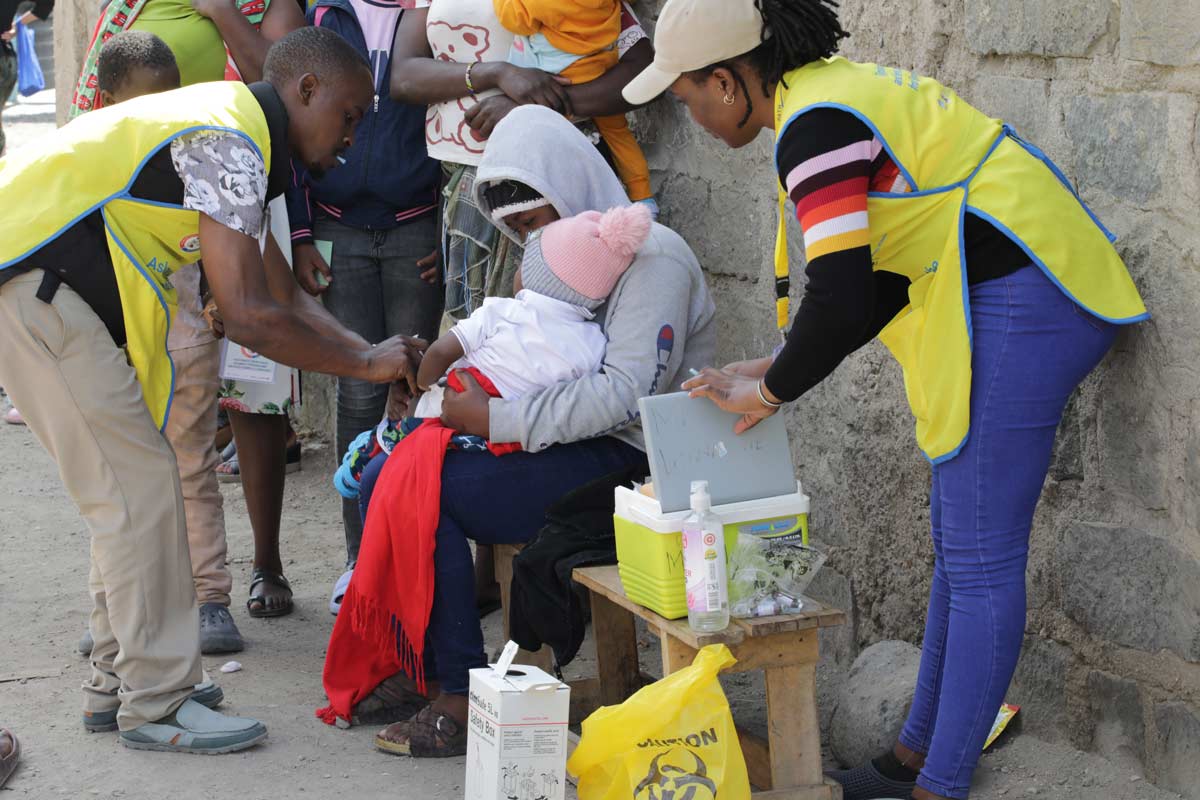
The state has since rolled out HPV vaccination campaigns in schools and public spaces like markets in a bid to boost uptake.
Dr Asaph Kinyanjui, a palliative care practitioner who has worked with cervical cancer patients, says that survivors stepping up to add their testimonials to the campaign has helped increase uptake.
“Having people with lived experience sharing their journey and saying, ‘if I received this vaccine, I probably would not have had this disease, or probably I would have reduced the burden of the disease’ – it adds a lot of value in terms of giving the community and especially the young girls’ confidence [to take] the vaccine,” he said.
Milicent Kagonga, a mother in Nairobi, says she was encouraged to take her daughter for the HPV vaccine after hearing from survivor-advocates.
“My daughter was 10 years old. It was very important because I never wanted my daughter to come to me in the next 20 years asking me a lot of questions like, ‘Mummy, why did you allow me to go through this?’ For me, my pride is that not even my worst enemy should go through cancer, so should I allow my daughter to get it?” she said.
Further to go
Cervical cancer remains one of the leading causes of cancer deaths among women in Kenya, despite being both preventable and highly treatable when detected early. While significant progress has recently been made in reaching school-going girls, health authorities note that the coverage remains uneven with many girls still missing their vaccine because of misinformation and cultural misconceptions.
But health workers say they are encouraged by the growing numbers of cancer survivors coming out to campaign for the vaccine. Their numbers even include men, whose experience of other cancers leaves them keenly aware of the meaning of prevention.
“What we normally do is that we talk to [men] to encourage their wives or their girls. One, [to get] screened, and then for the girls to be vaccinated. So we find that men are now taking their girls to the hospitals,” said Boniface Buki, a prostate cancer survivor.