
In Madagascar, stigma is undermining the fight against mpox
Vaccines are now rolling out to protect the people at highest risk, shielding them from both the virus and social ostracism.
- 30 April 2026
- 5 min read
- by Rivonala Razafison
At a glance
- Well over 1,100 cases of mpox have been recorded across Madagascar since December.
- Health workers at the Andohatapenaka Treatment and Isolation Centre say widespread social stigma is delaying care, with patients presenting for treatment only when the painful symptoms become too unbearable to hide.
- A first raft of 30,000 vaccines is being administered to help protect the people at highest risk, complementing existing containment measures.
At the Andohatapenaka Treatment and Isolation Centre (CTI) in Antananarivo, people with mpox are cared for away from the outside world. With no visitors allowed, they spend between seven days and three weeks in isolation, staying in touch with others only by phone.
One patient, who asked to remain anonymous, describes what has stayed with her most since her diagnosis.
“When you test positive, health workers come to collect you from your home in an ambulance. Suddenly, the whole neighbourhood is watching you, as if you’ve done something deeply wrong.”
For many patients, that public exposure can be harder to bear than the illness itself. But the disease is also physically gruelling.
“I felt swelling in my intimate areas at night. I scratched, and it turned into a rash that spread across my groin. Painful sores appeared,” says a 21-year-old man. He now struggles to walk even in his loose-fitting hospital garb, and cannot wear underwear or trousers. The pain, he adds, eased after he began treatment.
On 14 April, VaccinesWork was granted access to the centre, which opened on 10 January and has been operating at full capacity ever since. During their stay, patients come into contact only with doctors, nurses and support staff.
An expanding outbreak, an evolving response
First detected in north-west Madagascar in December, the mpox outbreak has spread rapidly. Between 18 December 2025 and 22 April 2026, 1,156 cases were confirmed across 51 districts.
As soon as the first cases were identified in Mahajanga, authorities activated an emergency response. On the ground, efforts have gradually been structured around several priorities: patient care, case isolation, testing, contact tracing and community outreach.
At the Andohatapenaka CTI, this translates into an intense pace of work for health teams.
“Most patients are around 20 years old. But we have already treated a five-month-old baby and a 68-year-old,” says Dr Andriarimanana Soaniaina Mampionona, the centre’s focal point.
Each day, new patients arrive, either self-referred or sent by doctors.
“They come here because the pain, especially in the genital area, becomes too much. As long as they can manage it, they tend to avoid going to hospital,” she explains.
Stigma, a major barrier to care
In this context, stigma emerges as a central obstacle.
Beyond the symptoms, the disease remains poorly understood. Mpox is primarily transmitted through close contact with an infected person, particularly via skin lesions, bodily fluids or contaminated objects, and not exclusively through sexual contact. It can also spread in everyday settings, especially within households or while caring for a relative.
“It’s not necessarily transmitted through sexual relations. Children can be infected too,” says a young mother.
Yet suspicion persists, and can affect patients’ social and family lives. Some fear the impact of a diagnosis on their relationships or their reputation. In practice, this perception delays care, and makes both patient follow-up and contact tracing more difficult.

Credit: Rivonala Razafison
“Many people may already have contracted the virus without knowing it. Only those who come to hospital are identified,” some patients say.
Teams adapting in real time
In response to these challenges, health teams are constantly adjusting how they work. At the start of the outbreak, test results could take up to 48 hours. With patient numbers rising, adaptations became necessary.
The introduction of GeneXpert machines, which can deliver results within a few hours, has helped improve patient care. But teams still have to contend with fear-driven behaviour.
“By the time we are ready to communicate the results, people have already left. When they find out they are positive, some run away because they are afraid,” says Dr Mampionona.
Building public trust
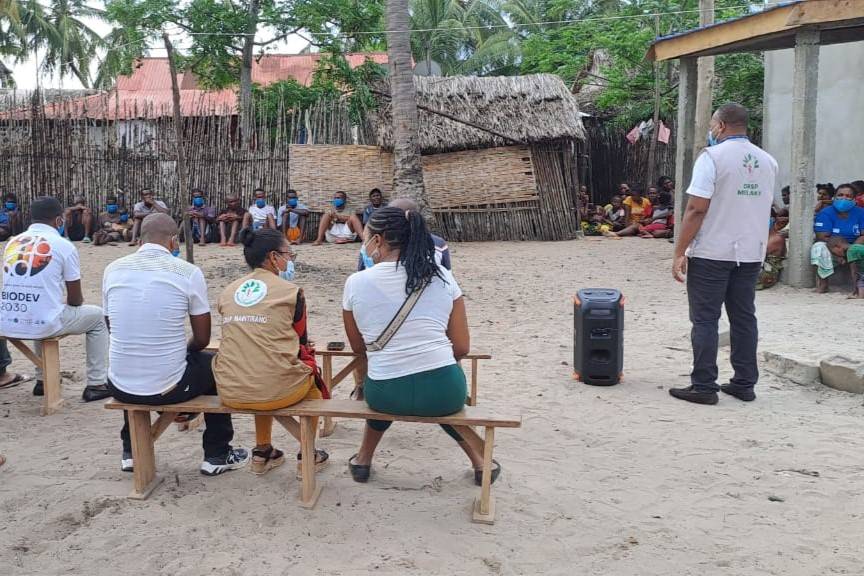
Beyond healthcare facilities, the response depends heavily on community buy-in.
“People question whether mpox is even real. Some think it’s an urban myth, others confuse it with chickenpox,” explains Professor Jean de Dieu Mamy Randria, an infectious disease specialist and Incident Manager leading Madagascar’s Public Health Emergency Operations Centre.
Have you read?
In a context shaped by everyday constraints, prevention messages do not always take hold.
Vaccination adds another lever
It is in this context that Madagascar received 30,000 vaccine doses on 5 March, to reinforce the response to the outbreak. This phase forms part of a coordinated effort led by national authorities, with support from international partners including UNICEF and the World Health Organization.
Vaccination first targeted those most at risk, particularly frontline health workers and vulnerable groups, before being gradually extended to the wider population from April.
It complements existing measures, as part of an integrated approach aimed at reducing transmission and protecting the most vulnerable.
As of 23 April, nearly 30,000 doses had been administered, including among high-exposure groups such as people in detention.
A response still underway
To date, mpox has caused three deaths, including that of a three-year-old girl. More than 880 of the 1,156 confirmed cases have recovered.
But on the ground, the response continues to play out as much against the virus as against the fear and stigma that surround it.
With improved diagnostic capacity, the gradual roll-out of vaccination and ongoing awareness efforts, health teams hope to steadily bring the outbreak under control.