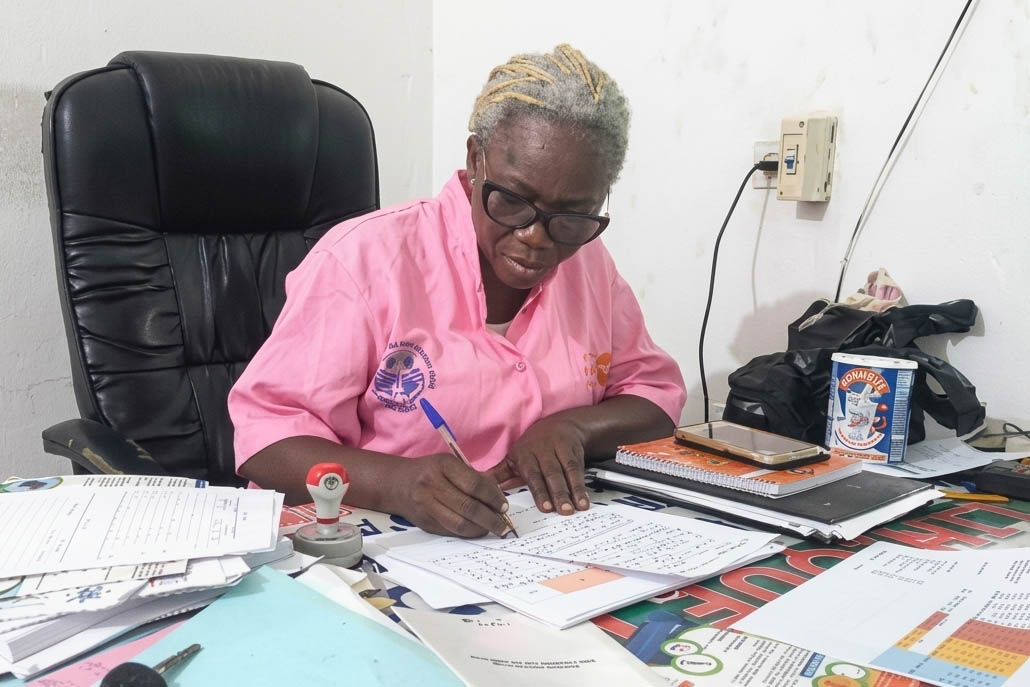

“My work as a community health worker starts before I even leave the house at 07:30”
Community Health Worker Madeleine Biniwe Teou works as part of an Integrate Health programme to deliver integrated primary care in Kozah district, northern Togo.
- 19 February 2026
- 5 min read
- by Integrate Health
In Adabawere, in the Kozah district, the name Madeleine Biniwe Teou is well known.
A community health worker (CHW) supported by Integrate Health, she has devoted more than ten years of energy and commitment to serving her community and has seen practices and needs evolve while staying true to her mission: bringing healthcare closer to the people.
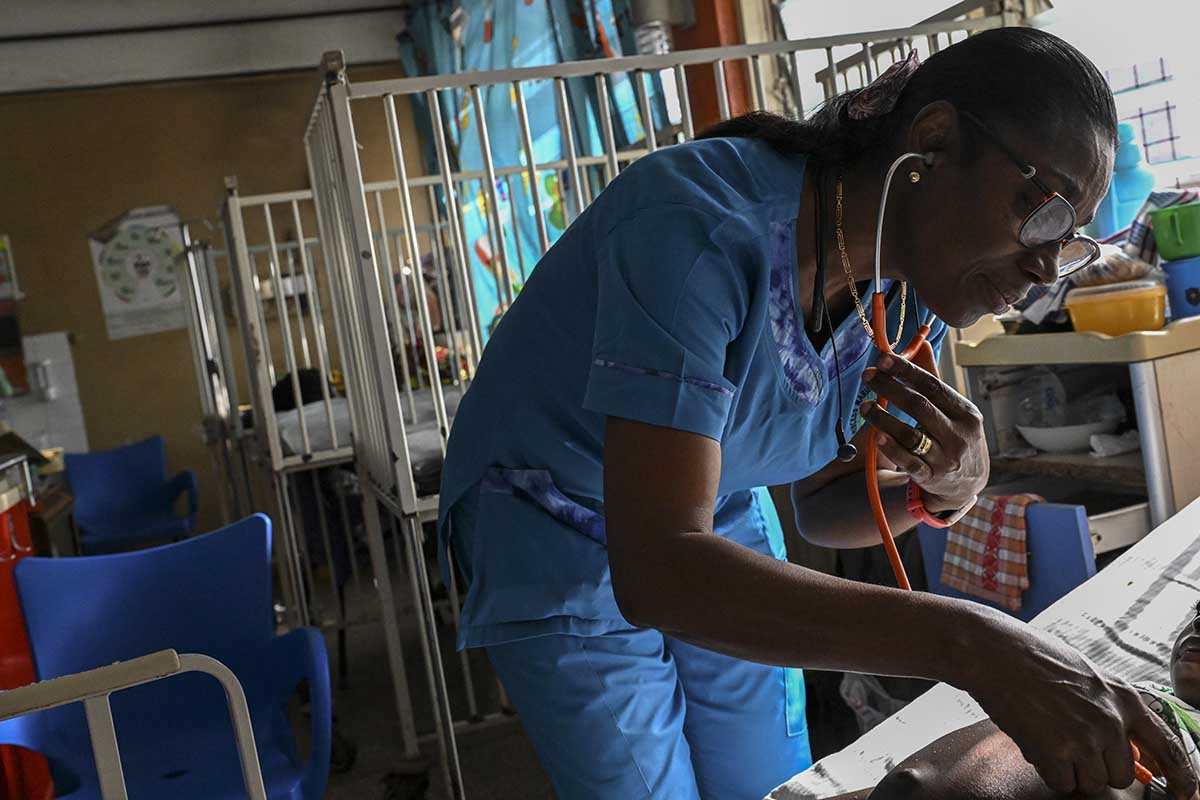
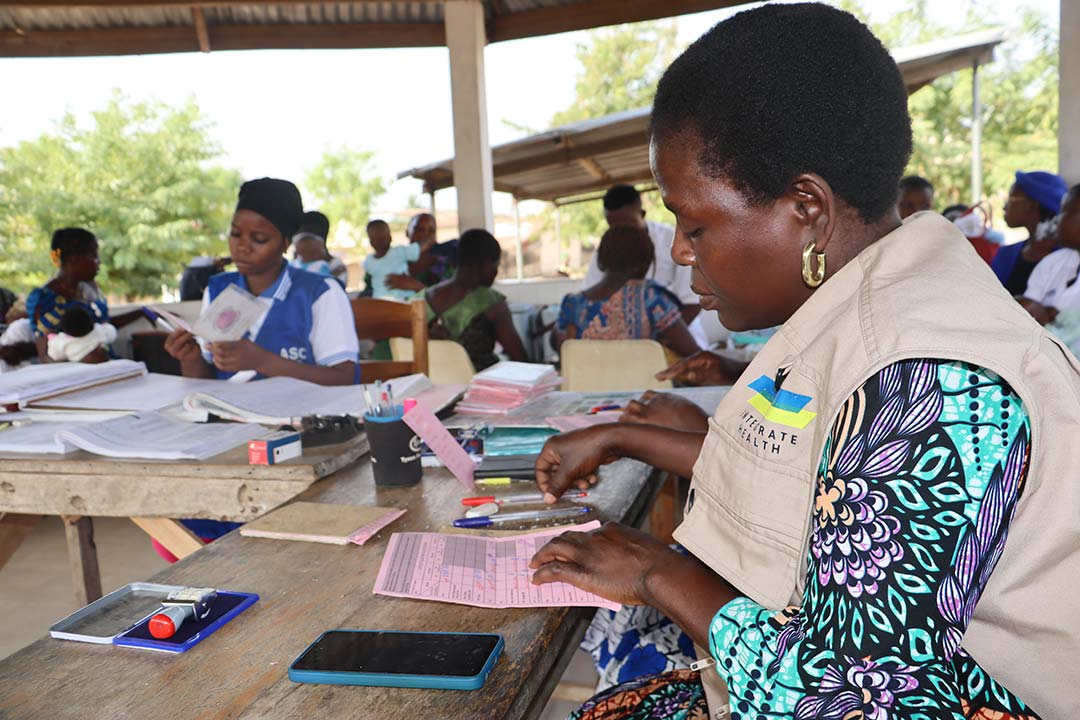
We met her on a Thursday morning at the Adabawere health centre. Alongside the nursing staff, she was lending a hand during a vaccination day – attentive to mothers, reassuring with children and always available to address families’ concerns.
Q: With the other CHWs, what does your daily life look like – your interactions with health centres and communities?
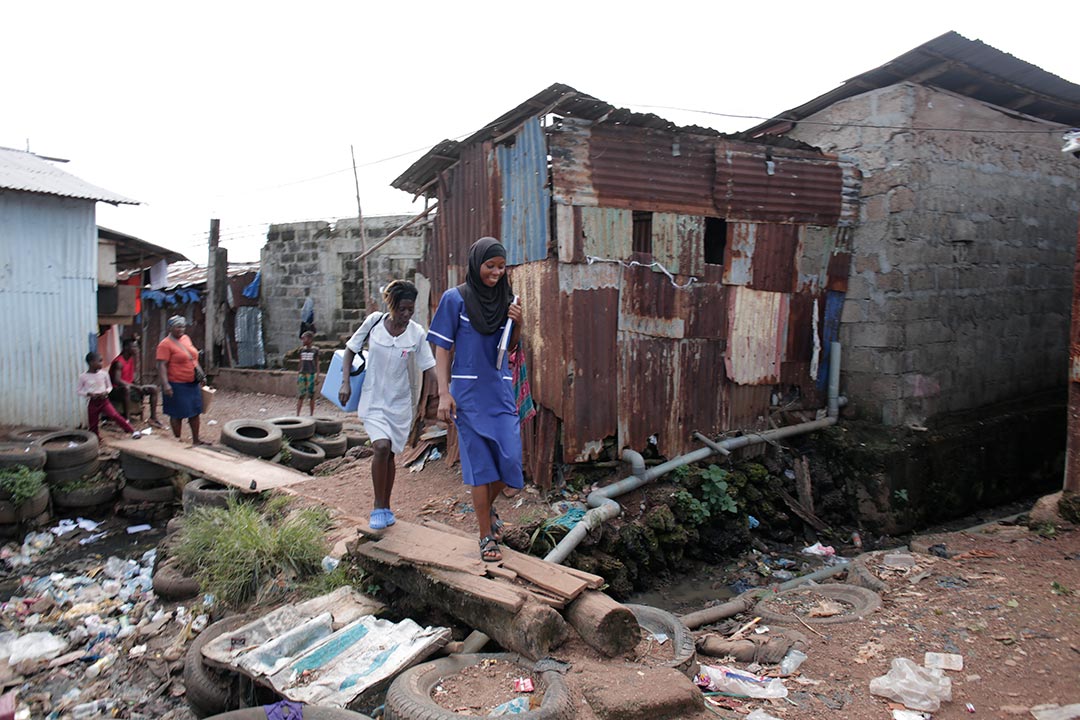
Madeleine Teou: As CHWs, we work almost every day. In the morning when I wake up, there are women who come to my house for family planning; others bring their children who are not feeling well. I treat them at home before heading out into the field around 07:30. In the field, I carry out active case-finding. I care for children under five for malaria, pneumonia, malnutrition, and diarrhoea. For pregnant women, we do follow-up, we teach them the danger signs and we check their antenatal consultations. If a woman has a positive pregnancy test, I explain the importance of starting antenatal visits. If she is not pregnant, I offer family planning.
We refer serious cases to the health centre. On that note, we maintain good collaboration with the head of the health centre and his team. We can call the head of the facility or the midwife directly. On Mondays, during our weekly meetings, the facility head often comes to check on us and encourage us. We share our reports with him. When there are distribution campaigns, he calls on us so the work can move forward. We also support the nursing staff at the health centre every Thursday to help vaccinate children. We fill in vaccination booklets, record the cards of children who need to be vaccinated, schedule appointments, and so on. We are trained, so we know what we are doing. During these days, we take the opportunity to encourage people to talk to each other, to advise each other, so that everyone can truly get vaccinated.
We ourselves are proud to support the health centre, because it is we who track down the children who miss their vaccinations. And since there is a high volume of patients, we come to help so that when women arrive for their vaccinations too, they can be seen promptly.
Q: The community-based health system strengthening program connects patients, health centres, and CHWs, so that no one is left behind. What do you think about the effectiveness of this system?
Madeleine Teou: The programme brought free care. With this free care, mothers no longer hesitate to bring their children to the health centre. As a result, the centre is very busy. The centre has grown now, especially thanks to the maternity ward that was built. In the past, when women gave birth, it was distressing to see. There was no space, and some babies were lying on the ground. The programme is effective. It was serious before.
Have you read?
When we started, I came across many cases of illness, cases of meningitis. In the past, you could bring a child into the world, but they would not reach their fifth birthday. Today, pregnant women know the danger signs, which prevents losing pregnancies. Children no longer fall ill like before. The women here often tell me that the money they used to spend on care, they now keep part of it for their household. It is the programme that makes this possible. I myself am affected. Because thanks to this CHW work, I am able to take care of my children. My children go to school.
Q: You are the link between patients and the health system. What does that look like concretely in your daily life?
Madeleine Teou: Mothers find us so important to them. You can feel it in their reaction, in how they welcome us during our home visits. For example, when a young woman becomes pregnant, she calls you. We have given our phone numbers to the households. She calls to say: “Mama, tomorrow I would like you to come so you can do this or that examination for me.” You reassure her. Sometimes it is for a pregnancy test, or because the child is sick. Without our interventions, many mothers would not have brought their children to the health centre, out of ignorance or neglect. It is we who encourage them. There are even some who come directly to our homes. We can see that they truly need us. If we were no longer here, the number of patients and the community’s attendance at the health centre would decrease.
On Mondays, we gather at the health centre. There are seven of us CHWs. We work on our weekly reports. Everything we did during the week – family planning, number of pregnant women followed up, children screened, patient follow-ups, case-finding, home visits, and so on – we come together to compile it all. We share the compilation with our supervisor.
During these meetings, we share our difficulties, which we record in a notebook. The difficulties often revolve around our equipment. When our vests, our bags and our scales wear out, it takes a long time to get them replaced. Yet these vests allow us to be clearly identifiable in the community – when you pass by, people can see you from far away and call out to you: “Oh, there’s the mama, the mama who takes care of our children and our pregnant women, she’s in the area.”