
New research suggests vaccines could help prevent autism
A major new study of 3.7 million people suggests certain infections, including rubella, could be linked to the development of autism in babies born with the disease.
- 1 October 2026
- 4 min read
- by Priya Joi
At a glance
- Researchers at Sweden’s Karolinska Institutet analysed health, birth and school records for 3.7 million people born in Sweden between 1987 and 2021, including 975 diagnosed with a congenital infection including toxoplasmosis, syphilis, rubella, cytomegalovirus (CMV) or herpes simplex.
- Children with these infections were more likely to be diagnosed with autism and intellectual disability and the findings held when compared with their own siblings.
- The authors say the results underscore “the importance of strengthening global vaccination programs and other preventive strategies”.
Children born with certain infections passed on from their mothers are approximately three times more likely to be diagnosed with autism, according to a study from the Karolinska Institutet in Stockholm, Sweden. They were also more likely to have an intellectual disability.
The infections are collectively known as TORCH: toxoplasmosis, syphilis, rubella, cytomegalovirus (CMV) and herpes simplex. These pathogens can cross the placenta and infect the developing foetus. They are already established causes of intellectual disability.
But until now, the authors write, their population-level contribution to neurodevelopmental outcomes “remains yet to be quantified”.
Dr Mark Schleiss, a paediatric infectious disease physician at the University of Minnesota School of Medicine, wrote an editorial accompanying the study: “We need to acknowledge that one solution (for at least a subset of autism spectrum disorders) is to administer more vaccines,” he told CIDRAP News.
Infections linked to autism, intellectual disability and lower grades
The study, published in JAMA Pediatrics, followed people for up to 36 years using Swedish national registers. Congenital TORCH infections were rare, at 2.5 per 10,000 births. Cytomegalovirus accounted for approximately half of all cases.
Crucially, infected children had a higher risk of autism and intellectual disability than their own uninfected brothers and sisters. The authors say this suggests the link cannot be explained solely by genes shared within families.
Children with the infections were more likely to be diagnosed with intellectual disability or autism. The infections were most strongly linked to the most severe forms of intellectual disability. They were also more strongly linked to autism combined with intellectual disability than to autism alone.
Crucially, infected children had a higher risk of autism and intellectual disability than their own uninfected brothers and sisters. The authors say this suggests the link cannot be explained solely by genes shared within families.
Children exposed to TORCH infections at birth also had lower school grades at age 16, even without a diagnosis of autism or intellectual disability. For rubella, the authors note, the difference corresponded to “a reduction from an A to a F in a single subject”.
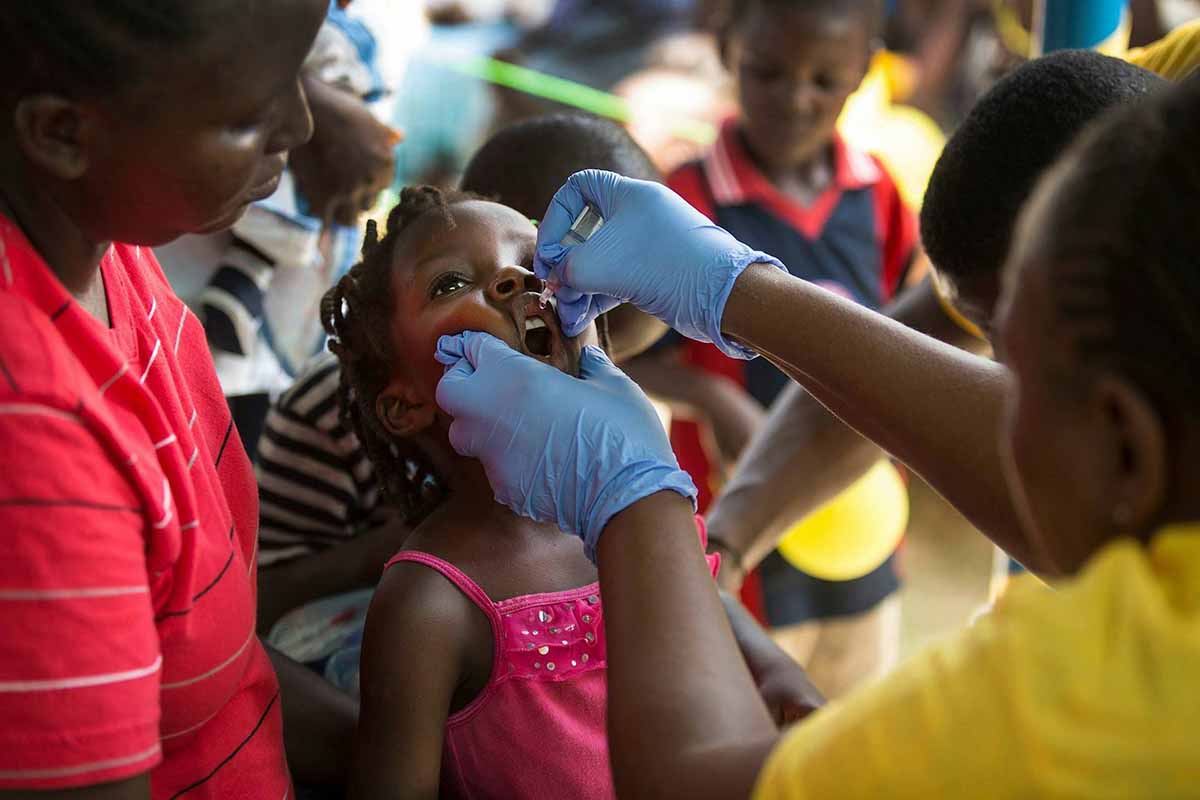
Vaccines could prevent autism
The link between rubella and autism is not new. Autistic features were first described in children with congenital rubella. Later studies found that 12% to 15% of children with congenital rubella syndrome met the criteria for autism. In the Swedish study, rubella “virtually disappeared in Sweden after the introduction of national vaccination”.
The authors write that this decline “highlights the public health importance of developing, deploying, and maintaining mass vaccination strategies to prevent congenital TORCH infections and their potential downstream outcomes”.
Have you read?
“In contrast to studies of common maternal infections, where associations with autism are largely explained by familial confounding, our findings persisted after sibling adjustment,” the study authors wrote.
“Nevertheless, absolute risk estimates indicate that these exposures accounted for only a small proportion of autism cases in the population.” This is because TORCH infections remained rare in the children studied.
Schleiss said the results highlight the need for a CMV vaccine and that rubella vaccinations are critical.
The largest study of its kind
To the authors’ knowledge, this is “the largest population-based study to date” of TORCH infections and neurodevelopmental and psychiatric outcomes. They add that comparing siblings “provide[s] evidence that these associations are robust to confounding by shared familial factors.”
Megan Pesch, medical director of the Center for Autism and Developmental Disabilities at Henry Ford Health, who was not involved in the study, told CIDRAP News that the size of the association was striking.
A link between CMV and autism has been suspected for decades, but previous studies were small and uncontrolled, according to Schleiss. He said the association has now been “rigorously proven”.
The authors conclude that the results “underscore the importance of strengthening preventive strategies, particularly for CMV and in settings with higher rates”.