
No more “dengue season”: for Indians, breakbone fever becomes year-round scourge
Delhi residents now contend with dengue well before the monsoon makes landfall, as India announces its first-ever approval of a dengue vaccine.
- 21 July 2026
- 8 min read
- by Safina Nabi

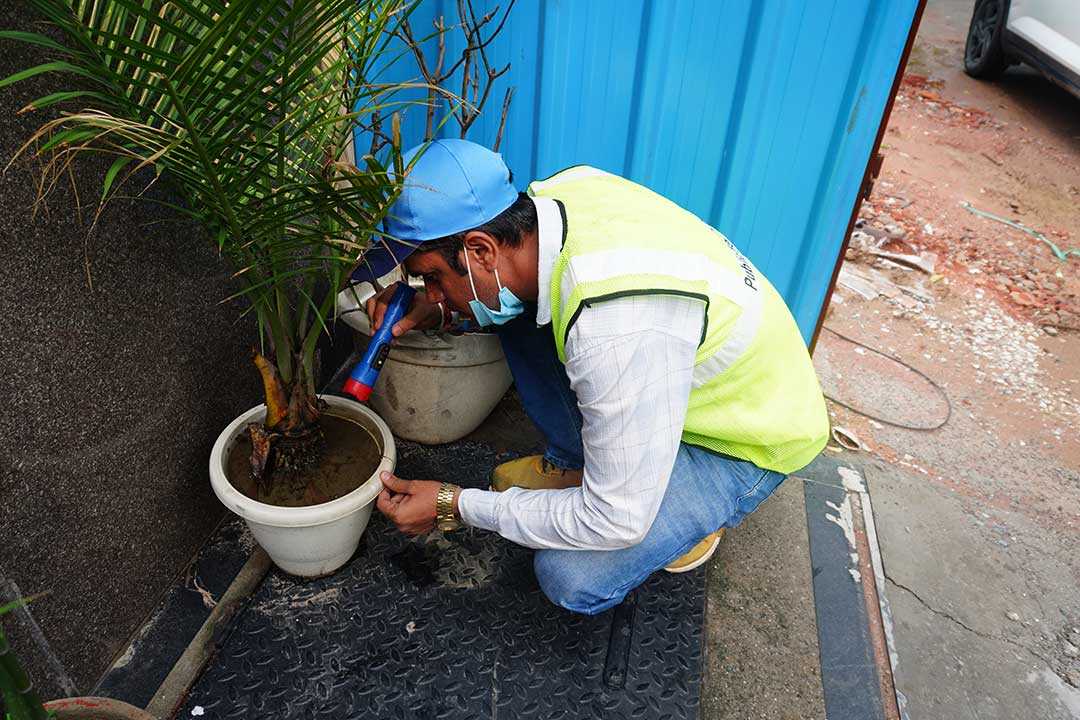
Every weekday morning for 14 years, 42-year-old Sonu Kumar’s commute has been the same: a 40-minute metro trip to South Delhi, where he works in the Municipal Corporation of Delhi’s vector control team, inspecting neighbourhoods, raising awareness, eliminating mosquito breeding sites, and coordinating sanitation drives to keep dengue at bay.
But while his job hasn’t changed, the rhythm of his work has undergone a major shift.

Credit: Safina Nabi
“There was a time when dengue was a seasonal disease,” Kumar says. “Our campaigns would begin a few weeks before the monsoon and continue until the rains ended. But over the last four or five years, we’ve barely had an off-season. We now remain busy throughout the year because outbreaks are no longer confined to the monsoon.”
NEWSFLASH: India approves first dengue vaccine
On July 21, India’s drugs standards authority approved the first dengue vaccine for the Indian market – a live, attenuated, tetravalent vaccine, produced by Takeda and marketed as Qdenga.
The jab – a two-dose vaccine recommended in India for people aged between 4 and 60 years – is already prequalified by the World Health Organization, and received approval independently in 42 countries before India. A statement released by the Ministry of Health and Family Welfare emphasised that the vaccine was expected to “complement” existing disease-control measures.
Kumar’s observations are echoed by senior officials overseeing Delhi’s dengue response. “Over the last three decades, we’ve seen a clear shift in both mosquito behaviour and disease patterns,” says Dr Ashok Rawat, Medical Health Officer (MHO) at the Municipal Corporation of Delhi. “Months that were once considered dengue-free are no longer free of transmission. The disease has gradually expanded beyond its traditional season.”
Have you read?
In dengue, India is facing a massive, growing health challenge. The mosquito-borne viral disease causes high fevers and frequently debilitating joint pain, and grows life-threatening when blood vessels begin to leak fluid and platelet counts fall sharply, increasing the risk of internal bleeding, shock and organ failure.
Over the past five years, the country officially logged nearly 968,000 dengue cases. The crisis peaked in 2023, when an outbreak caused a record 289,235 cases and 485 deaths.
Weirder weather
The change frontline workers like Kumar are witnessing has not been occasioned by a change in the virus itself. Instead, climate change has altered the environment in which dengue-transmitting mosquitoes live.
Warmer temperatures allow mosquitoes to reproduce faster and transmit dengue earlier in the year, while heavy rainfall and prolonged dry spells both create ideal breeding sites through standing water and household water storage.
“The story is no longer about rainfall, it’s about water,” says Sunil Kumar Raina, professor of community medicine at Dr Rajendra Prasad Government Medical College.
“Unlike malaria mosquitoes, Aedes aegypti breeds in water stored around homes and cities. Tanks, coolers, buckets, tyres and discarded containers provide breeding sites throughout the year, so the mosquito no longer depends on the monsoon. Rising temperatures further accelerate the cycle by allowing mosquitoes to reproduce more quickly and bite more often, increasing the chances of dengue transmission.”
Unexpected illness
The changing climate isn’t only reshaping mosquito behaviour, it is also catching patients off-guard, many of whom never imagined contracting dengue outside the rainy season.
For 52-year-old Anuradha N, a high school teacher, the warning signs seemed too ordinary to be dengue. One winter morning, she developed a fever and took paracetamol, assuming it was a seasonal viral infection. The fever lasted for three days and then subsided, but she began feeling increasingly weak.
“By the sixth day, I booked an appointment with a doctor because the fatigue was getting worse,” Anuradha says. “The doctor ordered some tests and then suggested a dengue test. I still wasn’t worried because in my mind it wasn’t dengue season.”
That night, hospital staff called with the results: she had tested positive for dengue.

Credit: Safina Nabi
“It was a shock,” she says. “Dengue was the last thing on my mind. What scared me even more was that my platelet count had dropped to around 20,000.”
A normal count of platelets ranges from 150,000 to 450,000; anything below that can cause the body’s internal defences to crash. When platelets plummet that low, it can lead to spontaneous bleeding, which can prove catastrophic if it occurs, for instance, in the stomach or brain.
The next morning, as she prepared to return to the hospital for admission, her gums began bleeding, and she collapsed.
“I don’t remember anything after that,” she says. “I woke up in the Intensive Care Unit.”
She spent several days in intensive care before recovering.
Constant surveillance
It isn’t only patients like Anuradha who are having to recalibrate their assessment of the dengue threat. The changing disease pattern has forced Delhi’s public health system as a whole to rethink how it responds to the disease.
Beyond annual patterns linked to the rains, Rawat says dengue once followed predictable four-to-five-year cycles of intensity, but climate change has altered that, too.
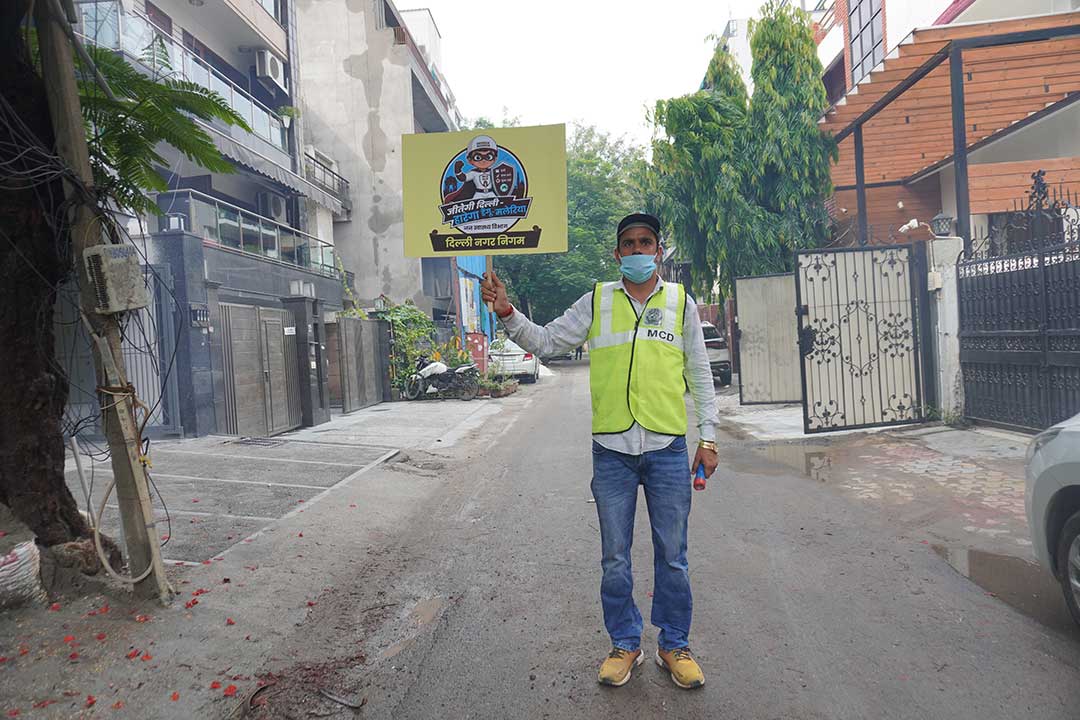
The shift has also forced Delhi’s civic authorities to rethink public awareness campaigns. Rawat says MCD now runs year-round awareness campaigns through public transport, hospitals, digital messaging and community outreach, replacing its earlier seasonal approach.

Credit: Safina Nabi
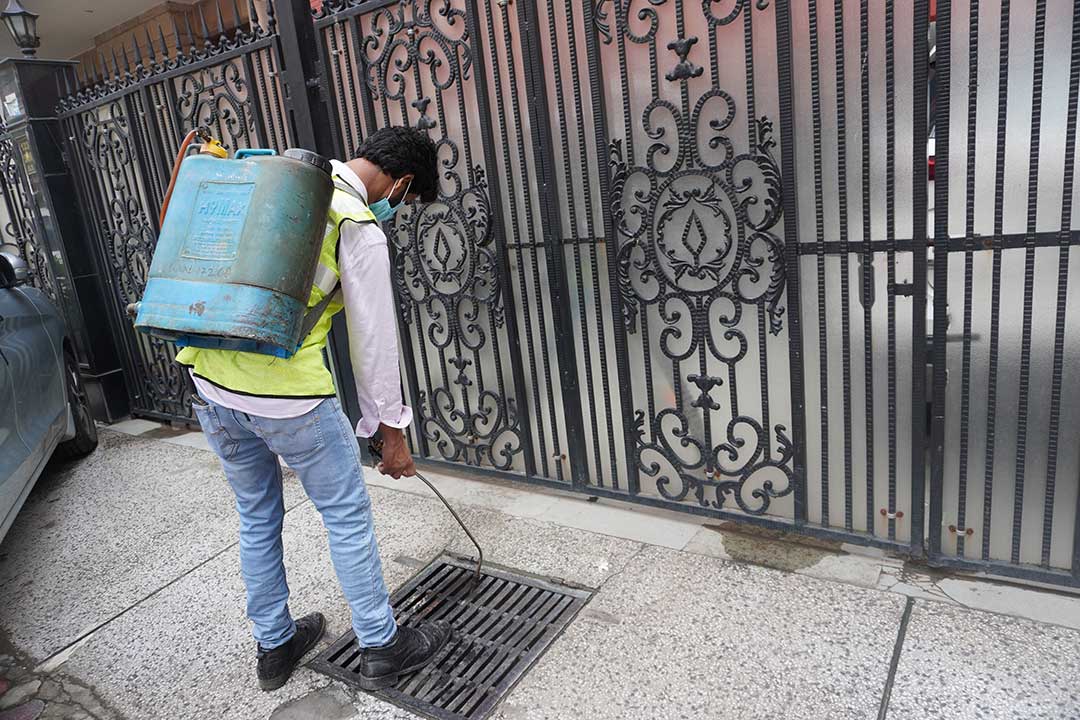
Harleen Kaur, an entomologist with the Municipal Corporation of Delhi, says MCD has moved beyond a seasonal response to year-round surveillance and integrated vector management.
“Instead of limiting activities to the traditional dengue season, we are now carrying out regular larval and adult mosquito surveillance, mapping high-risk areas, inspecting vulnerable sites and sustaining public awareness throughout the year,” she says. “This proactive approach allows us to detect increases in mosquito density early and implement control measures before outbreaks occur.”
Kaur says the MCD is also integrating mosquito surveillance with disease trends, weather information and GIS mapping to identify emerging hotspots before outbreaks intensify.
Future-proofing
Kaur says the next step is making surveillance more predictive rather than simply reactive. “Climate-linked surveillance helps us intervene earlier instead of waiting for cases to increase,” she says, adding that better coordination between municipal agencies, health departments and resident welfare associations is essential for timely action.
“We need to stop treating dengue as a seasonal outbreak and start addressing it as a year-round public health challenge,” says global health researcher Anant Bhan, who says that means building out climate-linked early warning systems, expanding surveillance, strengthening vector management and better preparing health facilities and communities alike.
Credit: Safina Nabi
Bhan says India already has strong surveillance systems and epidemiological expertise, but efficiently responding to climate-driven diseases will require better use of digital tools, community participation and health systems that routinely integrate climate forecasting into public health planning.
Vaccines incoming – and not a moment too soon
While surveillance and vector control remain Delhi’s primary defence against dengue, India stands on the cusp of a new chapter. On July 21, the country approved the first dengue vaccine for the Indian market – Qdenga, a tetravalent two-dose jab recommended for people between the ages of 4 and 60. Qdenga already has World Health Organization prequalification, and has been approved in tens of countries before earning the Indian drugs authority’s stamp of approval.
While it’s hoped the vaccine will make a significant dent on hospitalisations if distributed widely – a recent study suggests the vaccine has 90.4% efficacy against dengue-related hospitalisations after 18 months – a statement released by the Ministry of Health emphasised that it would be used as a complement to other dengue-control measures.
Credit: Safina Nabi
Rawat points out that a homegrown vaccine, DengiAll, is also currently undergoing regulatory review and clinical evaluation before wider use.
Still, he cautioned: “Until vaccines become widely available and policy decisions are made on their deployment, eliminating mosquito breeding sites, strengthening surveillance and ensuring early diagnosis remain our most effective tools against dengue.”
Dengue expected to win new terrain
Meantime, the disease continues to rack up numbers. According to official 2026 data released by the Municipal Corporation of Delhi (MCD), the capital has already logged 171 dengue cases, well before the traditional monsoon peak.
Proving Rawat’s point about changing patterns, the virus didn’t wait for the rains; unseasonal weather triggered a sudden spike of 52 cases in April alone.
Delhi’s experience mirrors a much broader national trend. Public health experts at Observer Research Foundation (ORF) warn that relying on seasonal control measures will no longer be enough as dengue expands into regions that historically saw little or no transmission.
Perhaps even more alarming than the ballooning incidence is where the virus is going. A 2026 machine-learning study published in PLOS Neglected Tropical Diseases projected an ominous trend: the virus is aggressively climbing into the cold, high-altitude Himalayan states.
As both humidity and temperature rise, doctors and nurses in cooler, mountainous regions that historically never experienced the disease – places like Shimla, Jammu and Kashmir, and rural pockets of Nagaland are having to adapt to an endemic virus they rarely encountered a generation ago.
Credit: Safina Nabi
Changing patterns of transmission are only one part of the story, however. Researchers say whether people become severely ill also depends on underlying health and social vulnerabilities.
By analysing national health data, researchers discovered that dengue outbreaks do not strike at random; they track closely with underlying community vulnerabilities like high rates of anaemia, surging cases of hyperglycaemia (diabetes) and localised nutritional gaps like vitamin A deficiencies. When climate change accelerates mosquito breeding cycles, it collides directly with these compromised immune systems, transforming a routine vector problem into a severe, highly fatal medical crisis.
This overwhelming surge is part of what scientists are calling a global “dengue explosion”. A comprehensive analysis by The Rockefeller Foundation reveals that while severe dengue was rare in India before 1996, the country now bears the large majority of the global dengue burden. And yet the crisis isn’t limited to India, with 129 countries affected, and 3.9 billion people at active risk of infection.
Sonu Kumar has witnessed the change first-hand. “Earlier, there was a season for dengue,” he says. “Now there isn’t.”