
Bangladesh has a dengue-fighting mobile app
With more than 100,000 dengue infections last year, Bangladesh is besieged by Aedes mosquitoes. A free mobile app hopes to create a legion of citizen scientists to play defence.
- 28 April 2026
- 4 min read
- by Mohammad Al Amin
At a glance
- Bangladesh is battling a mosquito-mediated viral onslaught. Scientists at Dhaka-based research institute icddr,b are hoping a new app will help them gain the upper hand.
- Mosquito Alert was first developed in Spain. The icddr,b and IDAlert collaboration has made it available in Bangladesh in hopes that “citizen scientists” will help researchers learn more about dengue hotspots.
- App users gain a benefit too: uploading photos of suspected dengue-transmitters wins them feedback from expert researchers, so they can better manage risk in their own homes.
Like more than 102,000 other Bangladeshis, Hedayat Ullah Khan from Khilgaon in Dhaka city fell sick with dengue fever last year. “I suffered a lot,” he told VaccinesWork. “That’s why I try to keep my house free from Aedes mosquitoes.”
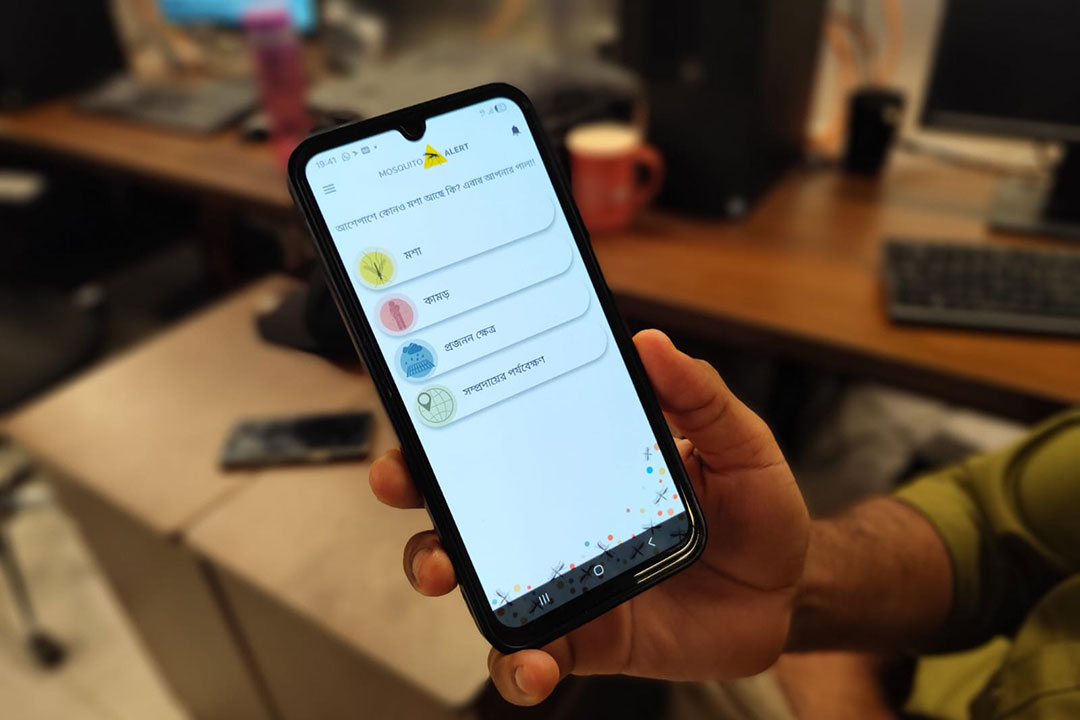
Surprisingly enough, there’s an app for that. Rolled out by Dhaka-based research institution icddr,b in September 2025, it’s called Mosquito Alert.
“I first take a photo of the mosquito, and send it through this app. Then the experts working behind it give feedback within short time – whether it is Aedes mosquito or anything else,” Khan said.
That not only provides reassurance to Khan, it also offers valuable input for researchers.
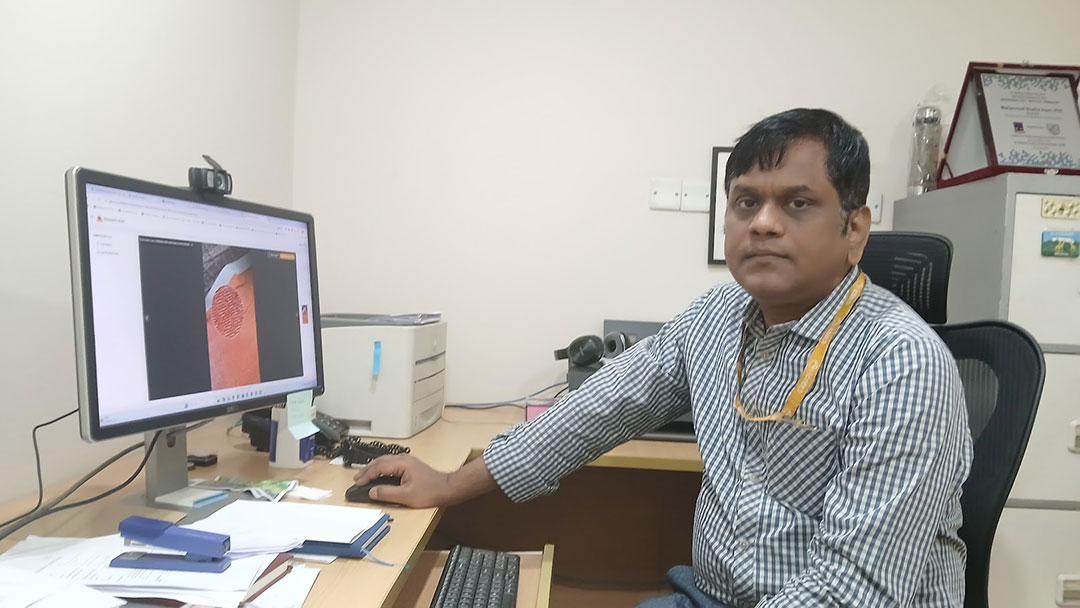
“Along with the image, location and other relevant details are collected. Then a team of expert entomologists reviews and validates each submission, then informs the participant of the result. Confirmed reports are published on a public map,” Dr Mohammad Shafiul Alam, a scientist at icddr,b, told VaccinesWork.
“Through this app, ordinary citizens actively participate in scientific research and can directly contribute to Aedes mosquito surveillance and control activities,” he added. “This real-time study report can help concerned authority to identify the high-risk areas, develop early warning system and take specific action, to tackle the vector-borne disease situation.”
Credit: Mohammad Al Amin
Alam said a panel of experts from Directorate General of Health Services (DGHS), Institute of Epidemiology Disease Control and Research (IEDCR), Dhaka North City Corporation (DNCC), Dhaka South City Corporation (DSCC), and the icddr,b are working with the app.
Available for free, the app was originally developed in Spain, but through the icddr,b project, conducted with support from IDApp, the tool has been made available in Bangla.
The dengue home-front goes digital
Bangladesh is struggling with multiple mosquito-borne infections, including dengue, chikungunya and malaria, confirms the Directorate General of Health Services (DGHS).
“Among the vector-borne diseases, dengue is a major public health threat, with 0.4% fatality in hospitalised patients, and which is also endemic in the country,” Professor Dr Mohammad Halimur Rashid, Director (Disease Control) at the DGHS, told VaccinesWork. In 2025, 413 people died of dengue in Bangladesh. This year so far, four fatalities have been recorded from the disease.
Dr Rashid said the government carries out “different programmes” year-round in a bid to control all of the mosquito-vectored diseases, and adds that public participation is critical to their success.
Have you read?
Those programmes include Aedes mosquito surveys. Mohammad Khalilur Rahman, entomologist at the DGHS, said those are typically conducted in Dhaka at pre-monsoon, monsoon and post-monsoon.
“These surveys typically identify high-density larvae in construction sites, abandoned tyres, and plastic containers, prompting warnings of potential, large-scale dengue outbreaks,” he added. Mapping out high larval density zones helps scientists keep tabs on high-risk zones for disease, as well as general risk levels over time.
“Surveillance is important to fight against any vector-borne disease. Therefore, community, society and institutional involvement will have to ensure to fight against the mosquito-borne diseases, including dengue and malaria in the country,” Khalilur Rahman added.
Researchers and officials alike hope that the app will help create an efficient and cost-effective interface for public participation.
“We have held consultations with the city corporation, health authority, civil society members [on how] to use the app. In Bangladesh, we are in the background, working for this app to carry out study. However, our operation is now in limited scale due to lack of manpower and logistics support,” the icddr’b scientist added.
“Prevention is the only way to fight against these diseases,” said Dr Shafiul. “If we go for massive mosquito surveillance, it is costly and time-consuming. That's why we are working to use this app as part of citizen science to get the real-time data of [the] mosquitoes.”
Need for reinforcements
But so far, app uptake has been limited, with just 227 participants logging mosquito sightings as of mid-April. “So far, we have relied on social media platforms to raise awareness and encourage app downloads. We have not yet conducted any campaigns in mainstream media for the same reason. However, once adequate resources are available, we plan to scale up the campaign,” Dr Shafiul said.
The team is also working to add data on the number of patients infected with mosquito-borne diseases in a bid to increase the volume of information available through the app.
Entomologist Khalilur Rahman remains hopeful that the app will make a difference to scientists’ efforts to bolster mosquito defences in Dhaka and further afield. “If people spontaneously participate in the Mosquito Alert app, and contribute relevant information, then it can be helpful to identify the mosquito and its breeding places.”