
The pain of the cold chain: five ways to help governments keep vaccines cool
A new report asked immunisation experts in 33 countries what would make it easier for them to deliver vaccines to their people; here’s what they said.
- 19 August 2026
- 4 min read
- by Priya Joi
At a glance
- The Vaccine Innovation Prioritisation Strategy (VIPS) partnership, convened by Gavi, consulted immunisation experts in 33 countries, 30 of them low- and middle-income.
- Countries want vaccines that sit in an ordinary fridge at 2–8°C and arrive with at least 12 months of shelf life remaining.
- They would accept shorter shelf life, freeze-drying or a higher price to escape ultra-cold storage, but not for vaccines that already fit their existing systems.
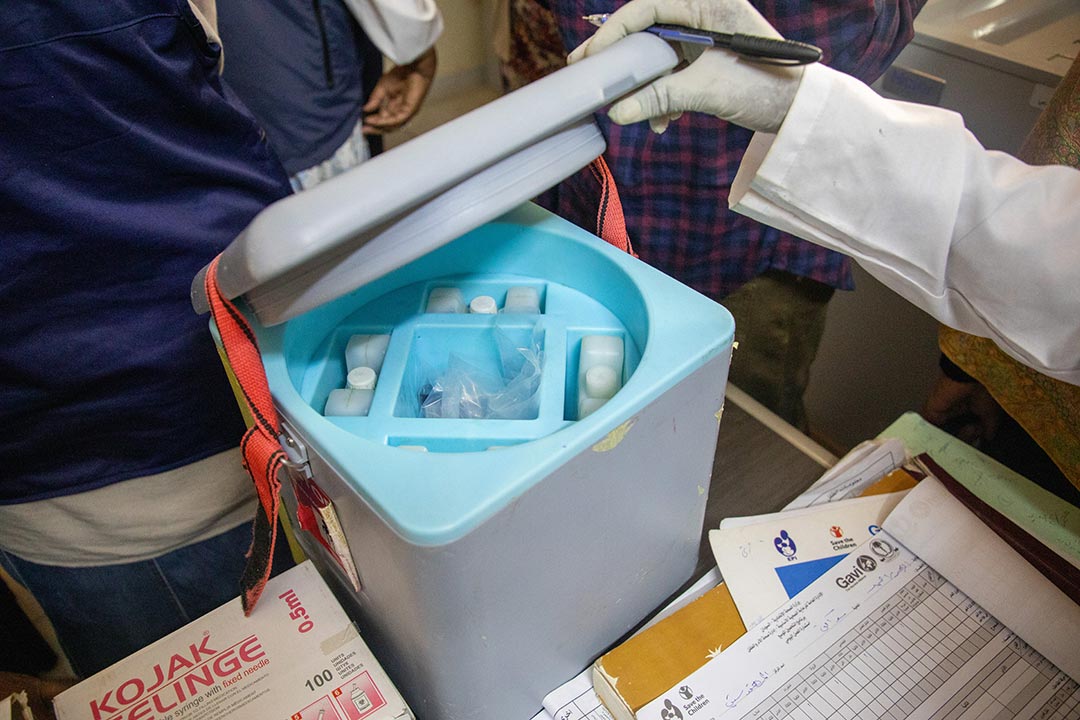
One of the biggest challenges in delivering life-saving vaccines to those who need them is the fact that they need to be kept at the right temperature to remain effective.
Most need refrigeration, some require ultra-cold temperatures between -50°C and -90°C. All have to stay within a narrow temperature band from factory to arm, which depends on reliable power, transport and equipment that keeps working.
A vaccine that does not fit how countries operate will not reach more people, however advanced it is.
The Vaccine Innovation Prioritisation Strategy (VIPS) partnership, convened by Gavi and bringing together WHO, UNICEF, the Gates Foundation and PATH, consulted immunisation experts across 33 countries in 2023 and 2024 to find out what that costs their programmes. Its report, published in August 2026, is aimed at funders, developers and manufacturers.
The scale of the problem is clear from the responses. Sixty-one percent reported moderate or significant challenges with vaccines needing ultra-cold storage.
Half said the same about vaccines kept at -20°C. Even the routine vaccines stored in a normal fridge caused problems for 36% of respondents.
Here are five things countries want to change.
1. An end to ultra-cold storage
Ultra-cold vaccines need specialised freezers running between -50°C and -90°C. Respondents record a clear preference to be rid of them.
Countries were asked what they would trade to get there. Eighty-seven percent would take a 2–8°C vaccine with only six months of shelf life over one needing ultra-cold storage. Seventy-three percent would accept a switch to a freeze-dried format. Sixty-five percent would swallow a 20% price increase, citing high energy demands and limited ultra-cold infrastructure.
Sierra Leone’s deployment of the Ebola vaccine shows the burden ultra-cold vaccines can bring. To vaccinate 8,000 people, the country had to procure ultra-cold freezers, upgrade electrical systems, establish backup power and train a substantial number of staff.
2. A full year of shelf life on arrival
Respondents wanted at least 12 months of shelf life remaining when a vaccine is delivered at the end-user level, rather than a product that arrives close to expiry, as that puts too much pressure on distributing the vaccines at speed.
Short and variable shelf life was named as a product challenge in its own right, feeding into discard rates and unreliable availability.
However, there is a trade-off between being able to use fridges rather than freezers and shelf life: 68% would accept a shorter shelf life to move a vaccine from -20°C into a fridge.
3. Liquid vaccines rather than freeze-dried ones
Freeze-drying can improve heat stability, but it means reconstituting the vaccine with a diluent before use, which adds preparation time and demands careful aseptic handling.
Respondents will take that deal to escape ultra-cold storage. They are markedly less willing elsewhere.
To move a vaccine out of the freezer and into a fridge, only 49% would accept a freeze-dried format. To stretch a fridge vaccine’s heat tolerance from a fortnight to a month, only 56% would prefer a freeze-dried version.
Thus the report asks manufacturers to avoid freeze-dried formats unless there is a clinical or programmatic advantage that justifies the added complexity.
4. Fewer rules to juggle
The report sets out five heat stability profiles, running from ultra-cold chain storage through to vaccines approved for controlled temperature chain use, which can be kept at up to 40°C for a minimum of three days just before administration, and carried to outreach sessions without ice packs.
A national programme may be handling several of those profiles at once. Respondents flagged the complexity of managing different temperature requirements across vaccines at national and sub-national levels, which raises training needs and the risk of errors, particularly during outreach.
5. Products that fit how programmes already work
The report includes a case study on a rotavirus vaccine with the most heat-tolerant monitor of the lot, developed to allow storage at 25°C for up to 30 days, with a strong safety, efficacy and stability profile.
It was supplied freeze-dried, so it had to be reconstituted into a liquid and this liquid used within six hours, while other vaccines in the same session were liquid. Health workers needed retraining for the two-part process, and because ambient temperatures in many settings exceed 25°C, using the heat stability would still have meant a separate cooling system.
Uptake was limited as a result. Improved heat stability alone does not guarantee successful implementation, the report concludes, and has to be weighed against the requirements of the other vaccines a country already gives.
A vaccine that does not fit how countries operate will not reach more people, however advanced it is.