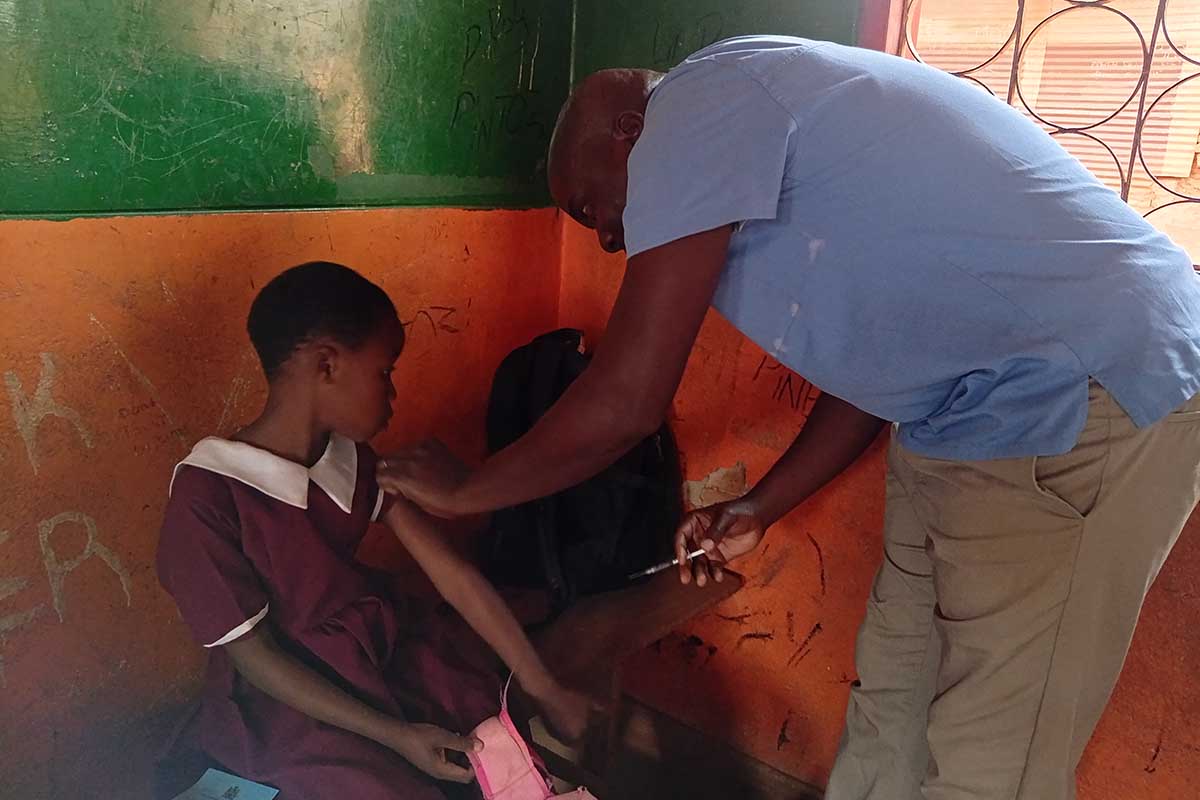

The Tanzanian veterinarian vaccinating dogs to save human children
Dr Ahmed Lugelo of Rabies Free Africa knows that saving dogs from rabies means protecting children from a brutal end.
- 23 September 2026
- 6 min read
- by Josh Babcock
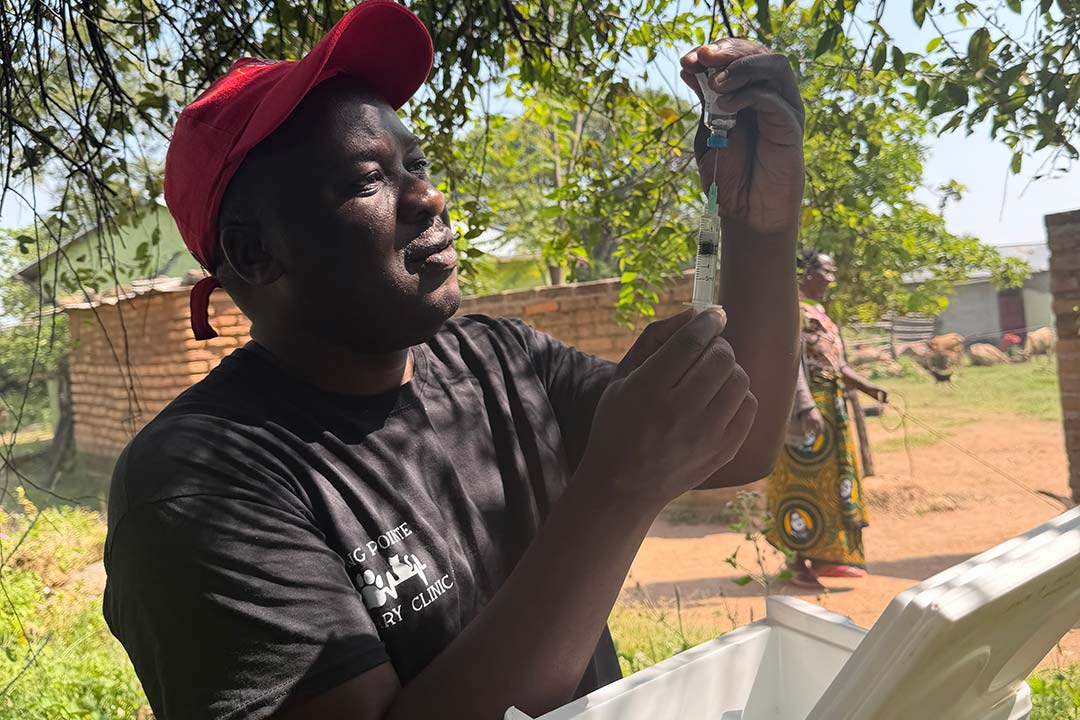
Ahmed Lugelo often thinks of the seven-year-old boy he met in Nyerere Designated District Hospital in the spring of 2015. He still remembers his mother’s cries.
“It was one of the saddest moments in my entire career,” said Lugelo, a member of Washington State University's Rabies Free Africa team. “I was sitting in front of the child, helpless, and we could not do anything. The mother was hoping that maybe the medication would change or reverse the symptoms, but it was too late.”
The child had been bitten by a dog weeks earlier, and Lugelo knew what the child’s parents didn’t: those symptoms meant that the window for effective post-exposure prophylaxis had closed. Rabies knows no other remedy than thorough wound care and timely reactive immunisation. “Timely” means as soon as possible. Once symptoms set in, it’s too late: the virus has reached the central nervous system, and death is certain.
“Unfortunately, the child died about three hours later,” Lugelo said. “That was a very painful thing, and it really changed the way I thought about rabies and the work that we do.”
A programme with promise
Lugelo, who has been a core member of Rabies Free Africa's community-based rabies control programme in Tanzania for the past 15 years, says cases such as these are fewer and fewer in number. The programme, largely focussed on mass dog vaccination, is making gains on its promise to eliminate rabies in the country’s Mara Region.
Before large-scale interventions began in the region, roughly 2,500 people were bitten by rabies-infected animals each year and about 40 people – mostly children – died annually in the Mara region alone from the disease.
But the efforts of Rabies Free Africa, in partnership with the National Institutes of Health in the USA, have changed those statistics. Annual cases in the region have fallen since the programme’s inauguration in 2013, and only eight human fatalities from rabies were reported between 2020 and 2023.
Courtesy Rabies Free Africa
As rabies cases declined, some people began to feel the disease was no longer a threat, and the risk of complacency reared its head. “There were so few cases, people were asking why they needed to continue vaccinating,” Lugelo said. Educating the public on the need to keep up immunisation was critical.
But in the meantime, the lowered perceived threat level was creating the opportunity for more harmonious human-animal relationships. “What we saw, was people started loving the dogs and keeping more dogs, when before they would see an unfamiliar dog and throw stones.”
Protecting the next generation
No country in Africa has eliminated dog-mediated human rabies. Sub-Saharan Africa accounts for roughly 20,000 of the world’s estimated 59,000 annual human rabies deaths, according to the World Health Organization. The majority of those fatalities are in children.
“When I’m in the field and I’m working, I’m protecting children; I’m protecting the community,” Lugelo said. “This virus affects many families and being that I live here, I know that it can even affect my family too.”
Have you read?
Lugelo started in the programme going home to home, tracing the movements of rabid dogs, or sometimes, infected jackals and hyenas, that may have exposed people and animals to the virus.
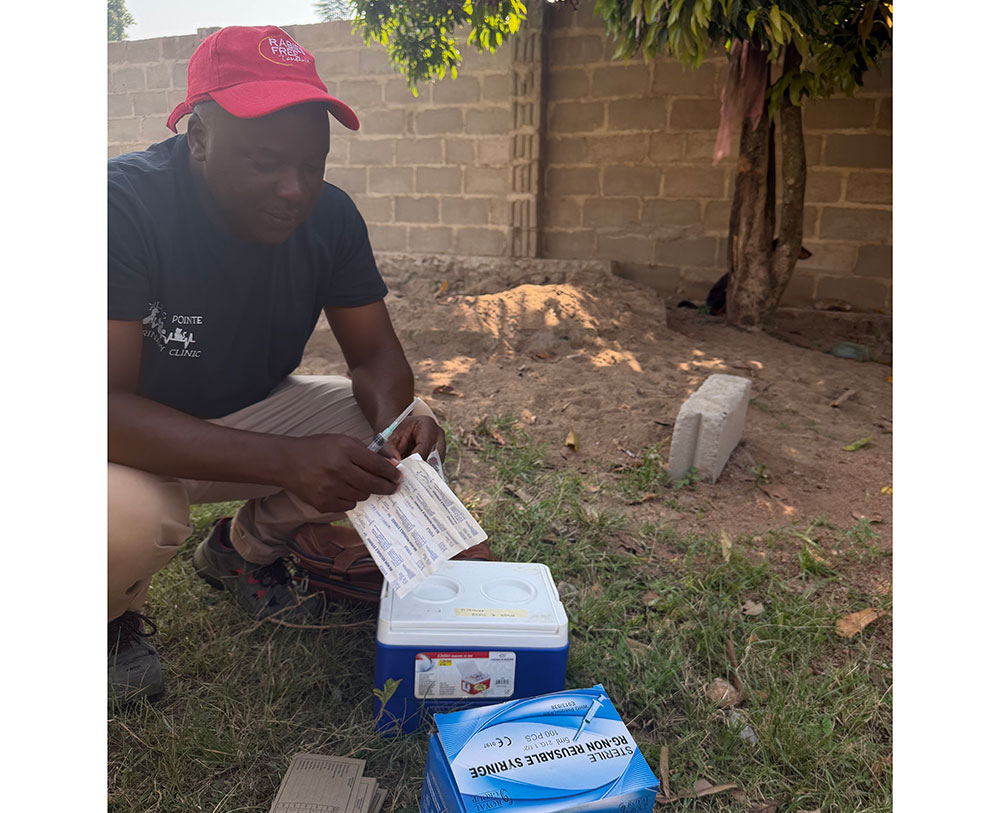
He later advanced to help lead the programme's mass dog vaccination efforts. Today, vaccination events often draw hundreds of children and their canine friends, often from miles away.
Lugelo, who has three children of his own in Dar es Salaam, says it’s young people who often fail to recognise the signs of danger in an infected dog, which leaves them at risk of exposure to the virus.
His drive to shield them from is at least part of what has propelled the programme to its most recent milestone: 3 million dog vaccinations, many thousands of which were personally administered by Lugelo.
“On our busiest day, we vaccinate about 500 dogs,” Lugelo said, noting each rabies vaccine is provided by Merck Animal Health at no cost to the programme.
Innovation spotlight: The Zeepot
Local problems need local solutions, and the Mara region was facing two colliding challenges: rabies, and weather so warm it threatened to spoil the temperature-sensitive dog vaccines keeping the virus in check.
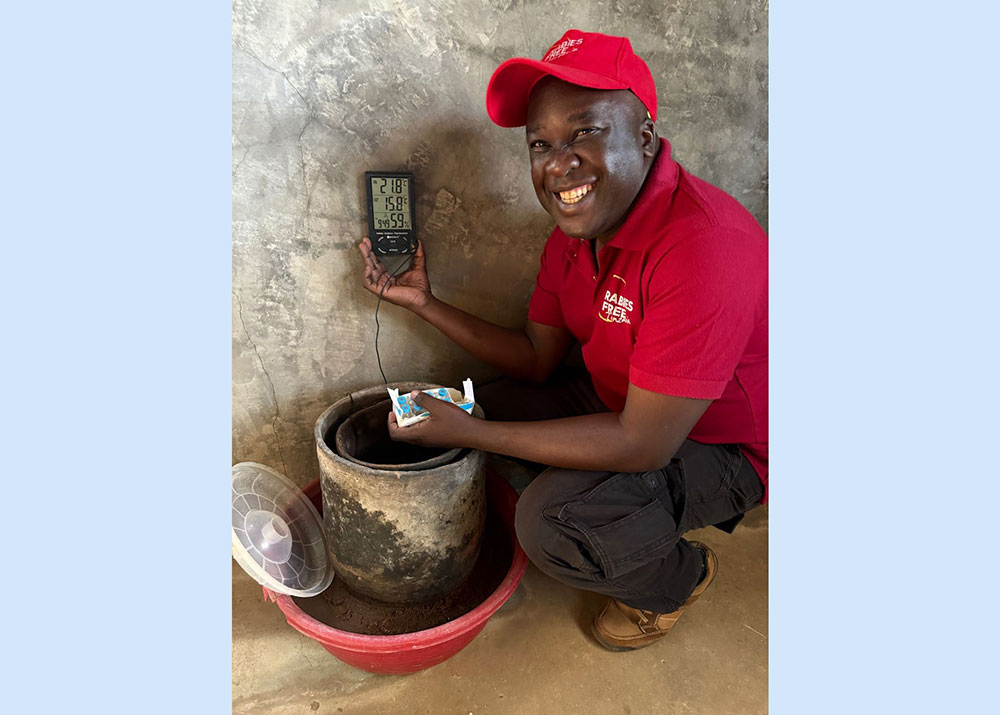
The Rabies Africa Team hosted a competition in which locally based designers were invited to design a storage device that suited the challenge. It needed to be made with locally available materials, be relatively inexpensive and, of course, had to keep vaccines cool. Five prototype designs were selected for development and testing. After comprehensive temperature testing, product refinement and re-testing, the Zeepot was chosen as the winning design.
Courtesy Rabies Free Africa
Rolling out since 2020, this locally manufactured clay device uses evaporative cooling – no electricity required – to keep the vaccines at safe temperatures. The vaccines can be stored in the Zeeppot for up to three months without any decline in immunogenicity. Each zeepot costs US$ 20 and there are 221 units currently in use in the field.
Putting resources where they’re needed most
Much of Lugelo’s work now is a kind of high-stakes triage: identifying which communities are at most urgent risk, and will therefore benefit most from large-scale animal rabies vaccination.
To make those decisions, he relies on community assessments, bite reports, and rabies case data. It’s a responsibility he doesn’t take lightly, knowing limited resources mean not every community can be reached at once.
“Vaccination is important because it helps to protect the whole community,” Lugelo said. “We want to support everyone, but our resources are limited. In time, and funding permitting, we aim to provide vaccination to dogs in all communities in Tanzania, and to expand to other parts of Africa too.”
No rabies-free Africa without community buy-in
Lugelo’s community assessments are aided by the programme’s recent innovations, like the ability to store thermostable rabies vaccine in locally made and designed clay coolers known as Zeepots, and a cellphone application that uses facial recognition to track vaccinated dogs. In addition, an ongoing NIH-funded study is conducting an oral vaccine trial across 36 wards in Tanzania which, if successful, will allow vaccination of dogs through oral baits.
With nearly one-third of all canine-mediated human rabies deaths occurring in Africa, Lugelo said the programme’s accomplishments are encouraging, but significant work remains. Entire regions of Tanzania, and indeed much of Africa, still lack consistent rabies control efforts.
One vaccination at a time, Lugelo is working on changing that. But he says there is another component to rabies control that also needs investment – education.
“It is one of the most important parts of rabies prevention, yet it’s often overlooked,” Lugelo said. “Rabies is not like malaria. You can’t wait for the symptoms to treat it. We need to spend more time teaching communities how to clean dog bite wounds to reduce the likelihood of infection, that vaccination should start immediately, why delays are dangerous and how acting quickly can mean all the difference.”
More from Josh Babcock