
In Uganda, people with albinism risk missing immunisation due to harmful myths
One local non-profit has spent the last 13 years fighting stigma and righting dangerous health misconceptions.
- 29 September 2026
- 6 min read
- by John Musenze
At a glance
- In Uganda, people with albinism are often regarded with mistrust and superstition
- While the major biomedical health risks associated with the condition are skin cancer and visual impairment, a culture of misinformation leaves albinos vulnerable in other ways too, including to vaccine-preventable diseases.
- Advocacy organisation SNUPA are out in the community, armed with sunscreen and information, looking to debunk myths and get albino children protected.
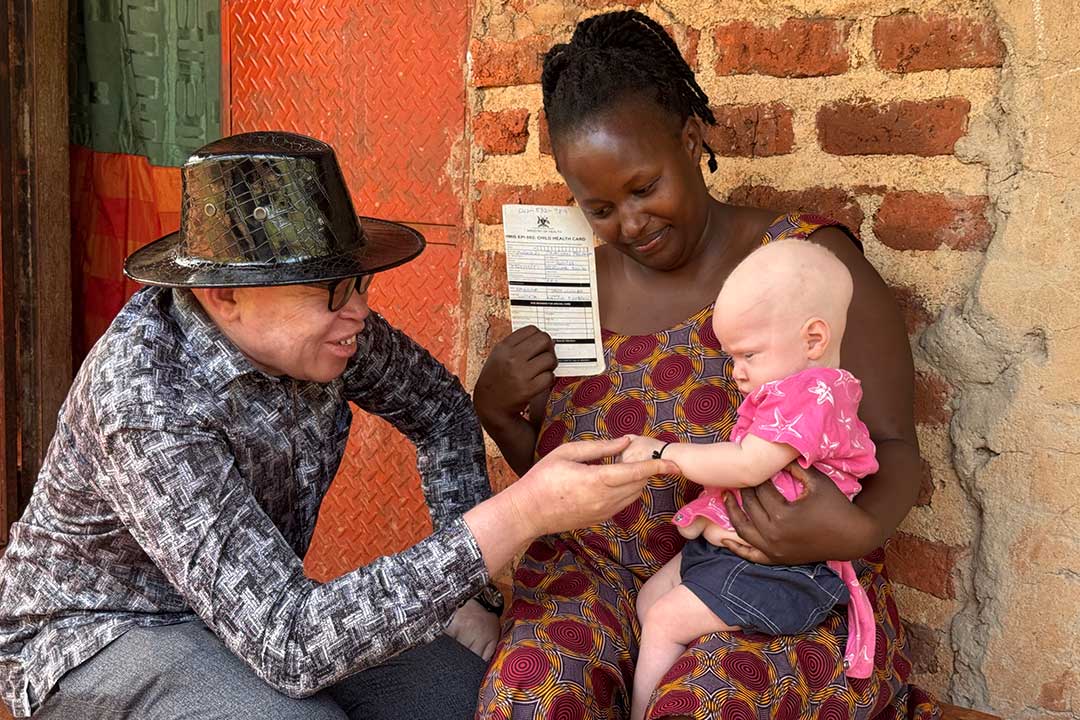
Joanita Namugabo, a resident of Kainogoga village in Uganda’s Jinja district, found it hard to accept that she had given birth to an albino baby.
At that point in time, Namugabo understood little of the condition, but had absorbed the widespread misconception that the child’s unusual, pale colouring meant that he was cursed.
There were desperate tears, worried nights, the emotional hardship of seeing family members distance themselves from her and her infant, she recalls. And then there was a visitor who changed everything: a person who would open her eyes to the fact that her baby boy was just as much of a blessing as any other child.
“This was my second-born, and first time I have seen an albino in our family, so I was worried and very scared,” Namugabo told VaccinesWork, “until someone within the hospital told me about people living with albinism and asked for my number, and later called me and met me at my house.”
That person was a representative of Source of the Nile Union of Persons with Albinism (SNUPA), a non-profit organisation that has spent the last 13 years helping families understand albinism and access health services.
Albinism comes with particular vulnerabilities. Some of those are straightforwardly biomedical. The condition is a genetic difference that results in a lack of protective melanin, or pigment, in the skin, hair and eyes, which means that people with albinism are at extremely high risk of skin cancer and visual impairment.
Other vulnerabilities are produced by and within the communities they live in, rather than in their bodies. Prejudice and superstition mean albino people are often socially marginalised, and left out of services that should help keep them safe. That includes immunisation, say SNUPA staff.
Namugabo says SNUPA staff taught her how to protect her son’s sensitive skin from the sun and provided her with sunscreen. They also linked her up with health professionals, and offered her psychological support. In the nine months since then, SNUPA has stayed in contact, making follow-up visits to her home and encouraging her to stay on top of her son’s routine vaccination schedule. He’s currently two doses into his four-dose malaria series, Namugabo reports.
“99% of our members are vaccinated”
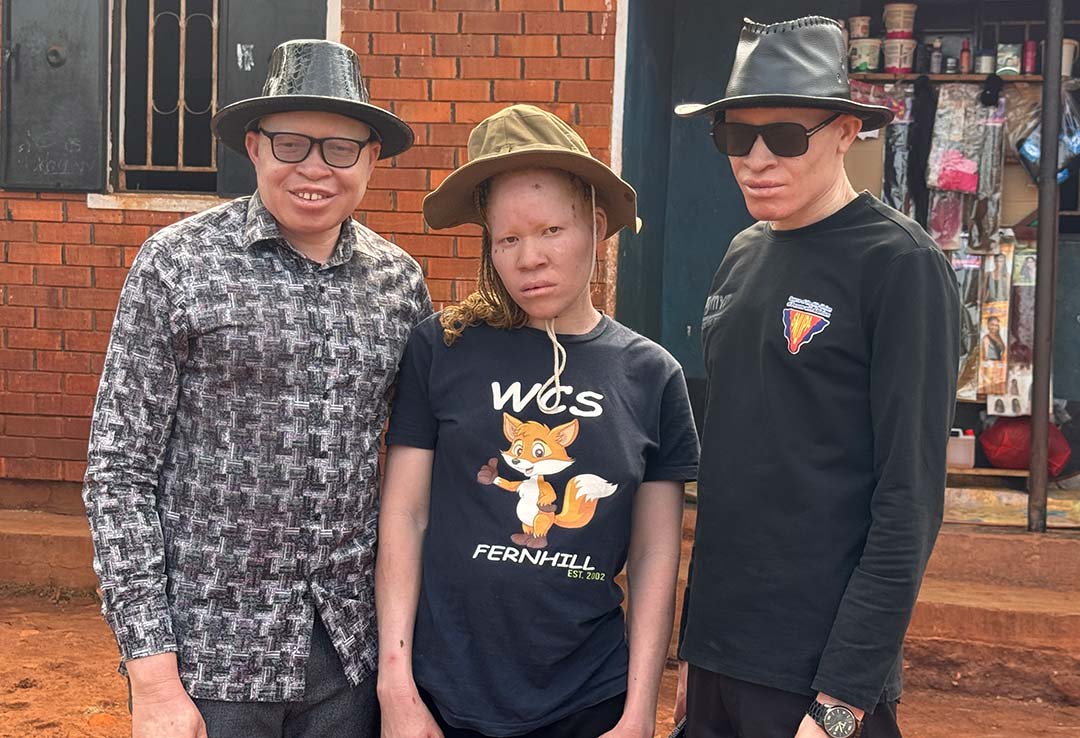
Like almost 79,000 other Ugandans, Sharon Nakawala, 23, from Kagumba in Jinja district, was born with albinism. Through out her life, she says she has battled faced stigma and discrimination. SNUPA’s support has been critical to keeping her well.
Credit: John Musenze
“I am an albino; SNUPA has been with me for about 10 years. When I was around 13 years, they took us to the hospital for the HPV vaccinations together with other young girls. I now have a baby who is nine months and they have been with me through the pregnancy and even after. They provide with me with basic needs like skin cream, medical connections and care, including psychological support that every one of us needs most,” she said.
Peter Ogik, co-founder and chairperson of SNUPA, who has spent years working with communities to replace misconceptions about albinism with proper science-based understanding, was born with albinism himself and understands how deeply myths can affect families.
“We have placed a volunteer at major hospitals and in places where we can’t have one, we have given contacts to the hospital in-charge in case one gives birth to an albino, [so] they can connect us to them. In Busoga region where our organisation is based, we have 600 members, all albinos, and nationally we have about 2,000 people that we help, including about 200 refugees,” Ogik told VaccinesWork.
Have you read?
Growing up, Ogik was told that people with albinism do not really die, but would eventually disappear. The death of his sister in a road accident upended that false belief, and helped shape his determination to confront misconceptions surrounding albinism.
SNUPA was formed in 2013 after people with albinism in Busoga region, eastern Uganda, came together to discuss the discrimination, health challenges and social exclusion they faced, Ogik said. The organisation has since expanded its work beyond eastern Uganda, supporting people with albinism through health education, skin-cancer prevention, advocacy, community mobilisation and links to health services, including, notably, vaccination.
“It’s a must to avoid any disease or risk if we can. Ninety-nine percent of our members have been vaccinated, have skin lotions to prevent cancer and have information about their health. That’s the only way we keep them safe – and apart from skin diseases, we don’t want [to take] any risks,” he explained.
The natural immunity myth
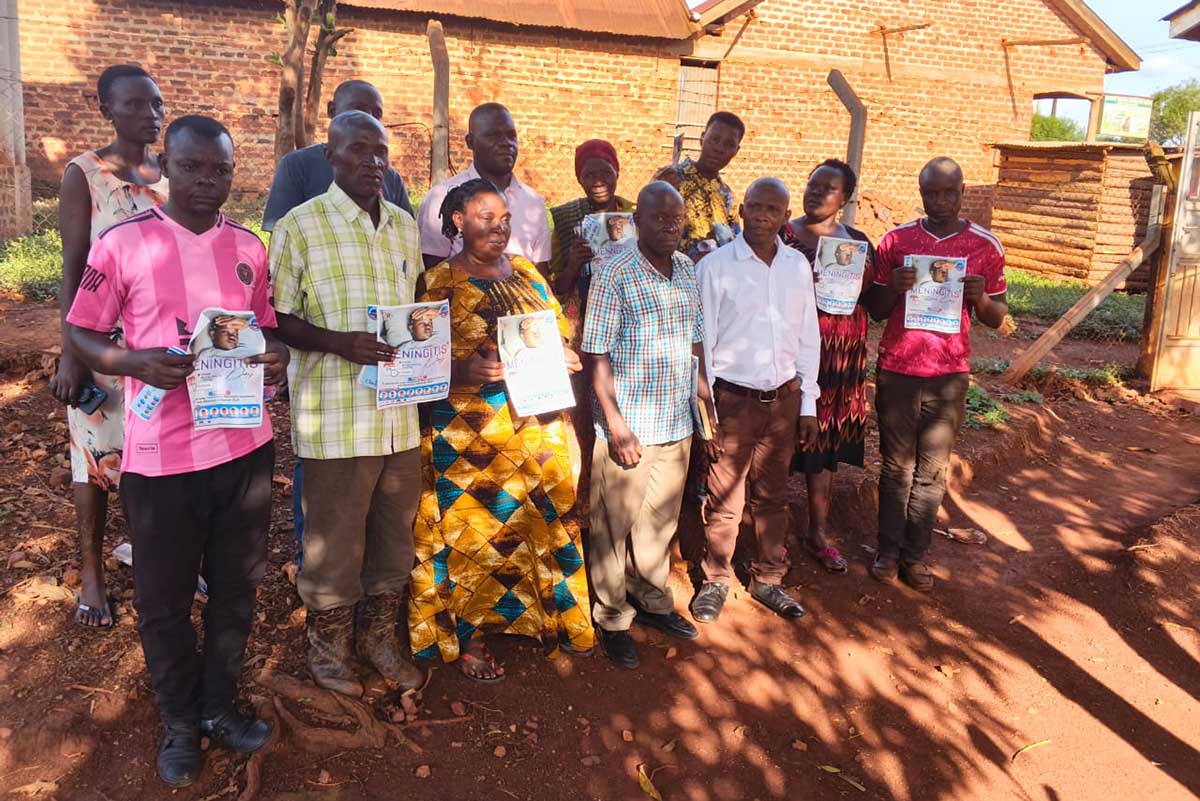
Ogik says he and his colleagues encounter families labouring under diverse false beliefs that make them think their albino child can, or should, avoid immunisation, leaving them at acute and unnecessary risk of vaccine-preventable diseases. SNUPA uses people living with albinism as community advocates to counter those myths.
“Many of them are told albinos are good for getting-rich rituals, so their bodies are [naturally] immune and strong. Some are told their children are going to die before making five years and find no reason to vaccine, but when they see us, old enough in 40s, 30s and above, they get inspired and we have seen a big vaccine uptake,” he said.
“People with albinism are human beings like everyone else. Albinism should not become a reason for a child or adult to miss services routinely available to the wider population,” Ogik added.
Henry Manson Ngobi, a dermatologist who treats people with albinism in Eastern Uganda, told VaccinesWork that SNUPA has been an important resource for his patients. “When someone gives birth to an albino, some want to abandon the child, some are frustrated, some do not want us to vaccinate them, that we might kill them, but also many become hopeless and lost. So we link them to SNUPA and after some time, these same mothers come back happy. SNUPA simplifies our work,” he said.
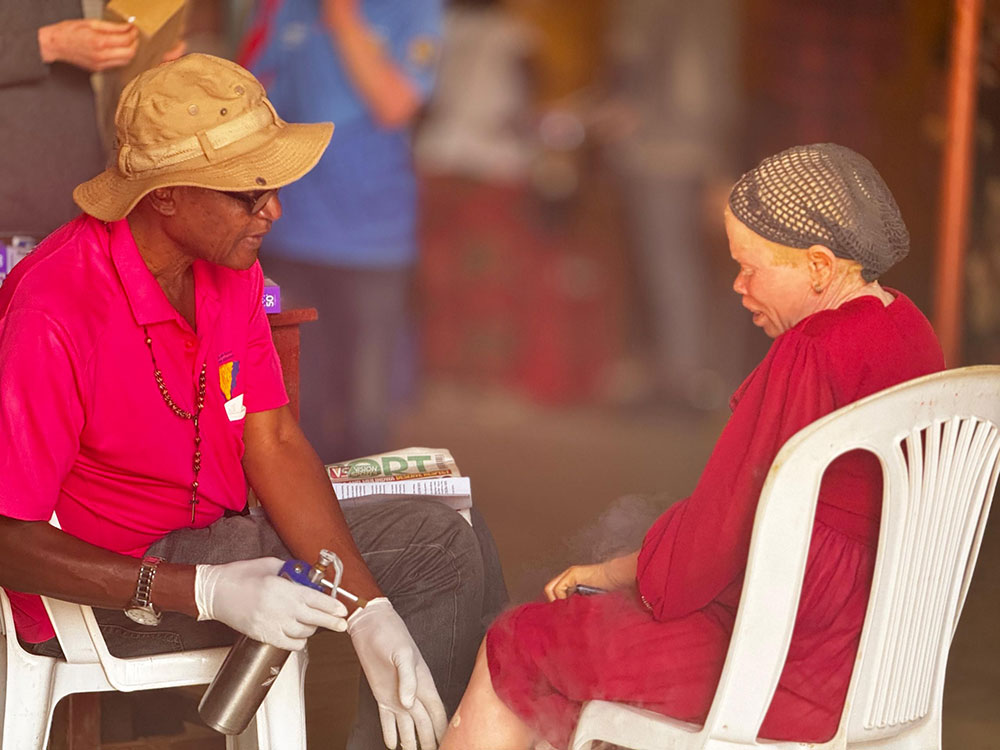
Credit: SNUPA
He praised SNUPA for taking information into communities, rather than waiting for health misconceptions to bring families to clinics.
“Before SNUPA came in, they [albino people] were in villages hiding with no treatment, no sunscreen creams, and could not even protect their skins from cancers,” Ngobi said.
Dr Moses Muwanga, the Assistant Commissioner of Disability at Uganda’s Ministry of Health, said community organisations such as SNUPA can complement government vaccination campaigns by helping health workers reach groups that may face additional barriers because of stigma, misinformation or social exclusion.
“Albinos are normal people, only that their skin lacks melanin. But there’s a lot of myths and misinformation that they are told, like being immune to diseases, so we are happy to partner with organisations like SNUPA that take the message to the last person,” he said.
He said in SNUPA’s case, the messengers are often half the message. “When they see their fellow [people with albinism] all grown in their 50s, and these are telling them to go to all healthy programmes, it empowers them with trust.” he said.