
“When the drought bites, we move”: a nomadic mother tells her story
Ten-month-old Erodo from Isiolo, northern Kenya, is unimmunised. His mother regrets that, but her family goes where the grazing is, even if that takes them far from healthcare.
- 27 April 2026
- 6 min read
- by Dominic Kirui
At a glance
- The people of Isiolo county have the longest average travel time to immunisation facilities of all Kenyans. That can take a toll on immunisation rates – especially when the families themselves are also perennially on the move.
- For pastoralists like Angelina Muthoni and her family, keeping the cattle fed and watered is an existential priority. “When the drought bites, we move. And when we do, we don’t care to look for a place where there is a hospital or health centre,” she says.
- Muthoni understands the importance of immunisation, and plans to get her son Erodo vaccinated “if circumstances allow.” But that likely means hoping that the next season’s grazing land happens to be a walk away from the nearest clinic.
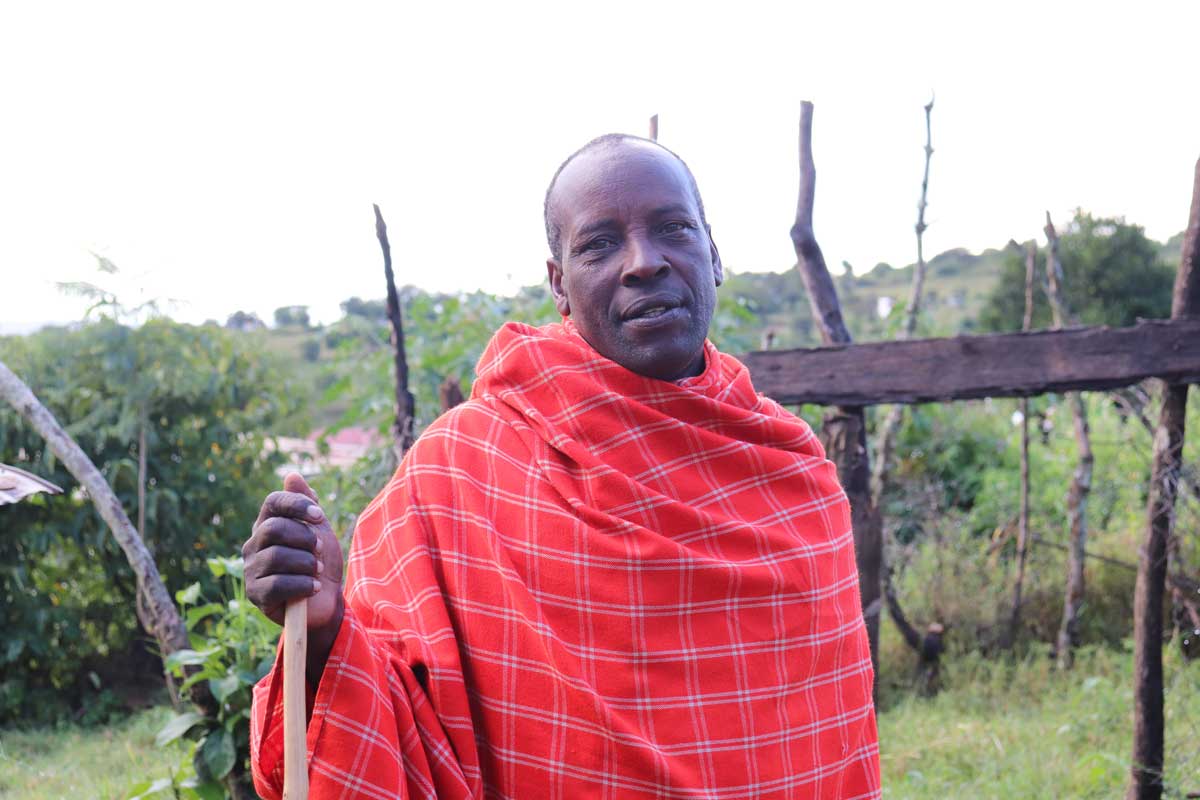
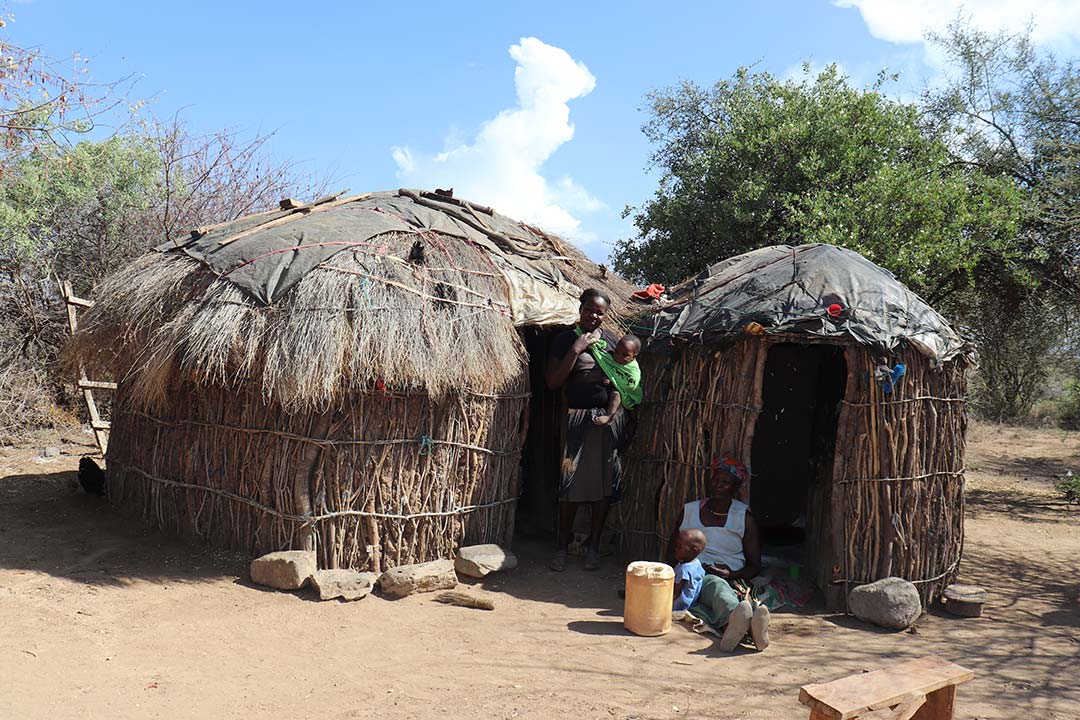
It’s a scorching afternoon in Aremet village in Kenya’s Isiolo County. Angelina Muthoni sits in the shadow cast by an overhanging roof at the entrance to their traditional hut, talking with her mother. The drought has already begun, and so the cattle are gone from the village. The men have begun take them far away to find pasture.
The 30-year-old mother of three holds ten-month-old Erodo in her lap. The child, she says, has not received any vaccine since he was born.
“We were not here, we came from behind those hills,” she says as she points towards three faraway hills. “When the drought bites, we move. And when we do, we don’t care to look for a place where there is a hospital or health centre. We only care about the pasture and water,” she says.
Yvonne Opanga, the Research, Learning and Impact lead at Amref Health Africa says that unvaccinated “zero-dose” children like Erodo make up about 3%[1] of all children in Kenya. That’s about 48,000 individuals who are perilously vulnerable to all vaccine-preventable diseases.
While Opanga says Kenya has done “persistently well” on immunisation coverage, she adds, “the 48,000 children not immunised are a cause for worry because they are at risk.”
In Kenya, counties with nomadic lifestyles, cross-border movements and long distances to health facilities are considered especially high-risk for outbreaks of preventable illness.
That includes Isiolo, which, like other counties in the northern part of the country, has benefitted from relatively little public investment. Infrastructure, including roads, electricity, education and healthcare, is sparse. Poverty rates are high. Health centres are sparse, with families in this county contending with the longest average travel time to the immunisation facility in all of Kenya.
Have you read?
“Especially in northern and northeastern Kenya, you might find facilities as far as 30 kilometres away [from communities], and this hinders immunisation delivery,” Opanga says.
In fact, it hinders access to basic childhood healthcare from the very start. Like many women in her community, Muthoni gave birth in her village hut, with assistance from a traditional birth attendant.
“Here, it is very rare to find a woman giving birth in the hospital because we are very far and doctors don’t operate at night, [even] where there is a facility nearby, because of the insecurity. Our community fights with the neighbours over cattle,” she says.
Being born at home makes it highly likely that a child falls behind on the immunisation schedule right away. Kenya recommends that newborns receive the anti-tuberculosis BCG jab and polio vaccines immediately after birth. Muthoni’s child never even met a health worker until he was three months old.
“If circumstances allow”
“It was last year when we were in Oldonyiro because the pastures there were good, and my baby was only three months old. A local health worker came to our village when he heard that we had settled there and asked me to go to the hospital where my child could get immunisation.
“Since he offered to bring me there with his motorbike, I accepted and we went. By bad luck, the vaccine had run out, and my baby did not get it. We had to move again before I could go back because there was a raid and we lost our cattle to the neighbouring community,” Muthoni says.
“Even for the first two, it took time before they could be immunised. This was largely because my mother insisted on having the children immunised, because she has lived in Nyeri County before and saw how serious people there took the issue of immunising children. I will just make sure my son gets immunised, but if circumstances will not allow, I will be sad for him because he might develop some disability or die of diseases,” she says.
Persistent barriers
Amina Sarite, the Expanded Programme on Immunization (EPI) Logistician in Isiolo County, confirms that in her experience, zero-dose children like Erodo are at very high risk of vaccine-preventable illnesses.
But getting children like him caught up is easier said than done. The pastoralist lifestyle throws up both geographical and mobility barriers. Moreover, cultural and behavioural factors that lead to misconceptions about vaccines in the county still exist, she says, which leads to low awareness of the importance of vaccines.
Meanwhile, Muthoni laments the low density of facilities in the county. “We just wish that the government can build for us more facilities and man them, then ensure they are paid, so they can remain at the hospital when we visit,” she says. “We also request for night health workers because mostly that’s when many women visit to give birth, and that is how they will avoid home births and remain there for their children to get immunised. Let them just run 24 hours and deal with the insecurity.”
Back at Aremet, Muthoni’s compound lies dry, with no grass but only sand and thorny acacia bushes surrounding it. No paved roads connect this place to anywhere. No motorcycle or bicycle is parked against the makeshift grass-thatched huts, weather-proofed with nylon bags. If Muthoni has somewhere to be, she’s walking there – alone.
“My husband went away past the plains to look for water with other youthful warriors, but since there are cattle raids going on with the neighbouring communities, we don’t expect them back any soon. It’s safer for the cattle if they are with them all the time. We will only wait: they will come when they deem safe to do so,” Muthoni concludes as she heads into their hut to get her son a cup of milk.
[1] Data compiled annually by the World Health Organization and UNICEF put Kenya’s coverage with the first dose of the basic diphtheria, pertussis and tetanus-containing vaccine at 91%, which means that by those estimates, some 9% of Kenyan children qualify as “zero-dose”. Opanga was referring to Kenya Health Information System data.