
“Don't ask for anything else. Just ask for safe passage”: negotiating access for vaccines amid conflict
The negotiator’s non-negotiables: respect local dynamics, build trust and adhere to humanitarian principles.
- 18 August 2026
- 9 min read
- by CORE Group , IRC REACH
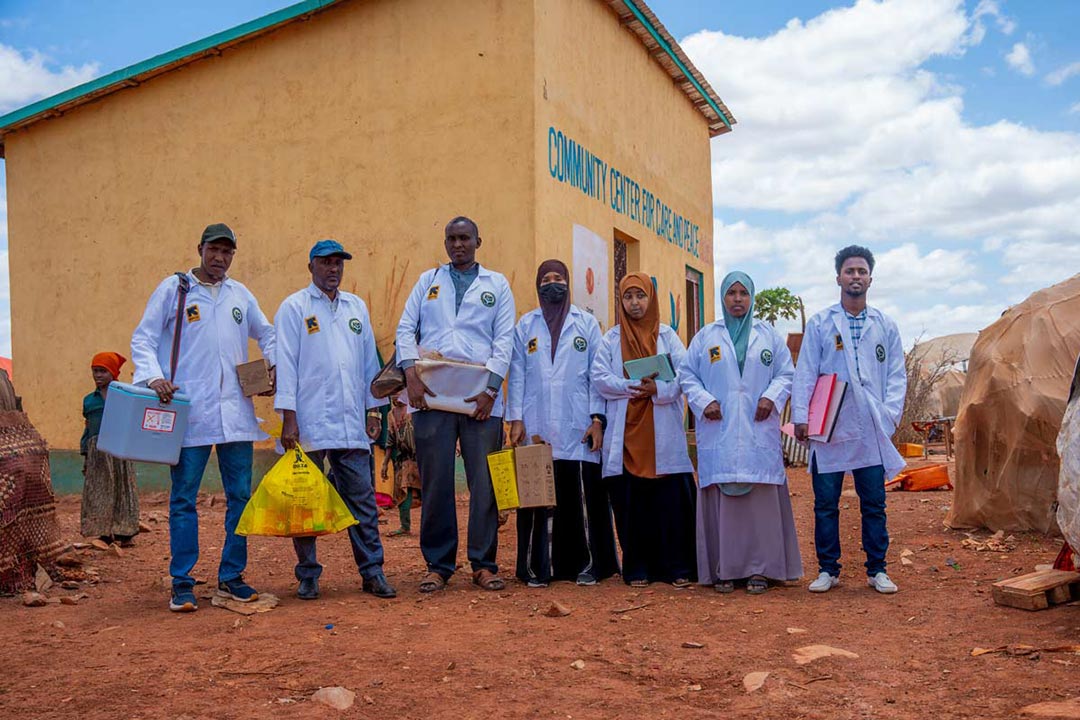
“Something is about to happen”
Early one February morning in Nairobi, Gautam Chatterjee received a phone call from a colleague in Baidoa, Somalia. The colleague, Muktar Abdi Issak, had an uneasy feeling that something was about to happen.
Muktar and Gautam – both specialists in humanitarian access negotiation and security with the International Rescue Committee (IRC) – had worked for months negotiating with authorities and local communities to plan a vaccination session in nearby Bulajima. A vaccination team was scheduled to head out at 7:30 am.
But now, Muktar reported, the streets were empty; the shops were closed; and there were no patients in the nearby outpatient clinic. In addition to negotiating access for vaccination teams, Muktar and Gautam are responsible for continually parsing signs like these and monitoring the security risks as well. They had to make a decision: wait, or go forward with the vaccination session as planned?
Gautam advised Muktar to delay their departure. “Let's see how the situation is,” he told Muktar. “Call the community elders at the other side, and see if they have heard anything. Call our partner security focal points and people that you know to see if they report any problems.”
These local partners had been key stakeholders throughout the process of negotiating access, and Muktar was able to rely on them for accurate information about the current unrest. Based on what he learnt, the team decided to postpone any travel to the outreach locations for a couple of hours. When they heard later that fighting over land disputes had erupted at a livestock market, resulting in casualties, movement was cancelled for the whole day. The vaccination session was only permitted on the next day when it was clear that the fighting had stopped.
Pausing to protect people
In retrospect, the decision to cancel the planned vaccination activity was the right one: it may have protected the lives of both outreach team colleagues and community members.
At the time, however, Muktar fretted over the potential loss of access to the community they were trying to reach with much-needed vaccination services – access that had taken months of complex planning and negotiation.
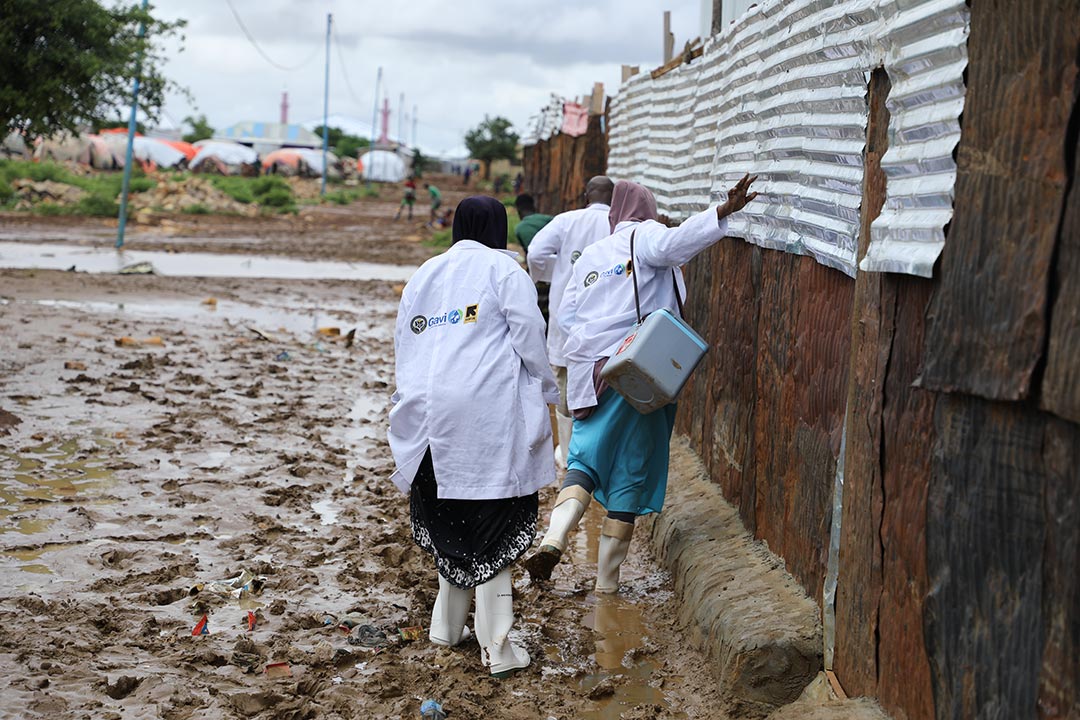
But Gautam reassured him that postponing activities for safety reasons was not the same as losing access. “That was a deliberate mitigation measure [taken] by us to reduce the risk on the team. We haven't lost access. As soon as the situation stabilises … they can go. Nobody who controls access has told us, ‘Don't come.’ We haven't received that message, so we have not lost access.”
Credit: CORE group and IRC
The Gavi REACH team
Access negotiation and risk mitigation are both critical to the success of ZIP, Gavi’s Humanitarian Partnerships programme, which delivers catch-up vaccination services to children aged up to five years in hard-to-reach communities impacted by conflict and other humanitarian crises.
It’s dangerous work. To minimise disruptions in the humanitarian settings where they operate, Muktar, Gautam and their colleagues can spend weeks and even months negotiating with a wide range of state, local and community actors before scheduling immunisation activities in remote or conflict-affected areas. And even then, constant vigilance and flexibility are required to ensure safety.
Have you read?
The IRC is ZIP’s lead partner in the Gavi REACH Consortium, which operates in Chad, Ethiopia, Nigeria, Somalia, South Sudan and other unnamed areas.
Muktar says he has to make risk assessments similar to the Baidoa incident on a regular basis, and meets virtually with Gautam frequently to discuss access and security matters impacting the work of their IRC colleagues and local partners. Across the REACH Consortium, Gautam provides similar guidance to ZIP’s immunisation teams across the region. In Ethiopia, for example, he played a critical role preparing the IRC and its partners to restart vaccination operations after the civil war.
Negotiating for vaccination
Routine vaccination services had been unavailable to children born during the long-running conflict between the Tigray and Amhara regions of Ethiopia. When the peace agreement was signed and an uneasy ceasefire was established in 2022, REACH was able to leverage previous IRC activities in the region and start negotiations with a wide range of officials in the area to gain the access they needed.
“You have to speak to the Federal Ministry of Health, the Regional Ministry of Health, the Zonal Ministry of Health and then the woreda, which is the district-level Ministry Department of Health,” Gautam explains. “You have to have interactions with all of them so that there is alignment.”
Because the security situation in the contested area continued to be fragile and unstable, the Ethiopian National Defense Force (ENDF) took over the administrative responsibilities for specific districts, and an ENDF commander was appointed as an Interim Chief Administrator. Operating under humanitarian principles – humanity, impartiality, neutrality and independence – the IRC was ready to cooperate with the designated authorities.
“Basically, the command post had control over who comes in, who goes out, what happens, what doesn't happen,” Gautam says. “After hearing our request to conduct immunisations for children who had missed their vaccinations, the command post agreed to allow the activity but asked that the vaccination team be based in the controlled area.”
To meet this condition, the REACH team brought in the Organization for Social Services, Health and Development (OSSHD), a well-known, reputable nonprofit already operating in several regions of Ethiopia including Amhara and Tigray, to deliver immunisation services in and around the area. After a few rounds of negotiations, the command post agreed to let OSSHD go in from Amhara to vaccinate children in the designated area in Tigray.
Partnerships make it work
Working with the REACH team, OSSHD had to use their already-established network to facilitate the negotiations with the command post. They also brought knowledge of local networks, a bank of credibility and trust, and the consequent ability to influence other key stakeholders in the area.
Gautam, who is originally from India, says, “If I were to turn up in a place where nobody knows me and say, ‘Hey, I want to talk to you,’ it would be very difficult for them to understand who I am. To establish my credibility and trust would take a long, long time. Whereas if it’s a project coordinator working for a partner agency who's already well known and in some cases lives with the community, they have seen him grown up as a kid, so their credibility will be much better.”
In exchange, the IRC shares an in-depth understanding of humanitarian principles and evidence-based vaccination protocols; innovative tools like Indigo vaccine carriers and geospatial mapping for target setting; and training in human-centred design, finance, administration and security.
Partners like OSSHD staff get ongoing coaching and mentoring from Gautam, who spent years doing field negotiation work for Médecins Sans Frontières (MSF) before coming to the IRC.
He says access negotiation takes a lot of patience and strong emotional regulation. “You need to be a good poker player,” he says. “Your emotions should be well controlled. The other side are also experts in this; they do it all the time. So, if you give your emotions away, if you are carried away by emotions, then they exploit that.” In all REACH countries, he has personally provided several rounds of basic humanitarian negotiation training for IRC partners’ access officers, project coordinators and other staff.
“One of the courses that I did with the teams,” Gautam remembers, “was how to talk to the military personnel.” Interfacing with armed officials at checkpoints is sometimes part of the ongoing process of negotiating access, but it made staff nervous, elevating risk factors. Gautam coached them: “They are doing their jobs. We are doing our jobs. You don't need to bend over backwards. You don't need to show fear. Don't be disrespectful to them because they have power. They can arrest you. You just go and say what you want. You want safe passage. Don't ask for anything else. Just ask for safe passage.”
When staff expressed concern that their supplies would be ruined if they let authorities open up their vaccine boxes – vaccines are temperature-sensitive – Gautam simply advised them to carry reserve ice packs and replace them once the authorities were satisfied. “Don't ever tell them, ‘Don't check my boxes,’” he instructed the team, “Because then they will, and this will keep you waiting for five hours.”
All of Gautam’s training has paid off. When the IRC team started working on the REACH project in 2022, they conducted a full access evaluation, which determined that their staff could safely get into only about 16% of the project areas to offer vaccinations due to access challenges, recent conflict and deteriorated political conditions. Now they and their partners can deliver immunisation services in 100% of the targeted locations.
Building trust with communities
While the IRC and its partner organisations are negotiating safe passage for vaccination teams with local and national officials and authorities, outreach staff are also negotiating access into communities who often mistrust strangers offering unfamiliar medical interventions. Building trust within these communities takes time and is a critical component to every successful access negotiation.
The community representatives who step up to the negotiating table can include community elders, who represent clans or sub-clans and play a major role in conflict resolution and local decision-making; religious leaders who help communicate humanitarian messages and build community understanding and acceptance of projects; and local authorities – including district officials, mayors, commissioners and village leaders – who provide coordination and official support. Also part of the equation are influential individuals, such as businesspeople, youth and women, who can shape public opinion and mobilise support – though in areas controlled by non-state armed groups, youth and women may often be excluded from these roles.
All of these are the people who bridge the last gap – the one between vaccinators and the children who need their services.
In Baraawe, Somalia, that gap briefly seemed impassable. This was a so-called “grey zone,” Muktar recalls – a place controlled fully by neither the government nor non-state actors, leaving it in fractious limbo. IRC’s local partner organisation worked with a community leader to map out the security situation and determined that the danger threshold was too high.
But the community leader stepped up. He helped the outreach team find a secret location just outside the zone of highest risk, and then proceeded to lead his community there, a few families at a time, so their children could get protected.
Keeping the goal in mind
Successful negotiation is about understanding and applying humanitarian principles, building trust, analysing stakeholders, respecting local dynamics, exercising patience, and making difficult ethical and security decisions.
For Gautam, the work is its own reward. “You are able to help colleagues to start the programme, start service delivery. And then you are able to … vaccinate children who have never been vaccinated.”
Muktar agrees. “We know that the communities are suffering a lot. ... They are suffering droughts, insecurity, as well as even sometimes their children are recruited to the ranks of the non-state groups without their willingness.” Knowing that these are the communities they are trying to access keeps the IRC REACH team and their partners going back to the negotiation table with determination, patience and bomb-proof poker faces.