
Pakistani parents of children with deadly measles-linked brain disease find mutual support over WhatsApp
Coping with subacute sclerosing panencephalitis, which hits about 1 in 10,000 measles survivors and causes death within a few years of first symptoms, is hard. In Pakistan, parents are leaning on each other.
- 28 October 2026
- 8 min read
- by Adeel Saeed
At a glance
- Subacute sclerosing panencephalitis is a degenerative brain condition that strikes about one in 10,000 measles survivors, years after their initial infection.
- In Pakistan, the families of more than 100 SSPE patients have banded together on WhatsApp to offer each other emotional and financial support as they figure out how best to spare their children the worst symptoms of the fatal illness.
- Speaking to VaccinesWork, some parents issued appeals to other families to take childhood immunisation seriously. Two doses of measles vaccine are 97% protective against the root cause of SSPE.
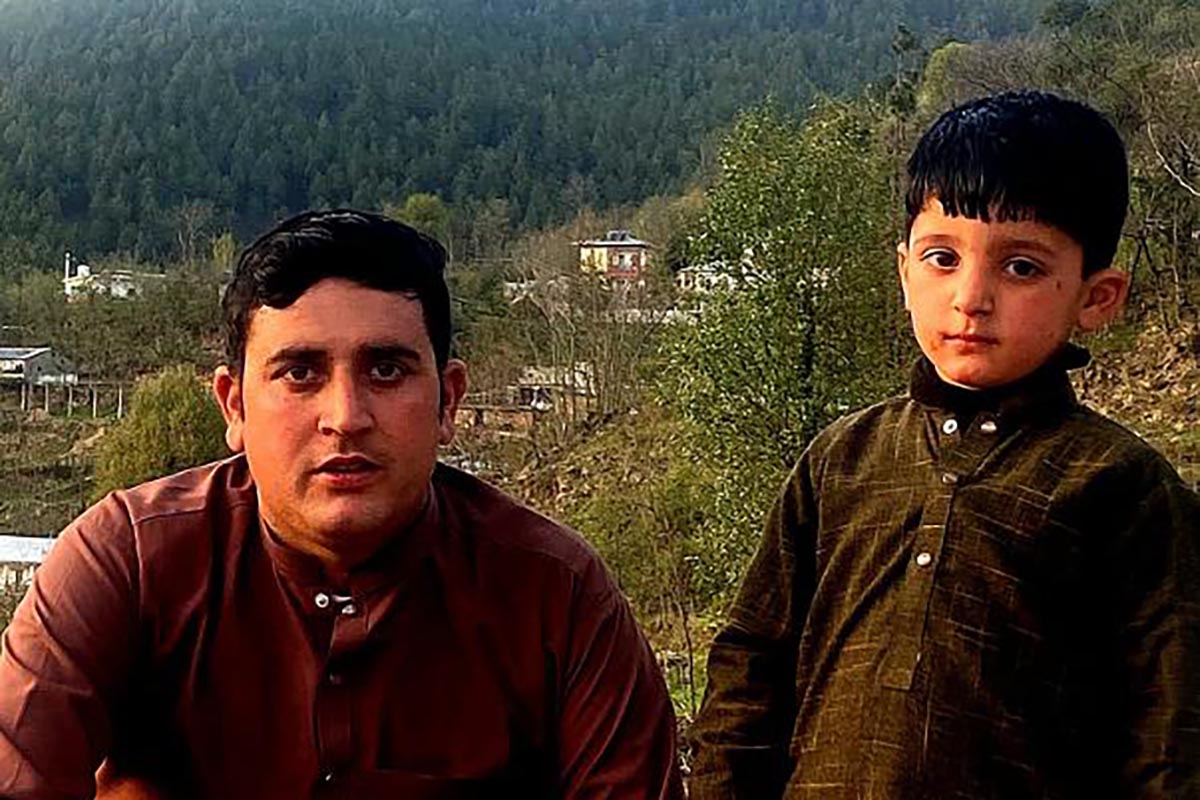
Abdul Ghaffar, a Pakistani expatriate working in Saudi Arabia, earns a substantial monthly income, but still struggles to meet the mounting costs of treatment and medicines for his eight-year-old son, Maaz, who has been battling Subacute Sclerosing Panencephalitis (SSPE) for the past two years.
SSPE is a progressive and almost universally fatal brain disorder that is a rare, delayed consequence of measles infection. Scientists estimate that 1 in 10,000 children who survive measles will contract SSPE several years later, but that rate rises to as high as 1 in 600 for children who contracted the initial measles infection when they were less than a year old.
Because it is a complication of measles, a vaccine-preventable disease, SSPE primarily affects children who were unvaccinated against measles or have not received all of the recommended doses.
Usually, between one and three years elapse between the onset of the first SSPE symptoms – which can be as difficult to pin down as behavioural changes, or altered performance in school – to death. Treatment helps manage the mounting neurological and physical symptoms, which include dementia, seizures and declining motor function. “Since late 2024, when Maaz was diagnosed with SSPE, I have spent almost 10 million rupees [about US$ 36,000] on his treatment,” Ghaffar told VaccinesWork.
To meet the rising costs, Ghaffar takes on extra work after completing his regular shifts. He also walks nearly seven kilometres to and from his workplace every day instead of taking a taxi, saving the fare for his son’s treatment.
Maaz, the eldest of his three children, holds a special place in his father’s heart.
“SSPE takes a devastating toll on patients and their families, leaving them physically, emotionally and financially drained,” said Ghaffar, who originally hails from Battagram district of Khyber Pakhtunkhwa.
SSPE parents unite to support one another
He’s seen that play out in other families, not just his own. During repeated visits to hospitals and doctors for his son’s treatment, Ghaffar met several parents facing the severe emotional distress and financial hardship, as that comes with having a child with SSPE. Their experiences left a lasting impression on him.
After discussions with several parents, Ghaffar and his fellow caregivers established a WhatsApp group called the “SSPE Foundation,” where families could exchange information about doctors, diagnostic tests, medicines, treatment options and supportive care, while also providing one another with emotional and financial support.
The group started with seven families in the first quarter of 2025, and, as of October 2026, has grown to include 123 members. Several neurologists have also volunteered to join the group, providing guidance to parents and helping raise awareness about SSPE and its management.
Asif, whose 10-year-old son Muhammad Younas has SSPE, joined the group on 1 October , 2026. He said he wanted to participate in discussions with other parents, explore treatment options for his son and benefit from initiatives organised by the group, including medical camps.
For Ghaffar, the group has proven a valuable source of practical information and emotional support. Without it, he said, the experience of caring for children with SSPE would likely feel intensely isolating.
Group helps family overcome treatment delay
Zaheer Abbasi, a driver from Haripur district, said the SSPE Foundation WhatsApp group helped his family after a delay in his daughter’s treatment.
“My eight-year-old daughter, Warisha, initially suffered because of our lack of information, resulting in a six-month delay in her proper treatment,” he said.
“Her diagnosis of SSPE came as a shock. What made it harder was that my wife and I knew very little about the complications, appropriate medical consultation and treatment,” he said.
Abbasi learned about the group from a doctor in Peshawar and immediately requested to join. “The group connected us with a relevant neurologist and guided us on caring for our daughter at home, including physiotherapy, proper feeding and a nutritious diet.”
Financial lifeline for cash-strapped parents
The chat group is also trying to arrange financial assistance for parents who cannot afford the treatment and medicines their children need.
A daily-wage worker who requested anonymity said he could not afford treatment for his nine-year-old son, who has SSPE. The father is suffering from severe sciatic pain and is unable to work regularly.
“Doctors have advised me to undergo spinal surgery, but I want to spend whatever I have on saving my son’s life,” he told VaccinesWork, holding back tears.
Fazal Subhan, an administrator of the group whose six-and-a-half-year-old son, Muhammad Abbas, has SSPE, said a widow from Nowshera district recently contacted the group for help.
“Her bedridden son had not received medication for four months, so we immediately arranged funds to help her resume his medication,” he said.
Subhan recently shared a video in the group showing a suction machine purchased by a father for his son, who died on 20 September 2026, before the equipment could be put to use. The father offered to sell the machine to a needy patient for 5,000 rupees below its market price.
“Suction machines and nebulisers are important supportive equipment for SSPE patients, helping manage respiratory difficulties and maintain airflow,” Subhan told VaccinesWork.
However, most families cannot afford such equipment and have to take their children to hospitals or other health facilities when their condition deteriorates. This is particularly difficult for families caring for bedridden and severely ill children.
Farid Khan, a resident of Bannu district in Khyber Pakhtunkhwa, posted a message in SSPE Foundation group on 3 October 2026, offering a pack of the drug Imunovir, containing 100 tablets, at a discounted price. The medicine is an antiviral and immunostimulant.
His ten-year-old son, Baitullah, who was diagnosed with SSPE on 7 September, died on September 30. Farid had imported the medicine from Dubai at a cost of 26,000 rupees (US$ 93.8) and offered it at a reduced price to another family rather than letting it go to waste.
SSPE Foundation administrators purchased the medicine for distribution to deserving patients, Subhan told VaccinesWork.
‘Protect your children,’ say parents of SSPE patients
Ten-year-old Muhammad Rehan has been battling SSPE for three years now. Speaking to VaccinesWork, his mother, Mrs Fahad, made an urgent appeal to other parents to take childhood vaccination seriously.
Rehan was a bright boy, she said, who had memorised the Holy Quran by age seven. He is now bedridden, and deteriorating.
The family’s efforts to save Rehan have cost them their plot of land, which they have had to sell. Her husband, who used to have six rickshaws that he rented out to rickshaw drivers, now has just one, which he drives himself. She urged other families to learn from the hardships suffered by her own.
Brick-kiln labourer Saeed Ahmad’s four-year-old son Arman Khan has SSPE. Ahmad acknowledges that while his child had received some of his childhood vaccines, he had not received every dose recommended by the health system. “My family, especially wife, are passing through severe mental stress due to the illness of Arman,” he said. “Parents are requested to give vaccination due consideration, to avoid such illnesses.”
Free medical camps
One of the group’s notable achievements has been organising free medical camps for children with SSPE.
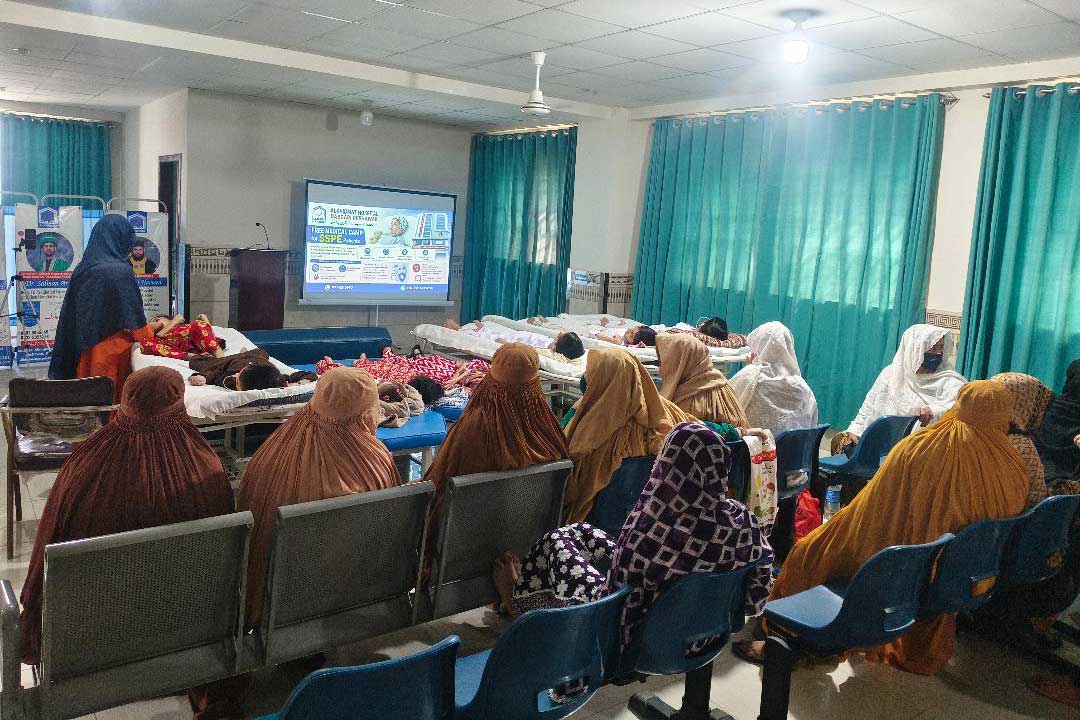
With support from a Pakistani donor based in Dubai and the humanitarian organisation Al-Khidmat Foundation, a camp was held in Peshawar on 6 September 2026.
Around 35 patients received medical check-ups, diagnostic tests, supportive therapies and a three-month supply of medicines. Each parent was also provided 5,000 rupees (about US$ 18) to cover transportation expenses.
A second camp was held on September 24 for around 20 remaining patients. Parents travelled with their children from different districts to Peshawar for medical check-ups and to receive a three-month supply of medicines free of charge.
Ghaffar said more than 10 million rupees had been spent on organising the medical camps, providing free medicines and covering transportation expenses.
Have you read?
Parents’ chat group is a resource for SSPE research
As the SSPE Foundation continues to grow, the information and experiences shared by parents are creating a valuable pool of real-world information about the disease, its symptoms, treatment patterns and the challenges faced by affected families, said Dr Amir Muhammad, Chairman Paediatric Ward at Lady Reading Hospital Peshawar and a volunteer member of the SSPE Foundation.
Parents regularly share information about their children’s age, disease progression, medicines, diagnostic tests, supportive therapies and treatment costs, providing insights into the experiences of families dealing with SSPE.
Muhammad said the SSPE Foundation, which connects the parents of more than 100 patients, could prove valuable to researchers. He said one important question requiring scientific investigation was why some children whose parents reported that they had been vaccinated against measles were nevertheless developing SSPE.
“This issue needs to be investigated scientifically to determine the possible reasons behind such cases,” he said.
Two doses of the measles vaccine are 97% protective against infection. Dr Athar Khalili, Paediatric Neurologist and General Secretary of the Khyber Pakhtunkhwa chapter of the Pakistan Paediatric Association (PPA), theorised that some children with SSPE may have received only one dose and missed their booster dose. In cases where a child has received both the doses, he said there is a need to check the efficacy of the vaccine, investigate whether it had been properly temperature maintained throughout storage and transport.
Survey, financial support needed for SSPE families
Dr Abdul Hameed, a children’s specialist at Al-Khidmat Hospital and a volunteer member of the SSPE Foundation, called for a comprehensive survey of SSPE patients to assess the disease burden and better understand risk factors.
He also urged the government to extend financial assistance to families caring for children with SSPE, particularly to help them meet the additional costs associated with the ketogenic diet that is recommended as part of supportive care.
Similarly, he suggested providing battery-powered wheelchairs to children with SSPE, enabling parents to move their bedridden children more easily and take them outdoors for fresh air and recreation.