
Moving beyond coverage estimates: using Lot Quality Assurance Sampling in zero-dose programming
Average vaccination coverage figures can mask deep inequalities at subdistrict levels – explore the new Zero-Dose Learning Hub's Lot Quality Insurance Sampling toolkit built for decentralised decision-making.
- 25 June 2026
- 5 min read
- by JSI
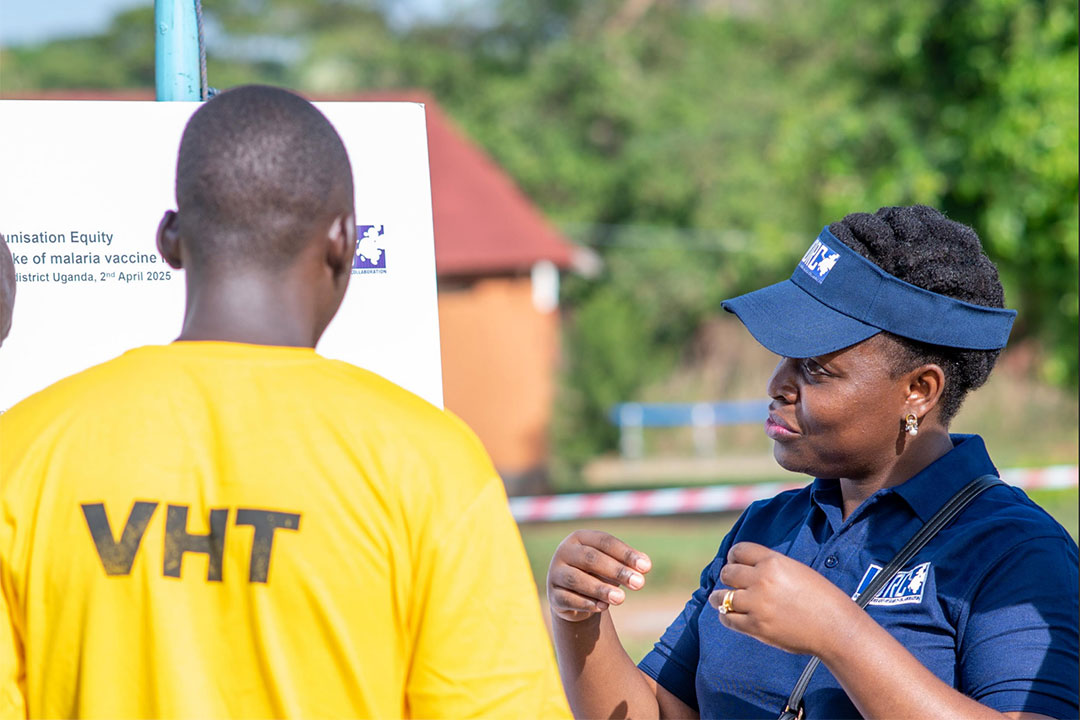
In immunisation programmes, national and district estimates of coverage are often used to track progress. But those averages can conceal the variation at subdistrict levels where children are still being missed, often in the same communities. For programme managers working to identify and reach zero-dose and under-immunised children, the more useful question is not only “What is coverage?” but “Where is coverage failing?” Lot Quality Assurance Sampling (LQAS) is designed to answer that second question.
What LQAS is designed to do
LQAS is a classification-based survey method that uses probability sampling and predefined decision rules to assess whether vaccination coverage in a specific area meets a target. It is intentionally built for use at decentralised levels of the health system – districts, subdistricts and health facility catchment areas – where programme decisions are made.
Rather than producing precise coverage estimates for each small area, LQAS classifies each supervision area (or “lot”) as either meeting the target or falling below it. This distinction is central. LQAS is not designed to provide small-area estimates at the local level. It is designed to support clear, timely decisions about where performance is acceptable and where corrective action is needed.
However, if programme managers also need to measure coverage at the aggregate level (e.g. district, region or province), data from the relevant supervision areas can be combined and weighted to produce a coverage estimate with a 95% confidence interval (CI).
What LQAS is not
LQAS is frequently misunderstood, particularly by those more familiar with large-scale survey methods. It is not a replacement for cluster surveys or national surveys, which are designed to produce statistically precise coverage estimates across large populations.
Nor is it equivalent to methods such as cluster-LQAS (C-LQAS) or rapid convenience sampling (RCS), which use different sampling approaches and serve different purposes. Most importantly, LQAS is not intended to estimate coverage within small areas. Sample sizes at the supervision area level are deliberately small, meaning results are used to classify performance rather than calculate precise estimates. In practice, this means LQAS answers a different kind of question: not “What is the exact coverage?” but “Is this area performing at an acceptable level?”
Why LQAS matters for zero-dose programmes
Zero-dose and under-immunised children are not evenly distributed. They tend to cluster in specific locations that are shaped by local barriers to access, service delivery challenges and social dynamics. LQAS is designed to detect these patterns by generating information at the level where services are delivered.
By classifying performance across supervision areas, it allows programme managers to identify where coverage is likely insufficient and where children are most at risk of being missed. In the context of immunisation, this is particularly relevant for indicators such as DTP1 and DTP3 coverage. Areas that fail to meet these thresholds are more likely to have higher proportions of zero-dose or under-immunised children, providing a practical basis for prioritising action. The result is not just better measurement, but more targeted and efficient use of resources.
How LQAS works in practice
At its core, LQAS relies on small, probability-based samples within defined supervision areas. Each area is assessed against two thresholds: a target level of performance and a lower threshold that signals unacceptably low coverage.
Using a statistically defined decision rule, each supervision area is then classified as either acceptable or unacceptable. This allows programme managers to quickly identify which areas are meeting expectations and which require immediate attention. Although LQAS does not provide precise estimates at the local level, results from multiple supervision areas can be combined and weighted to generate a statistically precise coverage estimate with a 95% CI for a larger catchment area. This dual function – local classification and aggregate estimation – makes LQAS particularly useful for programme management.
Have you read?
In Nigeria, LQAS was applied through a decentralised immunisation monitoring (DIM) approach across local government areas, where each ward was treated as a supervision area. Using small, probability-based samples, programme teams classified wards against vaccination coverage targets and identified those that were not meeting expected performance. This allowed programme managers to move beyond district-level averages and pinpoint specific wards requiring intensified outreach and support, particularly those likely to have higher concentrations of zero-dose and under-immunised children.
What the ZDLH LQAS toolkit provides
While LQAS has been used in public health for decades, a persistent challenge has been translating the method into practical application for immunisation programmes. The ZDLH toolkit, Using LQAS to Monitor and Measure Vaccination Programs, was developed to address this gap by providing operational guidance for planning and implementing LQAS surveys in real-world settings. It walks users through key steps, including defining supervision areas, selecting thresholds and decision rules, designing sampling approaches, and managing data collection and analysis.
The toolkit is intended for programme managers and monitoring and evaluation specialists, and is designed to support informed, strategic decision-making to improve vaccination coverage. It also includes tools, templates and examples to support implementation.
From measurement to action
In immunisation programmes, the value of data lies in how it is used. LQAS is designed to produce timely, actionable information that reflects performance at the level where services are delivered. It enables programme managers to move beyond aggregate coverage and focus on specific sub-areas where systems are not working as intended.
For zero-dose programming, this is essential. Reaching missed children requires more than knowing overall coverage, it requires identifying where gaps persist and responding accordingly. The ZDLH LQAS Toolkit provides practical guidance for using LQAS to monitor and manage immunisation programmes, with a focus on improving decision-making at decentralised levels. Explore the toolkit and related resources on the ZDLH website to see how LQAS can support more targeted, actionable approaches to identifying and reaching zero-dose and under-immunised children.