
From country needs to global tools: lessons from the Zero-Dose Learning Hub
Zero-dose and under-immunised communities are not uniform. Effective support cannot be, either.
- 2 July 2026
- 5 min read
- by JSI
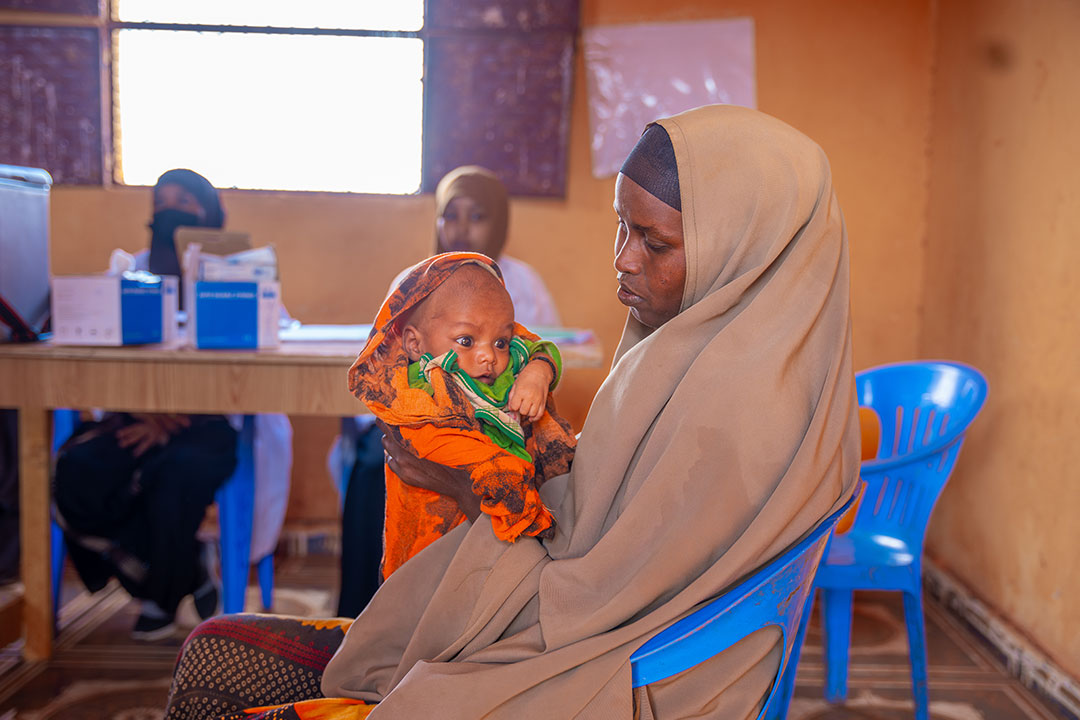
Reaching zero-dose children requires technical support that adapts to local constraints. Yet global assistance is often designed as a uniform package applied everywhere. Barriers differ across contexts, yet technical assistance is still frequently designed with one-size-fits-all solutions.
The Zero-Dose Learning Hub (ZDLH) (2022–2026) offered a different model. Technical assistance was treated as a bottom-up, demand-driven partnership designed to adapt to context and move evidence into action. As the global learning partner for the Gavi-funded ZDLH, JSI worked alongside Country Learning Hubs in Bangladesh, Mali, Nigeria and Uganda to strengthen implementation research and knowledge translation. Recurring needs at country level exposed gaps in global guidance, driving the development of a suite of tools and resources that will remain useful long after the project ends.
Tailored support for country-led learning: JSI’s technical assistance approach
Zero-dose realities aren’t standardised – technical assistance shouldn’t be either.
JSI’s technical assistance throughout ZDLH was designed to be responsive and adaptable, not standardised.
We worked as thought partners alongside the four Learning Hub teams – identifying the bottlenecks preventing evidence from translating into decisions, and the moments when programmes needed support to move from learning to action.
When a gap surfaced in one country, we supported that team directly. When it repeated across settings, it signalled a broader need. That is how ZDLH technical assistance evolved into tool development as a response to persistent, real-world constraints. These were not isolated issues. They were global gaps in how we evaluate zero-dose strategies, estimate costs, monitor performance at decentralised levels and translate evidence into use.
When standard evaluation methods weren’t fit for purpose: the theory-based evaluation toolkit
In zero-dose programming, a theory of change isn’t something you design once. It’s something you test, strengthen, and revise as implementation unfolds.
Across the four Learning Hubs, teams were asked questions that conventional evaluation methods often struggle to answer: why did an approach work here but not there? Which conditions enabled success? What did not work along the intervention pathway?
Have you read?
These are the insights teams need not only to learn after the fact, but to adapt strategies while they are being delivered. JSI developed the Theory-Based Evaluation Toolkit to help teams strengthen causal logic, make assumptions explicit and generate credible learning in complex environments – especially where experimental designs are not feasible. The goal is to support better programme design, sharper course correction and more confident decisions about what to sustain or scale.
When budgeting assumptions didn’t match operational reality: the costing toolkit
Costing is often overlooked. In zero-dose immunisation programmes, it cannot be.
A common question across the Learning Hubs was to understand what it actually costs to reach children who are consistently missed by routine vaccination services.
Programmes are expected to scale what works, but costs vary dramatically across subnational geography and delivery models. The global evidence base has not kept pace. ZDLH conducted a scoping review and found that there are few costing studies focused on zero-dose interventions, and many do not clearly report their costing methods, making findings difficult to interpret, compare or replicate.
That methods gap led to development of the ZDLH Costing Toolkit, designed to replace vague assumptions with practical, transparent approaches tailored to zero-dose implementation research. The toolkit recommends measuring incremental retrospective costs using a bottom-up, ingredients-based approach so teams can identify what drives costs, potential efficiencies, and where underfunding risks failure.
Uncovering subnational variation in coverage: the LQAS toolkit
Average coverage can mask local gaps. LQAS helps teams see where coverage is falling below target.
Because zero-dose children tend to cluster in specific pockets, the Learning Hub teams needed routine monitoring tools that provided sufficient granularity at the local level where planning happens.
Lot Quality Assurance Sampling (LQAS) offers a rapid way to generate reliable, decentralised performance data.
Because operational guidance was lacking for using LQAS for immunisation monitoring, JSI developed the ZDLH LQAS Toolkit, Using LQAS to Monitor and Measure Vaccination Programs, to fill this gap. The toolkit provides practical examples, templates, decision rules, and step-by-step guidance that supports LQAS decentralised monitoring under real constraints. This toolkit gives teams the tools they need to map localised performance gaps and ensure resources are directed to the areas that need them most.
Bridging the gap: knowledge translation tools that move evidence into use
Evidence does not change outcomes on its own. People do.
Knowledge translation is not an end-of-study step. It is the connective tissue between learning and action. The Knowledge Translation Toolkit, paired with guidance on measuring KT efforts, supports teams to plan stakeholder engagement, tailor messages to decision-makers and track progress across the KT pathway – from dissemination and transmission to acquisition, application and impact.
These tools are designed to prevent a common failure point in global health: strong findings that end at dissemination, rather than shaping planning, resourcing, implementation adjustments and accountability.
Carrying the learning forward
As the Zero-Dose Learning Hub concludes, the most important legacy is the learning left behind and a set of usable resources shaped by real country needs.
These toolkits were developed to strengthen the Learning Hubs, but the gaps they address extend far beyond four countries. Demand-driven technical assistance revealed where guidance fell short. Co-creation turned those gaps into practical tools. Knowledge translation ensured the focus remained on uptake, not output.
Explore the ZDLH toolkits and other technical resources on the Zero-Dose Learning Hub website.