
In Benin, Miss Espoir sings against polio
As health teams prepare to launch a new polio campaign, survivor and songstress Miss Espoir takes up the microphone.
- 8 June 2026
- 8 min read
- by Edna Fleure

At a glance
- Pop singer and polio campaigner Miss Espoir says she has three “arguments”: her voice, her body and her scars. She’s a polio survivor herself, and her push for prevention lands differently for that reason.
- Environmental samples show the paralysing virus is still circulating in Benin: the risk is still present.
- ”This vaccine is a chance for our children,” she tells audiences and passers-by on market days, when she joins health workers in support of the latest immunisation drive. “I go home with a sense of pride,” she says.
She stands before the crowd on legs weakened by the polio she contracted at five years old. The audience is lively, already drawn in. Then she begins to sing.
Her song, “Vilaine Polio”, was written for moments like this: to make vaccination feel close, concrete, memorable. Not a medical instruction, but a refrain people can take home with them.
At one point, she stops. The applause fades. For a few seconds, the performance gives way to testimony.
“I am living proof that parents should not turn away from the polio vaccine,” she tells the crowd. “This vaccine is a chance for our children.”
The words land differently because they come from her. Miss Espoir is not speaking about polio as an abstract threat. She is speaking from a life shaped by it.
A childhood marked by disease
Miss Espoir was born in Porto-Novo, into a family with little money. In the early 1980s, the polio vaccine was not free. Parents had to pay. For families like hers, that put it out of reach.
She contracted polio as a child. More than 40 years later, her body still bears the consequences.
“It has never been easy for me,” she says. “I had a difficult childhood because of my disability. I faced rejection and discrimination. No one wanted to play with me. It was as if the disease had marked me forever. Even today, although I try to put things in perspective, I will never forget that my life could have been different if the vaccine had been free.”
Miss Espoir later became an artist, and over time, turned that painful history into a public voice. For years, she has joined vaccination campaigns across Benin, especially those focused on polio.
“I want parents to play their part in protecting their children. And that means vaccination. For me, polio vaccination is a priority,” she says.
A threat many believed had disappeared
For many parents in Benin, polio feels like a disease from the past. Some look at Miss Espoir and see a survivor from another time.
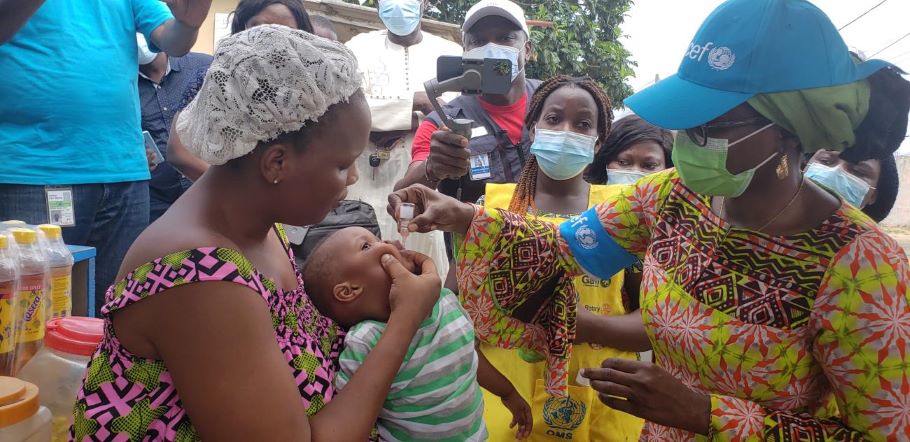
But polio has not gone away. In October 2025, type 2 variant poliovirus was detected three times in Donga, a department bordering Togo.
Credit: Ministry of Health
“The virus is circulating, even in places where no clinical cases have yet been reported,” says epidemiologist Karl Houenou.
That makes Miss Espoir’s story more than a painful memory. It is a warning. When she says, “I could have been vaccinated,” she is also speaking to parents today: telling them their children can be protected now, and at no cost.
That is the change she keeps returning to. “Today, the polio vaccine is free in Benin. Money is no longer a reason not to vaccinate. What remains are fears. What remains are rumours,” she says.
Rebuilding trust in the face of rumours
MissEspoir knows those fears well. Since she began campaigning against polio, she has sometimes arrived at homes where parents would not even open the door.
“Some are afraid of side-effects. Others have heard rumours that the vaccine causes infertility, that it contains forbidden substances, or that it is part of a foreign plot. And some have simply lost trust in institutions,” she says.
In Ouaké, in northern Benin, Fatimatou, the mother of a 14-month-old boy, had stopped taking her son for vaccination. After one earlier dose, his foot became swollen, and she was frightened. It took repeated conversations with health workers for her to change her mind.
“I used to take my child to be vaccinated. But after that incident, I stopped. Now I have started again, and I am happy I did,” she says.
She is not alone. In 2022, a polio vaccination campaign was suspended as a precaution after reports of adverse events following immunisation. Campaign monitoring data recorded 10,089 refusals, at a time when concerns about side effects were high and rumours were spreading widely.
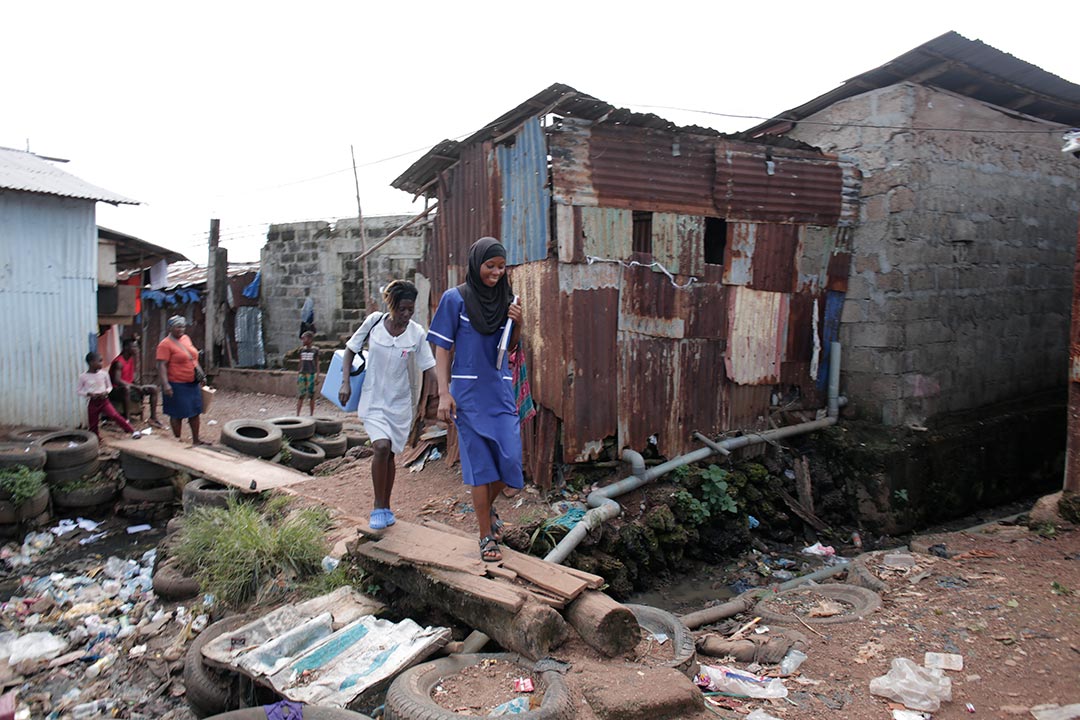
The effects are still being felt. On social media, rumours continue to circulate. In some families, fears about side effects remain strong. In others, vaccination decisions are made without discussion. For community health workers, this makes persuasion slow, patient work.
This is where Miss Espoir’s presence matters.
In the markets, a message spreads
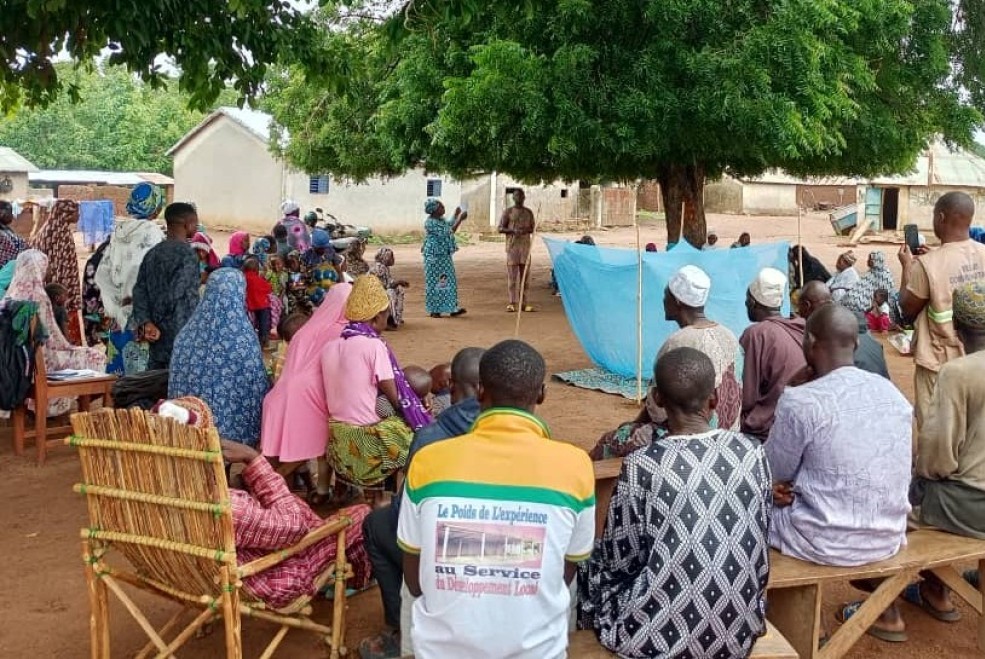
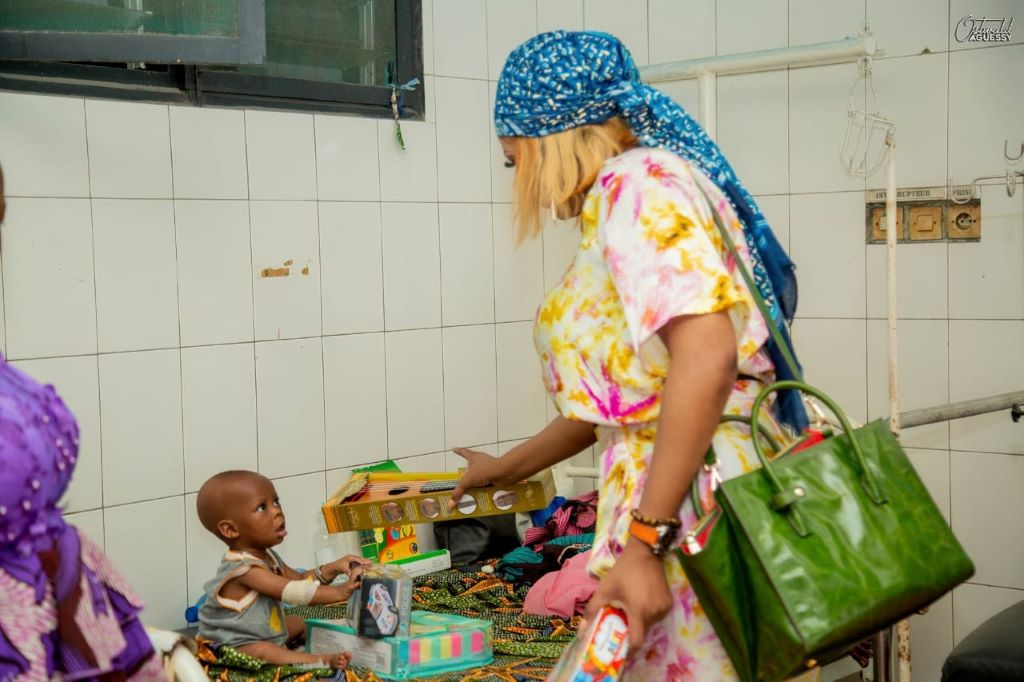
During the 24–27 April campaign, Miss Espoir spent much of her time speaking to women in the markets. A message shared there, she says, does not stay in one place for long.
At Saint-Michel market in Cotonou, many women already know her. Some first thought she was a health worker, before later seeing her on television and realising she was a singer.
“I have seen her come here for more than ten years to talk to us about the polio vaccine,” says one woman who regularly shops at the market. “It is thanks to Miss Espoir that I found the words to convince my husband. He refuses all vaccines. I think it is a good thing that she uses her own story for this cause.”
That trust took time.
Read more about polio
“Today, people welcome me with laughter and applause. But at the beginning, it was difficult. The mothers did not want to listen. Little by little, trust grew, especially after my song celebrating mothers and the sacrifices they make,” Miss Espoir recalls.
Credit : Edna Fleure
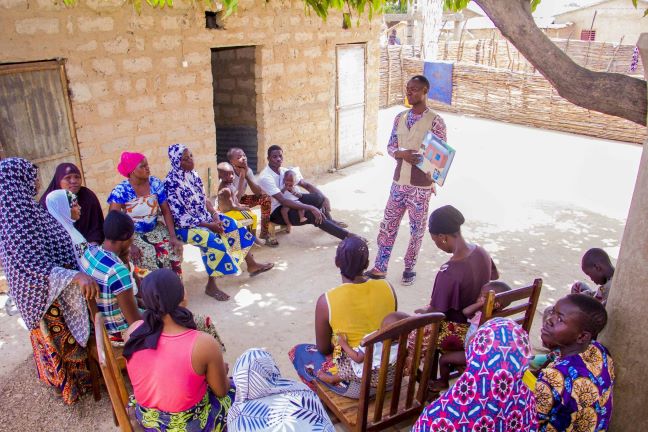
Her work takes different forms: conversations in local languages, songs at official campaign launches and exchanges with the community workers who go from house to house. She works alongside the structures set up by the government, WHO and UNICEF, adding the force of her own story to the wider mobilisation effort.
“When I knock on doors, my arguments are my body, my voice and my scar,” she says. “When mothers look at me, they see a woman who almost died, who survived and who is telling them: vaccinate your children.”
More than 2.5 million children targeted
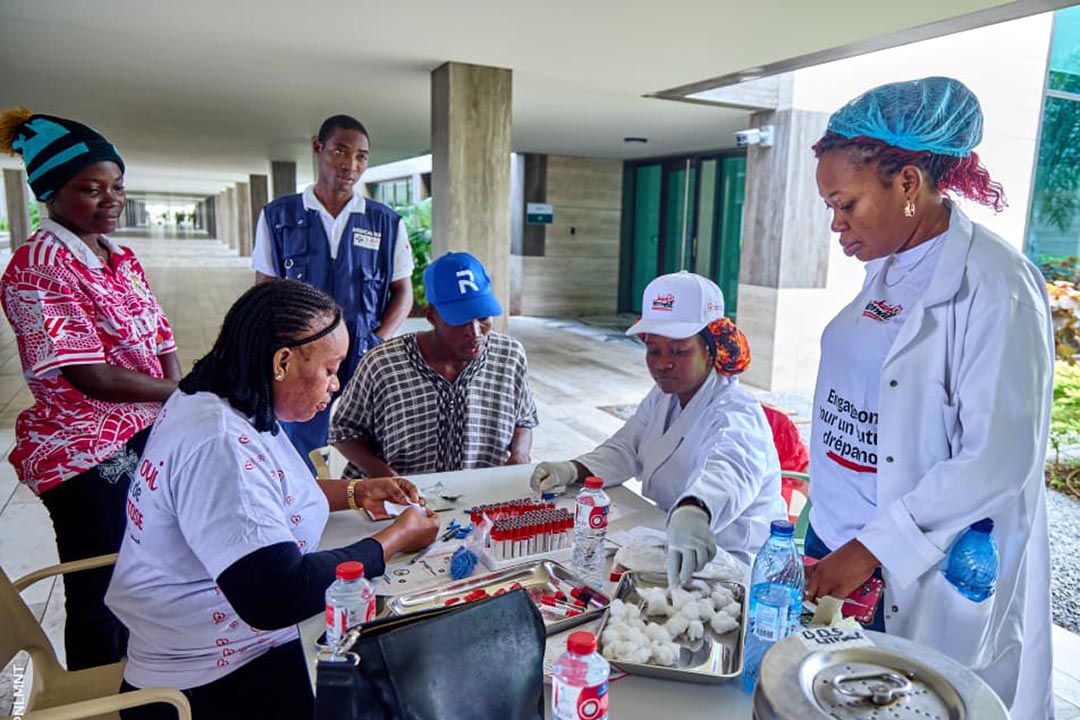
For this first response round, health authorities targeted 2,516,862 children under the age of five across six departments: Alibori, Atacora, Borgou, Donga, Collines and Plateau. More than 2.8 million doses of oral polio vaccine were sent into the field.
The target was at least 95% coverage. Below that level, poliovirus can still find unprotected children and keep spreading.
Reaching that figure depends not only on vaccine supply, but on the people who can get families to open their doors. Miss Espoir is one of them – not as a health worker in uniform, but as an artist people recognise and trust.
“Having a well-known and much-loved artist like her with us is a real asset. She knows how to speak to parents,” says Raimath Sodji, a vaccinator in Porto-Novo.
According to administrative data from the Ministry of Health cited by WHO, more than 2.485 million children had been vaccinated by the end of the campaign.
Behind that number are vaccine doses, field teams, doors opened after hesitation, long conversations and parents who had to be persuaded without being pressured.
“Polio will not have the last word”
At the end of the campaign, Miss Espoir will return home unchanged. Her own scars remain. But other children will have received protection she never had.
That is how she measures her work: by what she can help prevent for others.
“I go home with a sense of pride. This time, nasty polio will not have the last word. I will continue to fight with the weapons I have: my body and my voice,” she says.