
Bringing the hospital to the community in rural Malawi
For parents in Nsanje who are short on both time and money, the 16-kilometre walk to the clinic may as well be an odyssey. But now, a fortnightly mobile outreach clinic is making sure basic care is no longer out of reach.
- 10 April 2026
- 5 min read
- by Josephine Chinele
At a glance
- Mothers in riverine East Bank, in Malawi’s Nsanje border district, used to face a 16-kilometre walk to the clinic – a prohibitive distance for some.
- Since 2024, however, a fortnightly mobile health clinic has been bringing health facility services right into the community.
- Not only are more children being immunised as a result, but health workers at the nearest facility say the outreaches have meant their wards are less congested than previously.
For mothers in East Bank, a locality in Malawi’s Nsanje district, the cost of a vaccine used to be either a 16-kilometre walk or 10,000 kwacha (US$ 6) for the bicycle-taxi fare: a price steep enough to bar some children from accessing basic healthcare.
That changed in 2024, with the inauguration of fortnightly mobile outreach clinics at the Takondwa Community-Based Child Care Centre in Nsanje, and three other similarly hard-to-reach locations in the district.
“The long walk is finally over. We are saving both time and money. The savings are now used to buy food for my children,” says Estelle Matiki of Malota village, Traditional Authority Mlolo in Nsanje district.
Matiki first became a mother 23 years ago, and recalls regularly making the long, rocky hike to Sankhulani Health Centre. She was young, and either pregnant or carrying a newborn on her hip, and the weather was awful.
“I had no choice but to ensure a safe pregnancy and have my son immunised,” she tells. But not anymore: “Months ago, I was confident to remove an implant contraceptive to conceive. The doorstep clinic is enough assurance of accessible medical care.”
Bridging the distance
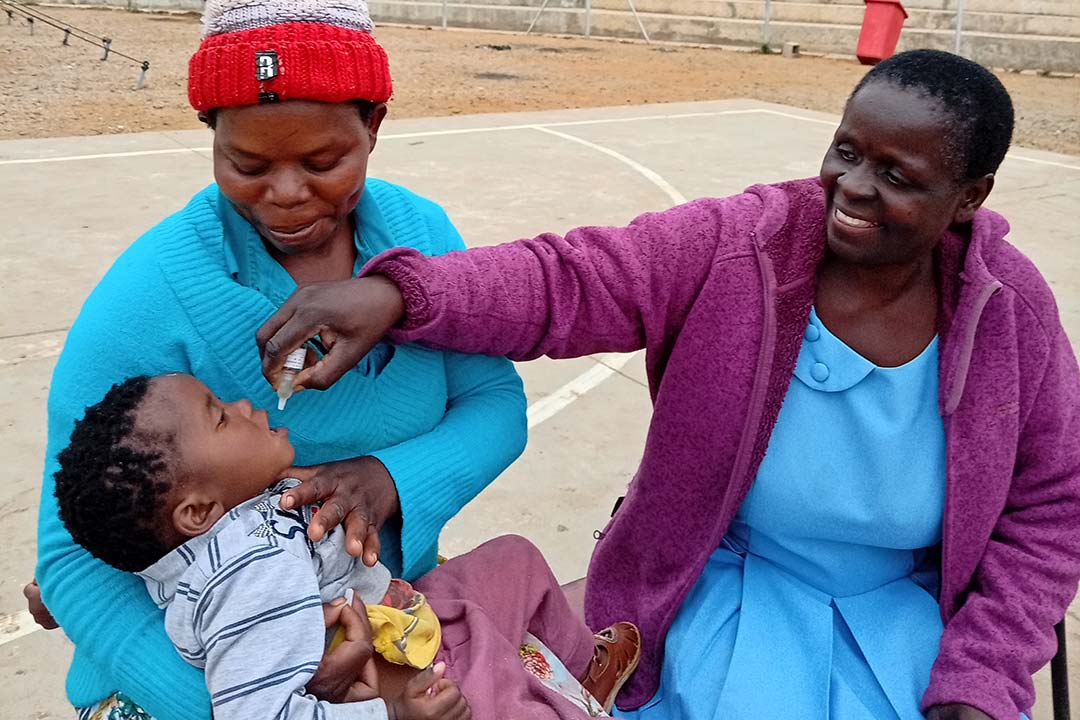
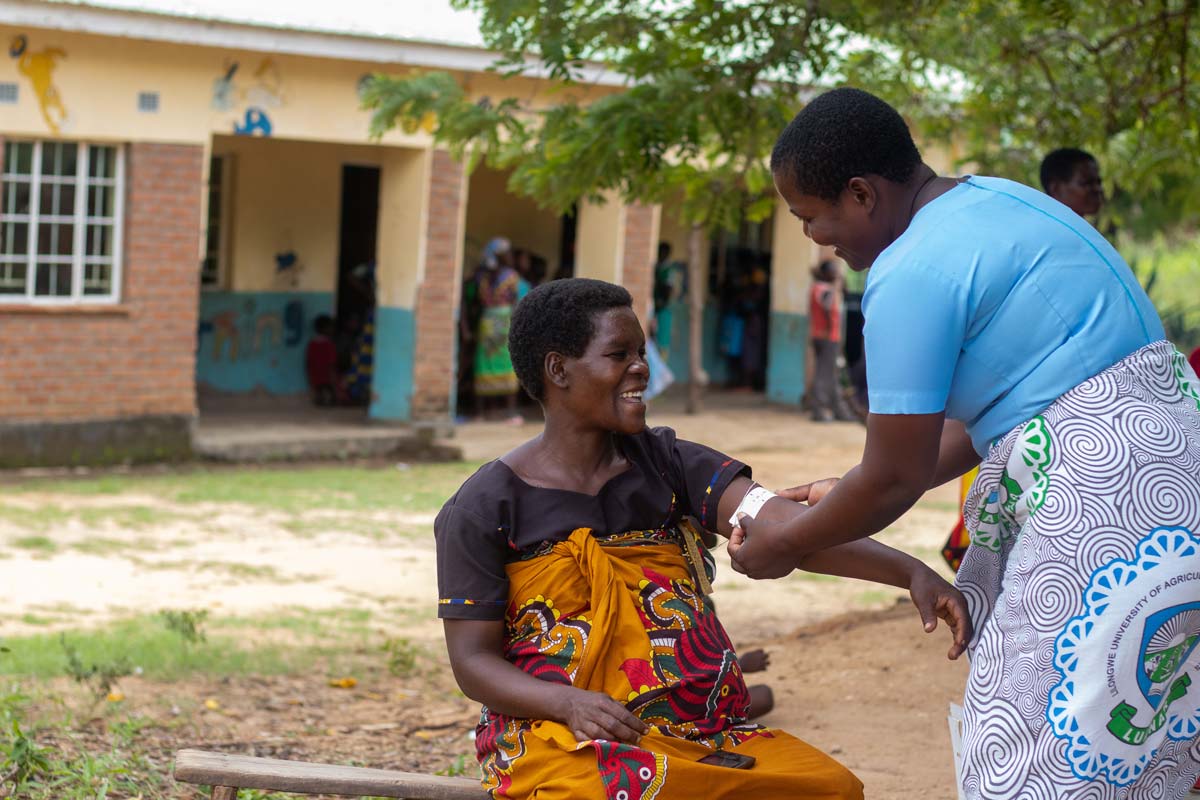
The aim of the UNICEF-supported outreach clinics is to bring the hospital to the patients, reducing the commute to a mere 200-metre walk for mothers in East Bank.
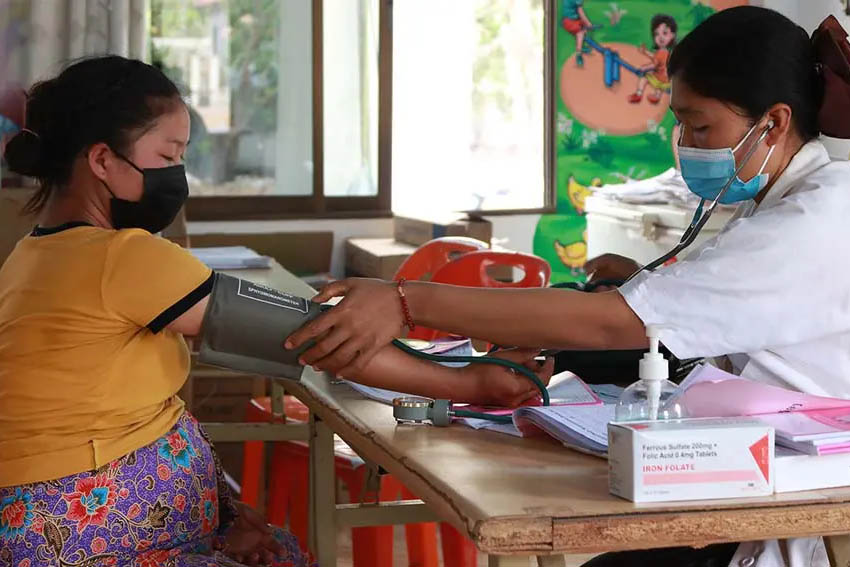
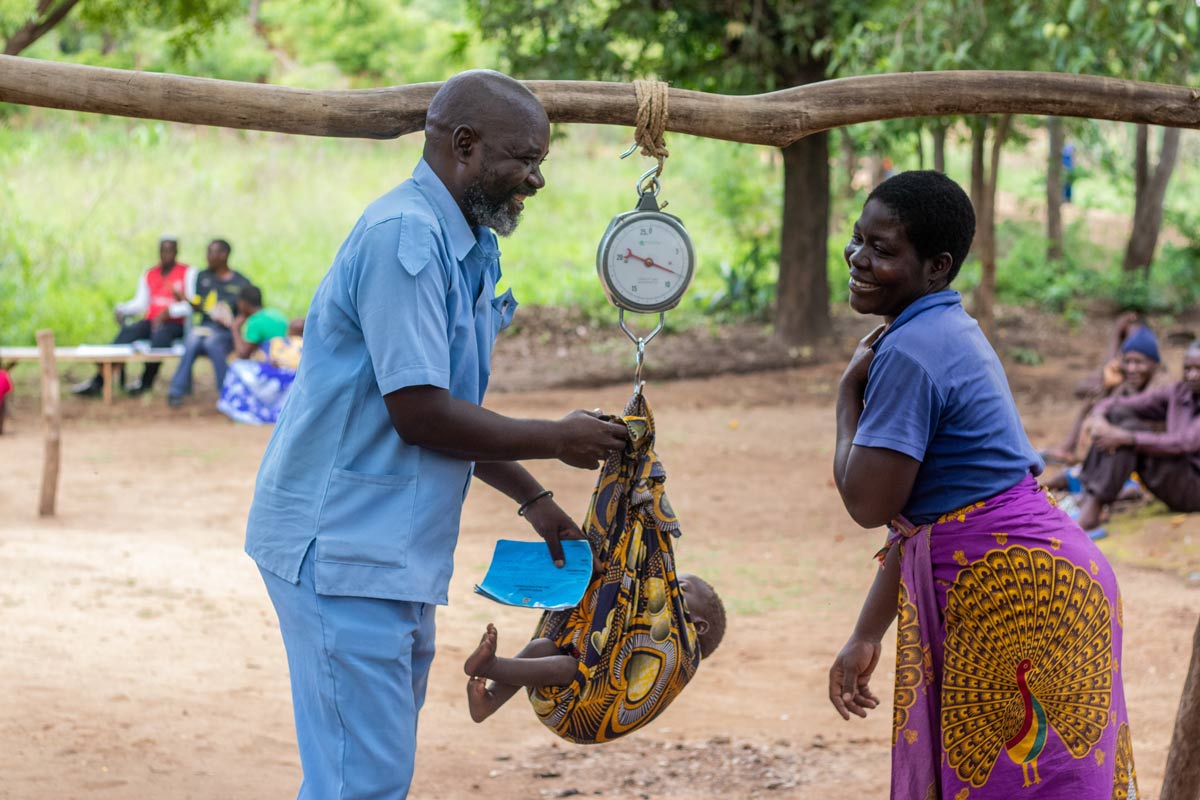
The clinics offer antenatal care, routine immunisation, nutrition check-ups and growth monitoring, HIV testing and counselling, as well as non-communicable disease screening. Health workers staffing the clinics say they have also successfully identified and vaccinated previously unimmunised children in the community during the outreaches.
According to 2024 statistics, some 6% of Malawi’s children are still living without the important immune protection they need to survive preventable diseases. Those children are likely to be disproportionately concentrated in areas like East Bank, in disaster-prone districts like Nsanje, where communities are cut off by flooding or broken roads, or simply isolated by long distances to the health facility.
Local mother Berthia Joseph knows that that comes with serious risks, and is all smiles to have protected her six-week-old baby with the basic five-in-one pentavalent vaccine, as well as with a dose of oral polio vaccine, pneumococcal conjugate (PCV) and rotavirus vaccines during the outreach clinic. “I found seven mothers who also came for routine under-five immunisations in front of me. In no time, it was my turn to have my baby immunised,” she said.
Unlike Matiki, Joseph delivered her baby at Holy Trinity Hospital, about an hour’s drive from Sankhulani Health Centre, after being referred there due to complications during pregnancy. But while facility births are generally better correlated with vaccination than home births, Joseph says the distance from her home to the clinic had sown doubts.
“In my mind, I was already hesitating to have my child vaccinated, until a Health Surveillance Assistant (HSA) for this area visited and informed me about this outreach clinic,” she says.
“Relief” for local health workers
Local HSA Luckwell Chilongo says the integrated outreach clinics have relieved him from the pain of witnessing preventable deaths. “I have experienced a lot of frustrations in line of duty. Many children from this area were unvaccinated, women miscarried for unknown and undiagnosed reasons and in worst cases, deaths occurred,” recalls Chilongo, who has worked in the area for 16 years.
In certain respects, the job is easier now than when he started. “This is a portable tablet, it has data for expectant women and vaccine eligible children,” Chilongo says, brandishing the device. In 2023, 8 of the 12 HSAs under Sankhulani Health Centre were allocated the tablets and solar-charging kits under a programme called Integrated Community Health Information System (iCHIS), run by Last Mile Health. They’re outfitted with Geographic Information System-equipped technology, to make tracking the children in a given HAS’s care easier.
“We continue to tick the register when they come for immunisations. When I notice that a child has missed a vaccination, I follow up on them,” Chilongo says.
Decongesting wards
The mobile outreach clinics are having an impact beyond the villages they serve. Vanessa Thom, a Nurse and Midwife Technician at Sankhulani Health Centre, says she’s seen a change in health outcomes at the facility too. “Before this initiative, women delivered unsafely at home, or on their way to the hospital,” she says, adding that the wards used to receive many more unvaccinated or malnourished children for treatment.
The outreach clinics have aided in decongesting the main health centre, since an average of 150 patients per clinic looked after closer to home. “Through these clinics, I’m glad I’m not overwhelmed to deal with severe illnesses, as patients are managed timely and within their community vicinity,” Thom says.
As an expression of gratitude, the community “spoils” their health workers, taking turns to cook up treats for them.
“We are pleased that the community values our work. These clinics have strengthened our relationship with communities,” says Mike Sikweya, Senior Medical Assistant at Sankhulani Health Centre.
Have you read?
Healthcare around the corner
Nsanje District Hospital’s Chief Health Prevention Officer Fred Munyaliwa says the outreach clinics are having an impact at the statistical level too.
“We identified outreach clinics as a plan to reach areas with limited access to services. Since their introduction, we have increased vaccine coverage from 90–95%,” he reveals.
“Nsanje’s status as a disaster-prone district has led to an increase in zero-dose children and immunisation defaulters. Outreach clinics are now working to close this gap,” he says.
For mothers like Matiki, the days of choosing between a 16- kilometre walk and their child’s health are finally over. What was once a day-long struggle is now a simple walk around the corner. By bringing the hospital to the village, these clinics are doing more than just treating patients: they are building a future where no child is left behind and where life-saving care is a right, not a luxury.