
Extreme heat in India is threatening frontline health workers and vaccination coverage
Battling extreme heat and a lack of facilities, Indian frontline health workers are increasingly risking their own health to get the job done.
- 22 June 2026
- 7 min read
- by Shuriah Niazi
At a glance
- With spring and summer temperatures regularly tipping 45° Celsius, grassroots health workers in India, who spend most of the day outside caring for their communities, are feeling the heat.
- Auxiliary Nurse Midwife Pooja Sahu from Shamshabad in Madhya Pradesh recently suffered heat stroke: “I started vomiting so violently that I had to stop my vaccination work and get an IV drip,” she says.
- Families are also less likely to brave the walk to vaccination clinics in extreme heat, threatening vaccination coverage during the hottest months.
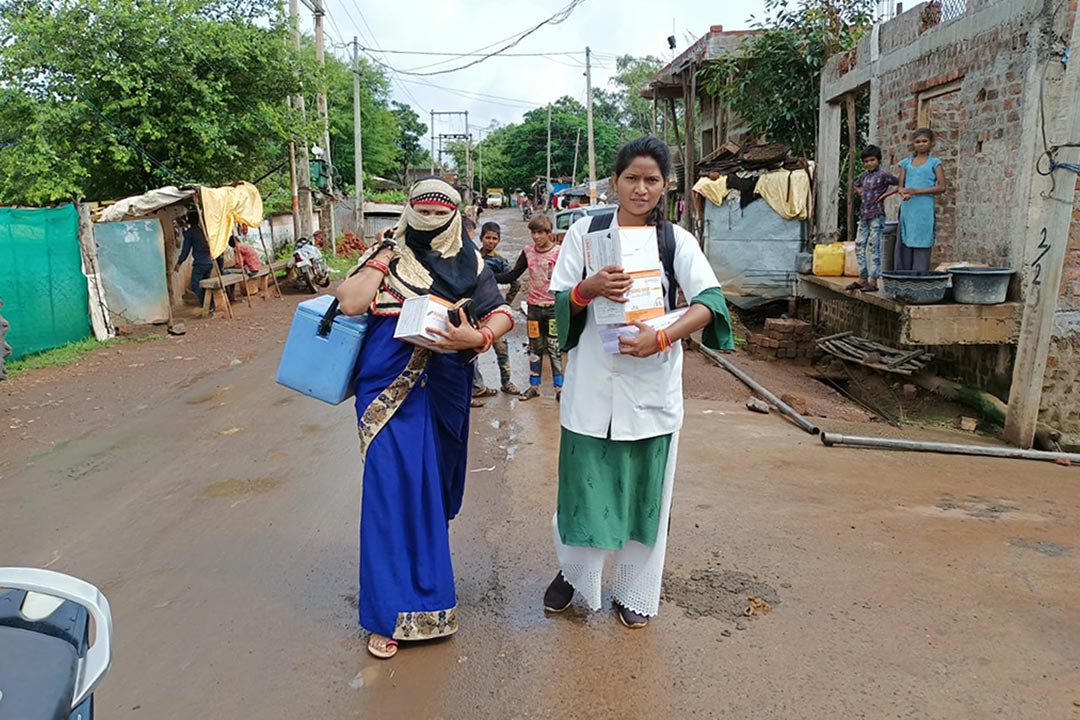
In Madhya Pradesh, located in the heart of India, temperatures often soar past 45° Celsius. For Pooja Sahu, an Auxiliary Nurse Midwife (ANM) working in Shamshabad, the heat is a daily complication. From administering vaccines to providing door-to-door healthcare services, she spends most of her time outdoors, where there is neither adequate shade nor any means of cooling down.
“These days, we start our day early to complete vaccination tasks before the harsh afternoon sun sets in,” says Sahu. “But simply stepping out of the house is a challenge in itself.”
Most of the government-run community childcare and nutrition centres, known as Anganwadis, in her area lack electricity to power fans or any other cooling arrangements.
“When the wind stops blowing, I just feel like finishing the work and leaving,” she says. “The entire shift is spent in discomfort.”
To cope with the heat, Sahu carries ice and a bottle of cold water from home, as normal water warms up quickly. She often has to walk more than two kilometres, finding neither shade nor a place to rest along the way.
During a recent survey and vaccination drive, she suffered from heat stroke and severe dehydration. “I started vomiting so violently that I had to stop my vaccination work and get an IV drip,” she recalls.
The brutal summer heat also endangers vaccine uptake. In the last week of May, Sahu arrived at a vaccination site where nine children were expected. Due to the scorching heat, only four turned up – the other parents refused to bring out their children.
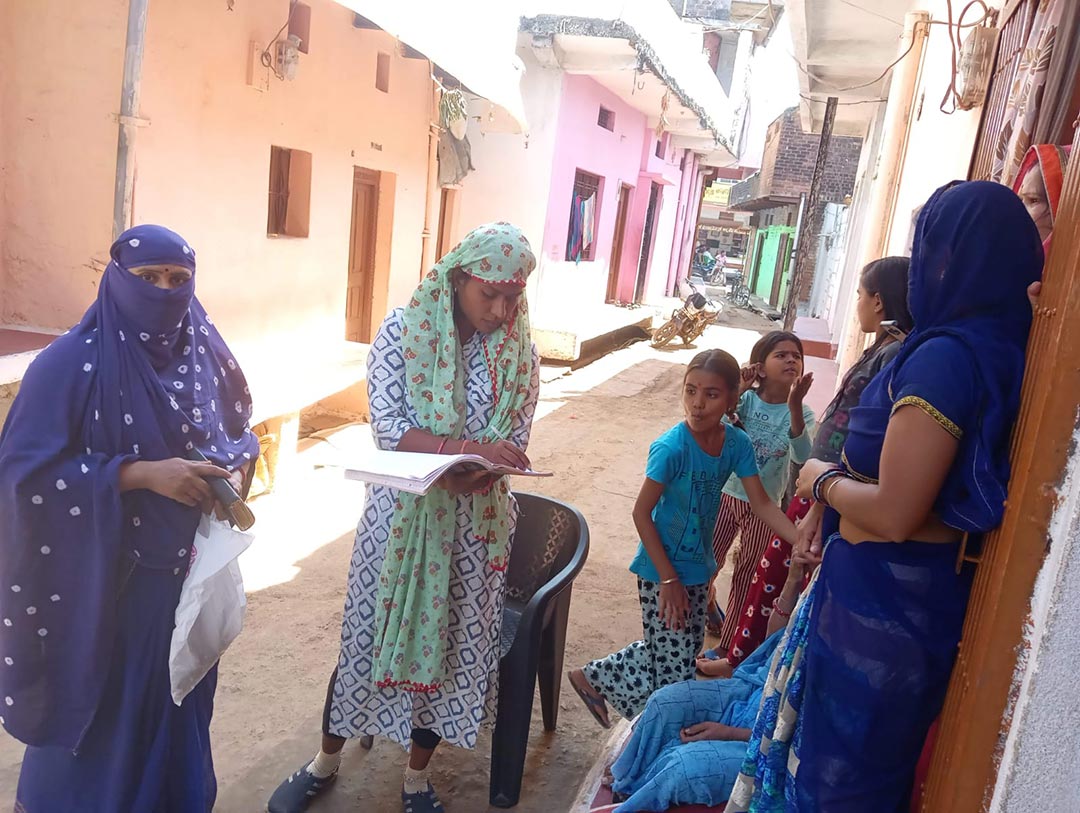
Credit: Shuriah Niazi
“Two children from the same family were due for vaccination. I tried hard to persuade the parents, but they said they wouldn’t come out in such heat and would get the vaccination done in July.”
How do rising temperatures affect health workers and vaccination?
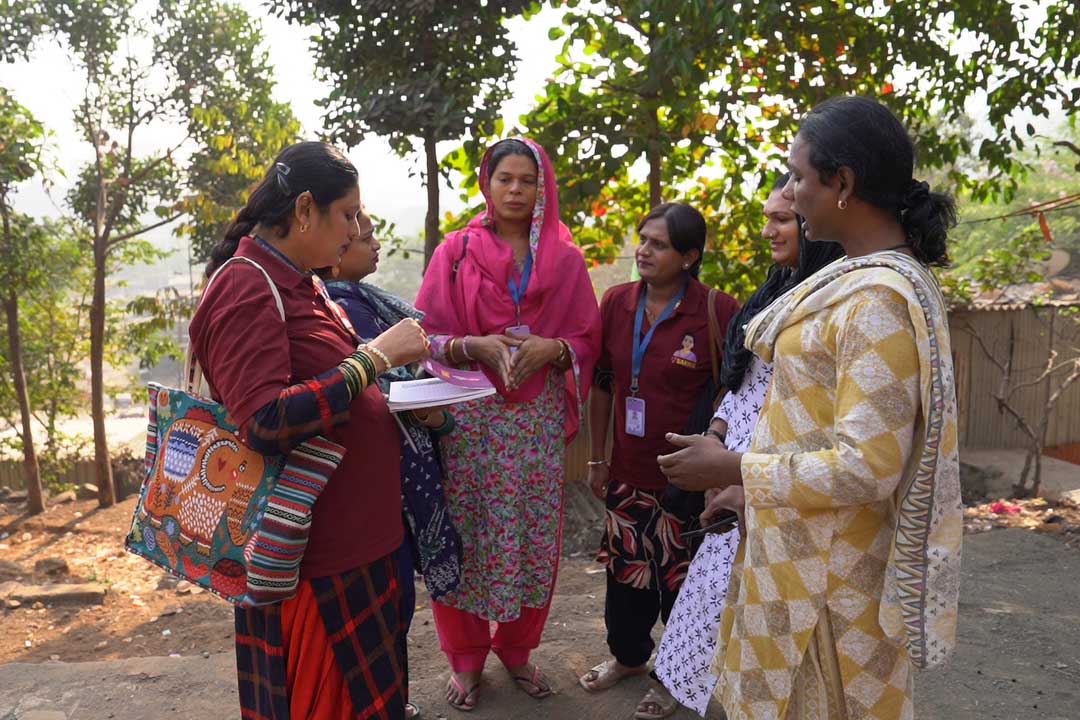
Sahu’s story illustrates that rising heat is no longer just a weather issue. Summer temperatures are becoming a major occupational challenge for thousands of grassroots health workers, including ANMs like Sahu, and the million-woman force of pink-clad community health workers known as ASHAs.
Still, even amid these punishing extremes, they strive to ensure that no child misses out on vaccinations and essential health services.
When these ANMs step out, they carry vaccination and antenatal care registers, records of children and pregnant women, ‘due lists’, malaria logs, vaccination cards, daily diaries, counselling materials, water bottles, and tablets for digital data entry. All in, their bags often weigh 12–13 kilograms, they report – and that’s not including the passive cooler boxes that keep the vaccines themselves safe from the heat.
How does extreme heat affect childhood vaccination coverage?
Sumitra Deshmukh, an ANM at the Bijukhedi Health Centre in Lateri block is responsible for 11 villages, which include a total population of 9,345 people. She looks after the immunisation of 950 children. Summer temperatures not only make her day-to-day more onerous, but in some cases make her targets impossible to achieve.
Deshmukh explains, “Children arrive in the morning, but people hesitate to step out of their homes after midday. Many parents say they won't bring their children out in such heat and will get them vaccinated next month.”
Her area of operation spans 10–12 kilometres. Even after reaching the villages by two-wheeler, she often must travel another half to one kilometre on foot, and arriving at the Anganwadi centre often brings little relief: “In some places, fans are installed, but there is no power connection; they are just hanging there for show.”
Have you read?
Deshmukh leaves home with a bottle of cold water and relies on it throughout the day. However, constant exposure to the sun has taken a toll on her health. Recently, the heat caused boils and facial swelling, yet she did not take any leave.
She says, “Vaccination work takes place during specific sessions. Even if we fall ill, we still have to reach the children.” No matter the temperature, she conducts vaccination sessions three days a week, and spends the rest of her days in the field checking on pregnant women, newborns and high-risk patients.
Deshmukh’s story illustrates that the second- and third-order public health impacts of rising heat are already taking shape.
Purnima Pandey, an ANM working in Ward No. 26 of urban Bhopal says, “We carry water and food from home. Often, parents do not bring their children for vaccination due to the scorching sun, so we have to persuade them.”
During a recent heat wave, she reports, a member of her team fell ill and required treatment with oral rehydration salts.
How is extreme heat affecting workers elsewhere in India?
In a recent study on the working conditions of ASHA workers in Haryana, Indian research organisation HeatWatch found that the sorts of problems reported by the ANMs interviewed by VaccinesWork are widespread among frontline community health workers. ASHA workers interviewed spent an average of six to ten hours per working day outdoors, with 83.7% of them spending the hottest hours of the day exposed. Just 37.2% reported constant access to drinking water.
Fatigue, dehydration, headaches, dizziness, and other heat-related health issues were common.
Apekshita Varshney, founder and researcher at HeatWatch, said, “The heat might reduce workers' capacity to conduct door-to-door visits and interact with people, delaying vaccination campaigns although we lack concrete evidence for this. Anecdotal evidence suggests that communities avoid travelling during extreme heat, lowering attendance at health centres and missed follow-ups.”
According to Varshney, “These workers face heightened risks due to gender-based workloads, caregiving responsibilities, limited opportunity to rest, and a lack of control over their work conditions. Heat stress is also linked to reproductive health risks and nutritional deficiencies.”
Climate scientists state that India is clearly experiencing increased heat, particularly during the spring months. The most significant concern is not merely the rise in average temperatures, but the intensity, duration and frequency of heat waves.
Raghu Murtugudde, a climate scientist and Professor Emeritus at the University of Maryland, USA, said: “Temperatures in many parts of India have reached 45°C during March, April and May. The situation is worrying."
Which communities are most affected by extreme heat?
Murtugudde added that the burden of extreme heat falls disproportionately on poorer communities and outdoor workers of all kinds.
“Whether someone can cope with heat depends on access to shade, hydration, shelter and cooling. Those who work outdoors, walk long distances, cycle, carry loads or spend hours in the sun are far more vulnerable. Poor people, women, children and the elderly are likely to be affected the most.”
Speaking about frontline workers such as ASHAs and ANMs, he said heat stress is becoming an increasingly important occupational risk. “We should not be thinking about the point at which heat becomes fatal. We need to plan well before danger sets in. Prevention and preparedness are far more important than testing the limits of human endurance.”
HeatWatch’s Varshney said, “Governments must provide water, shade, cooling stations and heat-safe transport. They should integrate worker-specific safeguards into Heat Action Plans, train ASHAs and ANMs on heat stress and safe work timings and ensure fair wages and reduced workloads during extreme heat.”
She added that there is no official tracking of heat-related illnesses among ASHAs, and heat-related deaths are under-reported.