
The show must go on: the street theatre troupe tackling vaccine hesitancy in rural Pakistan
The Caravan of Hope has it all: tragedy, comedy, show tunes and a life-saving message. Khyber Pakhtunkhwa appears to be listening.
- 31 March 2026
- 6 min read
- by Adeel Saeed
At a glance
- A theatre troupe with backing from UNICEF, Voice of America and Pakistan’s health system is travelling Khyber Pakhtunkhwa with a play about the importance of immunisation. Audience reactions suggest they’re managing to change sceptical minds.
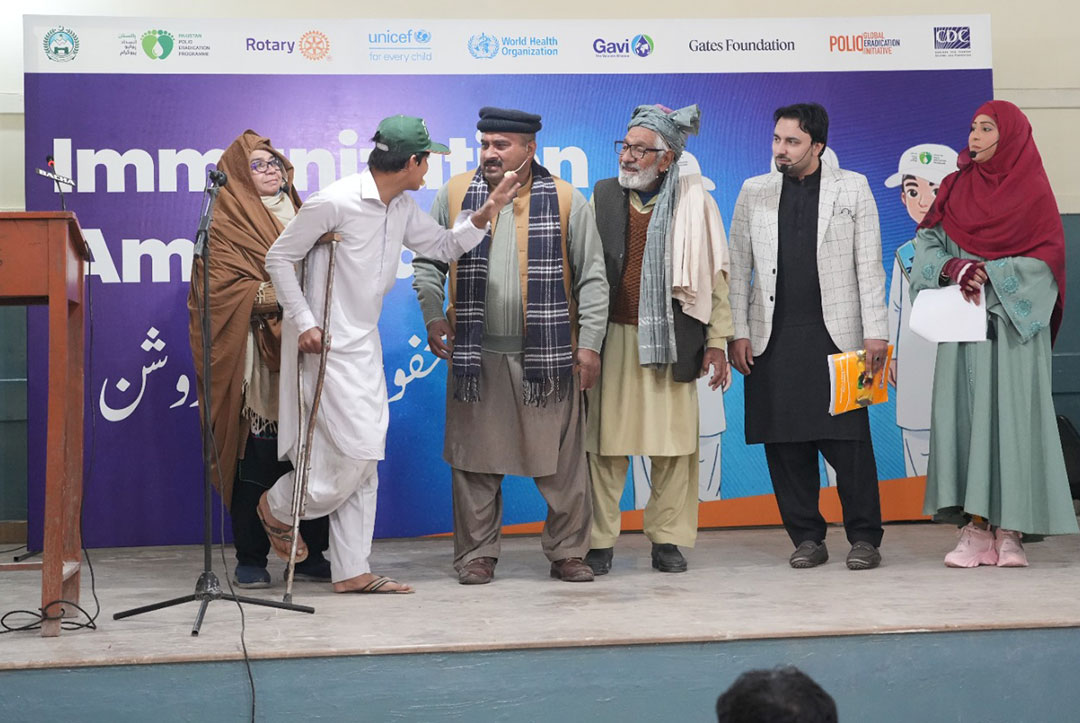
- “I often observed people struggle to hold back their emotions by wiping away tears as they watch me portraying a child affected by polio, walking with crutches,” says Hassan Munir, a teenaged actor in the company.
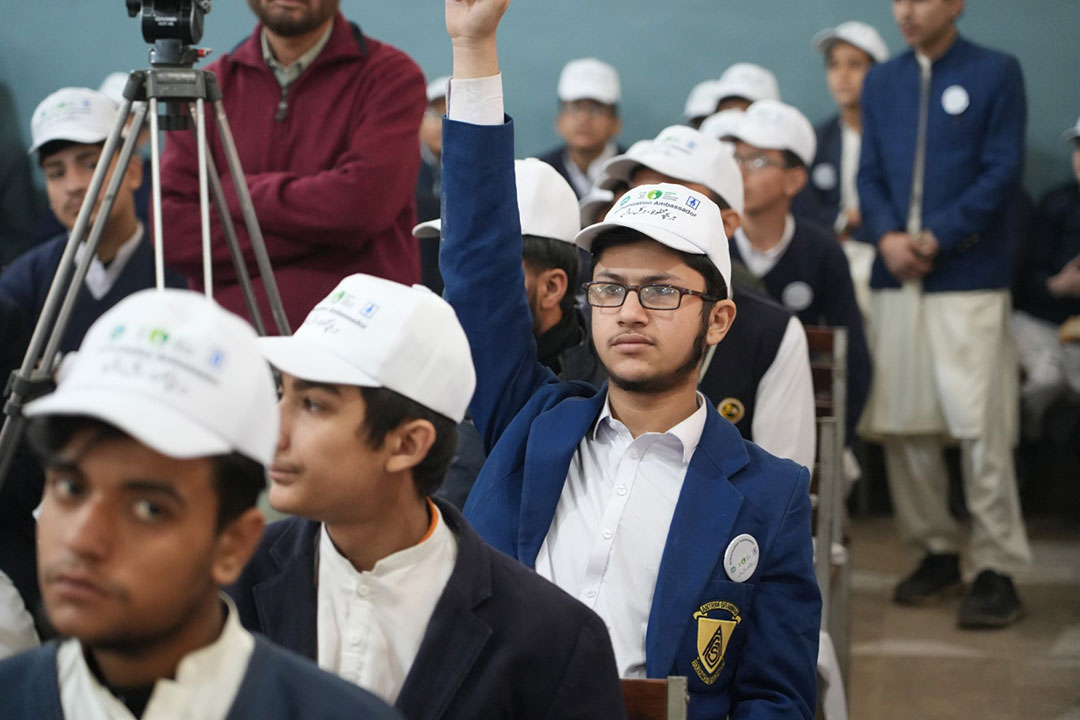
- Performances of the show on school campuses have drawn a growing club of student “Immunisation Ambassadors,” who are eager to help spread the Caravan of Hope’s message
The theatre was a street in Dara Adam Khel, Khyber Pakhtunkhwa. A troupe of 15 actors had been about to take their places on the makeshift stage, when two gun-toting tribesmen in traditional white turbans stepped in.
The men had learned that the Pashto-language play the group was about to perform concerned immunisation against polio, and this was not acceptable to them. They said they thought immunisation was a “foreign ploy”. They raised false claims that polio drops could damage a child’s future chances of having a family.
Their misgivings were dangerous. Only two countries still see endemic transmission of wild-type polio: Pakistan, and neighbouring Afghanistan. Dara Adam Khel lies just 50 km east of the border between them. Here, vaccinating against the paralysing virus is more than an insurance policy.
The organisers argued and reasoned, invited the tribesmen to take a seat, to watch the drama unfold and hear what it was that the performers actually had to say. Eventually, reluctantly, the men agreed.
A 45- minute roller-coaster ride of humour, music, tragedy and high emotion began to unfold before them. The erstwhile sceptical tribesmen were rapt; by the show’s end, they’d agreed not to obstruct vaccinators’ access to households in the town.
Caravan of Hope
The travelling performance is known as the Karwaan da Umeedono, or Caravan of Hope. Backed by UNICEF, the Deva programme, a Voice of America (VOA) initiative, and Pakistan’s Emergency Operations Centre, its objective is simple: persuade vaccine-hesitant parents in Khyber Pakhtunkhwa to think again.
The province was home to 20 of the 31 people who fell ill with polio in Pakistan over the course of 2025. Despite notable successes – the nationwide immunisation campaign of December 2025 recorded 97% coverage in Khyber Pakhtunkhwa – vaccinators continue to encounter challenges. During that push, 18,349 refusals were recorded, and 82,393 children had been marked down as “not available”.
But the play has seemingly found a way to open some of those slammed doors. Recently, Muhammad Annas, a Grade 10 student in Peshawar who had grown up in a religiously conservative family that were open about their anti-vaccination views, escorted polio vaccination teams through his neighbourhood following a performance at his school in Peshawar’s Kakshal area. Annas even helped organise a gathering of children at his home during the week-long nationwide polio immunisation drive held in February this year.
Have you read?
“Muhammad Annas transformed from a vaccine-hesitant into an active member of a youth cohort serving as ‘immunisation ambassadors’, raising community awareness about the importance of vaccination for improved public health,” said Nasir Jamal, a teacher at the school.
Another student from the same school, Muhammad Sohail, persuaded his father, a prayer leader at a mosque, to ensure that his two siblings under the age of five received their full course of vaccinations.
“My parents were not regular in vaccination of minors, but after attending the stage drama at school, I became concerned, and convinced them to take prevention of childhood diseases seriously,” Sohail told VaccinesWork.
Laughter, tears and changed minds
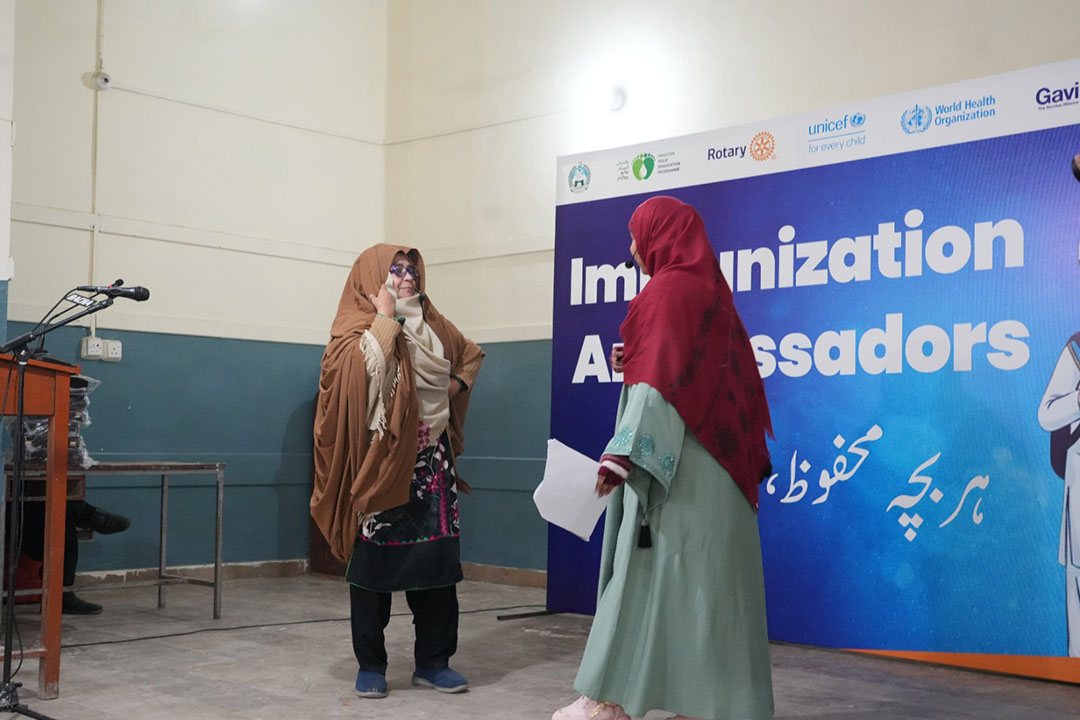
“We have performed in remote areas, including the most conservative and security-compromised southern districts of Khyber Pakhtunkhwa,” said Uzar Sherpao, a seasoned artist who plays the Caravan of Hope’s central character, Khan Lala: a stubborn, vaccine-sceptical family elder.
Credit: Emergency Operation Centre
Sherpao’s versatile talents keep audiences spellbound: he’s funny in comic scenes, and heartbreaking in his tearful portrayal of a father devastated by his son’s polio-induced disability.
“The impact of street theatre is so profound that during performances I often observed people struggle to hold back their emotions by wiping away tears as they watch me portraying a child affected by polio, walking with crutches,” says Hassan Munir, the teenaged actor who plays Sherpao’s son.
Hassan shares that many spectators express deep sympathy, initially perceiving him as truly disabled. He adds that several people later admit that they had never fully understood how serious and life-altering polio can be until they witnessed the performance.
“By dramatising sentiments of a patient and his family after falling victim to crippling polio, this approach not just delivers a message, it changes minds,” said audience member Shabab Khan, a poet and dweller of Mohmand district bordering Afghanistan.
It particularly struck Khan how true-to-life the story’s characters seemed. Many people in his area knew people like Khan Lala, who on grounds of false beliefs and misconceptions, were endangering the future of a new generation by preventing vaccination of children.
Something for everyone
“Caravan of Hope has performed more than 100 shows in schools, community halls, streets and hujras (guest houses) of people in different parts of Khyber Pakhtunkhwa during the last several years,” said Noorul Bashar Naveed, a renowned playwright, and the pen behind the play.
And each show has drawn all sorts of people, said Muhammad Munir, Assistant Producer. “Theatre audiences include local people, community elders, children, government officials and even women who in rural settlements watched performance while wearing traditional veil covering head to toe.”
“In many areas where the show was organised due to low immunisation coverage, people are in constant contact with us, often requesting through messaging that the show be held again to further raise awareness in the community,” Munir added.
Credit: Emergency Operation Centre
That’s where the immunisation ambassadors come in. Following a production of the show at Government High School, Kakshal, an initial batch of 100 students were appointed to the role, undergoing training regarding the importance of vaccination.
More students will be appointed from other schools, to form a Khyber Pakhtunkhwa-wide club of immunisation ambassadors, said Shadab Younas, a communications officer with UNICEF KP.
Shafiullah Khan, coordinator at the Khyber Pakhtunkhwa Emergency Operations Centre, told VaccinesWork that a proposal is under consideration to screen video recordings of the show in schools and communities to broaden its impact. A plan is also being mulled about inclusion of immunisation importance in the curriculum for the education of youngsters, he added.