
How Aka hunters and Fulani chiefs helped health workers locate CAR’s missed-out children
In the southeast of the Central African Republic, a special cadre of experts filled in the blanks on the healthcare map.
- 14 August 2026
- 5 min read
- by Moussa Mbodji , Olivier Konan
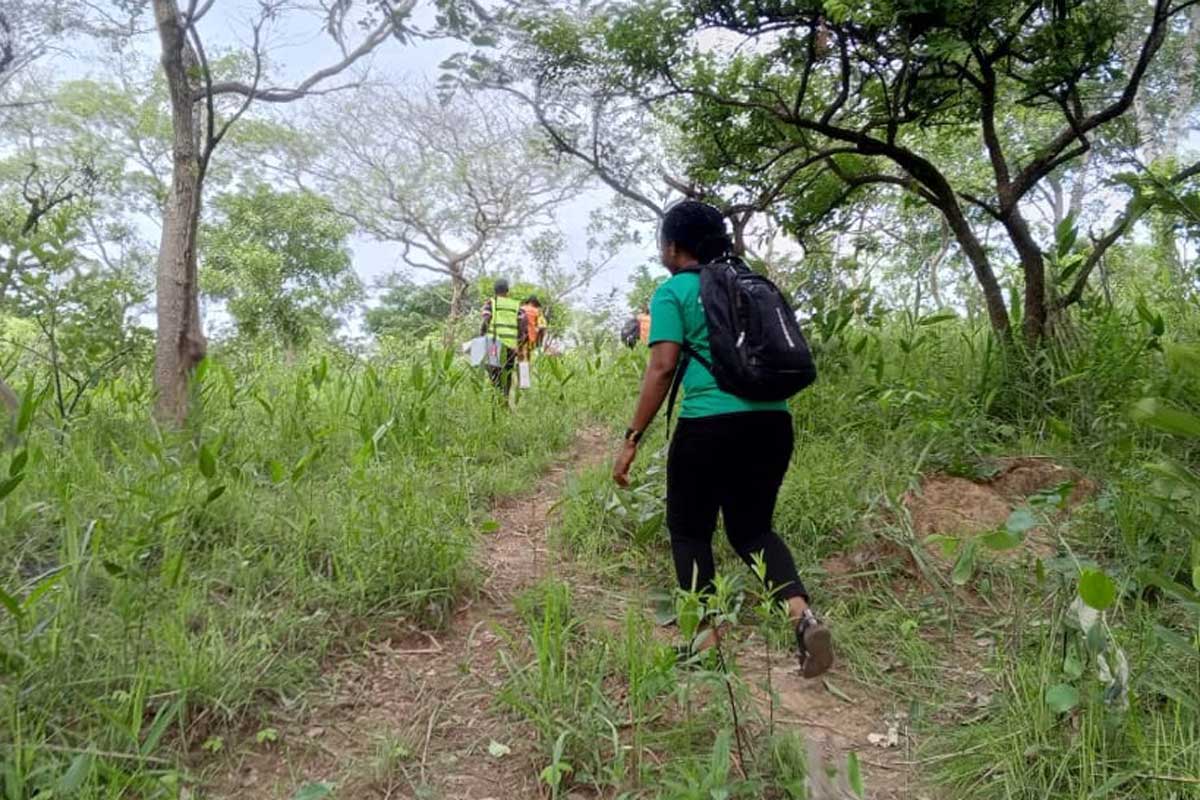
The extremely isolated southeastern district of Kembé-Satéma, nearly 600 km from the Central African Republic’s (CAR’s) capital, Bangui, is home to socially and geographically marginalised communities with disproportionately low immunisation rates.
Fulani herders are often cut off from the healthcare system by constant movement in search of water and pasture. Aka villages, meanwhile, are swallowed by the rainforest and hard to find.
For the vaccination teams from the Expanded Programme of Immunization (EPI) who are charged with protecting CAR’s children from vaccine-preventable disease, reaching these remote communities is a logistical puzzle and a physical strain. Insecurity, unbridged rivers, resource scarcity and a near-total absence of usable maps complicate their mission.
To close the resulting immunisation gap, the district health system collaborates with civil society organisations (CSOs).
Redrawing the map
It wasn’t going to work unless the CSO alliance tasked with the job – global CSO World Vision and its local partners Béafrica Santé and Wali ti 3ème – could figure out how to fill in the blanks on the healthcare map.
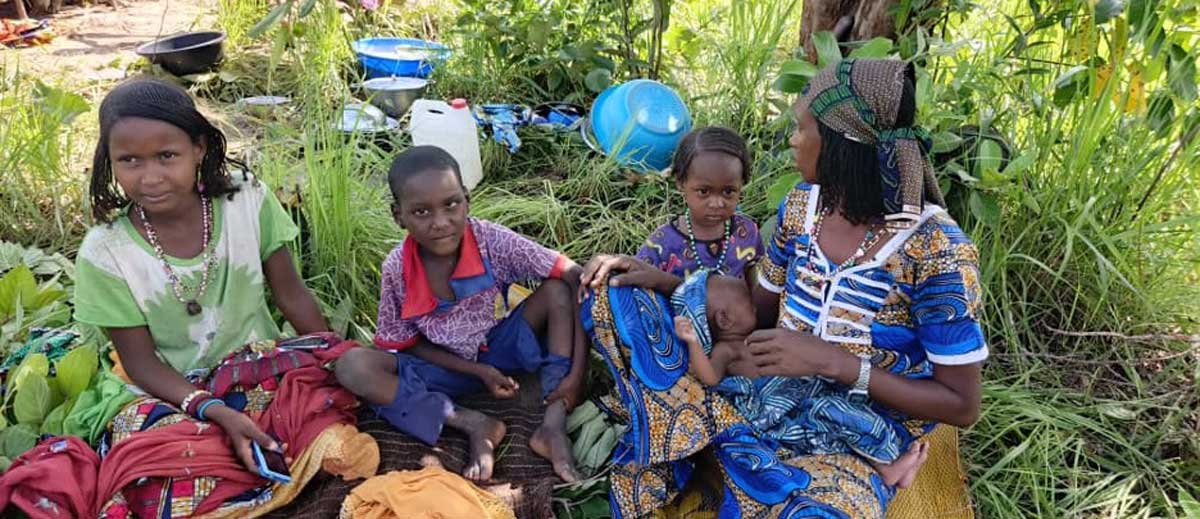
In October 2025, the team asked CAR’s Departmental Health authorities to convene a meeting of a group of community leaders in Mobaye-Zangba district, which neighbours Kembé-Satéma.
At that meeting was Yaya Ibordji, a prominent figure in the Fulani community, who shared an innovative proposal. The CSOs could enlist Fulani chiefs, called “Ardos”, and Aka community guides and local hunters to the immunisation project. What these individuals lacked in medical training, he argued, they made up for with their encyclopaedic knowledge of every path, camp and social nuance.
Yaya himself would make the necessary introductions. Based in an urban area, Yaya is a deeply respected figure in the Fulani community – the sort of person whose welcome is sought by every newcomer to the region. Quite often, new Fulani arrivals leave him their phone number and the details of the area where they plan to take their herd. He remains a principal point of contact: on the sporadic occasions that they can get cell signal in the grazing lands they pass through, they turn to Yaya for news from town.
On the trail
In November 2025, a four-person vaccination team from World Vision set out for the first time to one remote Fulani camp. They had a guide in Mobamza Enoch, one of the 130 hunters and other ‘allies’ in the Mobaye-Zangba region who had stepped up to help the vaccination teams make their excursions to the bush. Enoch had stumbled upon several small settlements of the Fulani community while hunting, and he had bonds of friendship with them.
After a two-hour motorbike ride from the Mobaye-Zangba health centre, the vaccination team continued on foot for nearly 25 km through the savannah and marshy areas.
All along the way, Enoch was looking for a high vantage point from which to make a phone call using the Ardos’ contact details he had been given by Yaya. Network coverage was so patchy that the team had sent out messages to as many Ardos as possible, in the hope that one of them might receive it and alert the others.
Elusive certainty
In another Fulani camp in Mobaye District, the vaccination team was welcomed by Ardo Touzi Amadou, who had been alerted to their visit by a fellow chief who had chanced into some phone signal.
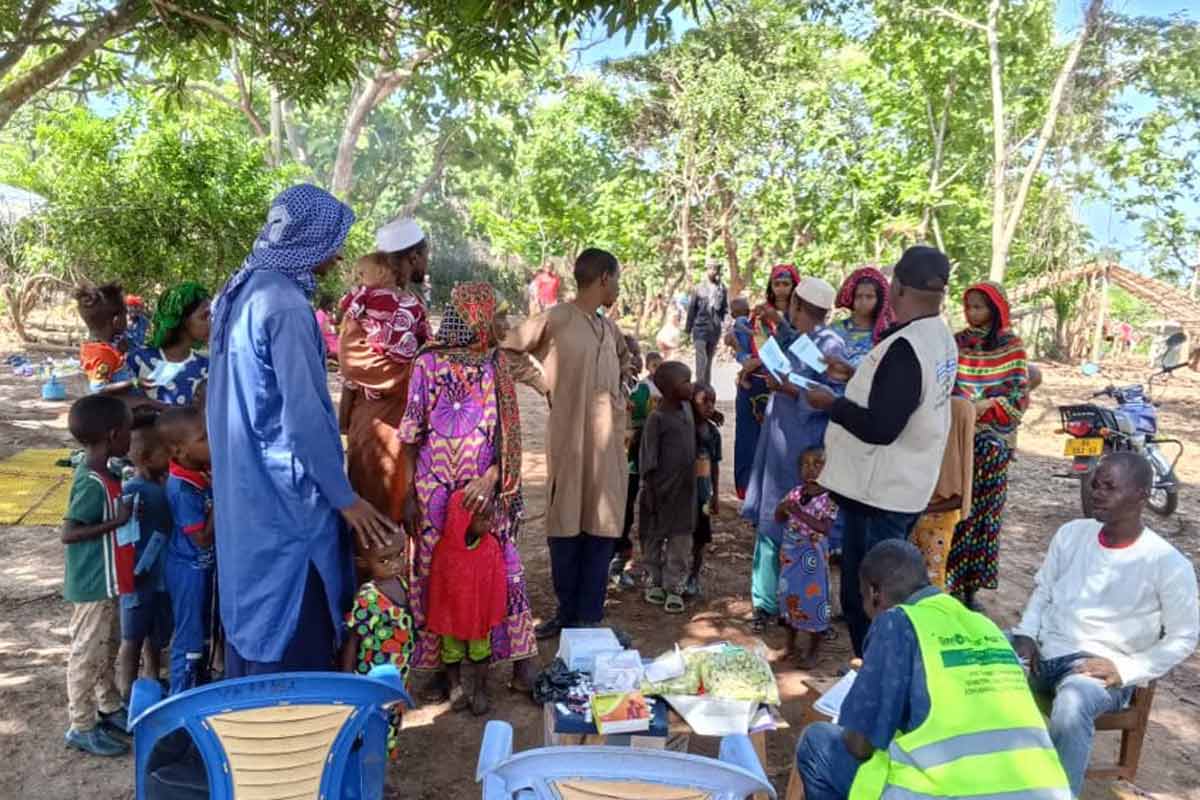
Ardo Amadou, who has 11 children himself, looked on as his community gathered at the vaccination site he had designated, women calling over their children, who were playing with the calves in the enclosure. For many of them, the vaccines they received were long overdue. After the vaccination session, Amadou collected the children’s vaccination cards to keep them in a secure place, ready for the vaccinators’ next visit.
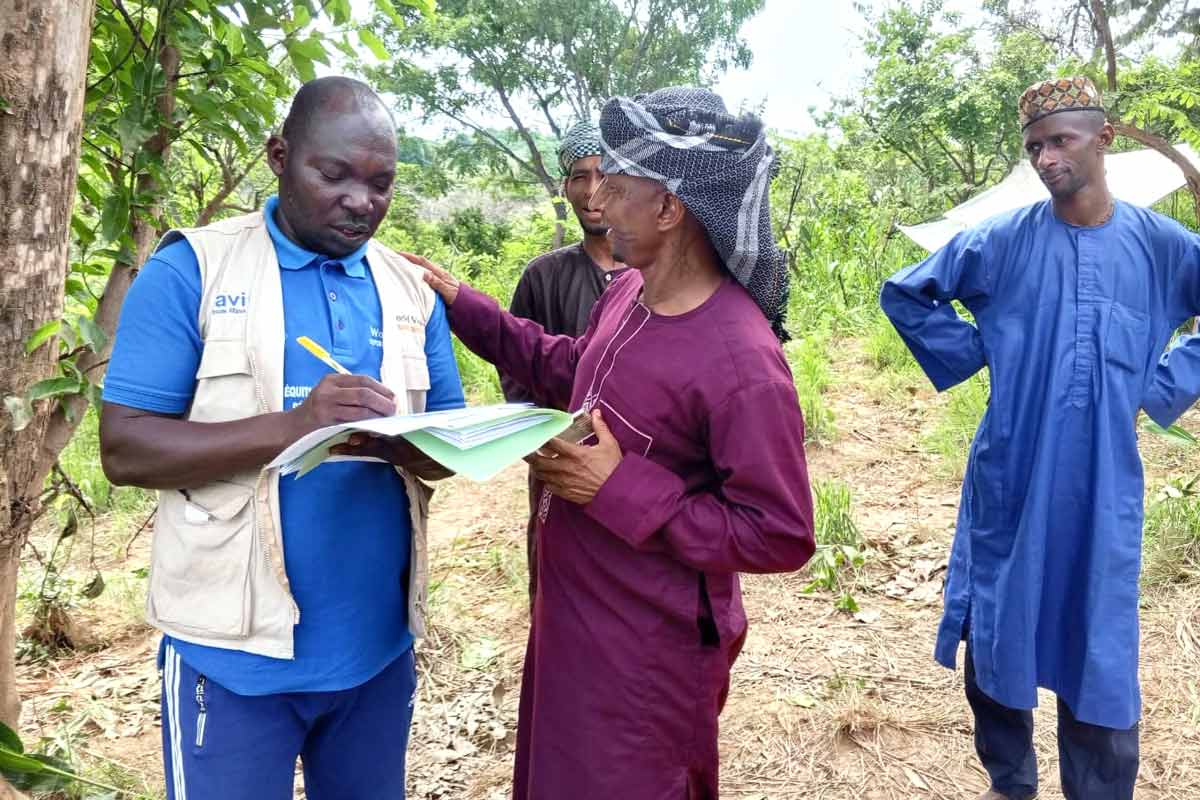
That next visit remains an uncertainty. The camp has no fixed address and shifts with the seasons. Locating the exact whereabouts of children who are due for a follow-up dose is an ongoing challenge. “We’re proceeding somewhat with the unknown,” admits Bara le Bien Aimé, Vaccination Supervisor, World Vision CAR. “We have to keep calling and hope to catch them at a time when they have mobile coverage. This community can cross the country’s borders as they move their livestock. Conducting routine immunisation is a real struggle in these circumstances.”
Have you read?
From Fulani to Aka community
The Ardos’ influence is not limited to their own community. “They know where everyone lives, even the Aka community,” says Fabrice Latou, a member of the World Vision project team.
When it was time for the vaccination team to visit one of these villages, deep in the forest, an Aka boy called Pollot Couyanne guided them. The walk took three or four hours.
Pollot, a fifth-grade student at Bagandou College in Mbaïki District, translated the team’s explanations about the importance of vaccination into Sango. The Aka chief, Issangna Yezo, then reassured the community: “We have received these strangers who have come to promote the health of our children. We indeed use bark to treat ourselves, but vaccines are effective and important.”
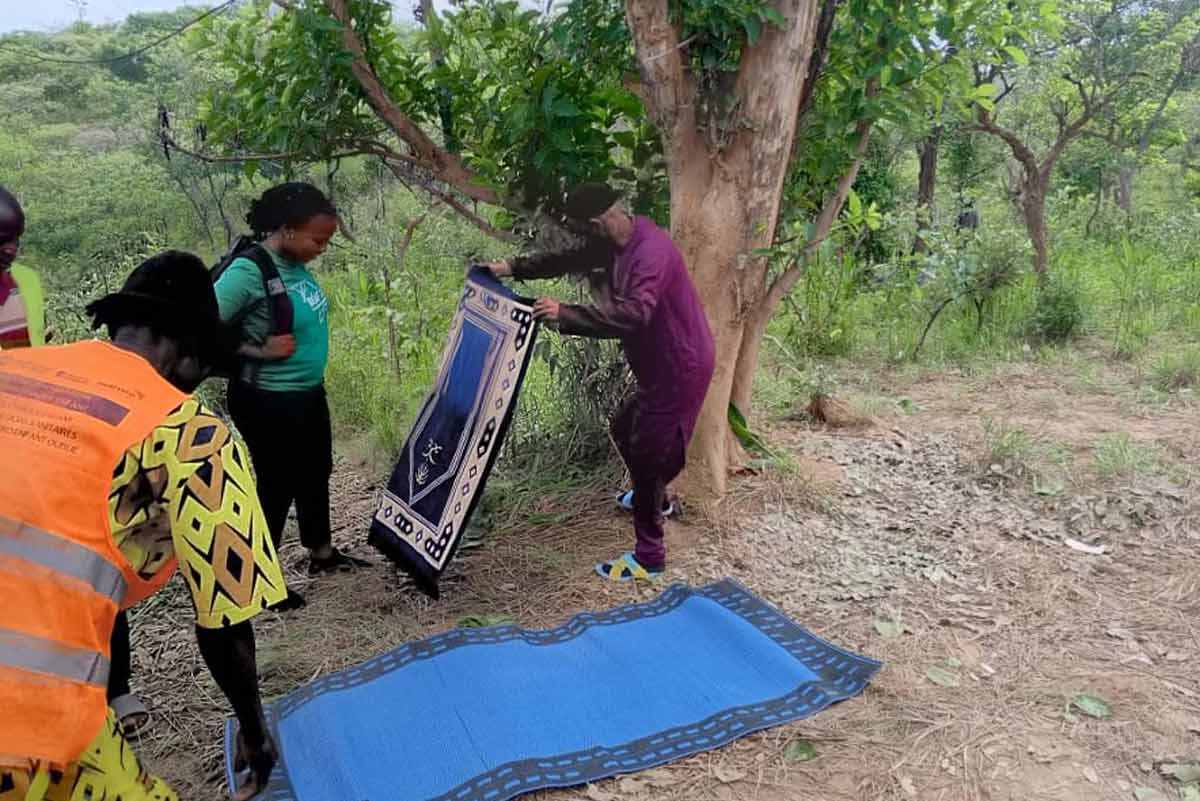
The women, who had until then deliberately kept their distance, approached, their children in their arms, to the vaccination site, where the team had settled down on the ground in a clearing. They made the most of time they had before approaching night, and the long foot-journey back forced their departure.
The work of reaching these remote communities was complicated and full of uncertainty. But it was also making a measurable difference. Between August 2025 to March 2026, local experts like Ardos and Aka guides were instrumental in the registration to the immunisation system of more than 100,860 children spread across more than ten health districts.
How is Gavi helping
To help increase immunisation coverage in lower-income countries, Gavi launched a series of opportunities for civil society organisations (CSOs) to deliver projects reaching zero-dose children and under-immunised communities via its CSO Fund Manager.
MannionDaniels, a global health and social development consultancy, working in a consortium with Oxford Policy Management (OPM), currently operates in this role, providing end-to-end grant management services.
With support from Gavi through this funding mechanism, World Vision, supported by local CSO partners such as Béafrica Santé, FAFECA and Wali ti 3ème, targets 13 health districts in CAR with its ‘Zero Dose Zero Barrier (ZDZB)’ project. The project engages communities with completely different characteristics and lifestyles to ensure that no child misses out on life-saving vaccinations.