
How a sceptical father in the Central African Republic became an advocate for vaccination
In CAR’s capital Bangui, men call the shots when it comes to vaccination, and the decision is too often a hard ‘no’. The Zero Dose Zero Barrier project learned that getting fathers talking to each other could help soften their misgivings.
- 11 May 2026
- 7 min read
- by Moussa Mbodji , Lois Esther , Fabrice Latou , Olivier Konan

Tensions fizzed in the two-room apartment in Bangui’s Third Arrondissement shared by Ousna Mahamat, 31, her husband, Ali, and their three children.
Bad luck had visited the family too often. Twice in 2023, the market where Ali sold items such as sugar, coffee, soap and tea had been ravaged by fire, and they had lost all their assets.
Since then, Ousna had been jointly responsible for the family finances. In the courtyard of her house, she bought and sold firewood to support the family.
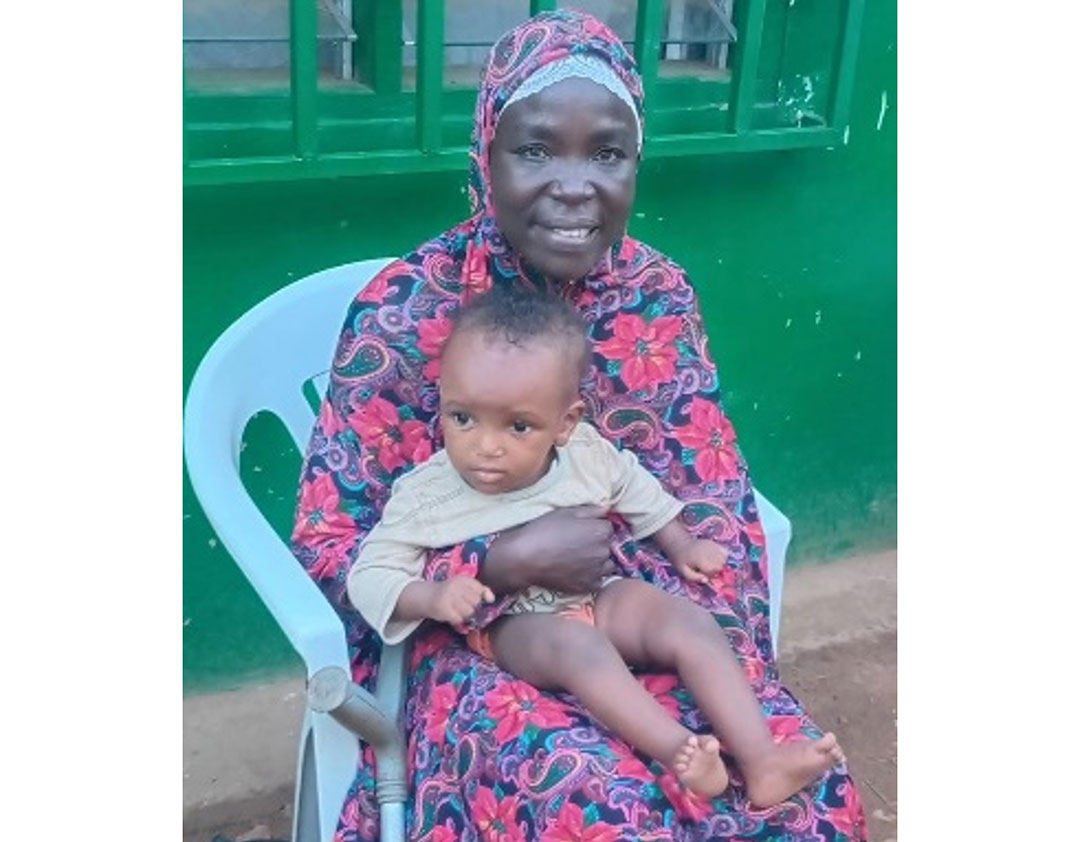
© World Vision CAR-2025
To add to their ongoing financial stress, the couple disagreed about how best to protect the health of their two daughters and son, all aged between one and four years old. Ali had categorically forbidden his wife from taking them for vaccinations, leaving Ousna worrying about what an unprotected future might bring.
Where fears arise
Vaccine refusal is, in many cases, rooted in a simple lack of authoritative, reliable information. Many parents don’t know what a vaccine really is, or how it prevents disease, or what its benefits for the health of the whole family might be.
The GESI analysis report states that in most households in each of the four health regions, decisions about childhood vaccination were mainly made by fathers.
An additional critical question hangs over parental decision-making, most acutely in places unsettled by conflict: can those who administer these vaccines be trusted? In the absence of clear answers, rumours take over. Conspiracy theories and disinformation spreads, fuelling fear and growing anxiety among communities.
In such a climate of uncertainty, even a patently false statement can be enough to turn families away from immunisation services. The fragmented trust and social splintering that often follows can then block dialogue – the only way out of this risky impasse and conflict.
Understanding the context
The Central African Republic (CAR) is one of the most fragile countries in the world, with 429,000 people in the country who are internally displaced due to conflict and other crises according to UNFPA’s April 2026 situation report. Meanwhile, 60,000 refugees and asylum seekers, many of them fleeing conflict in Sudan, have fled over international borders into CAR, and now depend on the country’s strained health system. In addition, 2.3 million people – 43% of the country’s total population – are considered in “urgent need” of humanitarian aid.
That population is also acutely vulnerable to preventable diseases. According to the World Health Organization (WHO), 251,000 children aged 12 to 59 months are under-vaccinated or have never received a vaccination (‘zero-dose’), and 45% of children aged from 12 to 23 months have never been vaccinated.
In August 2025, the global CSO World Vision conducted a Gender Equity and Social Inclusion (GESI) analysis, to get a better understanding of the barriers to vaccination in four health districts of the country: Carnot/Gadzi, Mbaïki, Bangassou and Bangui II, which incorporates the capital city, Bangui.
Have you read?
These sites were chosen specifically to represent the diversity of social, cultural and security situations found in the Central African Republic. Carnot/Gadzi illustrates the great social and economic diversity of the mining areas. Mbaïki shows the marginalisation of the Aka communities. Bangassou, with a very low vaccination rates, experiences a context of constant insecurity, with many refugees and internally displaced persons, as it hosts a Sudanese refugee camp. Finally, Bangui II represents urban density.
The GESI analysis conducted in Bangui II aimed to identify the specific gender and social inclusion barriers faced by marginalised communities (Fulanis and Aka) and foreigners, such as Congolese, Sudanese and Chadian refugees, in accessing vaccination services, particularly for zero-dose and under-immunised children living within these community groups.
A widespread barrier to vaccination
The GESI analysis report states that in most households in each of the four health regions, decisions about childhood vaccination were mainly made by fathers.
A survey respondent stated: “The decision to bring a child for vaccination remains in the hands of fathers or in‑laws.”
A Muslim woman in health district Bangui II, declared in the survey that she “must obtain her husband’s permission to leave the house”, often leading to delays or outright refusals for vaccinations.
A targeted approach
After completing the GESI analysis, in September 2025, World Vision organised a series of meetings exclusively for fathers.
In Gbaya Dombia district, where Ousna lives, the World Vision team were supported by the chief of the district and a local civil society organisation called Wali ti 3ème. Their collective deep understanding of local social dynamics helped World Vision’s team to identify eight men, including both influential community members and ordinary people, who agreed to take part in the group meetings, held in a dedicated safe space within the community.
By creating these men‑only spaces, the team hoped to be able to directly address their concerns and questions, and even to transform these men into active advocates.
In a safe space, everything can change
The men sat down and talked at length among themselves about their mistrust of vaccines. A trained World Vision health facilitator listened to their fears, their doubts, and what the men knew – true or untrue – about vaccinations.
The concerns and questions raised by the men who took part in these meetings centred on several issues: the poor reception their wives received at health centres, but also their own busy schedules, which are so demanding that they neglect their vaccination follow-up.
During the discussions, the fathers asked direct questions: “Why is vaccination reserved for children and not adults?” and, “Why do some people say that the vaccine makes children ill, given that fever is often observed in vaccinated children, often accompanied by vomiting?”
Others questioned: “Why are our wives sometimes treated so poorly at the welcome desk of the healthcare centre?” Another man asked: “How can we easily keep track of the vaccination schedule when we are so busy, for example tending to the livestock in the pastures, especially as we don’t want to let our wives go out alone with the children?”
After listening to the men’s concerns and questions, the World Vision health facilitator calmly communicated clear information: what a vaccine contains, why it protects and what happens to an unvaccinated child.
Ousna’s husband, Ali Mahamat, attended one of these men-only meetings. Afterwards, he went home and told Ousna that she could go and get their three children vaccinated. Ousna had almost given up hope, but now there was no fear. His restriction on immunisation was lifted and forgotten.
A commitment to inspire
Ousna’s husband wanted to share his story with other fathers. At the next meeting, he talked to other men. He told them of his prior fear, then how his mind had been changed. He said: “Before, I didn't want my wife to vaccinate our children; I thought it was dangerous. But after talking with the World Vision facilitator, I understood. I also want to help. I understood my role as a father.” Today, Ali Mahamat is an active participant in these information sessions. He, and other fathers who have become advocates through the men-only meetings, encourage and educate other fathers in their community.
Another father who attended the same men-only sessions as Ali Mahamat, said, “These exchanges between us men allowed me to listen to reliable information and to ask my questions. Today, my perception has changed, and I consider vaccination to be important.”
Inspired by her husband’s commitment to advocate for vaccinations, Ousna Mahamat is now a member of Wali ti 3ème. In Sango, the local language, ‘Wali’ means ‘woman’. The name literally translates to ‘Woman of the 3rd’ (arrondissement). Ousna says, “Together, we will raise awareness and mobilise many women and even men to have their children vaccinated.”
Measurable results
In September 2025, the Zero Dose Zero Barrier project’s community mobilisation activities, including the men-only spaces, helped to identify 106 zero-dose children in the four health districts.
Those early successes were the foundation for bigger strides: by December 2025, the team from World Vision and Wali ti 3ème had reached 858 zero-dose children.
The creation of spaces for dialogue adapted to social realities helped to overcome resistance: in Bangui, the evolution of a father paved the way for that of a family, and then for broader community engagement, demonstrating that structured listening can be a decisive lever for reducing barriers to vaccination.
How is Gavi helping?
To help increase immunisation coverage in lower-income countries, Gavi, the Vaccine Alliance launched a series of opportunities for civil society organisations (CSOs) to deliver projects reaching zero-dose children and under-immunised communities.
World Vision has received support from Gavi through that funding mechanism for its Zero Dose Zero Barrier project in the Central African Republic, and the local CSOs Wali ti 3ème and FAFECA are World Vision’s partners in this project.
Gavi is supported by MannionDaniels, a global health and social development consultancy, which is working with Oxford Policy Management (OPM) in a consortium to manage an end-to-end fund manager mechanism.