
Finding invisible children in Congo-Brazzaville
In Congo-Brazzaville, children without birth certificates – and sometimes without vaccination cards – are still slipping through the cracks. In KM4, a neighbourhood of Pointe-Noire, nurses, community health workers and health committees are going door to door to find them.
- 17 June 2026
- 6 min read
- by Brice Kinhou
House by house, finding the children who have been missed
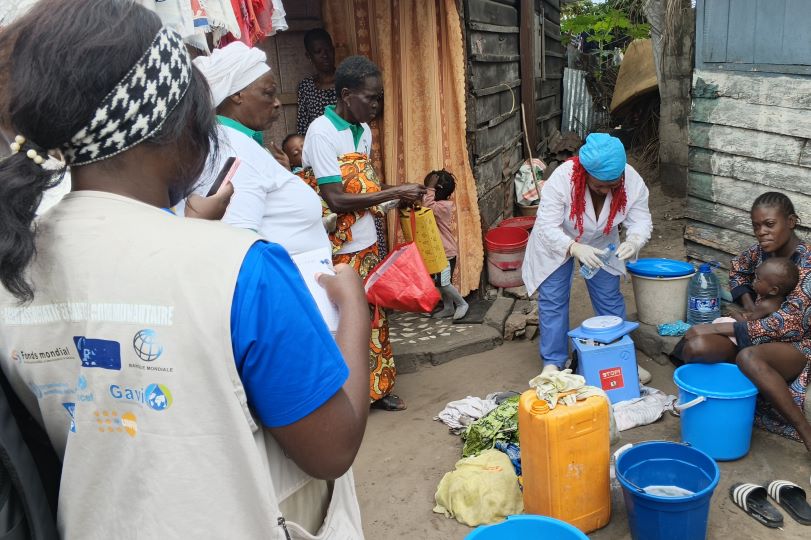
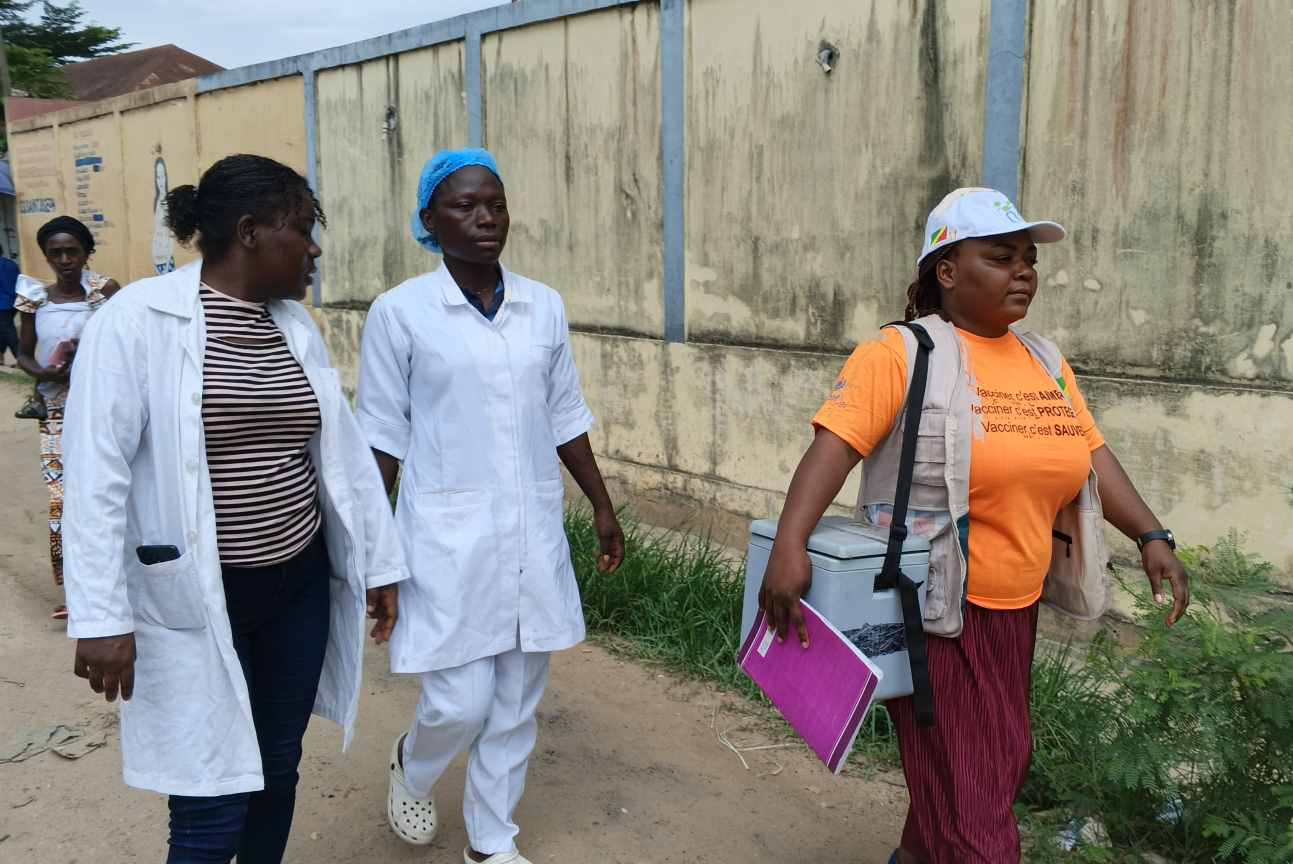
In KM4, a deprived neighbourhood of Pointe-Noire, a vaccination team stops outside a house made of wooden planks. Taty Simone, Secretary-General of the health committee, carrying a little boy on her back, is holding a list of children who have missed their vaccinations. Beside her, nurse Prefina Issanga, vaccine-carrier in hand, checks her register and calls out a name.
At first, no one answers. Then a mother eventually comes out, holding a creased vaccination card. Her child’s name, however, does not appear in any official records.
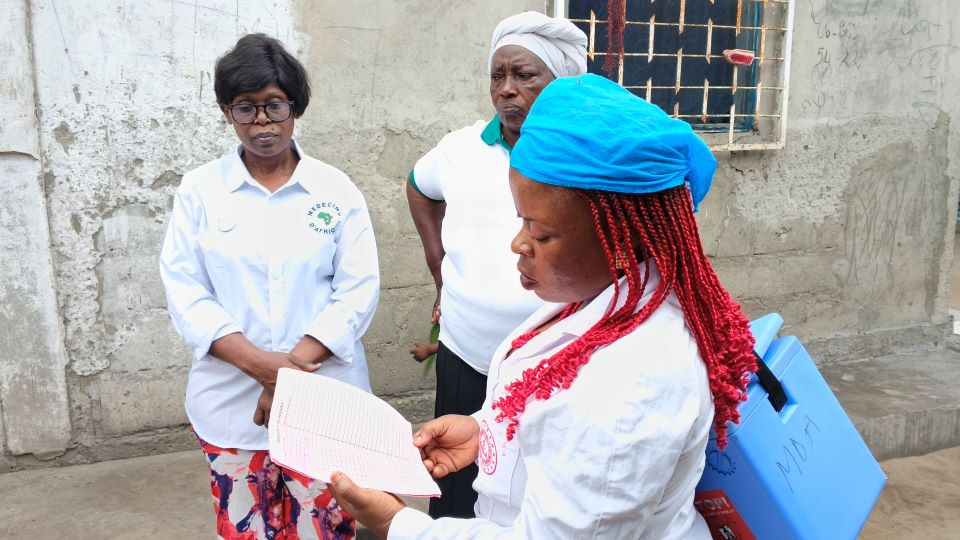
“Where is the child’s birth certificate?” the nurse asks.
“He doesn’t have a birth certificate yet because my husband travelled soon after he was born and has not returned for several months,” the mother explains.
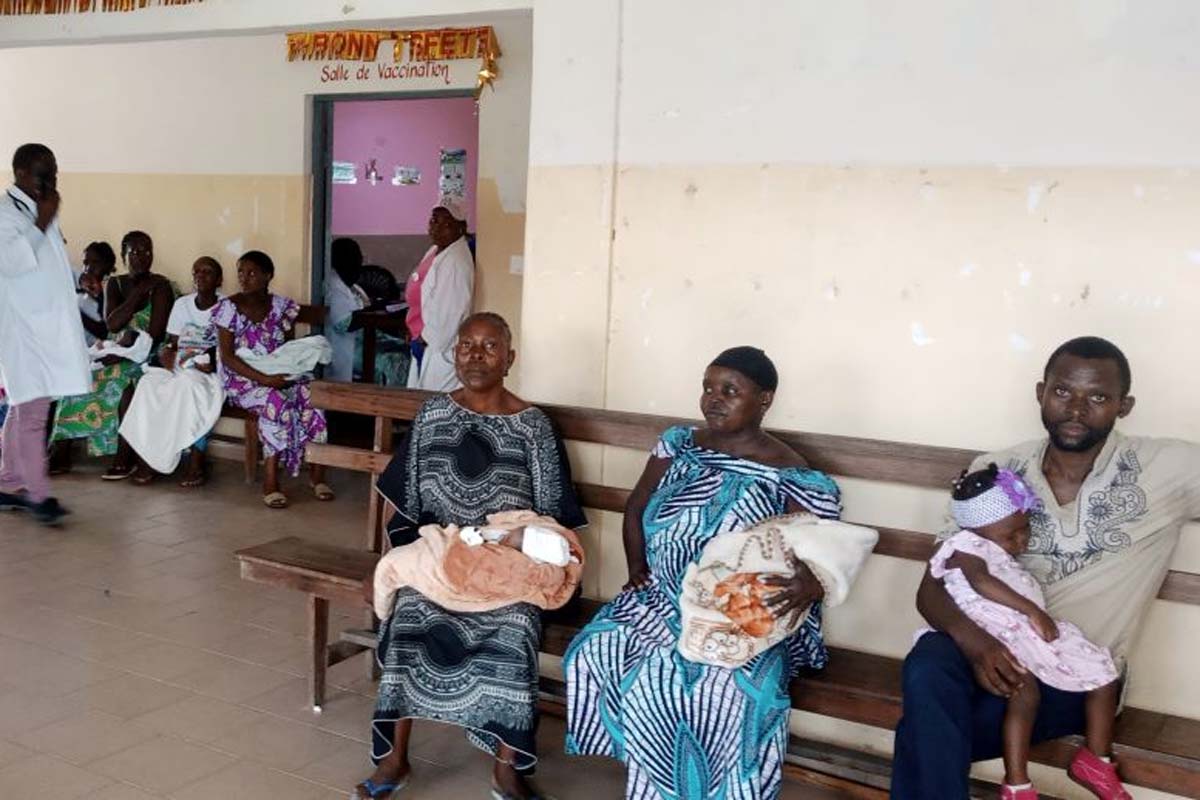
The child receives his catch-up vaccination on the spot, which is then recorded in both the vaccination card and on the health workers’ register.
A few houses further on, another woman brings out a nine-month-old child. This time, there is no birth certificate and no vaccination card. Community health worker Dreche Moutenfou opens her own notebook. By hand, she writes down the child’s name, estimated age, the mother’s name and the date of the next vaccination appointment.
In KM4, health teams are dealing with a reality that extends far beyond the boundaries of a single neighbourhood. Across sub-Saharan Africa, birth registration remains incomplete on a large scale. According to UNICEF, 90 million children under the age of five in the region are not registered at all, and more than 110 million do not have a birth certificate. Globally, 150 million children under five remain unregistered.
When a lack of documents complicates vaccination follow-up
In KM4, as in many urban and rural areas of Congo-Brazzaville, this gap has very practical consequences. Some children receive a first dose without being properly registered administratively. Others drop out of follow-up after a move, the loss of a vaccination card, or an interruption in visits to the health centre.
“We have children who have been vaccinated but whose administrative existence is unclear, and sometimes children who are registered with the civil authorities but never return for their booster doses,” explains Sylvie Zouanda, head of the KM4 Médecins d’Afrique integrated health centre.
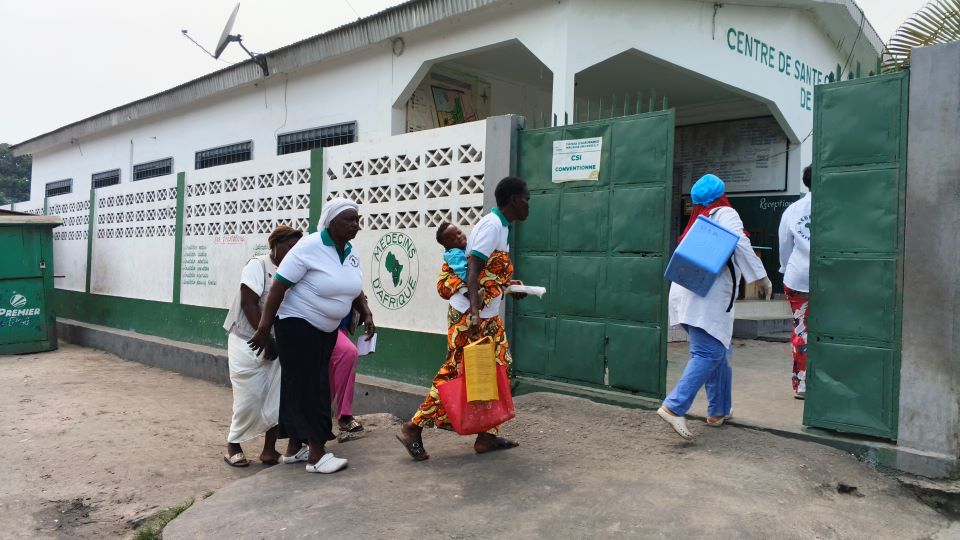
For health teams, the problem is not simply a formality . The missing documentation makes follow-up itself more complicated: knowing which children need to be vaccinated, at what age, and according to which schedule.
Teams regularly encounter situations where dates of birth are unknown or approximate. Some families have no official document confirming the child’s exact age, even though the vaccination schedule proceeds on that basis.
“We meet mothers who have lost the vaccination card, or who never obtained a birth certificate for their child. We then have to retrace the whole pathway to understand which doses have been administered,” says Issanga.
From notebooks to registers: how frontline teams fill the blind spots
To prevent these children from being left outside the system, the teams in KM4 cross-check the health centre’s registers with the cards brought in by mothers and the information gathered during home visits. When a child does not appear on any list, this is flagged. If there is no vaccination card, community health workers record the child’s name, estimated age, mother’s name and next appointment date in their own notebooks.
“We compare the information from our health centre with what we observe in the field,” explains Moutenfou.
This work relies heavily on community health workers and members of health committees. Because they work closest to families, they know the houses, the absences, the recent arrivals, the children being cared for by relatives and the mothers who no longer come back to the centre. They go door to door, speak to neighbourhood leaders and record new births.
“We often come across several cases of unregistered and under-immunised children in our area. In one zone, you can find 10 to 19 unregistered and under-immunised children,” says Taty Simone.
In some neighbourhoods, community leaders also become allies of the health system. In KM4, neighbourhood chief Mabinga Mangoula Marcel says he regularly works with community health workers.
“We help identify newly arrived families and children who do not attend health centres,” he explains. Poverty, he says, remains a central factor: “Many families live in severe precarity. Some move home frequently, while others lose their documents after heavy rains or flooding.”
He also believes many parents do not always understand the importance of birth registration.
Have you read?
Where vaccination becomes a way to make children visible
For those responsible for the Expanded Programme on Immunization, the question is practical: how can they make sure a child receives all their doses when that child may not appear in any administrative register?
“Birth registration and vaccination ultimately pursue the same goal: knowing that a child exists and making sure they benefit from their fundamental rights,” explains Soba Yvette, EPI focal point at the KM4 Médecins d’Afrique integrated health centre.
In the field, vaccination sessions do more than administer doses. They also help identify children who are still missing from official records and refer their families to birth registration services. Integrated campaigns are regularly organised to bring several essential services closer to communities, while health workers use child health consultations to remind parents of the importance of registering births and to explain the steps involved.
“Every vaccination session is also an opportunity to identify children who are missing from administrative records,” says Zouanda.
When birth registration falls behind, vaccination teams step in
But the process often remains difficult. In KM4, registering a birth is not always seen as an immediate priority amid the economic pressures of daily life. Family conflicts, population movements and the loss of documents make the situation even more complicated.
Brice Belo, president of the KM4 COSA, explains that while birth declaration at the health centre is free for children born there, obtaining the birth certificate from the town hall now costs between 2,000 and 5,000 Congolese francs. For families living in precarity, gathering this amount and paying for transport takes time.
“Parents generally exceed the statutory deadline of one month after the child’s birth,” he says.
In these cases, vaccination follow-up also becomes a safety net for children the birth registration system has failed to reach. In KM4, home visits, community health workers’ notebooks and the cross-checking of registers make it possible to find children who might otherwise have disappeared from follow-up. Without replacing birth registration, health teams are trying to prevent its gaps from turning, for some children, into missed vaccines.
More from Brice Kinhou
Recommended for you