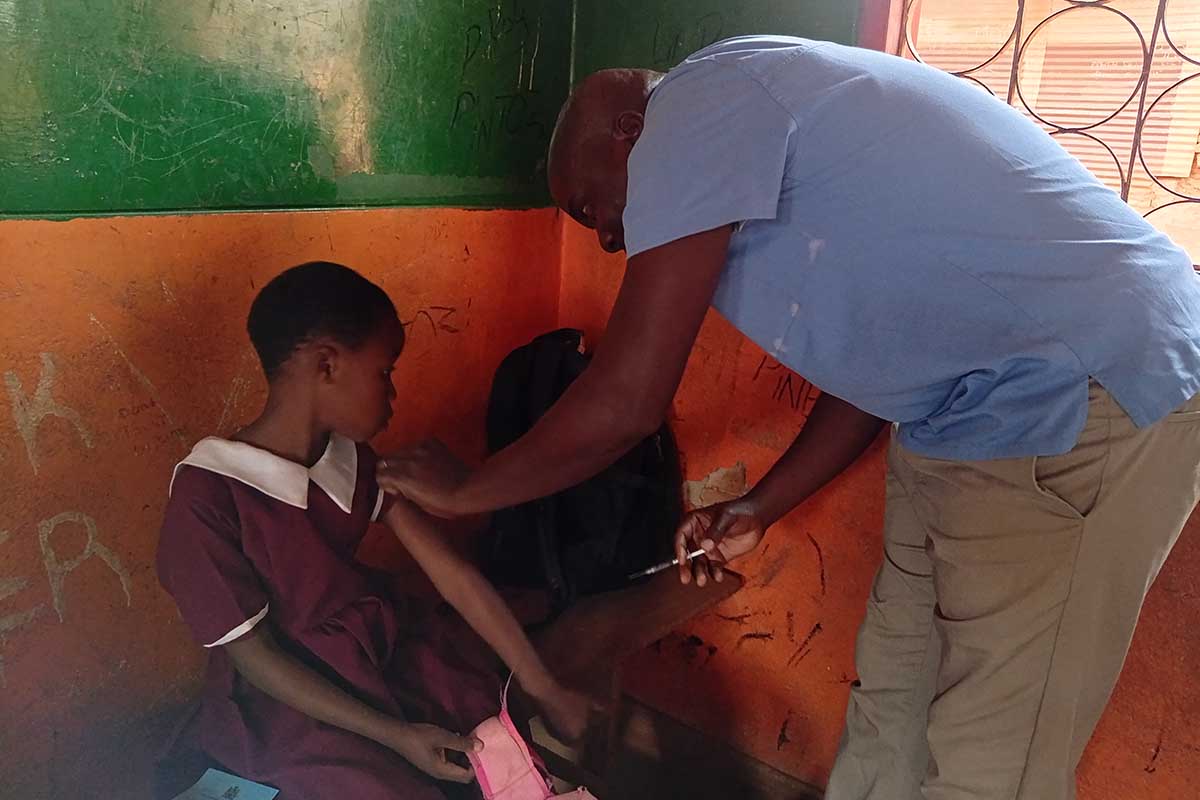

Measles killed thousands of Ugandan children, and then came the vaccine
“We have come a long way,” says one doctor, as a renewed wave of measles outbreaks threatens Uganda. “We simply cannot go back.”
- 30 January 2026
- 7 min read
- by John Agaba
The disease was dreaded and explosively contagious. In Edson Tumusherure’s village, it was killing children and straining the health system.
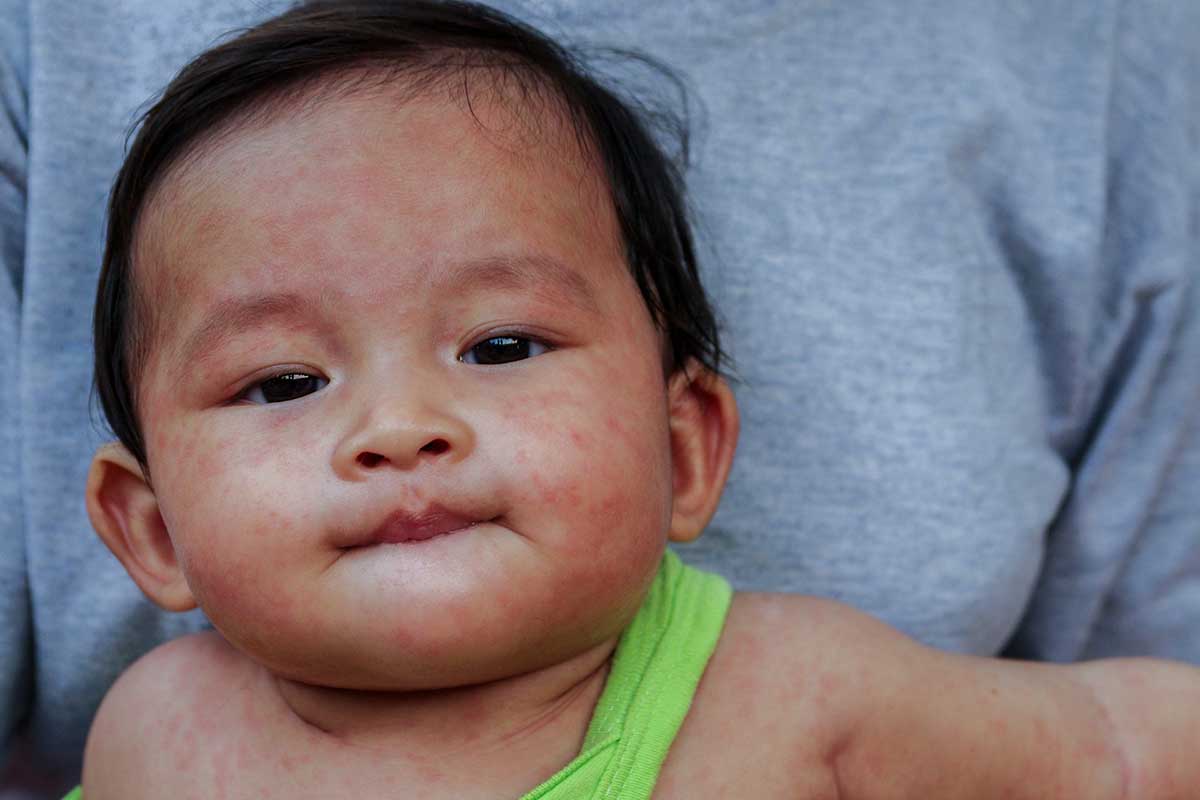
The typical early signs were a high fever, cough, red, watery eyes and the tell-tale rash that all but confirmed the diagnosis: measles. “It was so aggressive, with lots of complications,” recalls Tumusherure, now a health officer for Isingiro district in southwestern Uganda. “It was killing children in hundreds – almost three to four kids out of every ten who were hospitalised.”
Many of those who survived didn’t really recover. A number of children became blind after the virus attacked their eyes. Others developed severe, scarring pneumonia and others still suffered disabling inflammation of the brain.
A health system stretched
“We treated measles based on symptoms and how it presented because the disease doesn’t have a specific cure,” says Dr Patrick Kabwiga, a retired physician who runs a private clinic in Kabale district in southwestern Uganda. “So, we gave medication to manage the fever, cough, diarrhoea and other symptoms.”
But because the disease is airborne – and spreads from person to person through the air – it “swept through communities like wildfire whenever there was an outbreak”, says Kabwiga. “One case could infect up to 90% of its unvaccinated close contacts.”
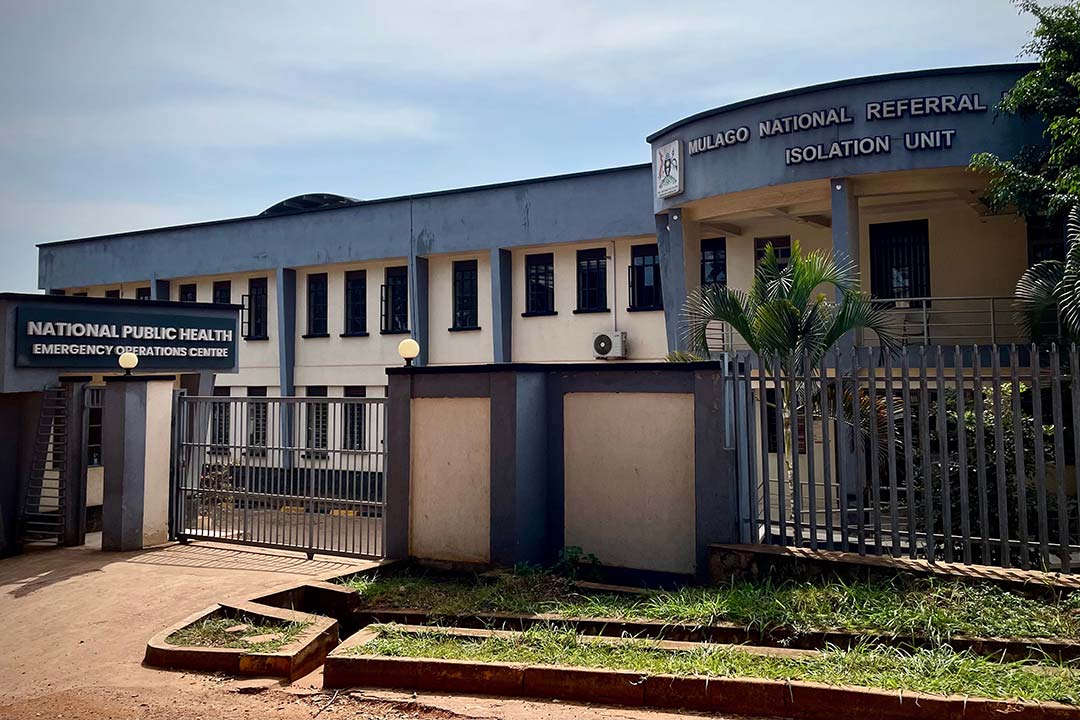
“This meant we needed isolation units, specific treatment wards for measles cases, separate from the general population – which stretched already meagre resources,” says Kabwiga in an interview with VaccinesWork. “Some [young] people think health authorities only started to isolate and quarantine people to control diseases after COVID-19. No. These measures didn’t start today. They were very popular in the 1980s whenever we had measles outbreaks.”
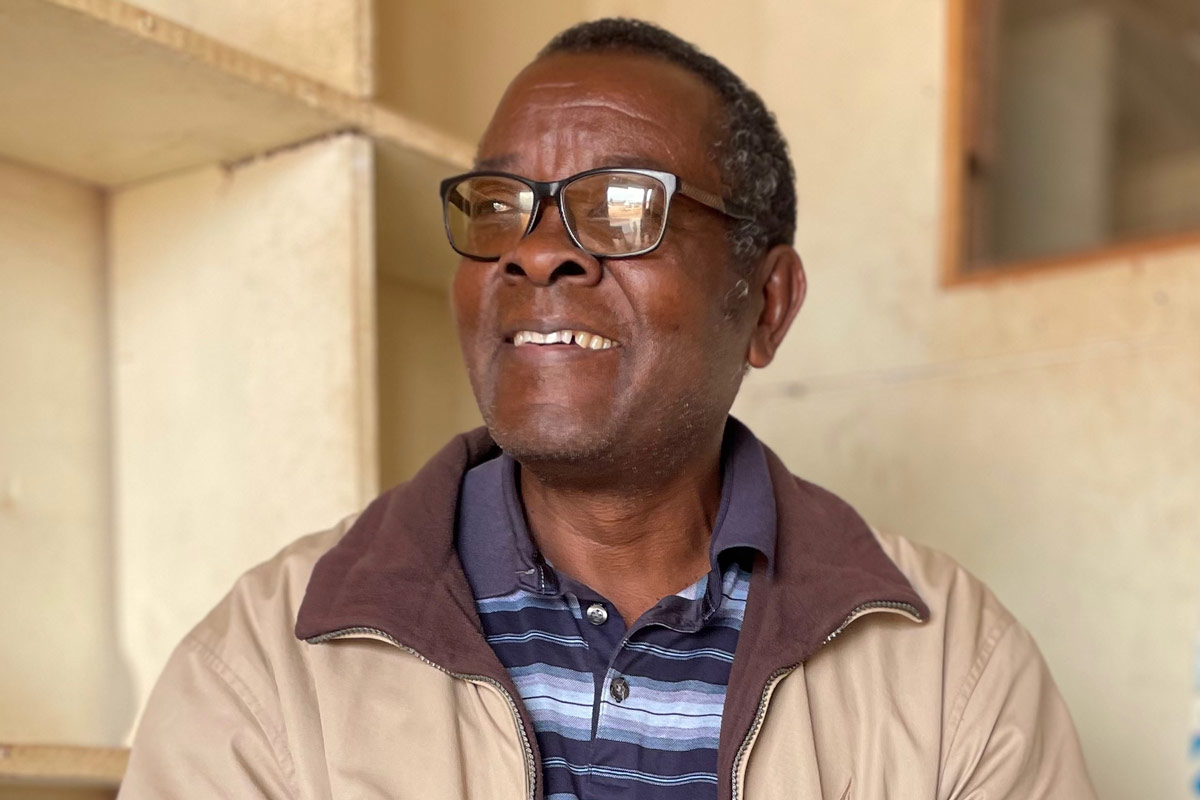
“When we talk of the 1970s and 1980s, measles – just like tuberculosis and the other traditional six killer diseases – was everywhere. Not only in southwestern Uganda, but throughout the country and beyond,” says Professor Edison Mworozi, a specialist paediatrician who interned at a measles ward at Uganda’s top referral facility, Mulago Hospital, in the 1980s. The measles vaccine first became available in Uganda in 1981, but only a minority of children were reached with the jab in the first tumultuous years of its tenure.
The unutterable virus
Indeed, measles was so prevalent that communities across the country didn’t refer to it by name out of superstitious fear it would summon an attack, says Mworozi. Instead, they used euphemisms. “For instance, communities in southwestern Uganda called measles, omuzibwe, or ‘epidemic’, while communities in the central region called it omulangira or ‘prince’.”
The disease sent shivers down people’s spines. Families produced many children hoping that if an epidemic swept through, it would at least spare some of their offspring. But sometimes, when the disease attacked, there weren’t any survivors. It killed all of the children below five years old, Mworozi says. “Families stopped eating certain foods if they had a child sick with measles.”
Turning point
But in the early 1990s, the country conducted catch-up measles vaccination campaigns, targeting children between 6 months and 15 years, and the disease started to disappear.
Uganda first introduced the measles vaccine in 1981, but coverage hovered around 34% for the first few years, in part because of civil and political unrest. The country launched its national Expanded Programme on Immunization, known as UNEPI, in 1983 to push ahead. In 1986, the advent of a new, more stable government permitted real progress on coverage to pick up.
By 1990, measles vaccine coverage was at 63% and climbing. During a landmark vaccination push in 1999–2000, the country inoculated millions of children between six months and five years, to protect them from the disease. The campaign worked.
Isolation wards start to close
“Weeks after the campaign, measles cases dropped by 39%, admissions by 60%, and deaths by 63%,” says Mworozi. “Isolation wards that had been full, started to empty.”
The wards continued to empty – and then close – as the country stepped up vaccination campaigns in 2003 and 2006.
“At one time we had almost zero measles cases,” says Dr Annet Kisakye, immunisation officer at the World Health Organization (WHO) office in Kampala. “For instance, in 2009, we had only nine confirmed measles cases in the country.”
The success showed communities what vaccines could do to protect children from the disease. And, in turn, communities demanded for the vaccine.
A slippery foe
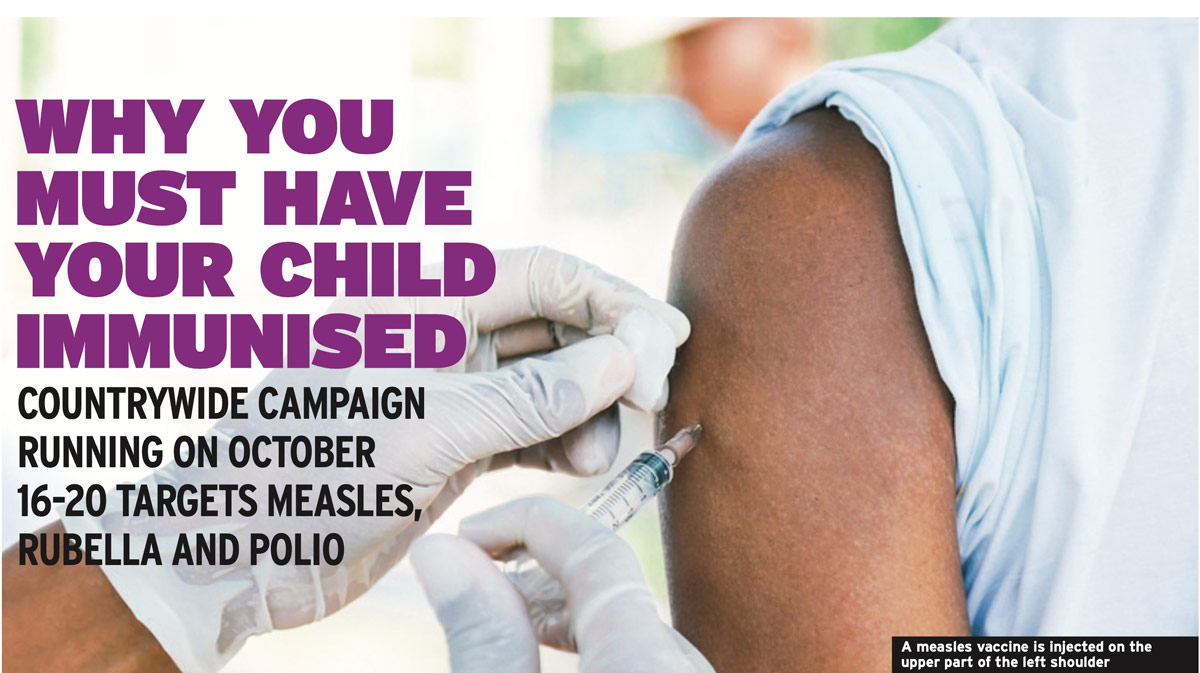
But measles is a slippery adversary. Because it’s so contagious, the virus requires high, robust immune defences: the World Health Organization says a 95% vaccination rate is required for herd immunity. That means the virus is likely to crop back up anywhere and anytime those ramparts drop or crumble.
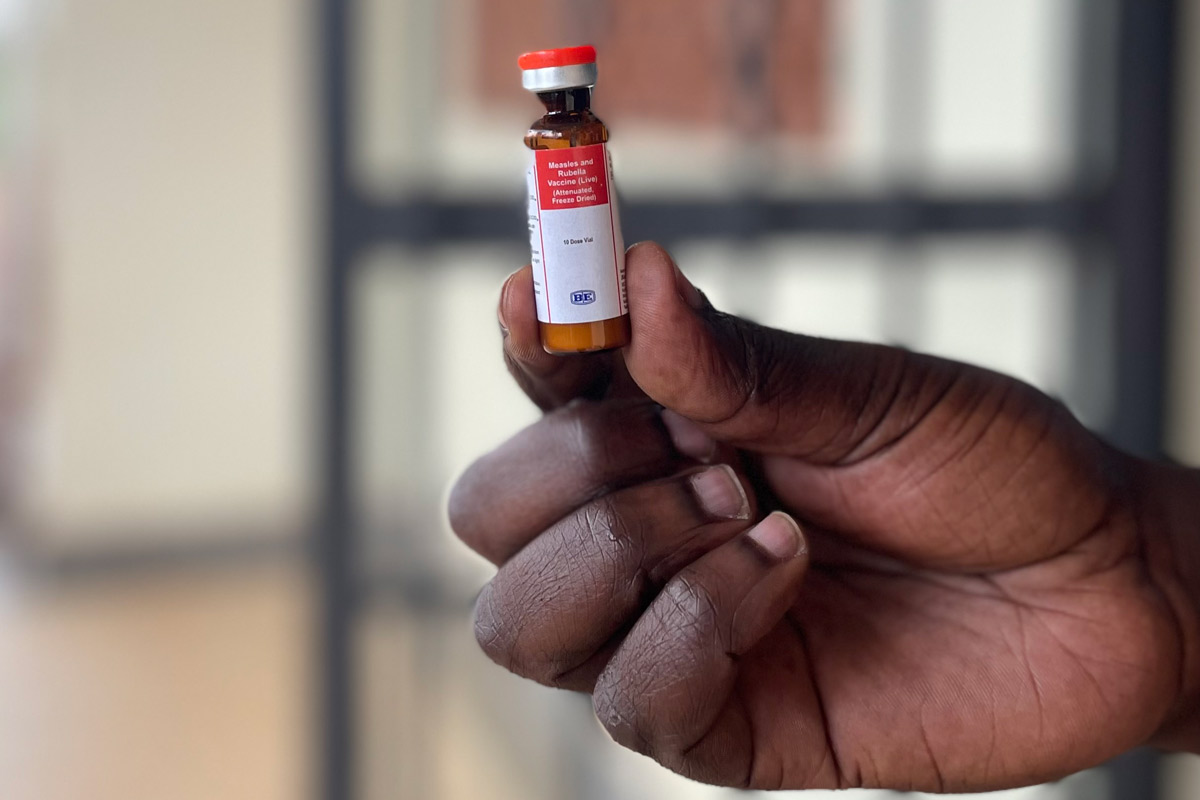
In the last two years, despite sustaining vaccination rates of about 90% with the first dose of the measles-rubella (MR) vaccine, Uganda has seen a rising measles caseload. In 2025, no fewer than 67 districts across the country reported confirmed measles outbreaks.
Dr Michael Baganizi, manager of UNEPI, notes that though first dose rates are high, “low MR2 coverage” – currently at 61% – and limited last-mile distribution of vaccines leave communities vulnerable to new outbreaks. Weak measles surveillance in affected districts is an additional problem, he explains.
That second dose of the MR vaccine is a relatively new addition to Uganda’s programme, rolling out for the first time in 2022. Initially, the assumption was that a single measles vaccine provided enough protection for life. Later science showed that not every child who received the vaccine ‘sero-converted’ or developed antibodies to fight the disease. “Some 15% may not (sero-convert) and need a second booster dose,” says Kisakye. In that sense, the programme is playing catch-up twice.
Defensive manoeuvres
But that game of catch-up is proceeding well. Baganizi says that 62 of the 67 districts that reported measles outbreaks in 2025 completed MR vaccination response campaigns. He says the remaining districts, including Butaleja in eastern Uganda and others in the Karamoja region, were conducting vaccination response campaigns at the time of speaking.
“The country has deployed a rapid response team, including epidemiologists and immunisation specialists, to support 37 of the districts in outbreak investigations to interrupt transmission,” says Baganizi. “It has also scaled up laboratory and molecular testing of suspected measles samples to ensure timely outbreak detection and response.”
At the time of writing, health officials were able to confirm that 43 of the 67 affected districts were able to declare their outbreaks over, not having reported a measles case in 42 days. Another 15 consider outbreaks controlled, and are waiting out the mandatory 42 days, while nine districts are still contending with new cases.
But the defensive efforts don’t end at outbreak control. Baganizi says UNEPI has supported over 111 districts to identify underserved areas and develop micro-plans to vaccinate under-immunised MR and ZDC children. He says the programme has also piloted last-mile delivery of vaccines and supplies in eastern Uganda to address transport challenges health facilities in the region face. The programme has planned a nationwide MR follow-up campaign in October 2026.
“We have all these socio-economic and cultural factors that continue to impact vaccine coverage. However, we continue to encourage parents to take children for immunisation,” says Dr Immaculate Ampeire, senior medical officer at UNEPI. “We are working with schools to ensure that children receive the second dose of measles-rubella vaccine before they enter class.”
“The challenge is that when we give most of these vaccines at birth [and the first few weeks of life)] but wait to give the measles vaccine at nine months, some mothers forget to come back,” says Mworozi. “It is even worse when you tell them to come back after 18 months [for the second dose].”
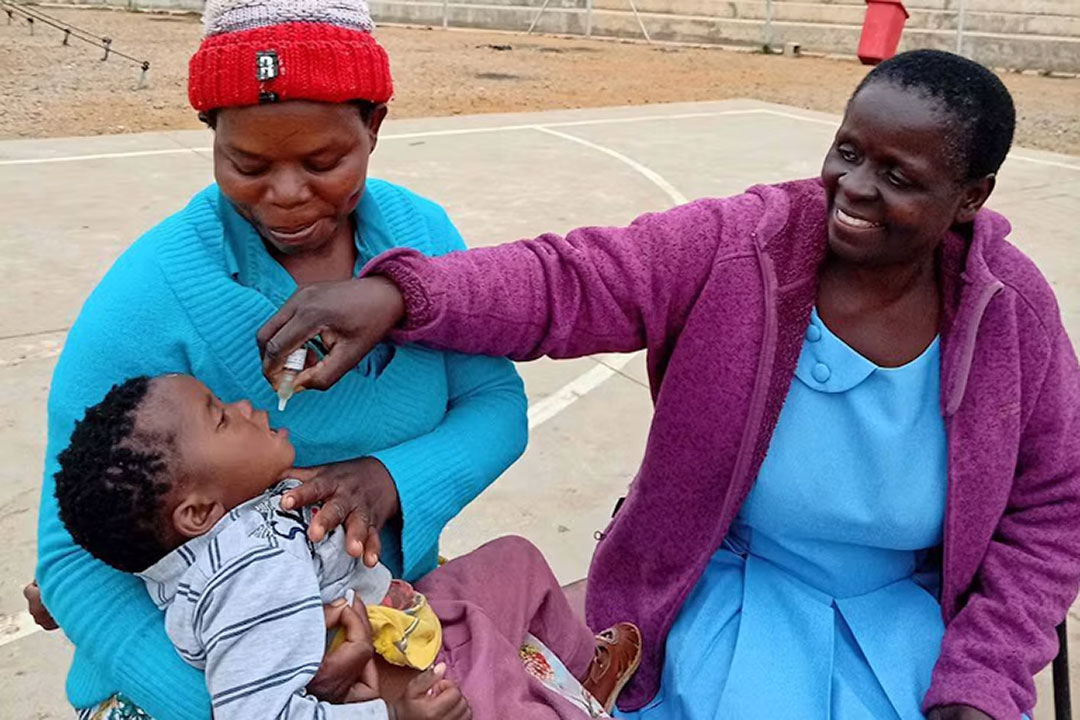
“But we have to continue reaching out to these parents in under-served communities because vaccination is the best protection that we can give children,” he says.
Have you read?
No going back
Back in southwestern Uganda, Dr Kabwiga looks outside his clinic’s window and stares into the distance.
“It is unfortunate that some communities have forgotten where we have come from, and that we have to plead with parents to take children for vaccination. But vaccines have been a miracle.”
Vaccination means that “measles is not as frequent as it used to be,” Kabwiga says. “Managing the disease is not as complicated as it was once.”
“Because of the MR vaccine, we have averted millions of measles cases and thousands of child deaths,” he says. “We have come a long way. We simply cannot go back.”