
What does it mean to lose ‘measles-free’ status and can countries get it back?
From the UK to Spain, nations are increasingly losing their measles elimination status. But what is it and why does it matter?
- 28 January 2026
- 6 min read
- by Linda Geddes
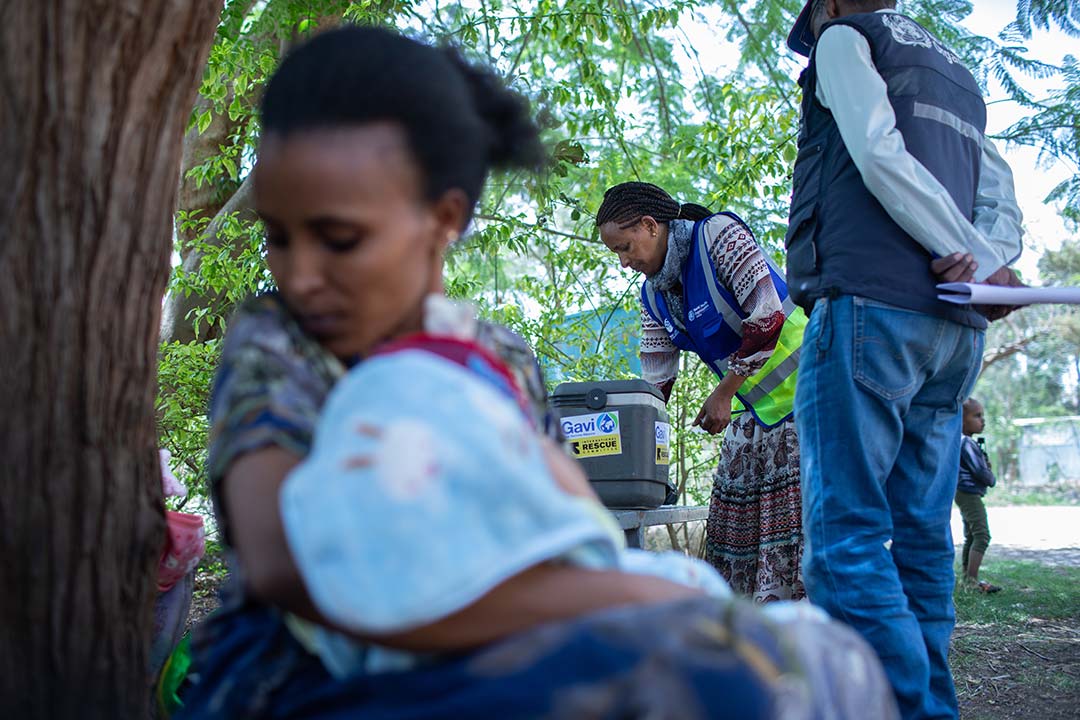
Measles – a disease many thought Europe had largely left behind – is making an alarming comeback.
In recent months, six countries in the World Health Organization’s (WHO’s) European region that had previously eliminated the disease have officially lost their measles-free status. In other countries, measles is once again considered endemic.
Although the decision to remove these countries’ measles-free status was taken last September based on 2024 data, the World Health Organization (WHO) did not release the information publicly until this week, once all countries had signed off.
The UK’s loss of measles-free status, in particular, had been widely anticipated by public health experts. After thousands of cases over the past few years, vaccination rates have remained well below the 95% coverage WHO recommends to to stop sustained spread of measles virus.
From endemic to eradicated: measles terms you should know
Endemic: When a disease is consistently present and spreading within a population. For measles, the World Health Organization (WHO) defines this as continuous transmission lasting 12 months or more in a specific country or region.
Eliminated: Elimination of a disease occurs when it is no longer endemic to a particular geographical region. In the case of measles, WHO defines this as the absence of virus transmission in a defined geographic area for 12 months or more in the presence of a well-performing surveillance system.
Measles elimination is officially verified when there has been no ongoing local spread of the virus for three straight years.
Eradicated: The disease no longer occurs naturally anywhere in the world. Smallpox is the only human infectious disease that has been eradicated worldwide.
Measles-free: A country that is measles-free has met the WHO’s formal public health definition of measles elimination – meaning no sustained local transmission for at least a year, backed by strong disease surveillance. If measles transmission continuously occurs for more than 12 months, the country is no longer considered measles-free.
Measles outbreak in an elimination setting: A single laboratory-confirmed case of measles.
Re-established: When a disease starts spreading continuously again after it had previously been stopped. WHO defines measles as re-established when the same virus strain spreads locally for 12 months or more in a country or region where it had been eliminated.
“This moment is a miserable reflection of the state of measles vaccination in the UK, and a very alarming indication of the risk to our children from this potentially fatal disease,” said Prof Andrew Pollard, Director of the Oxford Vaccine Group at the University of Oxford.
Canada lost its measles elimination status last year, while the United States is trying to preserve its own as measles infections continue to increase.
So, what does it actually mean for a country to “lose” its measles-free status? Here’s why the designation matters – and how countries can earn it back.
What does the loss of measles elimination status mean?
When a country loses its measles elimination status, it means that measles is no longer truly under control within its borders. WHO defines measles elimination as the absence of endemic measles transmission in a defined geographical area for 12 months or more in the presence of a well-performing surveillance system. Endemic measles is where the virus is consistently present and spreading within a population.
If measles transmission resumes after a country is declared ‘measles-free’, WHO considers it to be ‘re-established’ in that area. In the UK’s case, WHO decided that measles had been transmitting continuously in 2024, based on data showing 2,911 laboratory-confirmed cases in England – the highest annual total since 2012 – plus a further 957 cases in 2025, including the death of a child.
Losing measles-free status doesn’t necessarily mean that measles is everywhere, but it does mean the virus has returned to ongoing local spread rather than just isolated imported cases.
Have you read?
How is measles elimination evaluated?
WHO’s verification bodies – such as the European Regional Verification Commission for Measles and Rubella Elimination (RVC) – review annual reports from member states to determine when endemic transmission has been interrupted or re-established. They use this evidence to determine whether a country should be granted or lose elimination status.
Based on data submitted for 2024 and previous years, the RVC has concluded that most countries (60%) in WHO’s European region have successfully stopped measles and rubella from spreading continuously.
However, in 13 countries, including France, Germany and Italy, measles is considered endemic, while in a further six countries – UK, Spain, Austria, Armenia, Azerbaijan and Uzbekistan – measles has re-established.
The situation in 2024 “highlighted the urgent need for increased political and financial commitment from countries and international organisations,” the Commission said.
Why does it matter is a country is no longer “measles-free”?
Being “measles-free” is an indicator of strong public health performance more generally, as it reflects that a country’s vaccination programmes and disease surveillance have kept measles from establishing continuous local transmission.
Once that status is lost, it signals that gaps in immunity and public health response have grown, allowing the disease to circulate again.
Dr Ben Kasstan-Dabush at the London School of Hygiene & Tropical Medicine said that sustained measles transmission within the UK reflected “a decade-long decline in routine vaccination coverage”, and a “persistent failure” to reach the 95% measles vaccine coverage threshold recommended by WHO.
When countries or regions fall below that threshold, local spread can quickly re-establish, leading to outbreaks. For instance, in the small, densely populated inner-London borough of Hackney, where 133 measles cases were confirmed last year, just 60.8% of children received the recommended two doses of measles, mumps and rubella (MMR) vaccine in 2023–2024, compared with 83.9% of children in England on average.
“The low uptake of the MMR vaccine is also an indicator that other vaccine uptake may be lower,” said Dr Bharat Pankhania, Senior Clinical Lecturer in Public Health Medicine at the University of Exeter Medical School, UK. “We’re already seeing outbreaks of whooping cough, for example, which can be very damaging and lead to prolonged illness in very young babies.”
How can countries get their measles-free status back?
Regaining measles-free status requires countries to interrupt endemic transmission and demonstrate that the virus is no longer circulating locally. WHO only verifies measles elimination after three years without continuous local transmission.
So, to earn the status back, countries must not only halt outbreaks, but demonstrate a sustained period of interrupted transmission backed by strong surveillance and vaccination coverage data.
This has happened before. The UK, for example, was officially declared measles-free in 2016, lost that status when transmission became re-established in 2018 and then regained elimination status in 2021, after interrupting measles spread once more.
The latest setback is a reminder of just how easily measles virus can resurge, and how difficult it is to maintain elimination without sustained, high uptake of the measles vaccine.
More from Linda Geddes