
Outbreaks signal new delays for Nepal’s mission to eliminate measles
Measles is resurging in Nepal, with more than 20 outbreaks recorded in the past five years, and two confirmed so far this year. Why?
- 20 April 2026
- 5 min read
- by Pragya Timsina
The year was not yet a week old when laboratory analysis confirmed that several ill children in Nepal’s Sarlahi district were positive for the fast-spreading and potentially deadly measles virus.
Since the new year, health centres in Malangawa Municipality had received multiple children with high grade fevers and coughs. It was winter, so initially health workers assumed the children had been brought low by the seasonal bugs making the rounds.
But all of the children belonged to same community: a worrying signal that this could be a more acutely contagious pathogen.
Cross-border transmission from India is often the spark to light the tinder. Nepal’s measles vaccine coverage is relatively high, however susceptible communities' movement across borders means coverage with two doses of the measles vaccine needs to stay high to successfully shield these communities from the disease.
Next, on examining the children, they found they all had very specific rashes – known technically as erythematous maculopapular rashes – across their faces, trunks and limbs. That set off alarm bells: this was likely to be measles.
Blood samples were sent away to the National Public Health Laboratory (NPHL) in Kathmandu. Seventy-two hours later, they had confirmation. To date, 34 measles cases have been identified in Sarlahi as part of the outbreak.
Baglung District hit
Six weeks after the outbreak in Sarlahi was confirmed in January, another sprang up in Baglung District, in the hilly region of Nepal.
According to Prabin Sharma, director at the Provincial Public Health Office, Baglung, the first case was in a child who had recently returned from a trip to India.
He suffered a high-grade fever and the tell-tale rash all over his body, but crucial time to control the burgeoning outbreak was lost, because his family took him to a faith healer instead of the clinic.
Measles is the most contagious human virus known to science. It took just a few days for 18 more children to develop similar rashes and fevers. As soon as local health workers grew aware, they collected blood samples and sent them away to the Provincial Hospital for analysis.
As of 31 March 2026, 136 measles cases had been reported from Baglung. Fortunately, no fatalities have been reported so far.
Evidence of an immune wall breach
Analysis of the two outbreaks reveal a few telling similarities. Both outbreaks occurred in very marginalised communities, which have been struggling for day-to-day basics.
In Sarlahi, measles hit a poor Muslim community – a minority and often underprivileged faith-group in Nepal. In Baglung, measles spread through a Dalit, or low-caste, community, who have been socially isolated and deprived of various public facilities for generations.
Because measles is so contagious, it is often the first pathogen to find gaps in the immune defences of a given population. That was the case here: children in both communities were found to be unprotected, having missed out on regular immunisations in early childhood. Government data from 2024–2025 says that while only 1.7% of children receive no vaccines at all, around 11% of children countrywide miss out on one or more of their recommended doses.
Have you read?
Cross-border transmission from India is often the spark to light the tinder. Nepal’s measles vaccine coverage is relatively high, however susceptible communities' movement across borders means coverage with two doses of the measles vaccine needs to stay high to successfully shield these communities from the disease.
Sarlahi lies in the Terai region of Nepal, which shares a long border with India, and though Baglung is far from the border in the hills, the index case was a recent returnee.
Many people from Nepal travel to India in search of work opportunities, meaning that until Nepal is able to achieve a 95% coverage with both doses of the measles-containing vaccine even at subnational level – that’s the threshold that the World Health Organization has says constitutes herd immunity – the risk of an outbreak remains likely.
Elusive elimination
Measles is a tricky disease to outflank. Like many other countries, Nepal has been obliged to postpone its self-imposed elimination target more than once, when outbreaks of disease highlighted an incomplete defence.
The country had targeted elimination in 2016, but that year, a major outbreak hit the country’s west, and clusters of cases cropped up among the mountains. The deadline was pushed to 2019 – the year that would prove to see a record resurgence of the virus worldwide. Nepal wasn’t spared: 1,500 cases were reported from across the country.
Another big outbreak in 2023 saw some 1,000 children fall ill. Again, campaigns were launched, investment in routine vaccination redoubled, and a new target was set for 2026. With the year beginning as it has, that target is expected to be rescheduled again.
Measures taken
What’s most important now is patching the defensive gaps to try and quash the risk that more children fall ill. Prompt responses to outbreaks are key, says Dr Abhiyan Gautam, the head of the Child Health and Immunization branch of the Department of Health Services.
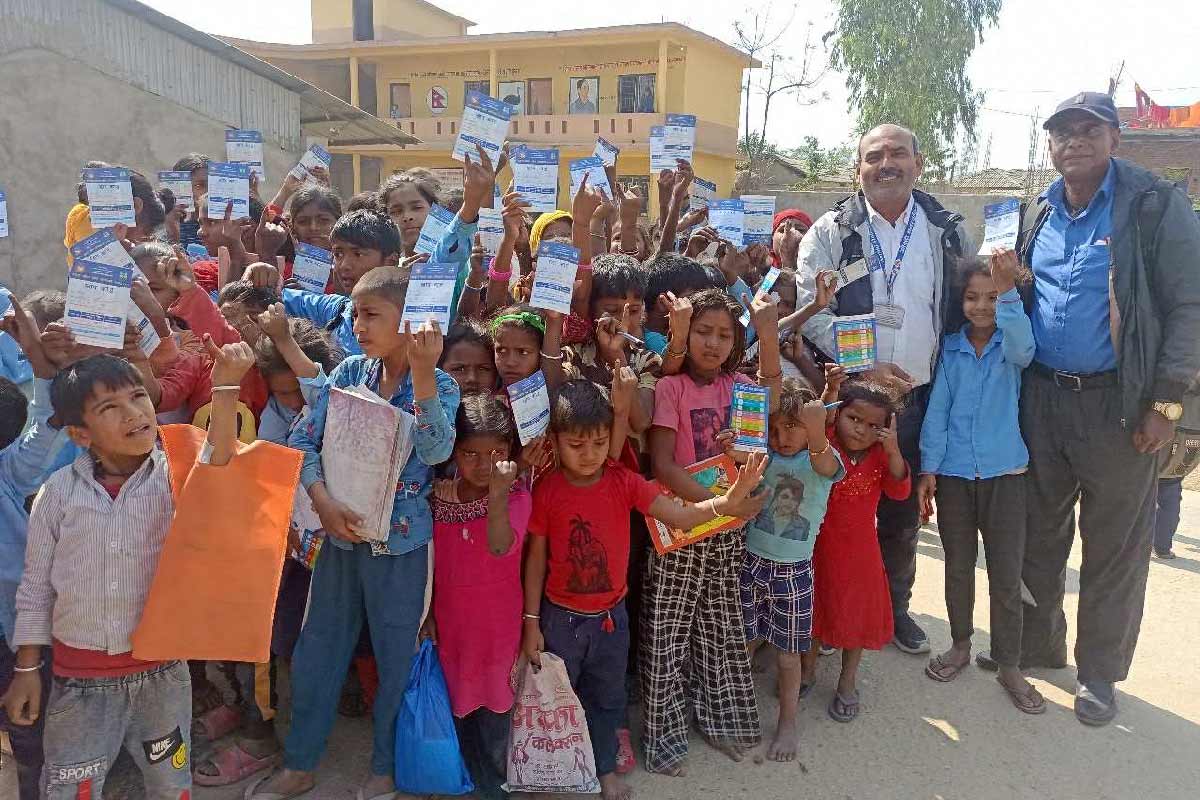
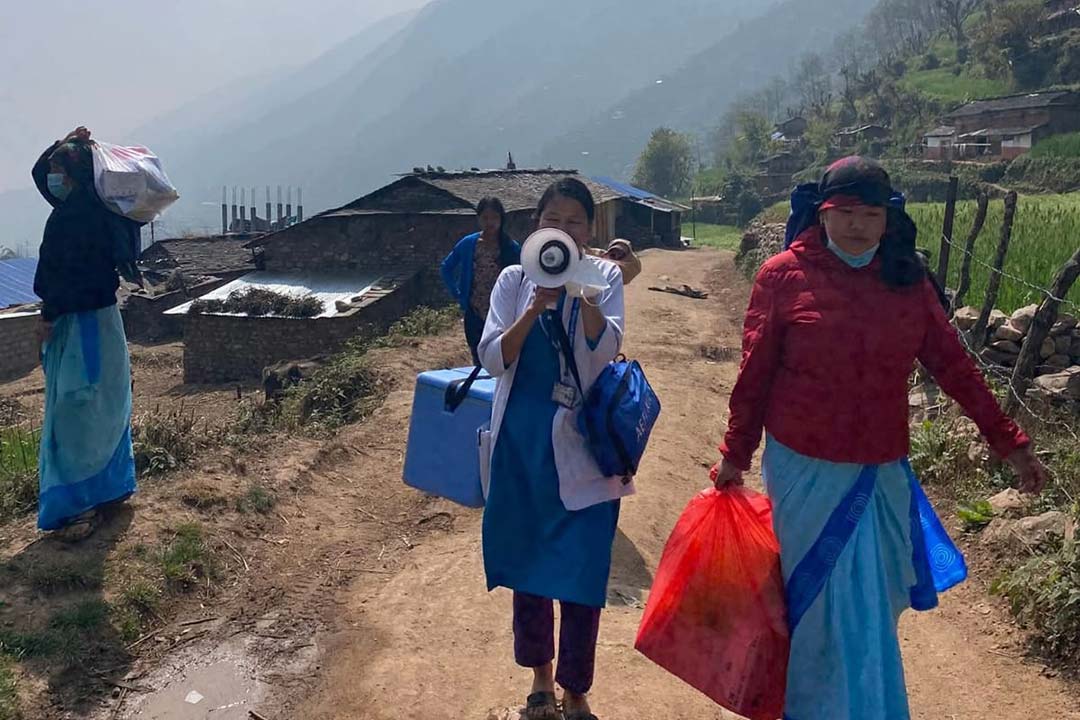
That’s something Nepal is practised at. Confirmed cases of measles trigger the deployment of well-trained health workers to the affected site. Patients are placed in isolation, and other exposed children are kept in proper quarantine, Dr Gautam explains. For the next several days, the team conducts a search programme to discover other afflicted children. Finally, the government rolls out a vaccination campaign in the affected community and among its neighbours.
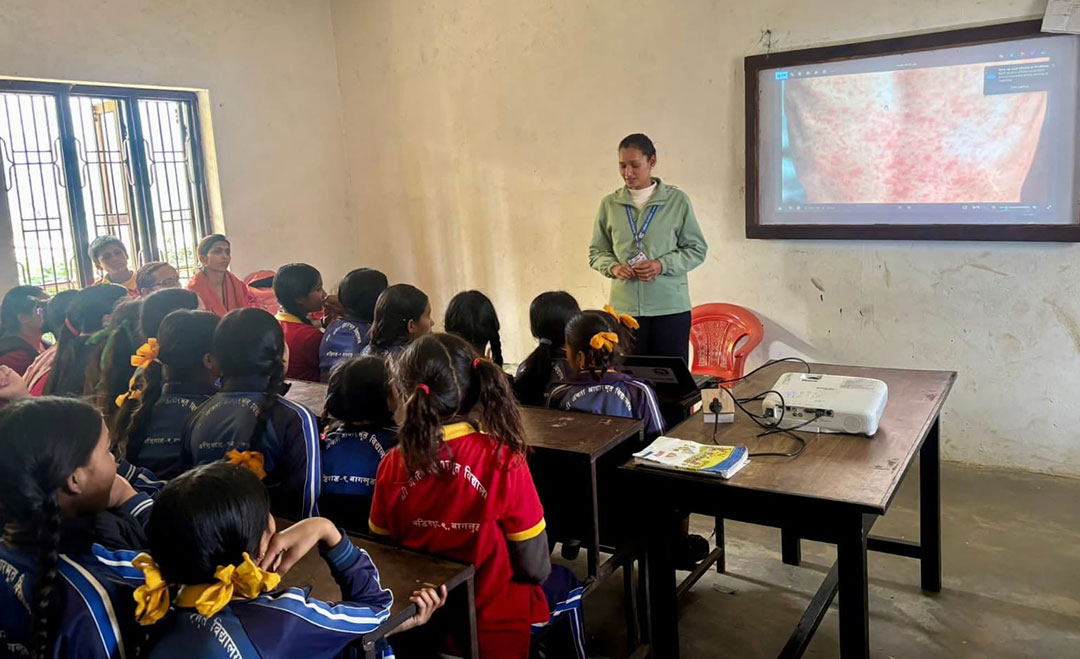
Credit: Nepal National Immunization Program
That sometimes takes collaboration with community leaders, who can help drive up the acceptability of vaccines. For instance, in Sarlahi, a Maulana, an Islamic schoolteacher, lent a hand to the health workers by interceding on their behalf with the families he works with, Gautam explained.
The long game
Sustainably increasing immunisation coverage is the only way to break the current measles trend.
But Dr Gautam also cautions that both progress and setbacks tend to reveal themselves on a delay. The most-affected age group in recent outbreaks has been children aged 10 to 15, pointing to gaps in coverage a decade ago, when those children were infants and toddlers and due to be vaccinated.
More from Pragya Timsina