
Preparing for AI-Enabled Bioweapons
The prospect of bioweapons developed by non-state actors has lent new urgency to multilateral pandemic preparation and response efforts. Yet at a time when AI has made such threats exponentially greater, the funding model that sustains critical health-security safeguards is collapsing.
- 4 March 2026
- 5 min read
- by Sania Nishtar , Project Syndicate
We don’t know when the next epidemic or pandemic will hit, or where the next infectious threat will emerge. But we do know that the nature of the threat is constantly evolving. One of the most sobering takeaways from this year’s Munich Security Conference was that AI-enabled gene editing has radically lowered the barrier to developing genetically engineered bioweapons. We must prepare to live with even deeper uncertainty about whether emerging infectious threats are natural or man-made, and whether they have been accidentally or deliberately released.
At a conference typically dominated by geopolitics and the threat of armed conflict, the prospect of bioweapons developed by non-state actors steered the conversation toward the neglected topic of global health security. Policymakers are now focusing on what capacities we have, and what additional capacities we will need, to detect and respond to this threat – as well they should.
Of course, from a public-health perspective, it may ultimately be irrelevant whether an infectious pathogen is man-made or deliberately released. What matters most for those of us concerned with saving lives and protecting health is that we are ready and able to detect and respond to infectious threats wherever – and however – they emerge.
Fortunately, there has been some progress since the COVID-19 pandemic toward strengthening our collective defenses against infectious threats. Just under a year ago, World Health Organization member states voted to adopt the WHO Pandemic Agreement, and although negotiations on the finer details continue, we at least know that there is still demand – if not a consensus – for multilateral cooperation on this critical issue.
Moreover, Gavi (the organization I lead) and the Coalition for Epidemic Preparedness Innovations have both evolved since COVID-19. Our organizations now work hand-in-hand to help protect the world from infectious threats. CEPI’s experts scan the horizon for potential risks and provide the right mix of incentives to translate ideas and research into safe and effective new vaccines and therapeutics. And at Gavi, we help make vaccines accessible to everyone who needs them, acting as a custodian of emergency stockpiles, a provider of surge financing, and a catalytic investor for regional vaccine manufacturing.
Have you read?
These functions are global public goods. They are central to our defenses against emerging infectious threats. Yet at a time when those threats have never been greater, the funding model that sustains these critical functions is collapsing as donors slash spending on official development assistance (ODA) in favor of investments in traditional defense capabilities.
These cuts put us all at risk. If anything, we need significantly more funding to tackle emergent and re-emerging infections and bioterrorism threats, including through interventions that can, and should, be taken now to strengthen our preparedness.
For example, there is an urgent need for closer coordination across preparedness and response structures. I know this because one of my first experiences as CEO of Gavi was tackling the Mpox emergency in 2024, and because I served as a cabinet member in Pakistan during the COVID-19 response. In both cases, it was clear that only an extensive multi-stakeholder response would be effective.
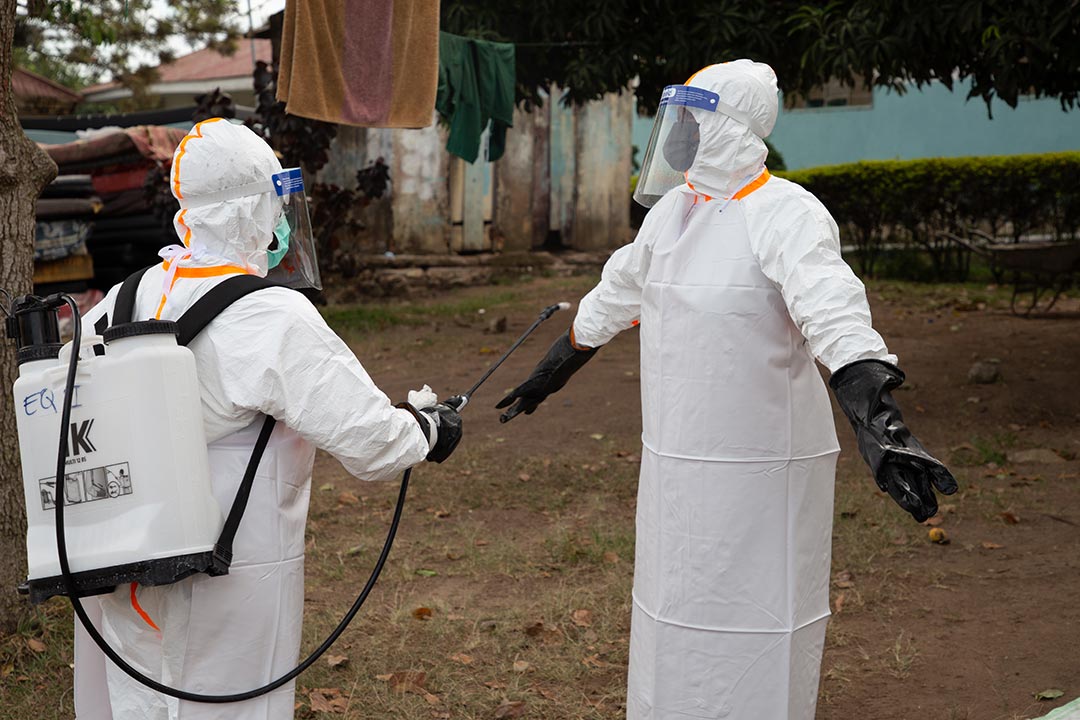
But such responses can be mobilized in a timely manner only if the relevant stakeholders have been fully prepared through periodic simulation exercises. Readiness is a muscle that requires regular exercise at all levels – national, regional, and international. Our preparations must encompass everything from emergency supply chains, logistics, and stockpile management to international borders and trade.
A second immediate need is for a formal, regularly tested joint-planning mechanism for researchers, funders, regulators, and manufacturers. We must ensure not only that medical countermeasures are developed rapidly, but that they are tested, approved, accessible, and scalable on short notice. All this work requires specific financing mechanisms. Without the right incentives, investments in medical countermeasures against low-risk, high-consequence infectious threats will not reach the necessary scale.
Third, we urgently need to add new competencies to the global health system to cultivate AI bio-resilience. By using AI for detection and prediction, we can harness the technology’s potential to counteract the threat it will pose in the hands of malign actors. Given the current trend toward downsizing global health institutions, this additional dimension must not be forgotten.
Likewise, we must remain focused on ensuring the availability of surge financing for large-scale epidemics and pandemics. To that end, Gavi recently established a new instrument – the First Response Fund – to provide rapid financing in the event of an outbreak or emergency. This instrument already played a key role in the rapid deployment of vaccines against Mpox in Africa.
But we still need a predictable mechanism to provide further liquidity for the type of large-scale deployment of medical countermeasures that would be required in response to an engineered infectious threat with pandemic potential. Multilateral development banks could play a key role.
The question of how we fund these capabilities is part of a larger debate about the role of ODA in a changing world. We will need to start thinking about ODA in two ways: as a tool for poverty reduction and economic development, and as a means of financing public goods and building global resilience. Collective health defense calls for collective responsibility. That means improving our coordination and establishing a model for predictable, sustainable, and reliable funding. Anything less invites disaster.
More from Sania Nishtar