
Sierra Leone races to drop maternal and child deaths to zero
226 days into the 300 day campaign, preliminary mortality data are promising. More than 10,000 zero-dose children have been caught up.
- 13 October 2026
- 6 min read
- by Saidu Bah
At a glance
- Sierra Leone has made enormous strides on maternal and child mortality since the turn of the millennium, when as many as 1 in 4 children were expected to die before age 5. But there’s further to go, and this year, the country’s Ministry of Health has decided to take a 300-day run at the target.
- The campaign’s target is ambitious: zero preventable maternal deaths, zero preventable child deaths and zero zero-dose children. 226 days in, preliminary data show the effort is having an impact.
- More than 10,000 formerly zero-dose children have been reached with vaccines, while maternal deaths have plunged more than 32% and child deaths have dropped by 12.3% over the 2005 baseline.
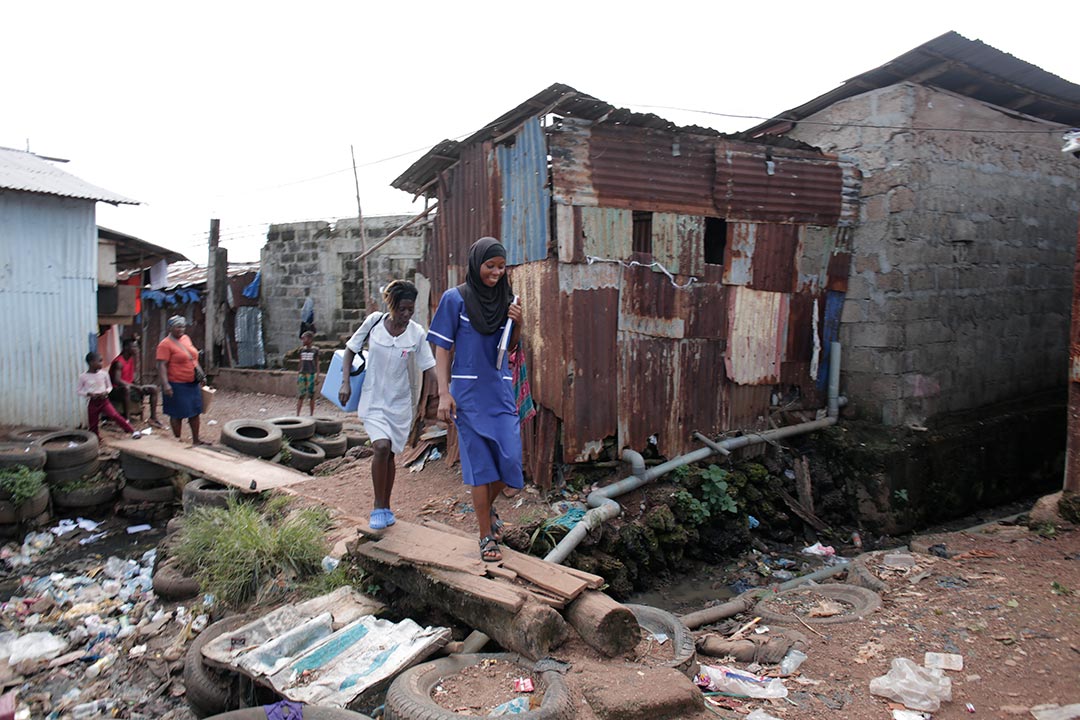
On a sunny morning in Sierra Leone’s capital Freetown, nurse Increase Conteh jostled through steep narrow alleys of the sprawling Congo Town slum, built on land reclaimed from the sea.
A vaccine carrier dangled from one of her shoulders and she held a notebook with a list of children who had missed vaccines they were due.
Many of the children on her list, she knew, had missed their jabs because their caregivers were simply too busy eking out a living to make the trip to the clinic. She looked around: there were overflowing sewers, piles of debris, flies and roaming pigs and dogs.
In tough conditions like Congo Town, home to an estimated 24,000 inhabitants, life can easily get in the way of scheduled preventive care. Unless, of course, the health system comes to the community.
Two-year-old Fatmata, for example, had initially missed out on her vaccines because her mother, 36-year-old Therissa Coker, had needed to travel to a village in Port Loko, in the country’s north, for funeral ceremonies. One thing led to another and it was eight months before Coker and her little girl returned to Freetown.
Back in Congo Town, Coker started a small business selling cooking ingredients on a table near her home.
“People in the slum usually buy rice, palm oil, pepper to cook. I don’t have time to go to the clinic with my daughter for routine vaccination. I'm so happy the outreach team came to my house to check on my child's vaccination record," Coker reported.
“The nurse checked my daughter's vaccination yellow card and administered some vaccine injections on her arm, thigh and also gave her an oral drop.”
Conteh works at Graybush Health Center and makes outreach to Congo Town a weekly routine that has been a lifeline for many of the children and pregnant women living in the informal settlement.
“We administer vaccine injections and drops in the mouths of children to protect them from polio, measles, yellow fever, worms and other illnesses. The vaccines boost their immune system to help them live a healthier life,” explained nurse Conteh.
Sights set on “Triple Zero”
It has become far safer to have, and be, a child in Sierra Leone over the last couple of decades. While in 2000, the maternal mortality rate stood at 1,800 deaths per 100,000 live births, that figure had fallen to about 354 deaths per 100,000 in 2023, according to UNICEF. Today, 9 children in every 100 die before age 5, down from one child in four at the turn of the new millennium.
But that’s still too many lost women and children. In March this year the Sierra Leone government, through the Ministry of Health launched an ambitious programme called 300 days of Activism for Triple Zero.

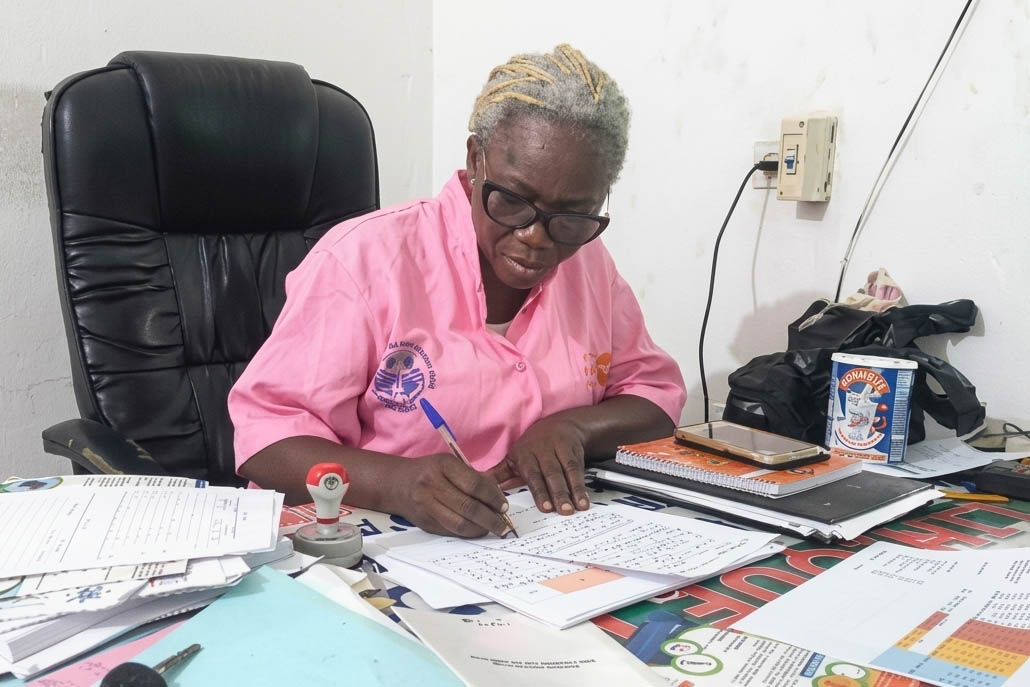
Credit: Saidu Bah
Dr Desmond Mada Kangbai, Program Manager for the Expanded Programme on Immunization, explained: “The initiative is targeting preventable maternal deaths during pregnancy or birth, infants and young children, and zero-dose for immunisation of children, meaning every child receives the needed life-saving healthcare.”
In other words: zero avoidable deaths of mothers and small children, and zero children unprotected by vaccines.
Have you read?
In practice, the vaccination element of that push has represented a shift in strategy from periodic campaigns to a focused, day-to-day execution model designed to address persistent operational gaps, like stock shortages, referral failures and missed immunisations.
“Our primary objective is to reduce the number of zero-dose children who have not received [a dose of the basic diphtheria, tetanus and pertussis-including] DTP vaccine by 12 months of age with a holistic approach that strengthens routine immunisation services to improve immunisation coverage, utilising existing routine structures and outreach services rather than isolated temporary campaigns to ensure long-term sustainability,” Dr Kangbai said.
Zeroing in
According to the latest World Health Organization/UNICEF estimates, Sierra Leone is home to 19,000 “zero-dose” or unimmunised children, many of whom live in border areas, nomadic settlements and urban slums like Congo Town.
The EPI has used microplanning data from 2025 to identify high-risk populations. Health facilities then use tracking registers and Community Health Workers (CHWs) to identify and protect individual children who have missed scheduled doses, Kangbai said.

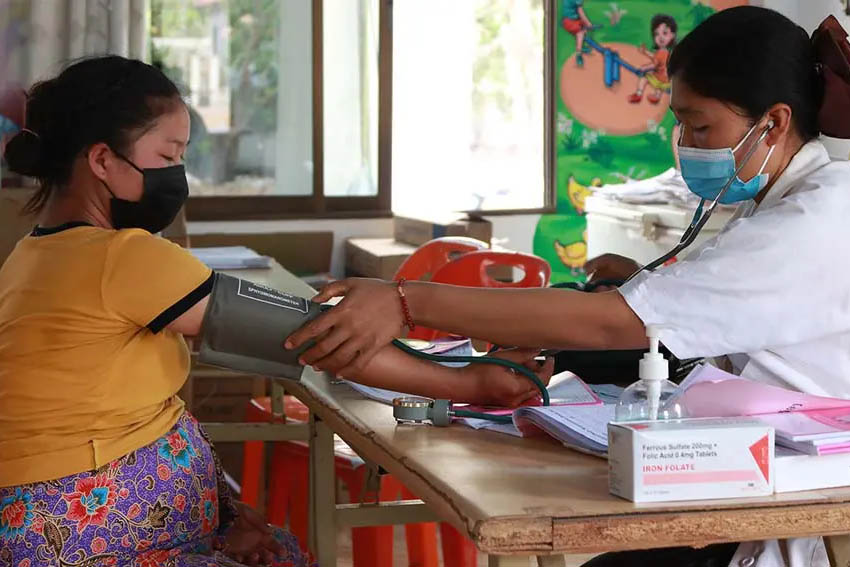
Credit: Saidu Bah
What is rolled out at the community level depends on need: measles campaign workers, for instance need to carry out contact tracing and targeted immunisation of high-risk individuals.
Other areas see health workers touring with a full complement of vaccines in their kit, including the anti-tuberculosis BCG vaccine, the 5-part basic pentavalent jab, the cervical-cancer blocking human papillomavirus vaccine for adolescent girls and the tetanus shot for pregnant women.
Lack of transport has been a stumbling block on the "last mile" to some of these embattled communities. But, according to Dr Kangbai, the Ministry and partners have procured 500 bicycles for Community Health Workers to improve mobility in remote areas.
While he notes that vaccine hesitancy is low among the population, poverty remains a barrier, with the transportation costs of a clinic visit often competing with household food security.
Current global financial challenges have put a squeeze on resources, he conceded.But the programme has found strength in its local-level allegiances. “Our success is heavily attributed to the involvement of local chiefs, community leaders, and the integration of services into existing Antenatal Care (ANC) and routine clinic visits,” Dr Kangbai said.
Data from the Ministry of Health so far show some significant improvements. Health Minister Austin Demby called it “a demonstration of what is possible when a nation comes together for a common purpose.”
226 days into the campaign, the Ministry’s dashboard – which collates preliminary administrative data, that has not yet been subjected to independent validation – recorded a 32.2% drop in maternal deaths against a 2025 baseline and a 12.3% drop in child deaths. It also reported 10,113 zero-dose children reached with essential vaccines.
Nurse Conteh, meanwhile, says she’s glad to have played her part. “Every vaccine dose I administer to children, I feel proud and happy that a life has been protected and prevented from illnesses."