
Signs of change: a Kenyan community health worker learns to talk to his deaf patients
As county governments roll out inclusive healthcare programmes for people with disabilities, Community Health Promoters learn a new lexicon of care.
- 8 September 2026
- 6 min read
- by Pius Sawa
At a glance
- To make healthcare more inclusive, several Kenyan county governments have offered basic training in Kenya Sign Language to community health promoters.
- Kelvin Kiliru Omega was selected as the representative of his Ward on that course – and has found his new language skills have made all the difference to the seven deaf mothers he has accompanied through pregnancy and childbirth since.
- “Kelvin came when our daughter needed his services the most,” said Florence Kevoko, mother of Naomi Boge, who is deaf and recently gave birth to her first child. Boge was able to keep up with all recommended antenatal and postnatal care due to Omega’s guidance.
Inside a home in Imbuti village, Vihiga county, two people sit and chat in animated silence. One of them is Naomi Boge, a deaf woman who has just returned from the clinic with her newborn baby daughter. The other is Kelvin Kiliru Omega, a 30-year-old Community Health Promoter (CHP) who recently learned sign-language to better support his patients.
“When I demonstrate to her, calling her by name, she becomes so happy and starts laughing,” Omega said.
For Boge’s family, as for Boge, Omega’s communication skills are a relief. Florence Kevoko, Boge’s mother, says that Omega’s explanations have meant that Boge has attended all the recommended antenatal clinics, and faithfully has her daily iron and folic acid supplements.
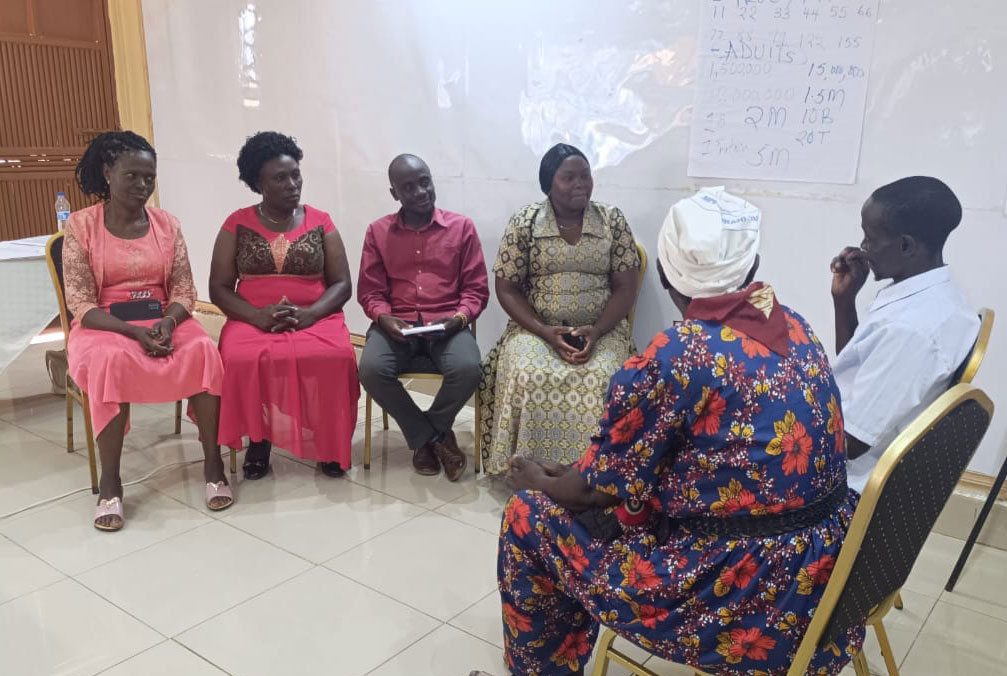
Photo by Kelvin Kiliru Omega
“We did not know how to explain to her all these issues, but I thank God, Kelvin came in time when our daughter needed his services the most,” Kevoko said, adding that her daughter had been scared of pregnancy, but with Omega’s support, she has felt “accepted and loved” during the journey.
Stumbling into a vocation
When Omega graduated from the University of Eldoret in 2020 with a bachelor’s degree in economics, he did not find employment anywhere. One day, in 2024, he attended a community health meeting at which CHPs were being recruited. Being the only young person present from his village, he volunteered.
“They wanted someone below 40 years, and I happened to be the only one present. I said let me help my community without looking at my level of education. Remember there is no salary for a CHP, apart from some little stipend, of around 2,500 shillings (US$ 20) a month.”
After going through the CHP training, he was given a phone installed with an app called Electronic Community Health Information System (eCHIS), containing the details of the 64 households (around 300 people) under his supervision.
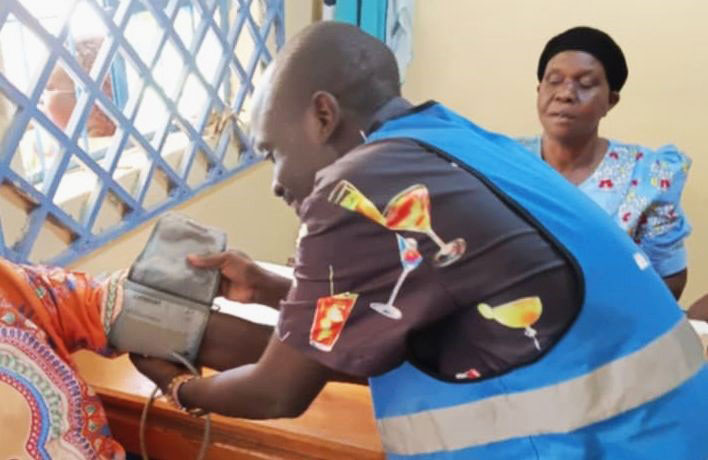
Photo by Pius Sawa
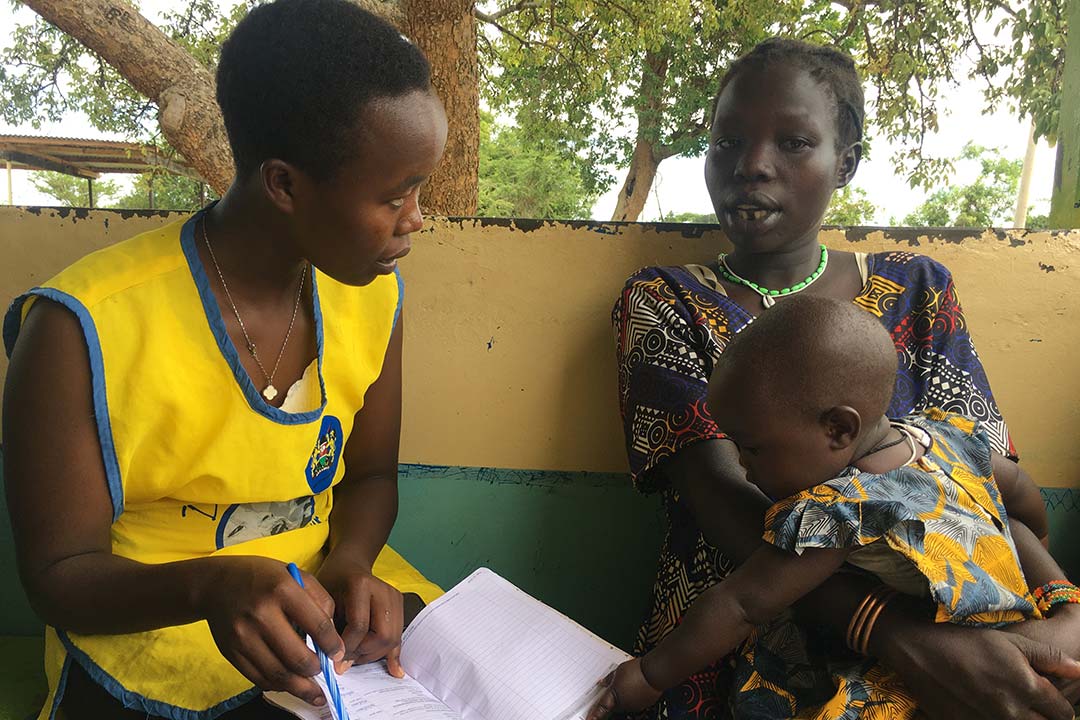
He is the link between the brick-and-mortar health system and family life, visiting pregnant mothers, people with disabilities, children under and above five years. On his rounds, he dispenses antenatal information, pregnancy supplements, measures blood pressure, tests for diabetes and malaria, doles out deworming tablets, and clues people in about the importance of preventive health: immunisation, hygiene and good feeding.
Silent support
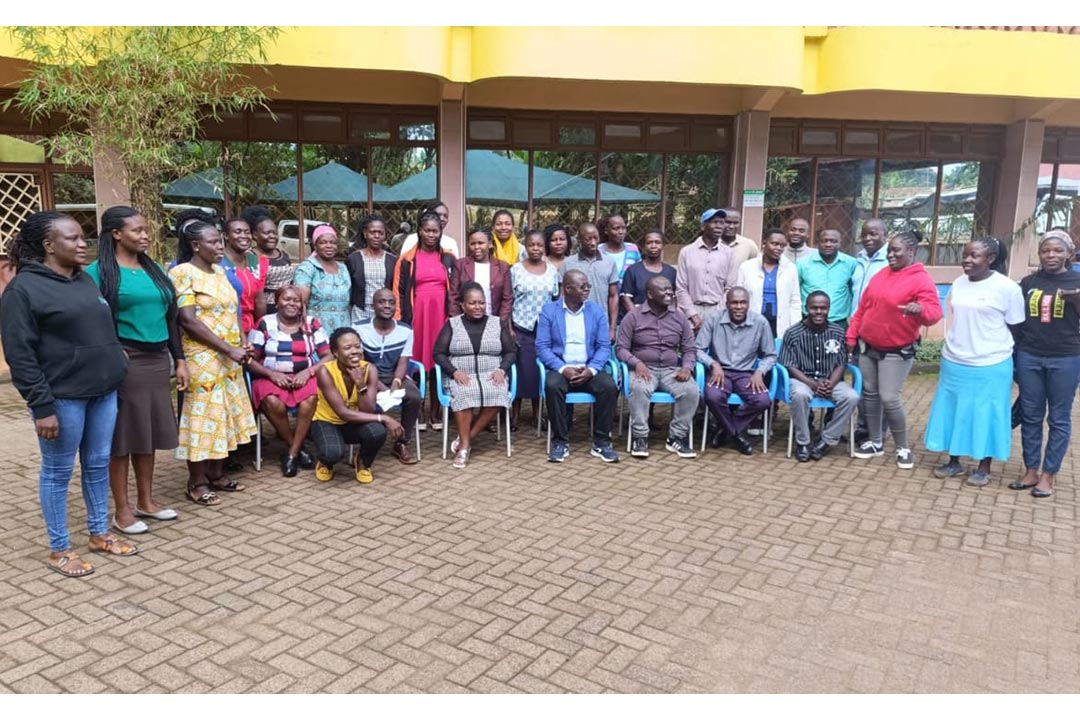
When the county government came up with a programme to train some CHPs in sign language, Omega applied and was selected as the trainee representing Wamuluma ward, which has 84 CHPs. The two week crash-course programme trained them on the basics.
Have you read?
“We were taught about immunisation, hypertension, diabetes, spelling names, etc. Through this training, [I learned] things I didn’t know that have helped me stay together with my community.”
Omega’s sign language services take him beyond his territory. Other CHPs call him to speak to their clients, and local health facilities invite him to communicate with deaf mothers and other deaf patients.
Over the past one and half years, Omega has accompanied seven deaf mothers along their pregnancy and childbirth journeys.
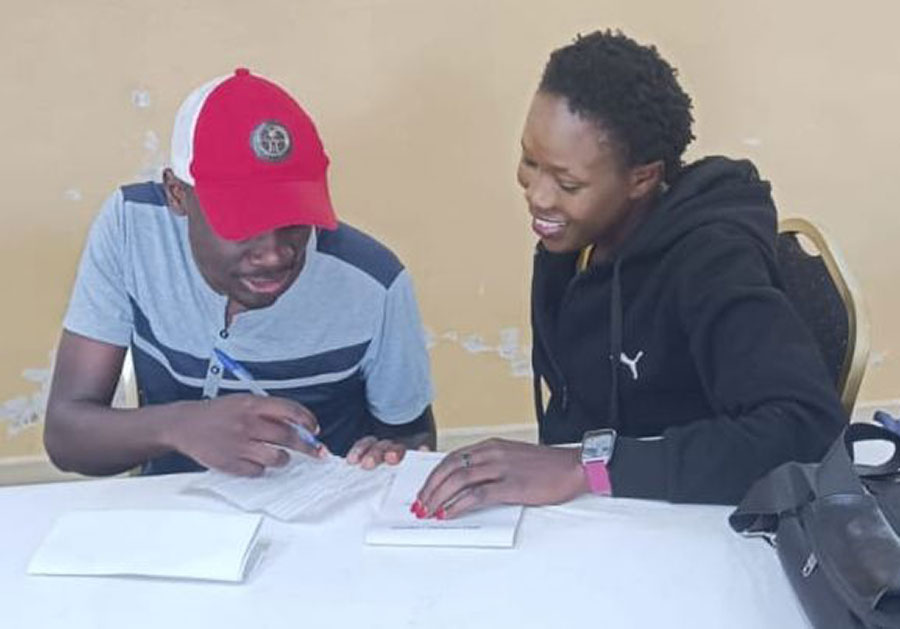
Photo by Kelvin Kiliru Omega
Polivia Ogwisa, another CHP, said that without the support of someone like Omega, deaf mothers might be at risk. She says in the past, when she entered a home to find a deaf mother, she would pray that the mother could read and write so they could communicate via notepad. It wasn’t always the case. “Every life matters, and when we can’t be able to reach out to the deaf, we shall be doing a disservice. Through his service, I have been able to help three deaf mothers.”
Spotlight: Community Health Promoters use person-to-person connection to save lives
Community Health Promoters (CHPs) are often the single most important link between the health system and families.
For immunisation outcomes, the closeness of a CHP to the community he or she serves can be transformative. A well-connected CHP knows when a child is born in their catchment area, can figure out which children have never received a vaccine, reach families to follow up when vaccinations are missed, and connect families to facilities and outreach services. That connection relies on good communication.
“Kelvin’s story shows why inclusion matters in that last mile. When health workers can communicate with every family, including people with disabilities, we have a much better chance of ensuring that no child is missed,” said Mario Jimenez, Senior Country Manager for Kenya at Gavi, the Vaccine Alliance.
Becoming the sign-language “governor”
Much as he is trying, Omega still faces some challenges. He said in some communities, the sign language they use is not standard, and when he or other CHPs visit, it becomes more difficult to communicate using the standard Kenya Sign Language (KSL) they were trained in.
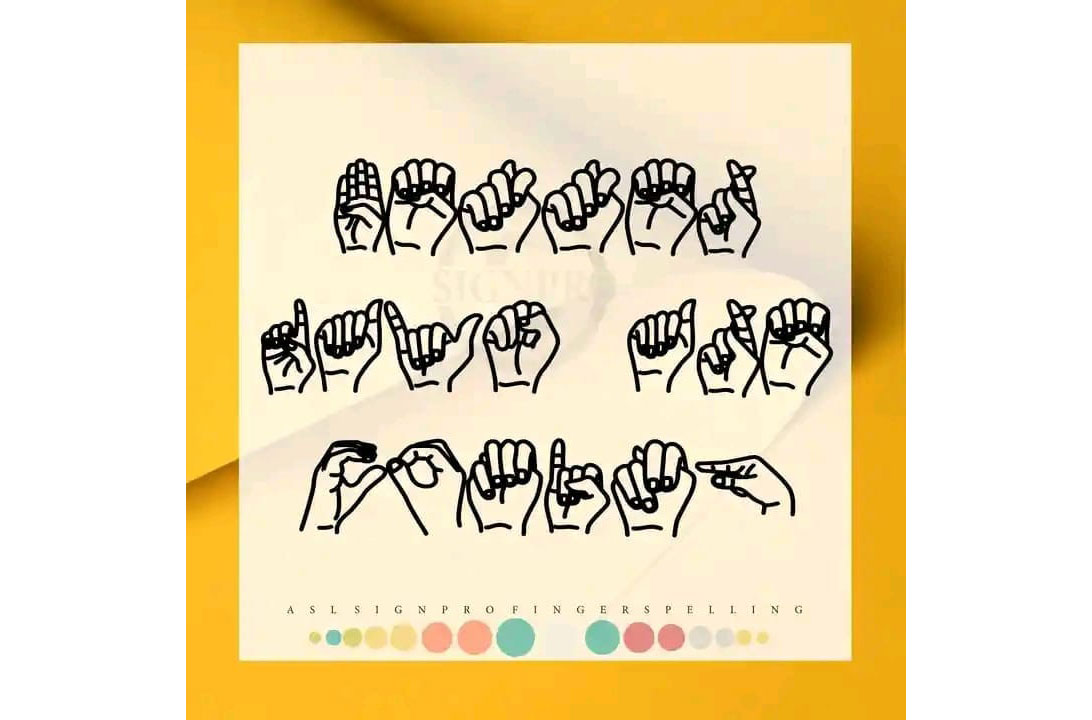
He expressed the need for an extended training in sign language as the two-week basic one they received isn’t sufficient enough to communicate everything. Omega appealed to government or other organisations to provide funding for full course training in sign language.
But despite these challenges, Omega is clearly also making a difference: he was voted the best CHP in sign language in Vihiga County.
“End of June, the officers from government came on the ground to assess us, and I was the best performer. They said I understand all the signs taught and I communicate well with the patients.”
During a County meeting recently, all the 25 sign language-trained CHPs voted him to be their Governor – a title borrowed from the highest political office in a Kenyan county.
That resonates: Omega has ambitions to enter politics and make a difference at a larger scale. “In 2022 I vied for a political office, but I did not win. With my role as a CHP, I have many friends and they know me. I think this places me in a better position to win next time.”
The sign-language training was offered by the government, in collaboration with the Kenya National Association for the Deaf and support from Amref Health Africa. Other counties like Kakamega, Makueni, Turkana, Embu and Siaya have also trained CHPs in sign language. According to the 2019 Kenya population and housing census, there are about 153,381 deaf people in Kenya, while the Kenya National Association for the Deaf estimates that between 600,000 to 1 million people in the country rely on Kenya Sign Language.