
In the DRC fighting Ebola means fighting rumours
In Ituri, in eastern Democratic Republic of the Congo (DRC), misinformation is raising the risk that Ebola patients and their contacts remain hidden from health teams.
- 15 June 2026
- 8 min read
- by Patrick Kahondwa
At a glance
- Amid the growing Ebola outbreak, health teams in eastern DRC have a vital job: identify patients, find their contacts and halt the spread. But they say community mistrust, fuelled by misinformation, is endangering that work.
- Rumours that accuse health workers of spreading the virus, or dismiss it as an invention, raise the risk of patients – who need both care and quarantine – being hidden from the health system’s view.
- But an alliance of radio announcers, religious leaders, community health workers and specialist government communications teams are racing to get ahead of the rumours – to explain the virus, and the need for containment measures that can feel draconian, before doubt can further fuel viral spread.
Enock Badaru (not his real name) says the tension was palpable. That day, he and his colleagues had gone to visit a family in Bunia to identify contacts of a suspected Ebola patient. But when they arrived, the relatives refused to speak. The mood in the neighbourhood quickly turned hostile.
Residents gathered, and young people began to threaten the health team. Badaru and his team had no choice but to leave to avoid being attacked.
But they knew that every delay in detecting a case, every contact left unidentified, every door closed to the response would increase the risk of transmission.
Dangerous mistrust
Since the Ebola outbreak was declared in Democratic Republic of the Congo (DRC), health authorities and their partners have been working to break chains of transmission. On the ground, the response is not simply a matter of surveillance, testing and isolating and treating patients. It also depends on something less visible, but just as critical: the ability to convince communities that health teams are there to protect lives.
This distrust has not come from nowhere. In neighbourhoods and on social media alike, false information is circulating and fuelling suspicion. At the beginning of the outbreak, some deaths were interpreted through mystical narratives. Even now, narratives circulate that frame Ebola as an invention, or accuse health workers of spreading the disease themselves. For response teams, these rumours are not marginal: they drive refusals to cooperate and directly complicate their work in the field.
At Mongbwalu General Referral Hospital, Medical Director Dr Richard Lokudi sees the consequences every day. Fear of health facilities is not limited to suspected Ebola cases; it is also keeping people away from other essential care. For health teams, that loss of trust threatens the continuity of routine services, including immunisation, and risks leaving already vulnerable communities even more exposed to preventable health threats.
“There are people who often believe that when a patient goes to the treatment centre, they never come back. Some rumours claim that people should not go to hospital because health workers will inject them with the disease, and that even someone who has come in with a mild illness could end up dying. This is completely false. When people avoid hospitals, it makes the response even more difficult.”
This distrust has immediate consequences. It leads some families to hide sick relatives. It delays investigations around suspected cases. It complicates the monitoring of people who may have been exposed to the virus. And it can derail, at least temporarily, interventions considered essential to containing the outbreak.
Credit: ICRC
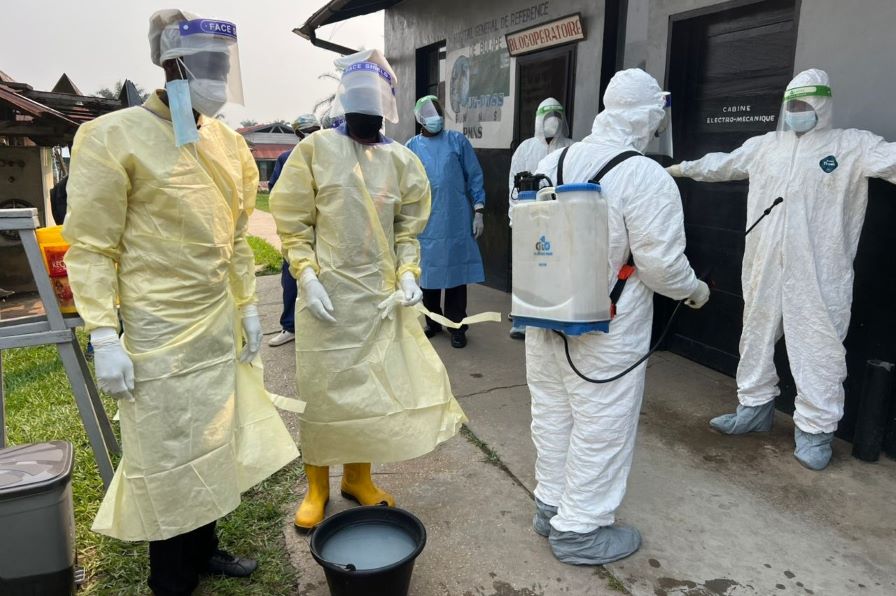
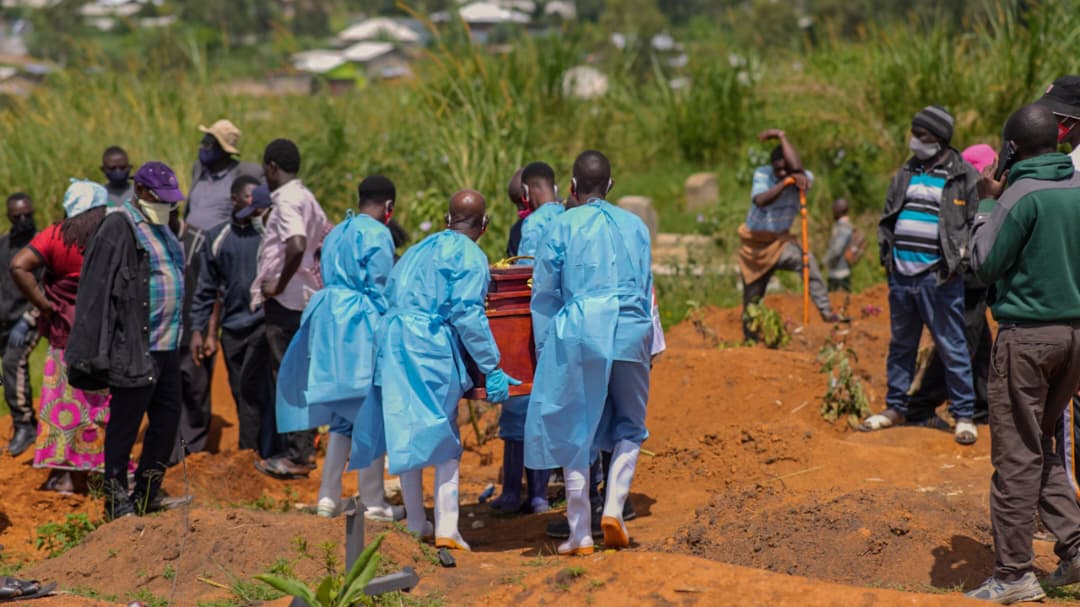
Burials remain one of the most sensitive moments in the response. In Rwampara and Mongbwalu alike, teams sent to manage the bodies of the deceased are often met with grief, fear and suspicion.
“We are sometimes stoned or physically attacked. Teams responsible for safe and dignified burials are also sometimes driven away when they try to take charge of the body of someone who has died. Yet when a family buries someone who is suspected of having died from Ebola themselves, the risk of infection becomes very high, because the body remains extremely contagious,” explains Badaru.
For health authorities, these interventions are essential to limiting transmission. But carrying them out often depends less on the protocols themselves than on the ability to secure families’ consent.
Building acceptance
In Rwambuzi, a neighbourhood of Bunia, Pastor Ignace Bingi played a decisive role in managing a suspected death.
The victim died while returning home from a mission, a situation that required health teams to intervene in order to carry out the necessary investigations and apply the planned surveillance measures.
When the response teams arrived, they were met with reluctance from the family, who refused the required samples as well as the procedures linked to the safe management of the death. Faced with this deadlock, Bingi drew on the trust he had built within the community to open a dialogue with the deceased person’s relatives.
After several conversations, the family eventually agreed to submit to sampling for laboratory testing, as well as to the organisation of a safe and dignified burial. In a response where every hour matters, this kind of local mediation can make the difference between deadlock and cooperation.
The experience illustrates the central role that community and religious leaders have come to play in the Ebola response. Their proximity to local residents, their credibility and their ability to defuse fear help make certain measures acceptable – measures that can otherwise feel brutal when they are poorly explained.
“This outbreak reminds us that no one is safe. We have already lost a pastor, which shows that religious communities are also affected. As religious leaders, we have a responsibility to raise awareness among our congregations, to fight rumours and to encourage respect for prevention measures in order to protect our families and our communities.”
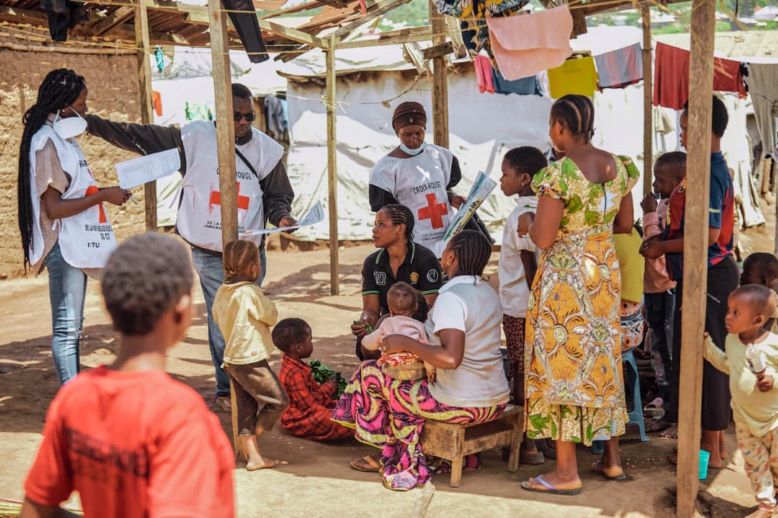
In several localities, community health workers are going from village to village to respond to residents’ concerns. Radio programmes in local languages explain the symptoms of the disease, remind listeners what to do, and try to correct false information before it spreads further. In churches too, awareness-raising messages are urging worshippers to follow protective measures and to report any suspected case quickly.
Have you read?
“When the message comes from a local chief or a pastor known to the community, people listen more closely. Our role is to help the community understand that health teams are there to protect lives,” says Bingi.
Risk Communication and Community Engagement teams are also closely monitoring false information circulating online and in neighbourhoods, helping them tailor their messages to the real concerns of local communities. They are also working to reassure people and encourage them to continue using health facilities for routine care, including antenatal consultations, vaccination and other essential services.
“RCCE organises deployments to raise awareness among different sections of the population. A specialised infodemic management team within RCCE is responsible for analysing rumours and messages shared on social media. We also collect rumours circulating within communities so that we can design appropriate messages to counter them,” adds Joseph Mugenyi, a member of the Risk Communication and Community Engagement (CREC) team in Ituri.
The challenge here is not simply to correct false information. It is to rebuild a relationship strong enough for families to accept a visit, a sample being taken, observation, or a safe burial. In other words, communication is not a secondary part of the response: it is one of its most concrete tools
No licensed vaccine
The outbreak currently affecting DRC and Uganda is caused by Bundibugyo virus, a species of Ebola for which there is currently no licensed vaccine and no approved specific treatment. The Ebola vaccines currently available in the Gavi-funded global stockpile protect against Zaire ebolavirus, a different species.
In this context, the response depends first and foremost on the rapid identification of cases, clinical care, contact tracing, infection prevention and control, safe burials and community engagement.
As of 6 June 2026, according to WHO, the outbreak had been reported in 25 health zones across three provinces – 17 in Ituri, seven in North Kivu and one in South Kivu – pointing to a rapid expansion beyond the initial epicentre. Ituri still accounted for the overwhelming majority of confirmed cases, with 487 of the 515 reported there, and particularly active clusters in Bunia, Rwampara, Mongbwalu and Nyankunde. In a context shaped by insecurity, population movement and cross-border trade, any breakdown in trust can quickly lead to delays in detection and further transmission.
In the DRC, fighting Ebola is not only about containing a virus. It also means persuading anxious families, reopening dialogue where fear has taken hold and enabling health teams to intervene without being seen as a threat. For Badaru and so many other frontline workers, the response is therefore taking place as much within communities as it is in health centres. As long as there is no licensed vaccine against Bundibugyo virus, trust remains one of the most precious and most fragile tools of the response.
More from Patrick Kahondwa