
Why girls in Kenya miss vaccination, and how grandmothers can help
In many communities, patriarchal norms leave girls disproportionately exposed to danger – including from vaccine-preventable disease. But a cohort of trained grandmothers is challenging that.
- 3 June 2026
- 9 min read
- by Joyce Chimbi
At a glance
- In parts of Kenya, systemic patriarchal norms leave girls and women at risk – including, in some cases, by restricting the access of female children to immunisation.
- That’s something Namelok Mary Kimagut, a nurse in the Rift Valley and a former child bride herself, has seen all too often. But she has reasons for hope: grandmothers, she says, are helping health workers challenge those dangerous trends.
- “Older women bring in a lot of experience in child rearing, and come with community respect and approval. Our health facilities are working with them to boost immunisation,” says the nurse.
After 14 cows were delivered as dowry to her grandmother’s house in Chepararia, West Pokot, in 2019, Celestine Lokor’s immediate obligation was to secure her husband’s lineage: she needed to deliver a boy child.
Instead, she gave birth to four daughters, whose well-being, she says, was not a pressing issue for a father in pursuit of sons. In most Kenyan traditions, only a son can carry a father’s name forward. Daughters are visitors, passersby in their birth families, on their way to their future husband’s home.
Without social and economic independence, Lokor needed permission to go to the clinic for her girls’ vaccination appointments. Even though immunisation is free and the government had reduced the distance to Lokor’s nearest dispensary from over 15 kilometres to just 1.5 km, “He still said no.”
In a neighbouring home, Rosa Lokichu began to take an interest in the Lokor family. Called “Koko”, meaning grandmother, by much of the village, Lokichu is a member of the Maendeleo ya Wanawake – Swahili for “Women’s Progress,” Kenya’s largest women’s grassroots movement. The group has more than 4 million members who conduct regular training for their members on issues such as maternal and child health.
Koko had noticed that the children were becoming increasingly isolated from the community. “They were very small for their age. As a second wife – [taken on] because the first one did not have any sons – I had seen this before, and I still see it often. The girls were being neglected as the couple hurriedly gave birth, chasing after a baby boy to keep the father’s name alive, bring pride to the family and look after the parents in their old age,” Koko says.
“The Chief and I approached the father two years ago, but he was very hostile. The community health promoters were afraid of going to the home. Eventually, the situation changed through dialogue with his own mother.”
The grandma-to-CHP pipeline
Although in much of rural Kenya, patriarchal structures mean that women are often relatively silenced, once past childbearing age, they often find themselves less restricted by tradition.
These were the preconditions for Koko to both mount her gender campaign, and to be heard.
It’s something Namelok Mary Kimagut, a nurse at Iten County Referral Hospital in Elgeyo-Marakwet county, which borders West Pokot county in the Rift Valley, can attest to. Kimagut was once stationed in Chepararia, and says Koko is not the only woman who she has seen age into influence, and deploy that influence for the sake of children’s health in their communities.
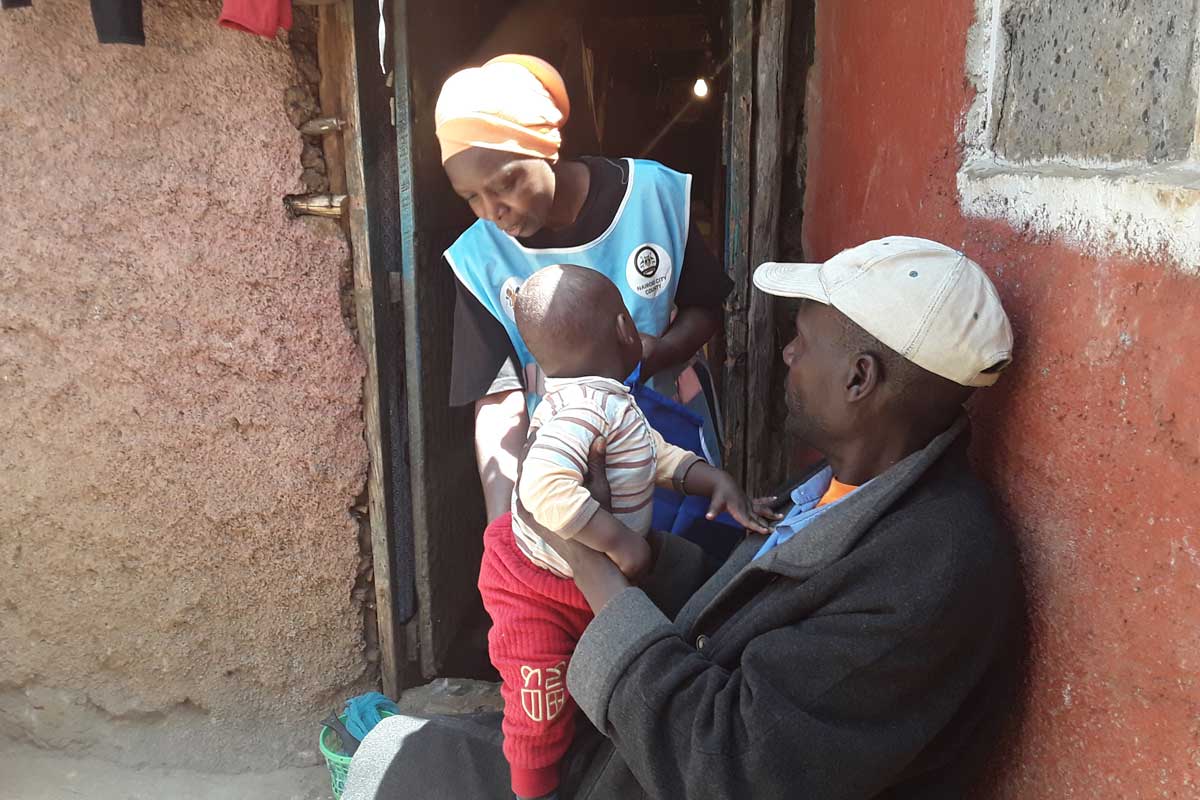
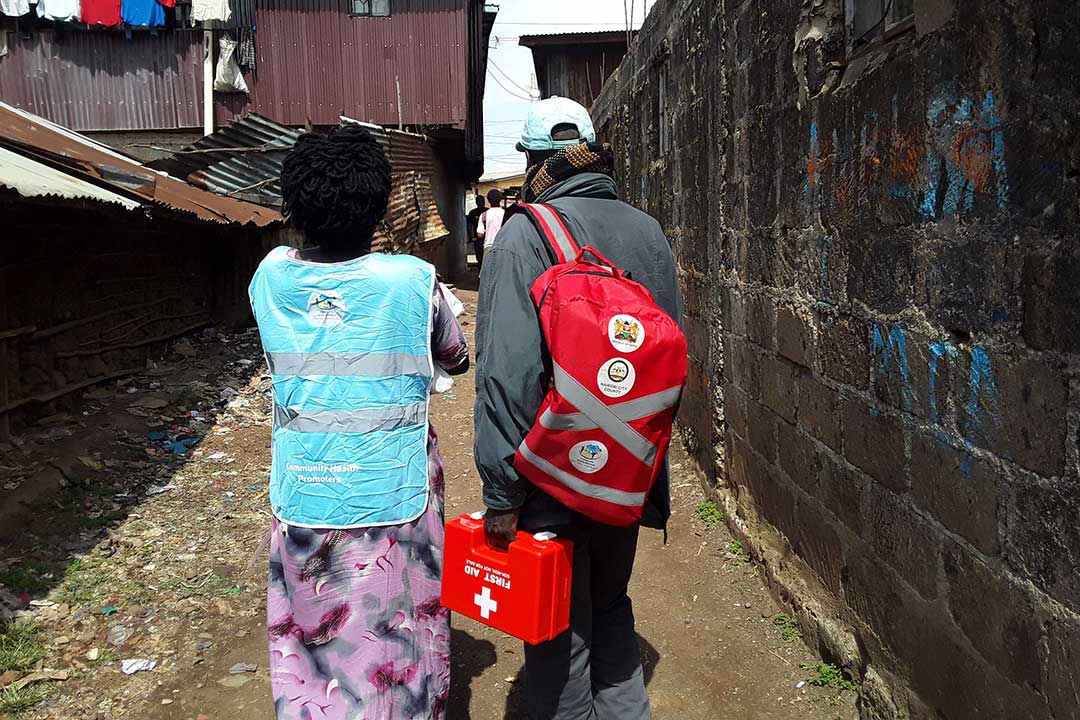
In fact, she says many grandmothers she knows have gone a step further to become community health promoters (CHPs), using their special roles in the community to boost uptake of modern child health interventions.
“There is a lot of training going on in our communities by the government and nongovernment organisations like Maendeleo Ya Wanawake. When older women are trained, they become even more powerful agents of change.”
Ancient culture meets modern medicine
Like the Pokot, Marakwet women also step into more autonomy, higher social standing and respect as they age, Kimagut says. That means that in Elgeyo Marakwet, like in Chepararia, grandmothers are proving a unique cadre of health influencers, with eight of them becoming CHPs at her current health facility.
“The change here is that our health structures have room to work with traditional leadership structures to improve health outcomes in our communities. That is why your area chief, working with CHPs, can bring police officers to your door if you receive treatment for highly contagious diseases like TB,” she says. “Older women bring in a lot of experience in child rearing, and come with community respect and approval. Our health facilities are working with them to boost immunisation.”
With training from NGOs, donor organisations and the Ministry of Health, they’ve shown themselves well-positioned to petition fathers and other family members to embrace modern child health interventions. They’ve been particularly concerned with driving uptake of hospital births and subsequent routine immunisation services, from the anti-tuberculosis BCG vaccine on day one of life, all the way to the anti-cervical-cancer jab in early adolescence.
It’s girls and women who stand to benefit the most from the grandmothers’ efforts. Though Kenya’s Constitution is widely considered one of the most progressive and gender-sensitive in Africa, female children still face higher barriers to routine child immunisation due to cultural and religious patriarchal leadership that prioritises male well-being.
“Sometimes a boy or girl can miss immunisation due to distance, lack of information or even health facilities. But some challenges are much more complex and invisible to the health systems as they are woven into the society’s fabric, creating gender imbalances. Our immunisation registers do not capture a child’s gender, only the date, age and vaccine received,” Kimagut explains.
Kimagut stresses that while gender imbalances exist in varying degrees across the country due to gender discrimination, the effect and root causes vary based on the religion, culture, and misleading myths and misconceptions prevalent in a particular area. “Gender disaggregated data in immunisation would help localise interventions.”
For now, making use of community gatekeepers to break gender barriers is the best way to tackle the specific, local prejudices that can leave girls more vulnerable than their brothers. “At the household level, grandmothers are our best allies. Through community health promoters, it is important that we lean into their social power because they influence positive change without creating conflict within the family.”
A grandmother’s influence
Kimagut says grandmothers’ influence for child health was tried and tested “when HIV was like a death sentence, leading to many orphans. When many abandoned them due to fear of HIV and stigma, grandmothers faced the pandemic with courage. As custodians of culture, grandmothers have helped community’s abandon beliefs – such as burying the placenta – that necessitated home births.”
Many Kenyan communities, including the Pokot, have a history of burying the placenta, believing that it is spiritually tied to the child’s life and connection to the ancestral land, or as protection against witchcraft. Even in this ritual, gender preferences emerged as the Luo community buried the placenta of a male child on the right side of the mother’s house to signify permanence in the homestead, and the female’s on the left to signify her eventual departure for marriage. Observance of that rite has necessitated home births, as hospitals are under obligation to dispose of human tissue according to strict hygiene standards.
These are practices that migrate into Nairobi from across the country, community leaders in the capital say, as people tend to migrate from rural areas with their traditional beliefs intact.
“Kenyans say ‘mwacha/mkosa mila ni mtumwa,” says Chief Kimani Maina, from Mukuru kwa Njenga, an informal settlement in the capital. The Swahili saying translates roughly to ‘those who abandon or lack culture are slaves’. It’s a double-edged sword – with pride in tradition, comes the disturbing fact that according to Chief Maina, some still quietly practise female genital mutilation (FGM), child marriage and widow inheritance.
Even in the cosmopolitan capital city, then, social influencers are much needed “to remove the perception that daughters are a waste of resources,” Chief Maina says. “Local proverbs say whatever you invest in daughters or women in general is lost in the kitchen or cooking pots. So, they still get the bare minimum.”
Evarline Ayuma, a CHP from Western Kenya now living in Nairobi’s Kibra, comes face-to-face with these problems regularly. She says that even when the government carries out door-to-door campaigns, “some fathers leave strict instructions for caregivers to hide the daughters because of some myths that they cause infertility. There is a severe fear of infertility, such that it is said that a home without children is a graveyard.”
Chief Maina decries the proliferation of religious sects and cults anchored on misleading doctrines that dangerously reinforce and empower men as the only decision-makers, controlling household resources and determining if and when a woman or daughter can access medical care. “Many of these cults emphasise male domination over women and are particularly against the vaccination of female children, saying it is contraceptives and sterilisation in disguise.”
Kavonokia, Akorino and Legio Maria are some the well-known religious sects that openly oppose immunisation and have spoken out strongly against the HPV jab.
Curtailed childhoods
Nurse Kimagut, a former child bride herself, says the sorts of gender imbalances that are at play in the belief systems Chief Maina describes show up physically via nutrition and immunisation discrepancies between boys and girls. “In low-income areas, a father is served food first and then the sons. Mothers and daughters eat last and what’s left. I also see – and have experienced – impatience over how long it will take for the girls to get married.”
She stresses that even though the immunisation register “does not capture gender, we have data to show that in certain communities transition to womanhood is done at a very early age, 5 to 14 years, and we can see how this impacts caregiving.”
FGM, for instance, is a gateway to child marriages, and is practised in varying degrees by roughly 30 of Kenya’s 40-plus ethnic groups. Outlawed in 2011, it remains deeply entrenched in rural and pastoralist cultural traditions. Kimagut talks about other criminalised but deeply-rooted and highly controversial, culturally-sanctioned traditions such as ‘beading’ among the Samburu, which function as a claiming ritual between adult men and often minor girls.
“FGM and beading signal transition to adulthood. So, if by age five a girl is already being seen as a young woman, they are then [at risk of being] misplaced from spaces such as child immunisation.”
“They are groomed, as I was, to start behaving as women and often miss school-based immunisation activities for polio and cervical cancer while at home looking after younger siblings. Others will be married or ineligible when it is time for the HPV vaccine.”
But amid these apparently entrenched challenges, grandmothers like Koko are successfully helping open the door to child immunisation, one homestead at a time, through dialogue with family members, neighbours and the community, connecting children like the Lokor family’s daughters in West Pokot with life-saving medicine.
Since Koko’s intervention, the children have continued to receive immunisation services, including school-based vaccine activities.
Once isolated, their door is now open to neighbours and CHPs for door-to-door health activities. Kimagut hopes that as more grandmothers formalise their influence as CHPs, “There will [one day] be no homestead they will not reach, and no gender barrier they will no break that stands in the way of female child immunisation.”