
Doctors say a rare but fatal condition linked to measles is rising in Pakistan
Subacute Sclerosing Panencephalitis (SSPE) affects about 1 in every 10,000 people who contract measles. In Pakistan, VaccinesWork spoke to families being devastated by the condition and the doctors who say cases may be rising.
- 15 October 2026
- 8 min read
- by Adeel Saeed
At a glance
- Every child who contracts measles as an infant has a roughly 1 in 10,000 chance of developing Subacute Sclerosing Panencephalitis, or SSPE, later in life. This degenerative brain condition is almost universally fatal and has no cure.
- In Khyber Pakhtunkhwa, Pakistan, doctors say they're seeing an alarming number of children struck down by the condition, as families of patients band together to find support.
- Experts say that measles vaccination remains the only protection against the disease.
Lying motionless on a bed with a feeding tube across his face, nine-year-old Muhammad Nauman is a different little boy than the one whose laughter used to fill this home.
For his father, Saifullah, a daily-wage labourer, the sight is almost impossible to comprehend and accept. Just a year and a half ago Nauman was an energetic child who spent his days playing cricket and the traditional game of tip-cat in the streets of Khyber District, close to the Pakistan-Afghanistan border. Saifullah takes out his mobile phone and scrolls through videos of Nauman swimming in a canal and playing with domestic animals.
According to doctors, the dramatic deterioration in Nauman’s health came as a consequence of Subacute Sclerosing Panencephalitis (SSPE), a rare a universally fatal neurodegenerative disease of the central nervous system, associated with prior measles infection.
That means SSPE, like measles, is preventable. “The disease primarily affects children who have not been vaccinated against measles or have not received [all of] the recommended doses,” explains Dr Athar Khalili, Paediatric Neurologist and General Secretary of the Khyber Pakhtunkhwa chapter of the Pakistan Paediatric Association (PPA).
In conversation with VaccinesWork, Saifullah said that Nauman had never received any measles vaccine.
What is SSPE?
More common in poor countries than wealthy ones, sub-acute sclerosing panencephalitis (SSPE) is a delayed-onset, fatal complication of measles.
It’s estimated to affect about one in 10,000 people who contract measles, with the risk being highest in people who were infected with measles in early childhood.
The first neurodegenerative symptoms emerge years after apparent recovery. Inside the brain, a mutant form of measles virus that has lain dormant is reactivated, and begins to cause inflammation and cell death. It usually takes fewer than five years from first symptoms for SSPE to claim a patient’s life.
Because two doses of measles vaccine are almost perfectly protective against measles infection, SSPE is also vaccine-preventable.
Delayed onset, fatal progression
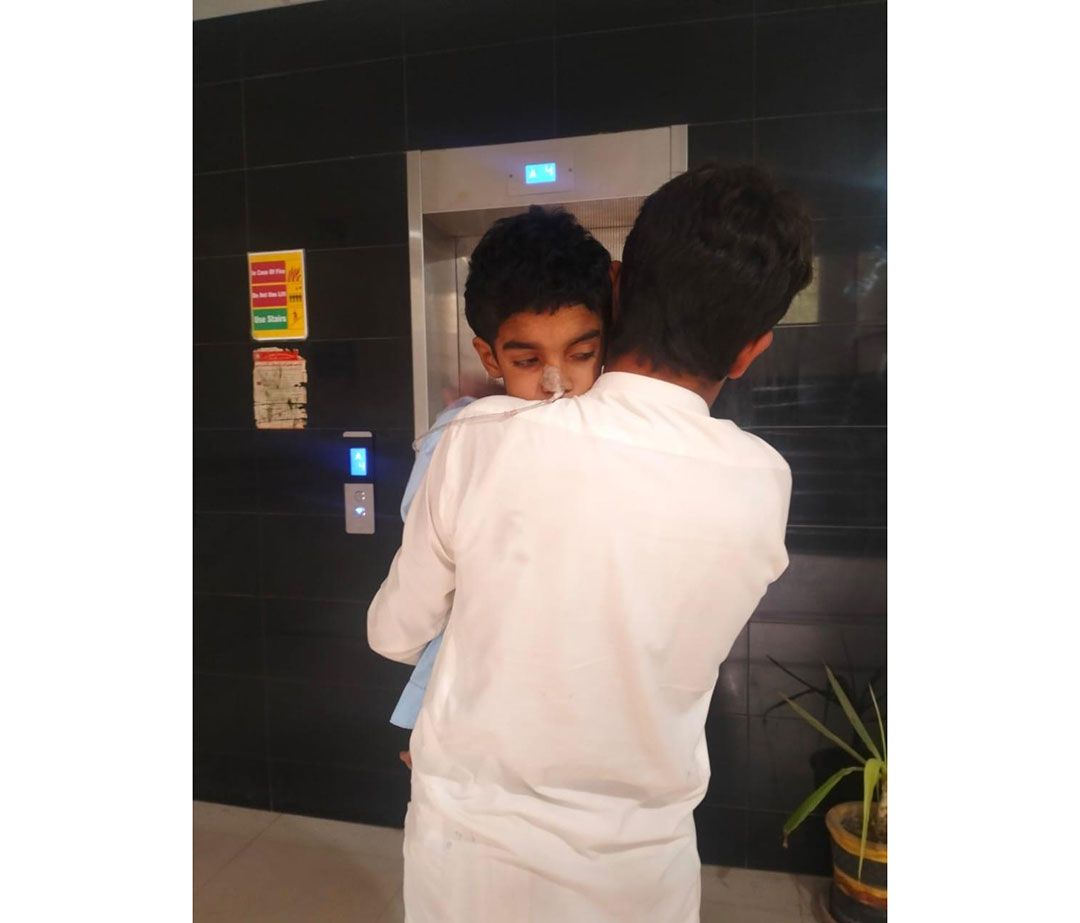
Muhammad Sudais, a nine-year-old boy from Bara on the outskirts of Peshawar, went to school and attended mosque for religious studies until SSPE began to take away his ability to live a normal life. He died of the disease on 9 September 2026.
“My son was an active and cheerful child until his seventh birthday, after which we started noticing something unusual,” said Murad Ali. The boy, who had once moved around with ease, started stumbling while walking. At times, he would lose his balance and nearly fall to the ground.
“We could not understand why our active son was suddenly having difficulty walking and took him to a local doctor, but he could not identify the problem,” his father recalled. “Some relatives advised us to take him to shrines and spiritual healers in hope of finding cure.”
Credit: Adeel Saeed
Within a few weeks of starting to stumble, Sudais’s condition began to decline rapidly. He became extremely weak and started experiencing jerking movements and stammering.
Sudais was taken to a tertiary-care hospital towards the end of 2024, where a paediatric neurologist advised a cerebrospinal fluid (CSF) test, leading to diagnosis of SSPE as the cause of his deteriorating condition.
Have you read?
Ali acknowledged that his son had not been vaccinated against measles. However, he said some other SSPE patients they had encountered claimed that they had been vaccinated against measles, but still developed the disease. We asked Khalili how he would explain these surprising reports, and he hypothesised that some of them might have received only one dose and missed the booster dose.
However, in cases where the child has received both the doses – which should have a combined protectiveness against measles of almost 100% – there is a need to check the efficacy of the vaccine, whether it had been properly maintained through the required cold chain, including during transportation and storage in ice boxes.
Considered rare, SSPE is a growing concern among doctors, families
“SSPE is described as a rare neurological disease in medical literature, but on the ground we are observing an alarming increase in its cases,” observed Khalili.
He said published estimates put the incidence of SSPE in developing countries at around ten cases per million people. Research has shown that as many as 1 in 10,000 measles survivors will develop SSPE, with that number rising to 1 in 600 when the patient was under one year old when infected with measles.
Even considering those expectations, the situation in Khyber Pakhtunkhwa should be regarded as “a serious concern,” he said.
“I would rather say it has been emerging as an epidemic,” he added.
To substantiate his observation, Khalili said 90 confirmed cases of SSPE had been registered at his private healthcare facility in Peshawar over the course of the year to September, averaging around 10 cases a month.
Khalili said he had found two children from the same family affected by SSPE. More surprisingly, in one case, three children from a single Afghan family in Nowshera district had developed the disease.
Credit: Al-Khidmat Fo
He called for establishing a dedicated SSPE registry, particularly at the district level, to accurately track the disease burden.
He isn’t the only physician worried about the frequency of recent SSPE diagnoses “We are facing an influx of SSPE patients as almost three to four children are arriving with SSPE complications on daily basis,” said Dr Amir Muhammad, Chairman Paediatrics Department Lady Reading Hospital (LRH), Khyber Pakhtunkhwa’s largest teaching hospital providing healthcare services to around 2.3 million patients annually.
Concerned over the increase in SSPE cases among children, Muhammad has approached Khyber Medical University (KMU) to conduct a scientific study to investigate possible reasons behind the rise in cases of the highly debilitating and often fatal disease.
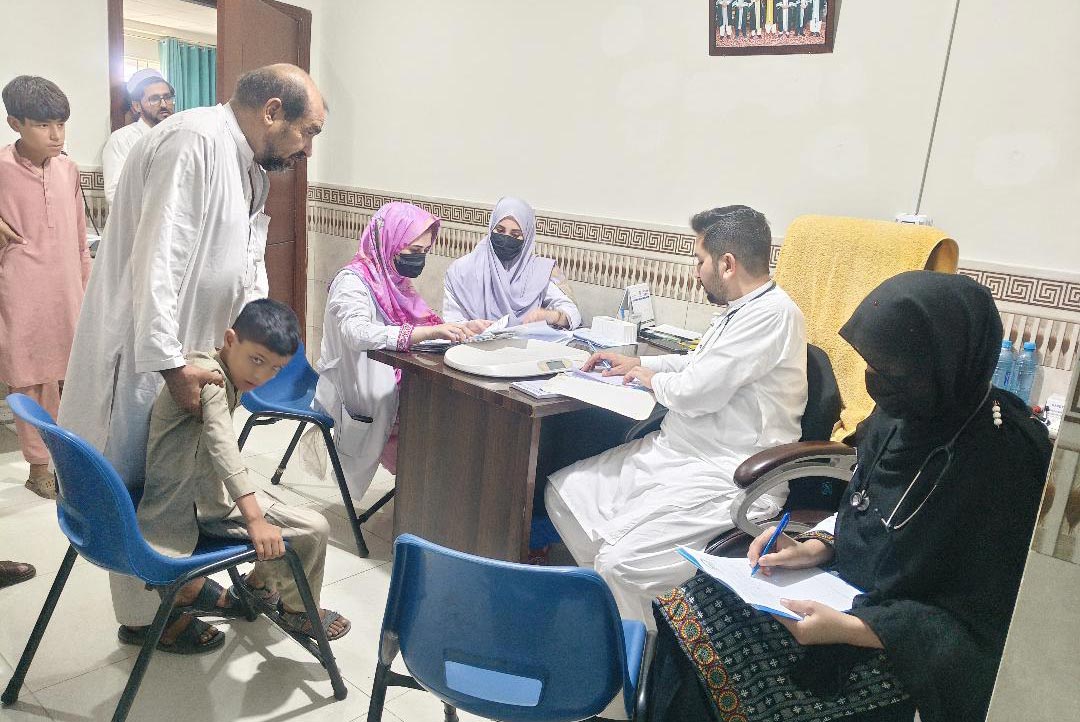
A mutual support WhatsApp group founded by few concerned fathers of children affected by SSPE in Khyber Pakhtunkhwa in 2025 has grown to include 118 members over the past one and a half years.
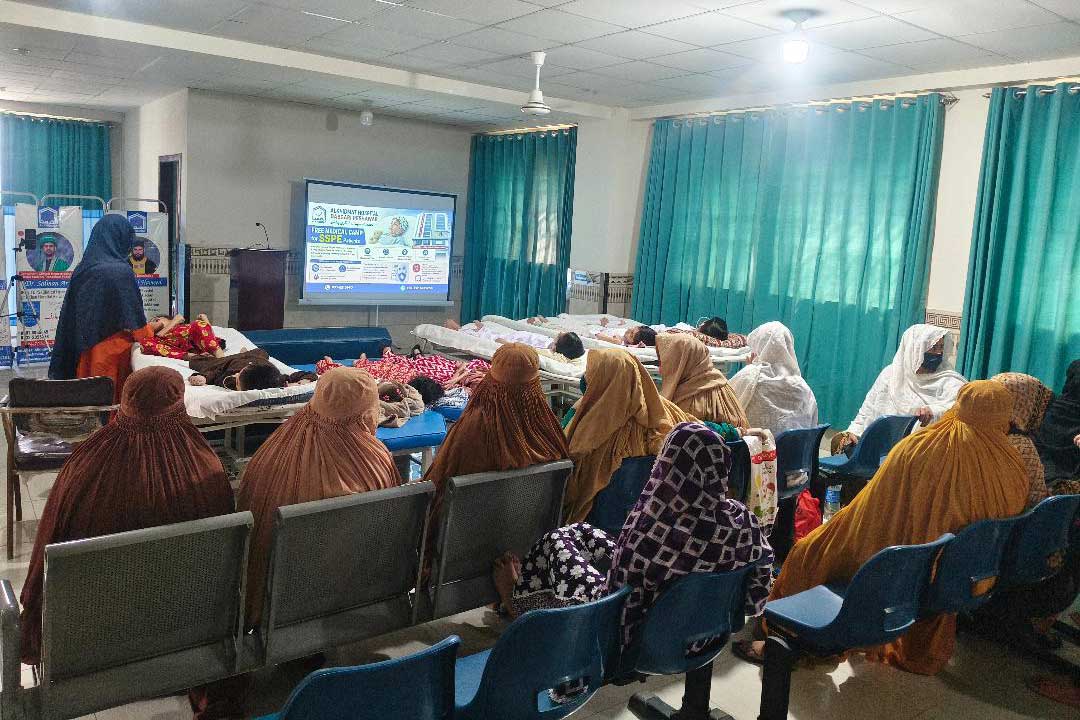
The group, which call themselves “the SSPE Foundation,” recently organised the first-ever free medical camp for patients in Peshawar. On 6 September 2026, around 40 children received free medical examinations, medicines, testing and physiotherapy, while parents were provided counselling.
An overlooked public health concern
“As an often-overlooked public health concern, SSPE has no centralised registration system in Pakistan. Based on our observations and information sharing by colleagues, the number of SSPE patients are on a noticeable rise,” said Dr Tipu Sultan, Senior Vice President of the Child Neurology Group of Pakistan.
“As long as measles cases continue to be reported, SSPE will continue to emerge unless high vaccination coverage is achieved,” he observed.
He said it was “unfortunate that some people still had reservations about vaccination,” adding that the persistent myth linking measles vaccination with autism had also affected vaccine acceptance and coverage.
Worrying measles burden adds urgency
According to the World Health Organization (WHO), Pakistan registered more than 17,000 measles cases in 2025, with an incidence rate of 66.65 cases per million people, reportedly above the threshold used to classify measles outbreaks as large and disruptive.
According to local news reports, a total of 4,541 confirmed measles cases were reported in the first quarter of 2026 in the country with 1,712 of them in Khyber Pakhtunkhwa. Measles is typically under-reported, and the real tally is likely to be much higher.
In November 2025, Pakistan launched a national measles-rubella vaccination campaign targeting more than 35 million children in a bid to close the immunity gap.
No treatment can reverse SSPE
“There is currently no curative treatment that can reverse SSPE. The medicines we provide mainly help control symptoms such as seizures and jerking movements,” said Dr Tipu Sultan.
He said doctors prescribe antiviral and immunomodulatory drugs, while supportive care focuses on improving the child’s nutrition and managing symptoms.
“We also advise a ketogenic diet, which include nuts, chicken, milk, cooking oil, butter, eggs and olive oil, along with supportive therapies,” he said. The Child Neurology Group of Pakistan is conducting research into the potential benefits of ketogenic diet for SSPE patients and the findings would be made public after completion of the study.
However, parents of SSPE patients told Vaccines Work that the ketogenic diet was financially difficult to sustain, costing around 40,000 rupees (US$ 144) a month. Parents also face difficulties accessing inosine pranobex, an antiviral medicine sold under the brand name Imunovir, which is reportedly obtained by members of the SSPE Foundation WhatsApp group from Dubai, where, at approximately US$ 94, it costs about half of what it costs in Pakistan, due to limited availability.
Vaccination: the only real defence against SSPE
“Public awareness to increase vaccination coverage is the only bulwark against SSPE,” observed Dr Muhammad Hussain, Central Vice President Pakistan Paediatric Association (PPA).
In the age of digital media, he suggested using podcasts and electronic media programmes, along with short awareness messages and videos, to educate the public about the devastating impact of SSPE and the risks associated with missed vaccination.
Hussain said such efforts could help families understand that not vaccinating meant risking a devastating emotional and financial burden.