
Liberia’s community health assistants are up at dawn to work at the healthcare frontline
Launched after the Ebola epidemic of 2014–2016, the community health assistant programme has proven itself valuable. Is it now at risk?
- 8 May 2026
- 5 min read
- by Tina S. Mehnpaine
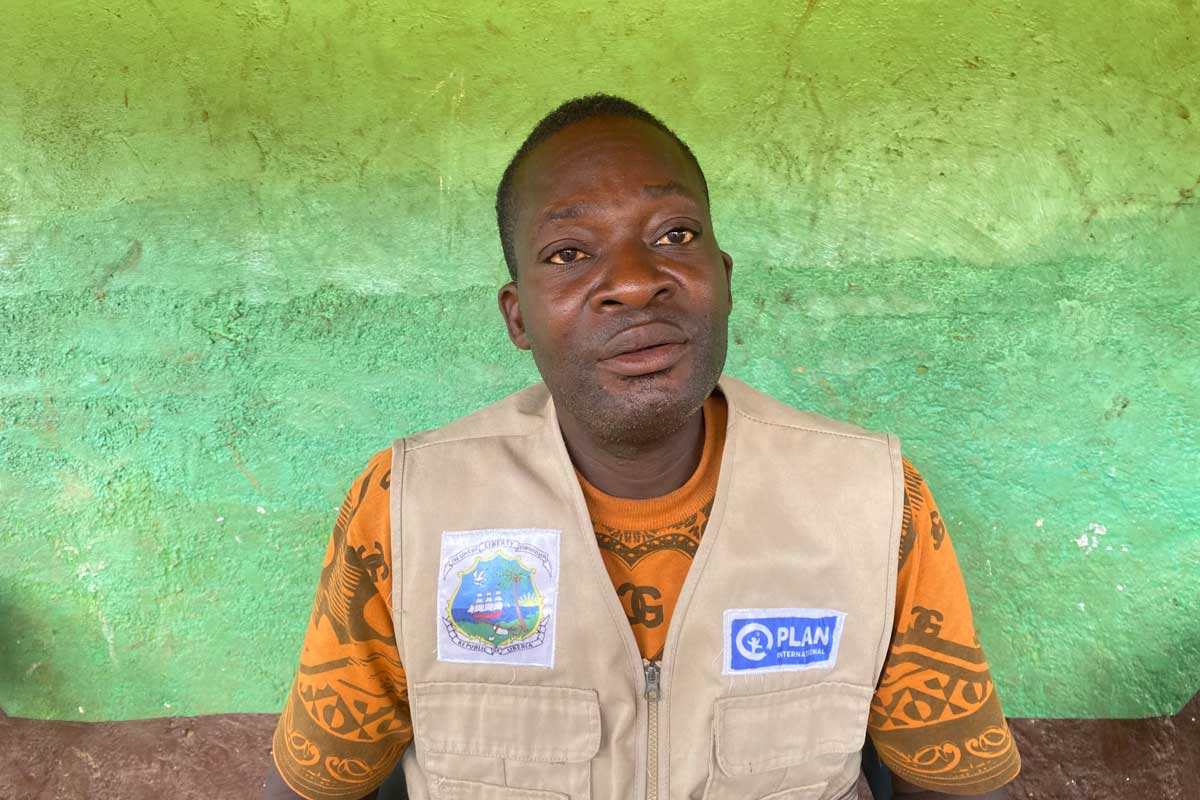
Before the morning dew has vanished under the dust kicked up by passing motorcycles, Alphonso N. Dokpo has already begun his weekly visits to the families of Dulay Town in Liberia’s Nimba County. He starts early, to catch local parents at home before they head into the fields for the day’s work.
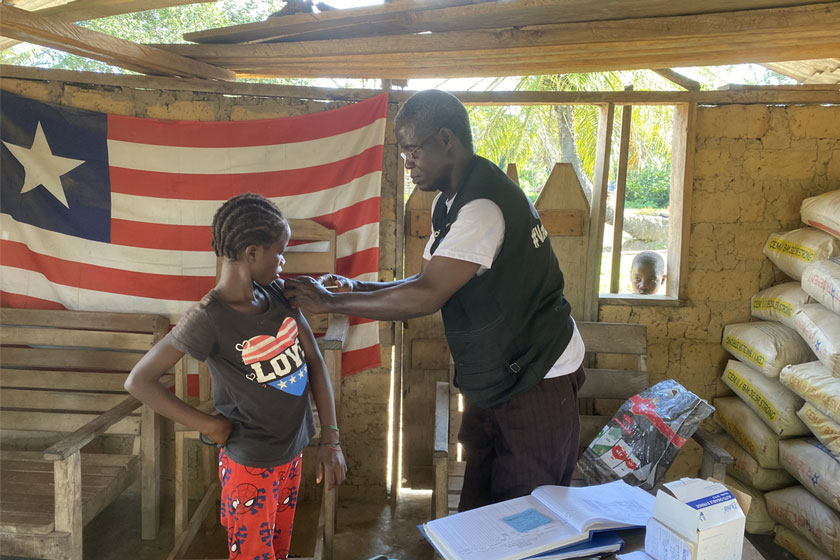
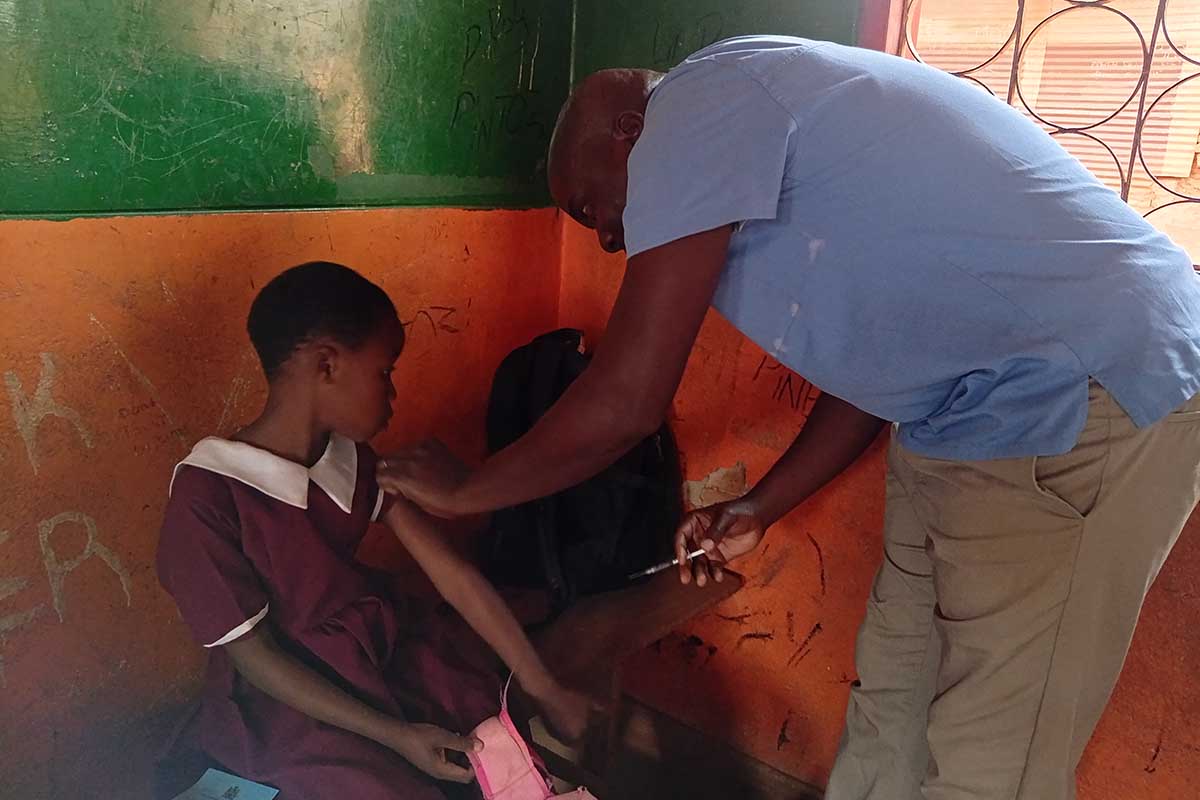
As a community health assistant (CHA), it’s his job to make sure that local children are checked for malaria, pneumonia, diarrhoea and malnutrition. If a child is sick, he either administers drugs or makes a referral to the nearest clinic.
Like almost everyone else here, and like his own parents before him, the father of three used to focus solely on his own farming work. In 2017, he began this work, based out of the only clinic in Goagortuo, which serves both Dulay and Sehtontuo.
“If we were not here to be doing the work, the clinic people seh will suffer,” he told VaccinesWork, speaking in his local Liberian pidgin.
Out of the way, but not out of reach
Grassroots workers like Dokpo are lifesavers for remote communities for whom access to basic health services can seem like a luxury.
Launched in 2016 after the deadly Ebola epidemic, the community health assistants programme was designed as a ladder to make services free and accessible to out-of-the-way towns. By 2020, more than 3,400 CHAs had been trained, deployed and incentivised to provide health services to rural Liberians living more than one hour, or 5 km, from the nearest health facility.
“So, it’s good help we are giving to the facility,” Dokpo says. “Even the children, they can’t take that distance; it’s far.”
According to the revised National Community Health policy published in 2025, CHAs had, in less than a decade, treated over 700,000 cases of malaria, diarrhoea and pneumonia. They had conducted more than 800,000 malnutrition screenings, and made more than 5.4 million home visits.
Service to community
Like other CHAs across the country, Dokpo was recruited to the role by the leadership of his community. While it’s technically a voluntary position, CHAs are allotted a monthly compensation of US$ 70, paid out by NGOs and partners.
Dokpo says that stipend is insufficient to cover his family’s needs – especially because it doesn’t come in every month – so he still sells his farm’s produce to make ends meet. But passion and service to the community have been motivation enough to keep him in the role.
“Before CHAs were not here, [this town] was very bad,” he says. “There were too many diseases around. But since we started, as soon as the child gets sick, they come to us or when we see a child sick we give them treatment.”
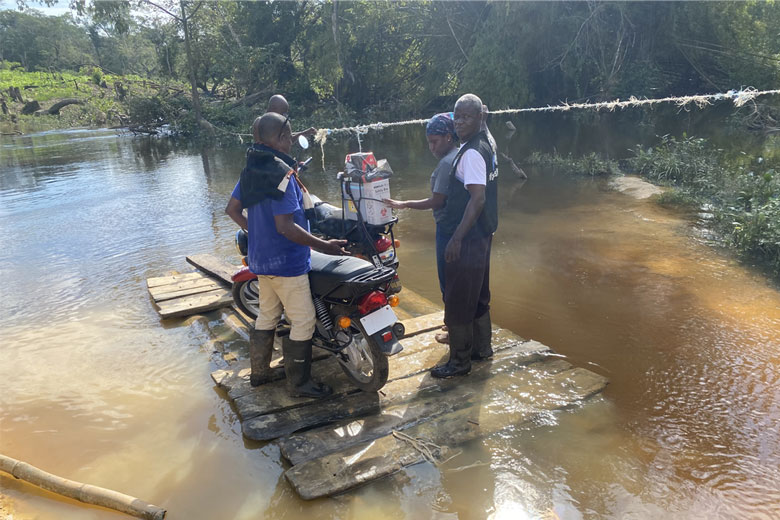
Getting to Dulay is only possible by foot, motorbike and the few sturdy pickups and trucks that dare to run the risk of mechanical crises after most trips on the bad roads. But the area does not have a clinic or health centre, leaving sick people heavily reliant on Dokpo and two other CHAs.
“To appreciate us, the people sometimes bring us bananas, plantain, eddoes and rice to tell us thank you for saving their children,” he says.
Life or death
Yei Meapeh remembers the night her two-year-old son got sick. His temperature was high. She ran to knock on Dokpo’s door; he ran to her aid, carrying drugs.
Before the CHA programme started, she remarks would have needed to travel on a motorbike or walk for three to four hours to Goagortuo, the closest clinic. And even that might have proved fruitless, as the clinic is mostly closed at night.
John Johnson admits he had once been somewhat dismissive of the CHAs in his town, but one afternoon, his daughter had dangerous diarrhoea. Thankfully, Evelyn Kpaanquoi, a CHA who looks after 83 households with a population of 347 in Zortapa town, a nearby town to Dulay, was at home. She immediately administered zinc tablets and oral rehydration salt (ORS) for the child.
“She really helped us, or else the girl would have died,” he speculated.
As one of the few women serving as a CHA here, Kpaanquoi has gained the trust and confidence of her community. Many women now come to her for advice on contraceptives.
Interested in more articles about health workers?
Precarious funding
But despite the impact CHAs are making in hard-to-reach communities, the programme is shakily resourced. Medication, training and compensation are supported by donors, with the Global Fund and Gavi both key funders of CHA programmes.
However USAID, formerly one of the programme’s main funders, has been closed. The World Bank office in Liberia recently alerted the government of its plan to end funding for vaccines.
There are unanswered questions on how Dokpo and his colleagues will be compensated for their work. Dokpo, Kpaanquoi and Junior Warkar, a CHA in Zor-Kialay town in Karnplay City, Nimba County, all say they have not received their monthly stipend since January of this year.
For Junior Warkar, a CHA in Zor-Kialay town in Karnplay City, Nimba County, delayed payment of the stipend is only part of his struggles. He also grapples with limited medication. As the only CHA operating here, Warkar’s population has grown over the years, now totalling 1,494, a figure above the 200 to 350 (40 to 60 households) set up in the national community health policy.
“I serve some people, and some people don’t get it,” he says.
Nyah P. Gbormie, a Community Health Service supervisor (CHSS), who oversees CHAs, said, “We really thanked God for them despite no pay, they are still working,” he adds.
Sustainability questions amid funding decline
Some argue the programme is structurally vulnerable because it entirely externally resourced. From drug purchases to CHAs’ compensation, international not-for-profit institutions have furnished funding.
For instance, in Rivercess County, the NGO Last Mile Health has made sure CHAs have received mobile devices, motorbikes, backpacks, flashlights and gasoline.
T. Ruston Yarnko, LMH Senior Director for Health Strengthening Systems, said as a partner to the Liberian government, his organisation is working to identify both domestic and external funding to support the CHAs and sustain the programme amid donor funding decline.