
New HPV vaccines offer broader protection against cervical cancer. How much difference could they make?
HPV vaccines are already preventing cancer, but new options could prevent even more cases.
- 14 October 2026
- 4 min read
- by Linda Geddes
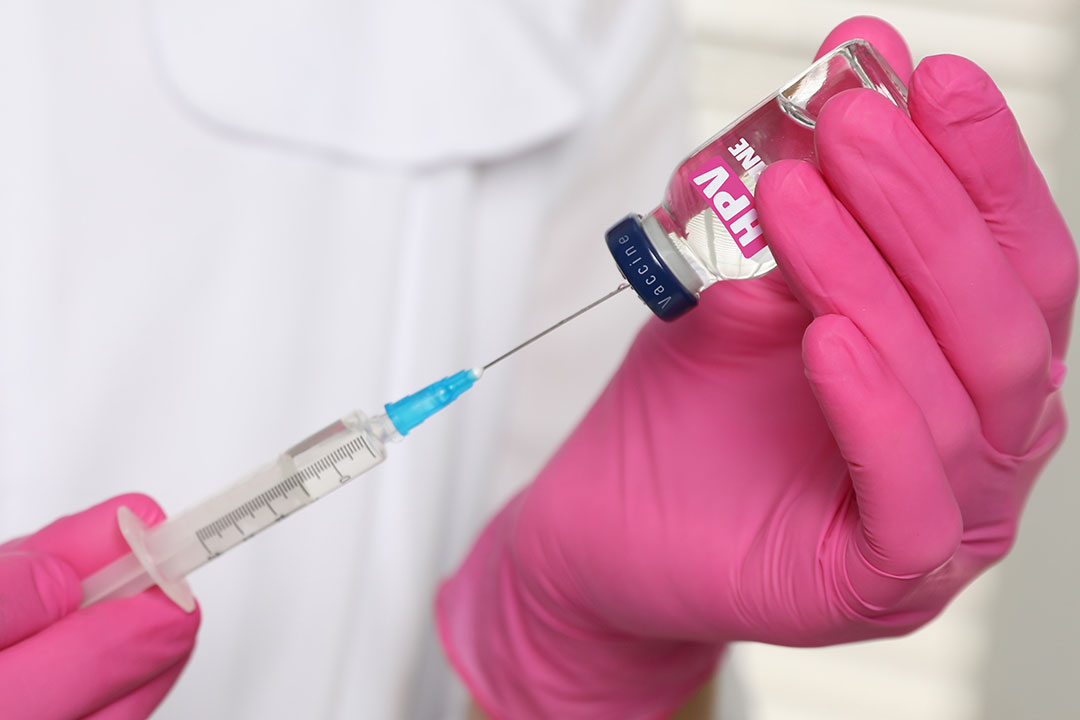
Vaccines against human papillomavirus (HPV) are already preventing cervical cancer around the world. But not all HPV vaccines protect against the same number of cancer-causing types of the virus.
For now, nine-valent (or nonavalent) vaccines offer the broadest protection, targeting seven high-risk HPV types, as well as two that cause most anogenital warts.
Yet, until now, only one such vaccine has received WHO prequalification, a global quality and safety stamp of approval required before UN agencies like UNICEF can buy any vaccine.
Gavi has estimated that, if nine-valent HPV vaccines were adopted as widely as possible during its 2026–2030 strategic period, their broader protection could ultimately save an additional 170,000-190,000 lives.
That could be about to change. A second nine-valent vaccine, developed by Chinese manufacturer Xiamen Innovax Biotech, has been submitted for WHO prequalification, while other manufacturers are developing higher-valency vaccines of their own.
Although existing HPV vaccines are already highly effective at preventing cervical cancer, widespread uptake of vaccines offering broader protection could potentially save hundreds of thousands of additional lives.
Which types of HPV virus are the greatest threat to human health?
HPV is a major cause of cancer globally, estimated to have been responsible for 620,000 new cancer cases in women, and 70,000 in men in 2019 alone.
Of these, cervical cancer accounts for by far the largest share; around 530,000 (85%) of female HPV-related cancers in 2019. However, HPV also causes many vulval, vaginal, penile, anal and mouth, and throat cancers.
While there are hundreds of different types of HPV virus, twelve are currently defined as high-risk, meaning they’re capable of causing cancer in humans. Of these, HPV types 16 and 18 are together are responsible for approximately 71% of cervical cancer cases globally.
Have you read?
Two further HPV viruses, types 6 and 11, cause anogenital warts: small rough or fleshy lumps around the vagina, penis or anus that are sometimes painful, itchy or may bleed.
Almost all sexually active people will be infected with HPV at some point in their lives, often without symptoms, and while most of these infections will go away on their own, persistent infections with high-risk forms can eventually lead to the develop of abnormal cells that may develop into cancer.
Which HPV types are covered by vaccines?
Currently, six HPV vaccines have received WHO prequalification, meaning they have been assessed as meeting international standards for quality, safety and effectiveness, and making them eligible for procurement by UN agencies such as UNICEF.
All are highly effective at preventing infection with HPV types 16 and 18 and the cancers they cause, but some also protect against additional HPV types.
Bivalent vaccines protect against HPV types 16 and 18; quadrivalent vaccines protect against these plus types 6 and 11, which cause anogenital warts; while Merck’s nine-valent vaccine, Gardasil 9, protects against types 6, 11, 16 and 18, plus five further high-risk HPV types: 31, 33, 45, 52 and 58.
Until now, Gavi has supported vaccination programmes using bivalent and quadrivalent HPV vaccines, but not the nine-valent vaccine.
Although Gardasil 9 has been WHO-prequalified since 2018, Gavi has prioritised introducing HPV vaccination to countries and achieving high coverage, stressing that vaccines targeting HPV types 16 and 18 can support the goal of eliminating cervical cancer as a public health problem.
However, Gavi has also anticipated adding higher-valency vaccines once there is sufficient and affordable supply and a clear prospect of long-term competition among multiple manufacturers to support a sustainable introduction and ongoing availability of such vaccines.
In December 2025, Gavi’s Board approved the inclusion of higher-valency HPV vaccines, such as nonavalent vaccines, on its product menu, subject to a second HPV9 vaccine dossier being accepted by WHO Prequalification for review, with studies underway to generate evidence supporting a one-dose schedule.
That moment has now arrived. In June 2026, WHO accepted the Chinese manufacturer Xiamen Innovax Biotech nine-valent HPV vaccine, Cecolin 9, for WHO prequalification review. It is designed to protect against the same HPV types as Gardasil 9. Further 9-, 10- and even 11- and 14-valent HPV vaccines are in various stages of development.
What impact could nine-valent vaccines have on cervical cancer?
The five additional cancer-causing HPV types covered by nine-valent vaccines are estimated to cause around 18% of cervical cancers globally, on top of those caused by HPV types 16 and 18.
However, bivalent and quadrivalent vaccines already provide some cross-protection against several of these additional types. Taking this into account, Gavi estimates that nine-valent vaccines could protect against roughly 6–18% more cervical cancers, although this will vary between countries depending on which HPV types are most common.
Gavi has estimated that, if nine-valent HPV vaccines were adopted as widely as possible during its 2026–2030 strategic period, their broader protection could ultimately save an additional 170,000-190,000 lives.
The availability of such vaccines would also give Gavi-supported countries more choice, allowing those with higher rates of certain cancer-causing HPV types to select a vaccine offering broader protection.
Gavi says governments have already expressed interest in accessing nine-valent vaccines, and that switching from a lower-valency vaccine would be relatively straightforward.
More from Linda Geddes