
A new malaria mosquito is causing outbreaks in African cites. Here’s where it came from
Genetic analysis suggests the urban-dwelling Anopheles stephensi mosquito likely arrived from South Asia and may have brought insecticide resistance with it.
- 25 June 2026
- 6 min read
- by Linda Geddes
At a glance
- Anopheles stephensi is an invasive urban-dwelling species of mosquito capable of transmitting two highly dangerous forms of malaria. To better understand how it invaded Africa, and the genetic basis of the insecticide resistance that may make it more difficult to control, researchers sequenced the genomes of 645 mosquitoes collected from across Africa, the Middle East and South Asia.
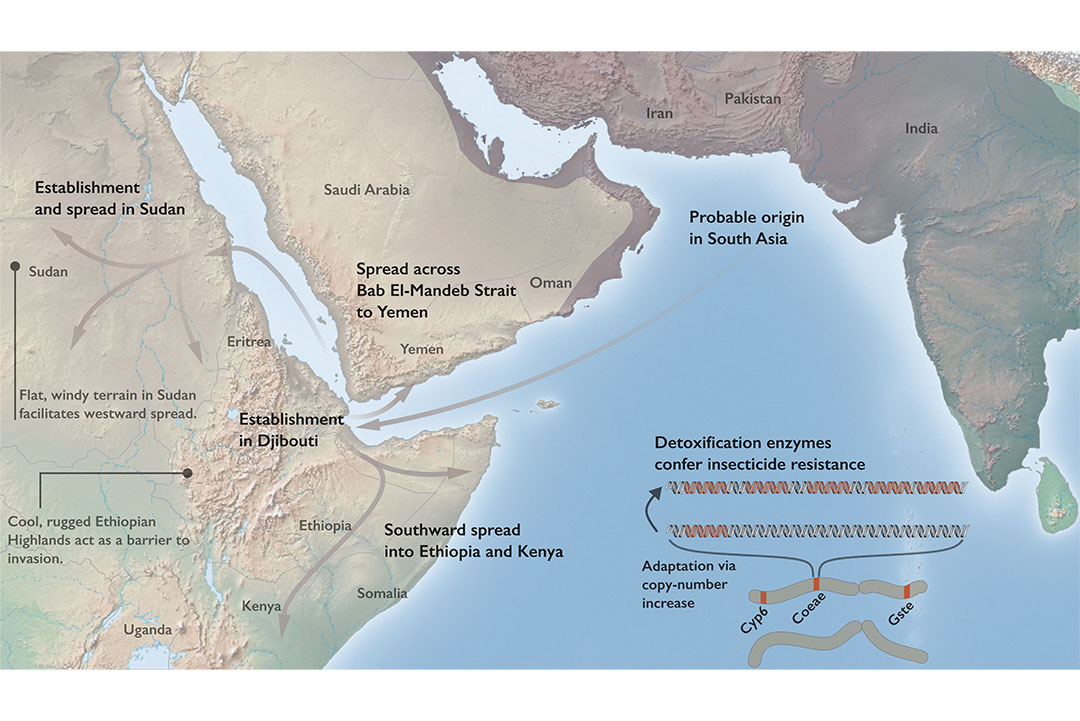
- They found that the mosquito most likely arrived from South Asia already equipped with many of the resistance traits that are helping it withstand common insecticides and established a “bridgehead population” in Djibouti. This may have subsequently seeded multiple invasion fronts across East Africa and Yemen.
- The findings could provide a framework for monitoring the mosquito’s future spread and targeting efforts to control it.
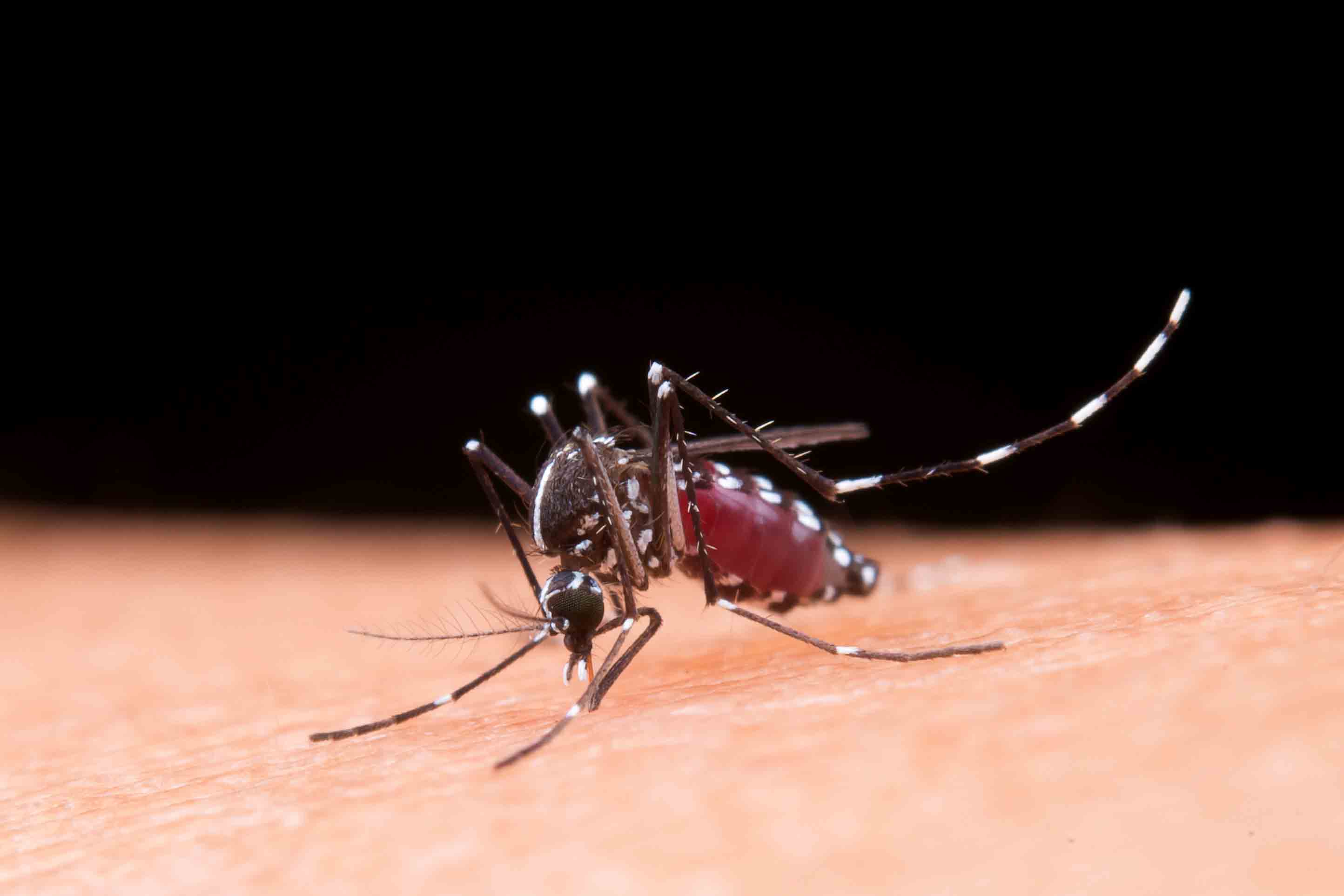
The arrival of an urban-dwelling species of mosquito in Africa has alarmed malaria experts. Native to southern Asia and the Persian Gulf, and resistant to many commonly used insecticides, African populations of Anopheles stephensi have already been linked to unexpected surges in urban malaria in Djibouti and Ethiopia, and threaten to expose millions more people to the disease.
Now, the largest genomic study of the species to date has revealed both how the mosquito likely arrived in Africa and subsequently spread, and the genetic basis of the insecticide resistance that may make it more difficult to control.
“If we understand where it comes from and how it gets around, we can use that information to prioritise specific regions for surveillance and control,” said Dr Tristan Dennis at Liverpool School of Tropical Medicine in Liverpool, UK, who led the research.
What is An. stephensi and why is it so dangerous?
Native to South Asia, An. stephensi is an invasive malaria mosquito that is uniquely adapted to urban life. Unlike other African malaria vectors, which are primarily associated with rural areas, An. stephensi readily colonises water tanks, barrels and other artificial containers, allowing it to flourish in densely populated towns and cities. The species is also capable of transmitting the world’s deadliest malaria parasite, Plasmodium falciparum, as well as P. vivax, the dominant cause of malaria outside sub-Saharan Africa. P. falciparum is the species that the malaria vaccine protects against.
Since it was first detected in Djibouti in 2012, An. stephensi has spread across the Horn of Africa and Yemen, with more recent detections in Sudan, Kenya, Nigeria, Ghana and Niger. The mosquito has already been linked to unexpected outbreaks of urban malaria. For instance, between January and May 2022 around 2,400 malaria cases were reported in Dire Dawa, eastern Ethiopia – a city that usually reports around 200 cases annually.
Have you read?
“In a continent where malaria is typically considered a rural disease and control strategies are designed accordingly, the establishment of a highly competent urban vector of P. falciparum and P. vivax malaria risks a shift in epidemiology that could threaten an estimated 126 million urban residents, and derail decades of progress in malaria control,” Dennis and colleagues wrote.
Another issue is that African populations of An. Stephensi are showing resistance to several important classes of insecticides, including pyrethroids used in insecticide-treated bed-nets, and carbamates used in indoor residual spraying. However, until now, it was unclear exactly which genetic changes were driving this resistance.
How did this mosquito species gain a foothold in Africa and subsequently spread?
To better understand how the mosquito became established on the African continent, and the genetic basis of its insecticide resistance, Dennis and his colleagues sequenced the genomes of 645 An. stephensi mosquitoes collected from across Africa, the Middle East and South Asia.
By examining their genetic similarities and differences, the researchers were able to reconstruct the mosquito’s journey into Africa and the origins of the insecticide resistance that is helping it to become established there.
The study, published in Science, found that An. stephensi most likely arrived from South Asia and established a “bridgehead population” in Djibouti that subsequently seeded multiple invasion fronts across East Africa and Yemen.
“Our data – and others’ – suggest ports were the primary point of entry, and the genetic data support this,” Dennis told VaccinesWork.
“We can also identify likely future routes of spread. An. stephensi was detected in Nigeria in 2020 and Niger in 2025. Our data suggest that flat, windy terrain in Sudan facilitated its spread, and raise the possibility that the Sahel corridor (for example, Chad and the Central African Republic) could be a route of spread that limited surveillance simply hasn't picked up yet. It’s really urgent to find this out.
“By contrast, we think the Ethiopian Highlands may have slowed its spread, and the ongoing invasion of Kenya could be constrained by the Rift Valley, which we know acts as a barrier to movement in other mosquito species.”
How is insecticide resistance contributing to An. stephensi’s success?
The study also suggested that many of the resistance traits that are helping the mosquito withstand insecticides were imported from Asia, rather than evolving after it arrived in Africa. This means An. stephensi may have arrived already equipped with some of the tools needed to survive exposure to commonly used insecticides, potentially making it harder to control.
“Resistance is widespread and genetically very uniform across Sudan, Ethiopia, Yemen and Kenya, because the entire invasive population derives from the same, limited genetic pool,” said Dennis. “That might sound simpler to deal with, but it’s actually the opposite: there’s no variation to exploit. If resistance had evolved locally in each country, you’d see a patchwork you could target with different insecticides region by region.”
How could these findings aid malaria control and prevention efforts?
Although the invasion spans multiple countries, with conflict, insecurity and weak surveillance systems making it difficult to track, the researchers say their analysis provides a framework for monitoring the mosquito’s spread and targeting control efforts.
“Knowing which geographic pinch points to target could be genuinely useful,” said Dennis. He pointed to Australia’s efforts to prevent the invasive tiger mosquito, Aedes albopictus, from spreading south from the Torres Strait through intensive surveillance and control measures. “The same logic could apply to natural barriers like the Rift Valley, or to ports as likely entry points,” Dennis said.
The discovery that the invasion most likely originated via maritime trade from South Asia also suggests that surveillance at major ports should be prioritised, as they may serve as gateways for future introductions.
“In practical terms, though, I suspect fairly little can be done immediately,” said Dennis. “Invasive malaria vectors have been successfully dealt with before. An. arabiensis invaded Brazil briefly in the 1930s and was eradicated through a concerted campaign, but coordinating that kind of effort across multiple countries in this invasive range will be hard, given the security issues that already hamper surveillance and control.”
More from Linda Geddes