
What happened to the feared ‘subclade K’ flu strain?
Scientists say that measuring human immunity alongside existing methods could improve predictions of the risks posed by emerging flu strains.
- 3 July 2026
- 6 min read
- by Linda Geddes
At a glance
- H3N2 subclade K flu is a variation of a human seasonal flu virus that emerged towards the end of the southern hemisphere’s 2025 flu season. Its rapid accumulation of mutations sparked concerns that it might evade existing immunity and vaccines.
- However, a study of blood samples from 243 individuals of different ages suggested most participants already had antibodies capable of recognising subclade K, and the 2025–2026 flu vaccine further boosted their immune responses.
- The findings help explain why predictions of a particularly nasty flu season did not materialise and suggest routinely testing human immunity alongside existing methods could provide a more accurate prediction of the threat of flu.
When a heavily mutated flu strain began spreading around the world last year, scientists feared it might evade existing immunity and render influenza vaccines less effective. But a July 2026 study of blood samples from hundreds of people suggests those fears may have been misplaced, and offers a more accurate way of assessing future flu threats.
First detected at the tail end of the southern hemisphere’s 2025 flu season, and known as H3N2 subclade K, the virus was an offshoot of a well-established seasonal flu virus that has circulated in people for decades. However, its rapid accumulation of mutations prompted concerns about how much protection the northern hemisphere’s flu vaccine would provide against it.
“Based on what we knew at the time, it was fair to expect that it would be quite a problem: that vaccine efficacy would be low, the number of cases potentially significant and people would be more vulnerable than to a virus with only a couple of changes,” said Dr Ruth Harvey, Deputy Director of the Worldwide Influenza Centre at the Francis Crick Institute in London, who led the study.
Yet when Harvey and her colleagues analysed blood samples from hundreds of people of different ages using a new high-throughput testing approach, they found little evidence of an immunity gap. Instead, most participants already had antibodies capable of recognising and neutralising the virus, and the 2025–2026 flu vaccine substantially boosted those immune responses.
The findings suggest that for future prediction of flu risk, directly measuring immunity in human populations could complement existing methods of assessing emerging flu threats and provide a more accurate picture.
How do scientists predict whether flu vaccines will work?
As part of global influenza surveillance, scientists routinely analyse the genetic sequences of circulating flu viruses, looking for changes that might affect how well existing immunity or vaccines recognise them.
If a strain appears sufficiently different, they’ll usually test it against antibodies from ferrets that have been infected with, or vaccinated against, a known flu strain. If those antibodies struggle to recognise the new virus, it could suggest that it may be less well recognised by existing immunity, or that current vaccines may provide less protection.
This approach has underpinned global influenza surveillance for decades and plays an important role in decisions about which strains to include in seasonal flu vaccines.
In the case of subclade K, both its genetic profile and experiments in ferrets suggested it was substantially different from the H3N2 strain used in the 2025–2026 northern hemisphere flu vaccine, raising concerns that vaccine effectiveness could be reduced.
Yet, ferrets typically experience only a single flu infection or vaccination, whereas human immune responses are shaped by years of infections and vaccinations.
“By the time you’re 20 years old, your immune system will have seen flu an awful number of times, and its response will have matured or expanded based on those exposures,” said Harvey.
“Animal models have a really key role, but we could never replicate that in them – it is just too complex. The only way to know if a flu vaccine will protect the human population is to actually get those human serum samples and test them against the virus.”
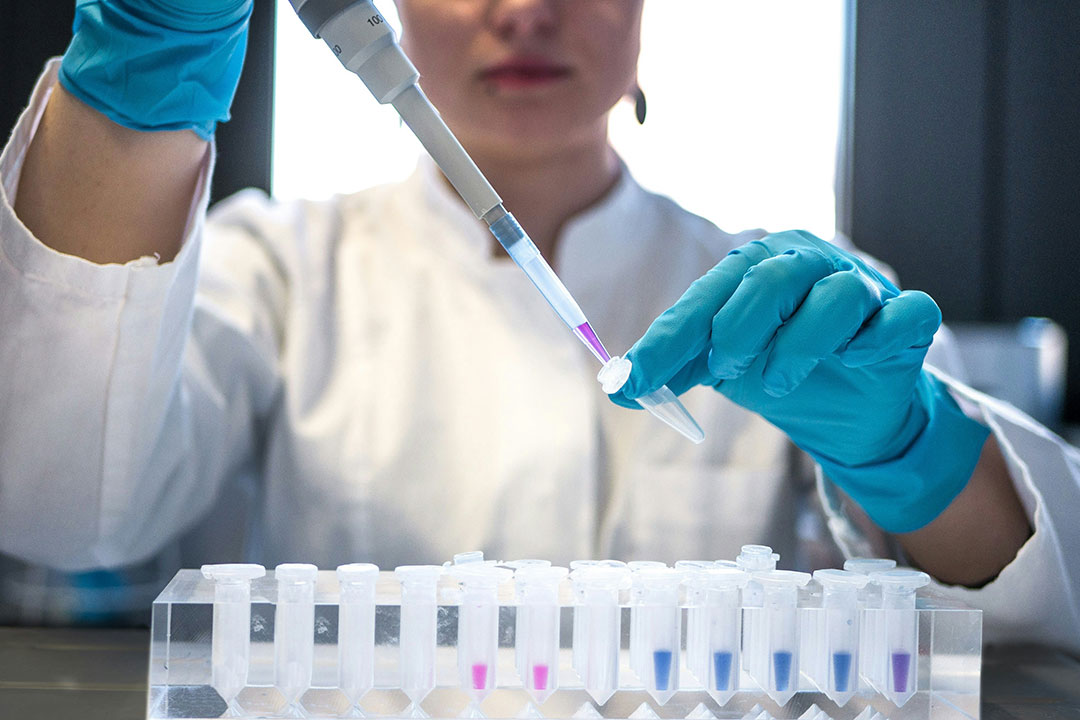
Serum is the liquid part of blood that contains antibodies. Until recently, testing large numbers of serum samples against circulating flu viruses was slow and labour-intensive, limiting the number that could be analysed.
During the COVID-19 pandemic, Harvey and her colleague Dr Mary Wu adapted and automated the technique for serum testing while studying immune responses to SARS-CoV-2. Wu has since applied the same high-throughput approach to influenza, making it practical to rapidly assess immunity across large groups of people.
What happened when they applied this approach to H3N2 subclade K?
As one of the World Health Organization's (WHO’s) Global Collaborating Centres for Influenza, the Francis Crick Institute receives influenza virus samples from more than 90 countries a year as part of global surveillance. For this study, the researchers selected representative viruses from the major H3N2 groups circulating in 2025, including subclade K, and tested how antibodies in human serum responded to them.
To do this, they drew on stored serum samples from several UK studies, including healthy volunteers, younger adults and older care home residents who had agreed to long-term monitoring of their immune responses to respiratory viruses. Some samples had been collected before people received the 2025–2026 flu vaccine, while others were taken afterwards, allowing the team to measure both existing immunity to subclade K and the boost provided by vaccination.
Despite the virus’s worrying genetic profile, most participants already had antibodies capable of recognising subclade K before vaccination, reflecting the immune memory built up through years of previous infections and vaccinations.
The 2025–2026 flu vaccine further boosted people’s antibody responses to subclade K, to levels comparable with those seen for the vaccine strain of H3N2.
“It was a lot better than I think we expected, based on how different the virus looked,” said Harvey.
The research was published in eBioMedicine.
Have you read?
Could this approach improve flu surveillance more generally?
The findings could help explain why fears that subclade K might trigger a particularly nasty flu season did not materialise. They also suggest that routinely testing human immunity alongside genetic analyses and animal studies could provide a more complete picture of the threat posed by emerging flu viruses.
At present, WHO’s process for selecting strains to include in seasonal flu vaccines already incorporates data from human serum samples. However, because generating those data is slow and labour-intensive, only relatively small numbers of samples can be analysed. The new high-throughput approach could make it possible to test many more people, across different age groups and populations, providing a far more representative picture of how well existing immunity is likely to protect against emerging strains. “It’s just better data,” Harvey said.
Having developed and validated the approach during the emergence of subclade K, Wu believes future assessments could be delivered much earlier in the flu season, giving health authorities more time to judge the likely threat posed by an emerging strain, inform public health decisions, and communicate the risk more accurately.
“We now know exactly what type of samples we need early in the season so that we can generate this data very rapidly,” she said.
The approach could also prove useful in the context of pandemic influenza. For instance, in a separate study, Harvey, Wu and colleagues recently tested serum samples from people who had received the seasonal flu vaccine against H5N1 viruses isolated from infected dairy cattle in the United States. They found little or no cross-neutralising immunity, suggesting that existing seasonal vaccines are unlikely to provide meaningful protection if H5N1 were to begin spreading widely in humans.
The findings also demonstrated how the same high-throughput approach could provide a rapid assessment of existing immunity to newly emerging viruses, helping to guide public health responses during the early stages of a potential pandemic.
More from Linda Geddes