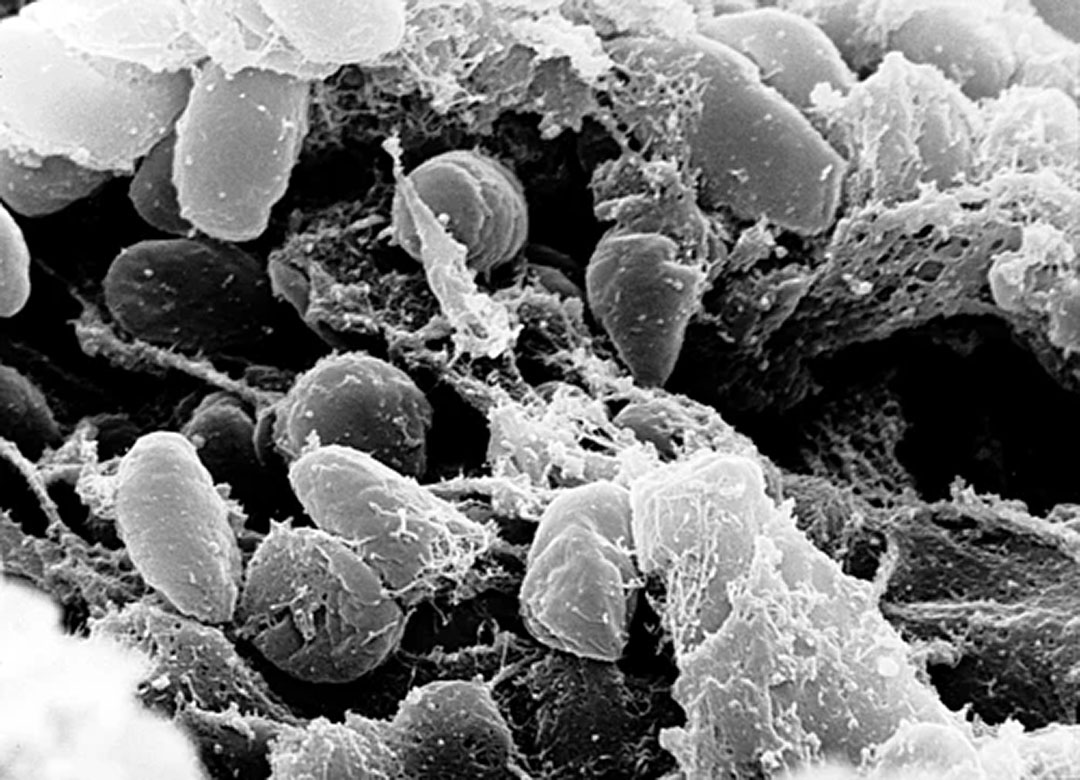

The world is running out of antibiotics that work. Drought is making it worse
A new study links the increase in global droughts to a spike in antibiotic-resistant bacteria in soil.
- 13 April 2026
- 4 min read
- by Priya Joi
At a glance
- A Caltech study has found that drought concentrates natural antibiotics in soil, encouraging bacteria to develop resistance.
- Hospital antibiotic resistance rates across 116 countries tracked closely with local aridity, even after accounting for national income.
- As climate change makes droughts more frequent and severe, researchers warn this could deepen the global antimicrobial resistance crisis.
Drought, a phenomenon growing more frequent and more severe as the climate warms, may be acting as a powerful, independent force driving antibiotic resistance in soil.
A new study, published in Nature Microbiology and carried out by researchers from the California Institute of Technology (Caltech), also found worrying correlations between soil antibiotic resistance levels and clinical hospital data, suggesting that the resistant genes aren’t staying in the ground.
Microbial warfare
Antimicrobial resistance is already estimated to contribute to more than four million deaths a year globally.
Around one in six common bacterial infections are now resistant to the antibiotics used to treat them, according to the WHO's 2025 global resistance report. A Lancet study predicts that AMR could be directly responsible for 39 million deaths by 2050.
While much of the discussion currently focuses on the misuse of antimicrobials both in animals and humans, soil has always been a microbial battlefield.
For hundreds of millions of years, bacteria in the ground have produced natural antibiotics to outcompete their neighbours, and other microbes have evolved ways to survive them.
Many of the antibiotics used in clinics today, from streptomycin to vancomycin, trace their origins to compounds first found in soil organisms. The resistance mechanisms that now threaten those drugs were likely forged in the same place.
What the Caltech team, led by postdoctoral researcher Xiaoyu Shan in the laboratory of microbiologist Dianne Newman, wanted to understand was whether changes to soil chemistry could be shifting that ancient arms race in ways that matter for human health.
Drying out
Their hypothesis was that as soil dries out, water evaporates but the antibiotic compounds bacteria produce do not. Those molecules thus become more concentrated in the remaining moisture.
Bacteria that cannot tolerate the increased exposure to the air die off, but those that can, survive and multiply.
“Imagine you have a vat of a liquid and you have a certain amount of antibiotics in it,” Newman told NPR. “If you were to evaporate that liquid, those molecules would stay there, and they would become more concentrated.”
Have you read?
That could expose bacteria to higher doses of antibiotics, driving resistance even faster. “Anywhere you increase exposure to antibiotics, you will select for microbes that can withstand them,” she said.
To investigate this, Shan and colleagues built a model to sift through publicly available soil microbiome data from sites across China, Europe and the USA spanning a range of land types including cropland, grassland, forest and wetland.
They found that in every single dataset, drier soils contained higher abundances of genes for both producing antibiotics and resisting them. The longer the drought, the stronger the concentration.
The team then confirmed the mechanism in the laboratory. They added a natural antibiotic to a miniature artificial soil ecosystem and dried it out to simulate drought conditions.
Bacteria that were sensitive to the antibiotic were almost entirely wiped out. Those already resistant survived equally well in dry or wet conditions. What remained was a community enriched in antibiotic producers and resistant strains alike.
‘Droughts are creating the same effects as overuse of antibiotics in the clinic. They both drive selection for antibiotic resistance,” Newman said.
Alarming health consequences
The findings are alarming when placed alongside the study’s clinical analysis, says Timothy Ghaly, a microbial ecologist at Macquarie University, Sydney, Australia, in an accompanying viewpoint in the same journal issue.
Using hospital surveillance data from 116 countries, the researchers found that the average frequency of antibiotic-resistant infections correlated strongly with the local aridity index, a measure of how dry a region typically is.
Newman’s team found that relationship held even after they controlled for national income, a factor that might otherwise explain differences in healthcare quality or antibiotic stewardship.
Resistance genes in bacteria are also known to transfer readily between species, and humans interact with soil constantly, through farming, gardening, construction and simply inhaling dust.
A wider lens on resistance
The Caltech team plans to use AI tools to probe the specific mechanisms by which bacteria modify and resist antibiotics under drought conditions.
In the meantime, this research should trigger a much wider examination of fighting antimicrobial resistance, said Ghaly.
Most strategies to fight antimicrobial resistance focus on clinical settings, reducing over-prescription, improving diagnostics and restricting veterinary antibiotic use.
If the soil itself is an engine of resistance, and climate change is turning up the dial, then understanding AMR will require integrating environmental monitoring with clinical surveillance, he says.
“The findings underscore the necessity of a truly integrated One Health approach to combating antimicrobial resistance; one that does not silo clinical and environmental pressures.
“Effective strategies must recognise that antibiotic stewardship in hospitals, while crucial, may not be enough if we neglect stewardship of the planet’s changing climate,” said Ghaly.