
8 things you need to know about the BA.3.2 ‘Cicada’ variant of COVID-19
Despite recent detections in the United States, BA.3.2 is considered to pose a “low additional public health risk”.
- 2 April 2026
- 5 min read
- by Linda Geddes
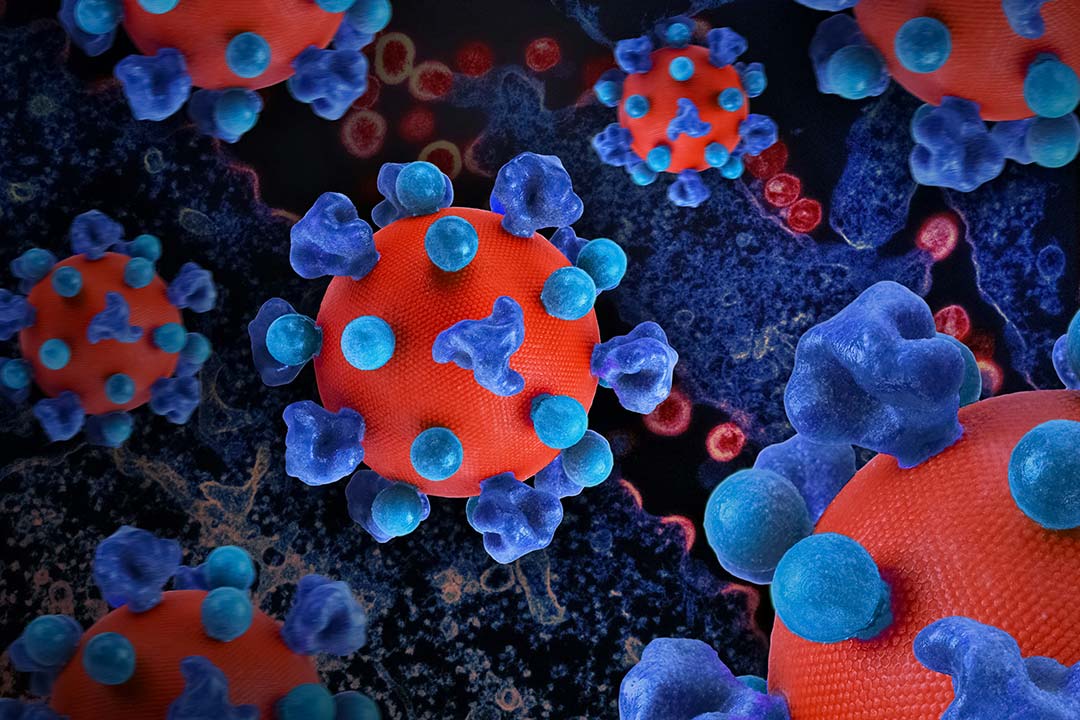
News of a “highly mutated” strain of SARS-CoV-2 has sparked understandable concern in recent days, with headlines focusing on the unusually large number of genetic changes it carries.
But while scientists are keeping a close eye on the BA.3.2 variant, nicknamed ‘Cicada’, early evidence suggests this Omicron offshoot is not currently driving large waves of infection or more severe disease.
Instead, it appears to be another example of the virus continuing to evolve, as it has since its emergence six years ago. Here are eight things we know about the BA.3.2 variant so far.
1. It is another offshoot of Omicron
Like all SARS-CoV-2 subvariants to emerge since November 2021, BA.3.2 is a descendant of Omicron, specifically the BA.3 subvariant that circulated at low levels in late 2021 and early 2022 before disappearing.
The emergence of Omicron marked a major shift in the virus’s evolution, with three lineages, BA.1, BA.2 and BA.3, appearing at roughly the same time, each carrying dozens of new mutations. While BA.1 and BA.2 went on to drive global waves, BA.3 never took off and quickly faded out.
Its reappearance in the form of BA.3.2 in late 2024 was therefore unexpected, suggesting it had been evolving undetected for some time, possibly in a chronically infected, immunocompromised person.
This has earned it the nickname ‘Cicada’, a reference to the insect’s long period spent underground before re-emerging.
2. It is highly mutated, even by Omicron standards
What sets BA.3.2 apart is how genetically different it is from its predecessor.
It has more than 50 mutations in its spike protein relative to BA.3, and more than 70 mutations compared to the original Wuhan strain.
Researchers believe this points towards the occurrence of a ‘saltation event’: a sudden evolutionary leap in which the virus accumulates many mutations at once, rather than gradually.
This is thought to occur during prolonged infections, where the virus has time to adapt under pressure from the immune system.
Many of BA.3.2’s mutations are concentrated in the spike protein, which the virus uses to enter human cells, and which is the main target of immune responses.
3. It was first identified in November 2024, but probably emerged earlier
BA.3.2 was first identified in South Africa in November 2024, but genetic analysis suggests it may have emerged sometime between December 2023 and July 2024, before being detected through surveillance.
This gap between emergence and detection is not unusual: it reflects how variants can circulate at low levels before being picked up, particularly as many countries have scaled back COVID-19 testing in recent years.
Since then, BA.3.2 has been detected in multiple countries, including across Europe, the United States and Australia, though initially only at very low levels, with a notable rise in detections in Western Australia in mid-2025. Even so, it has not surged in the way earlier highly mutated variants did.
4. It may partially evade existing immunity to SARS-CoV-2
Like many recent subvariants, BA.3.2 shows signs of being able to evade existing COVID-19 immunity.
Early laboratory studies suggest that antibodies generated by vaccination or prior infection are less effective at neutralising BA.3.2 than other currently circulating Omicron strains, including descendants of the JN.1 subvariant.
In simple terms, this means the immune system may not recognise it as well. However, this is part of a broader pattern. As SARS-CoV-2 continues to evolve, many Omicron descendants have developed similar immune-evasive properties, helping the virus to continue circulating even in populations with high levels of prior immunity.
Some studies also suggest this immune escape may come with trade-offs. While BA.3.2 appears better at evading antibodies, it may be less efficient at infecting cells.
This could limit its ability to rapidly become a dominant variant, researchers at the US Centers for Disease Control and Prevention said.
5. There’s no clear evidence it causes more severe disease
So far, the available data is reassuring. According to an initial risk evaluation of BA.3.2 published by the World Health Organization (WHO) in December 2025, “BA.3.2 has not shown a sustained growth advantage over any other co-circulating variant, and no data indicate increased severity, hospitalisations, or deaths associated with this variant.
“Overall, available evidence suggests that BA.3.2 poses low additional public health risk compared with other circulating Omicron descendent lineages.”
There is also currently no evidence that BA.3.2 causes different symptoms to other recent Omicron subvariants.
6. It doesn’t appear to be outcompeting other variants
Despite its many mutations, BA.3.2 does not appear to have a clear edge over other currently circulating variants.
It has spread internationally and been detected in multiple countries, but mostly at low or moderate levels, rather than driving large global waves. This suggests it is not currently outcompeting dominant subvariants such as JN.1 descendants.
7. Vaccines are still expected to protect against severe illness
Even though laboratory studies suggest BA.3.2 can partially evade antibodies generated by vaccination or past infection, vaccines are still expected to provide protection against severe illness, helping to prevent hospitalisations and deaths.
WHO and its Technical Advisory Group on COVID-19 Vaccine Composition continue to keep a close eye on how new variants affect vaccines, helping guide decisions on when new updates might be needed.
8. Even so, BA.3.2 is being closely monitored
WHO classified BA.3.2 a Variant Under Monitoring on 5 December 2025: one of five Omicron subvariants that currently has this status.
This means that BA.3 2 is being investigated to see if it – and others closely related to it – may pose an additional threat compared to other circulating variants. However, WHO’s current assessment is that BA.3.2 poses “low additional public health risk”.
In other words: it’s worth watching, but not currently a major cause for alarm.