
Baby on board: the women bikers riding for safer childbirth in rural Kenya
Mounted on pink motorbikes, the Boda Girls’ mission is getting pregnant women to their hospital appointments on time, and for free.
- 26 March 2026
- 8 min read
- by Angeline Anyango
At a glance
- Jane William Atieno is a “Boda Girl,” a motorcycle taxi driver with a difference. She’s on retainer with a not-for-profit maternal health project run out of a Siaya County hospital.
- The transport gap is a major reason poor, pregnant women in Kenya don’t always get the healthcare they need. A lift on a pink Boda Girl bike is free. “I am unemployed. The little money I have can now be spared to prepare for the birth of my child,” one young mother said.
- Hospital health workers say they’re seeing the change in the statistics. Since the programme began, the numbers of women attending antenatal care appointments and giving birth in the facility, have risen steeply.
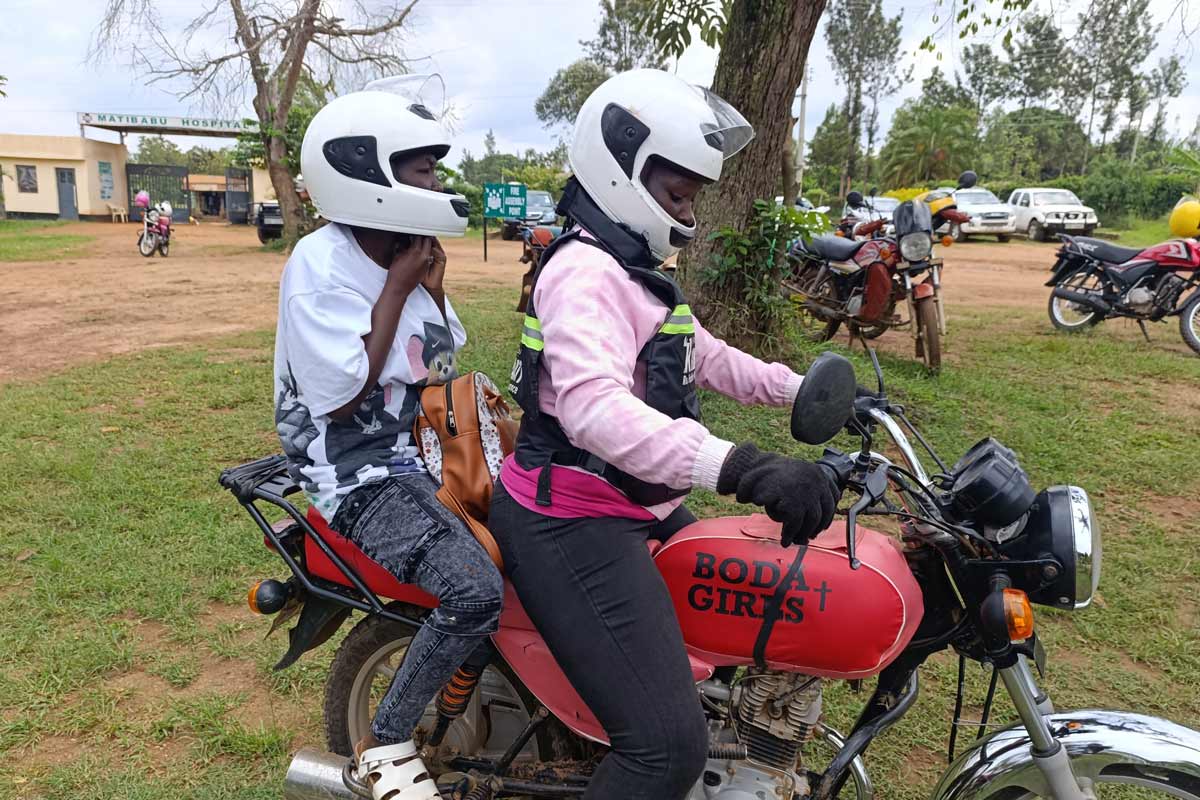
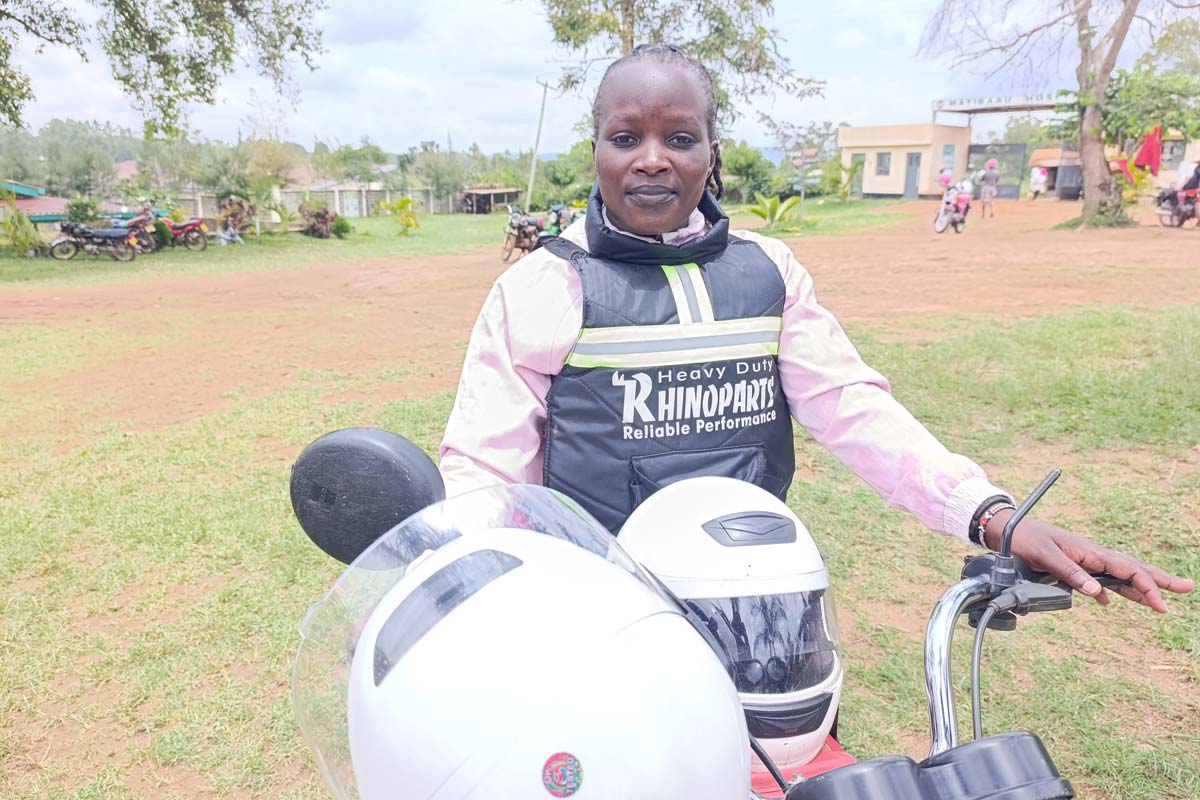
It’s a chilly Friday morning in March, and 27-year-old Jane William Atieno is making her way through Sango Village in Western Kenya’s Siaya County on a pink motorbike. The roads splash with stagnant water, and it takes skill to pick out a course between puddles and potholes.
She parks up just a few meters from a homestead, where her second client of the day, Mercy Atieno, is waiting to be picked up for an antenatal care (ANC) appointment.
Jane is no ordinary motorcycle taxi driver. She works for a programme called Boda Girls – the words are emblazoned in white on her bike’s petrol tank – a maternal health initiative run out of the not-for-profit Matibabu Foundation Hospital.
Established in 2004, that foundation supplies affordable healthcare to some 200,000 people through the hospital, various satellite clinics, community health programmes and a nursing college. But Siaya county’s maternal health indicators revealed that there were gaps still to be addressed. So, in 2020, with funding from the US-based Tiba Foundation, a female-driven two-wheeled transfer service for needy mothers and mothers-to-be was born.
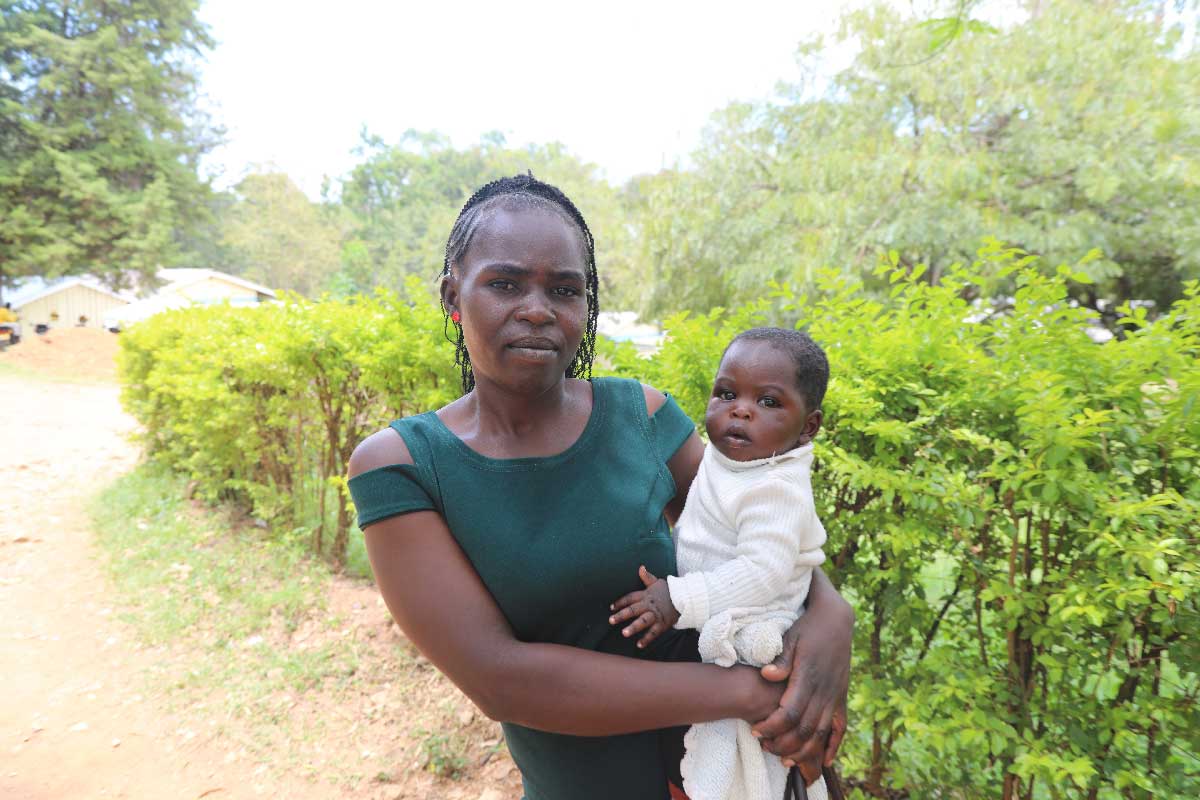
For Atieno, pregnant for the first time, the free pick-up service has been a major relief. Normally, she would have been charged US$ 1.55 (200 Kenyan shillings) for a lift from the village, an amount she says would have presented a major challenge. “I am unemployed. The little money I have can now be spared to prepare for the birth of my child,” she says.
Being a Boda Girl
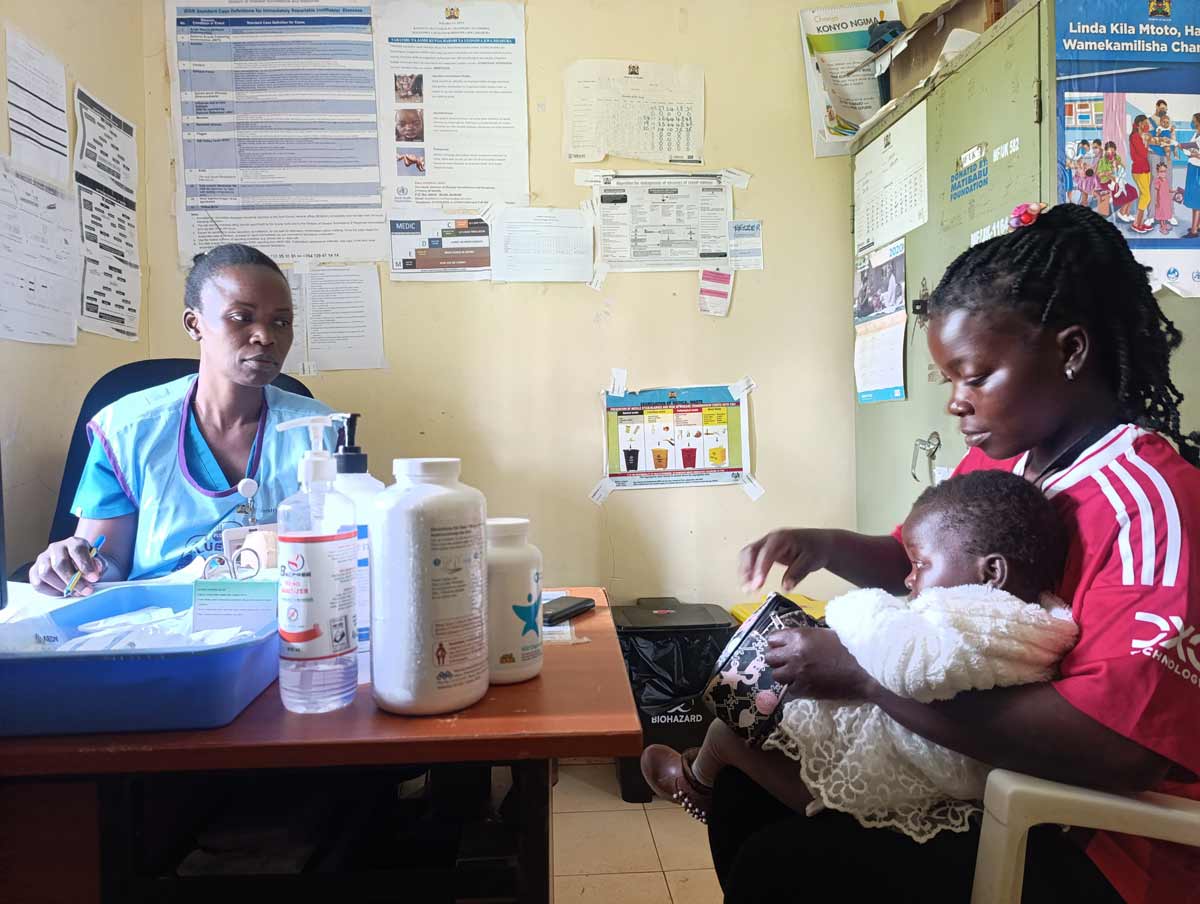
It’s 09:00 by the time Jane kills the engine in the car park of the Matibabu Foundation Hospital. She accompanies Atieno to the Maternal Child Health (MCH) clinic, promising to come back for her in the next hour.
Inside the clinic, dozens of women, some pregnant and others with newborns, are already queuing up.
“Today will be my third ANC clinic. I am looking forward to checking my weight, seeing my doctor and also will leave for home with my folic acid supplements,” says Atieno, who is four months pregnant.
She adds, “I will also be receiving antimalarial tablets which I take to protect me and the unborn baby since we come from a malaria endemic area,”
It’s been a year and a half since Jane began to work for the hospital’s ‘Boda Girl’ programme, and two years since she first learned how to ride a bike: a rare skill and an even rarer job for a woman in Kenya.
During the training – also coordinated by the hospital – the thought of transporting pregnant women and those with children under the age of five was a powerful motivator.
For years, she had heard stories of women giving birth at home due to the long distance to health facilities. Some of those stories had tragic endings. Many women she knew of had failed to attend ANC and postnatal care (PNC) clinics, missing opportunities to have their children vaccinated for better health outcomes.
“I looked forward to a time when I would start offering the services to the women. Having both mother and the baby alive and healthy is the end goal,” says a smiling Jane.
Now her daily assignment, she says, is to offer free transport to the women seeking ante- or postnatal care, contraceptives and cervical cancer screening services.
Her other role is to create demand for her services, which she does at public gatherings including at the chief’s baraza, church, women’s groups and marketplaces.
“Over the years, I have been able to create a wide clientele network. On most occasions, I get the women through referrals, making my work easier,” she says.
Mercy Atieno, for instance, was introduced to Jane by her her sister, who was also her client. The sister had revealed that Mercy, now 19, had just conceived and was out of a job, making travelling to the facility for the routine visits a major challenge.
The two were linked up in early January, and immediately kicked off the ANC clinic visits.
“I have Mercy's phone number, which we use to communicate and plan our hospital visits,” says Jane, who travels around with a notebook that stores the details of her clients including location, phone contacts and clinic appointment dates.
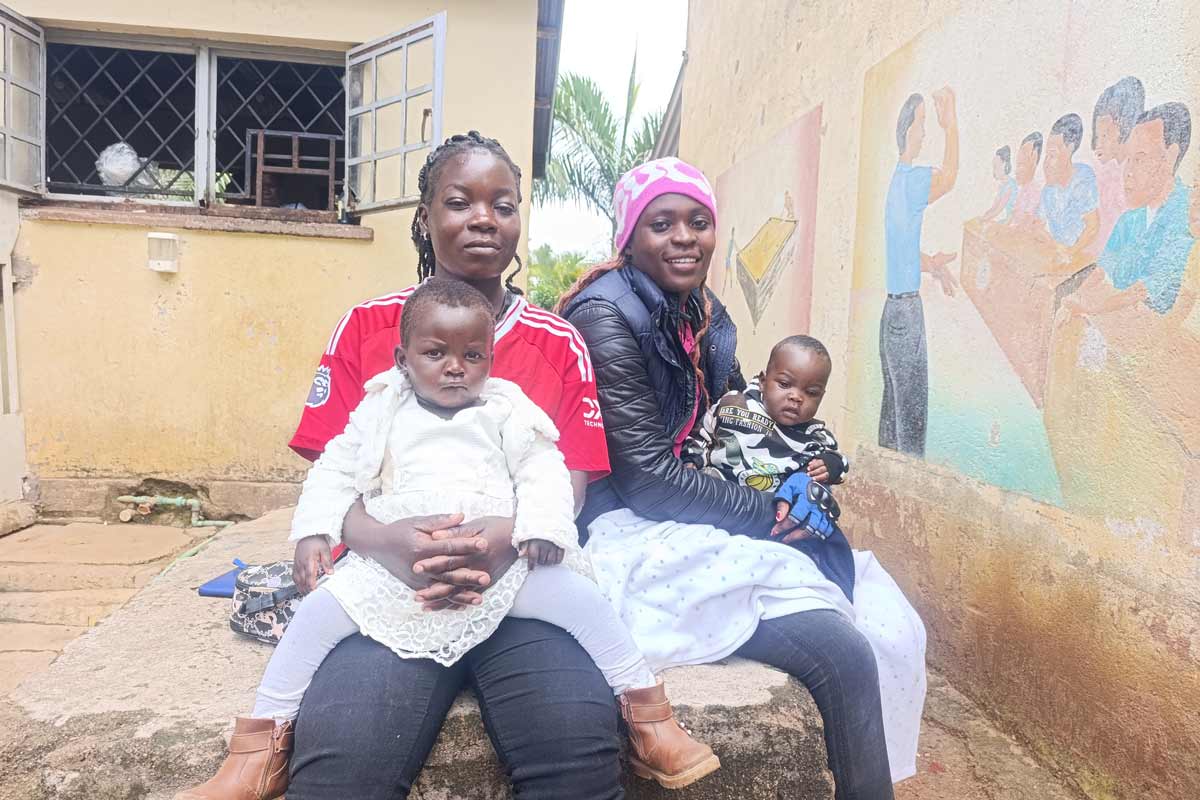
Outside the facility, Immaculate Achieng, 21, and her two children have just arrived on another pink motorcycle.
She’s due to see a health worker for a routine visit with two-year-old Maryanne Akinyi, but there was no one at home to take care of five-month-old Marsha Griffith, hence the reason she tagged along.
She is helped to the MCH clinic by her motorcycle rider, Brenda Awuor, who stays at the waiting bench with little Marsha, as nurse Presence Omog attends to her sister.
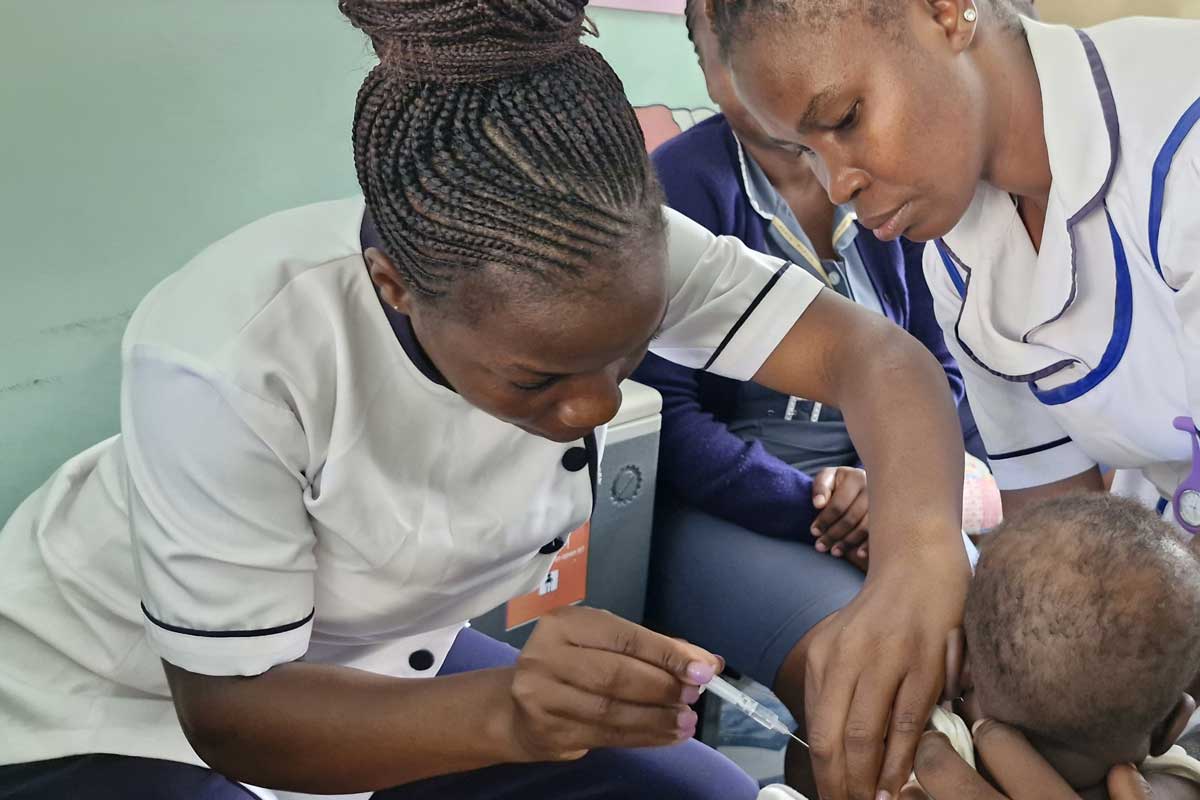
Maryanne is due her malaria vaccine and Vitamin A supplement. After those are done, the nurse hands over a deworming tablet with instructions on how it will be administered at home the following morning.
Maryanne is due back on 4 September, but Marsha’s next will be in just a few days, as Immaculate reminds Brenda as they get ready to mount the bike and head home.
How it works
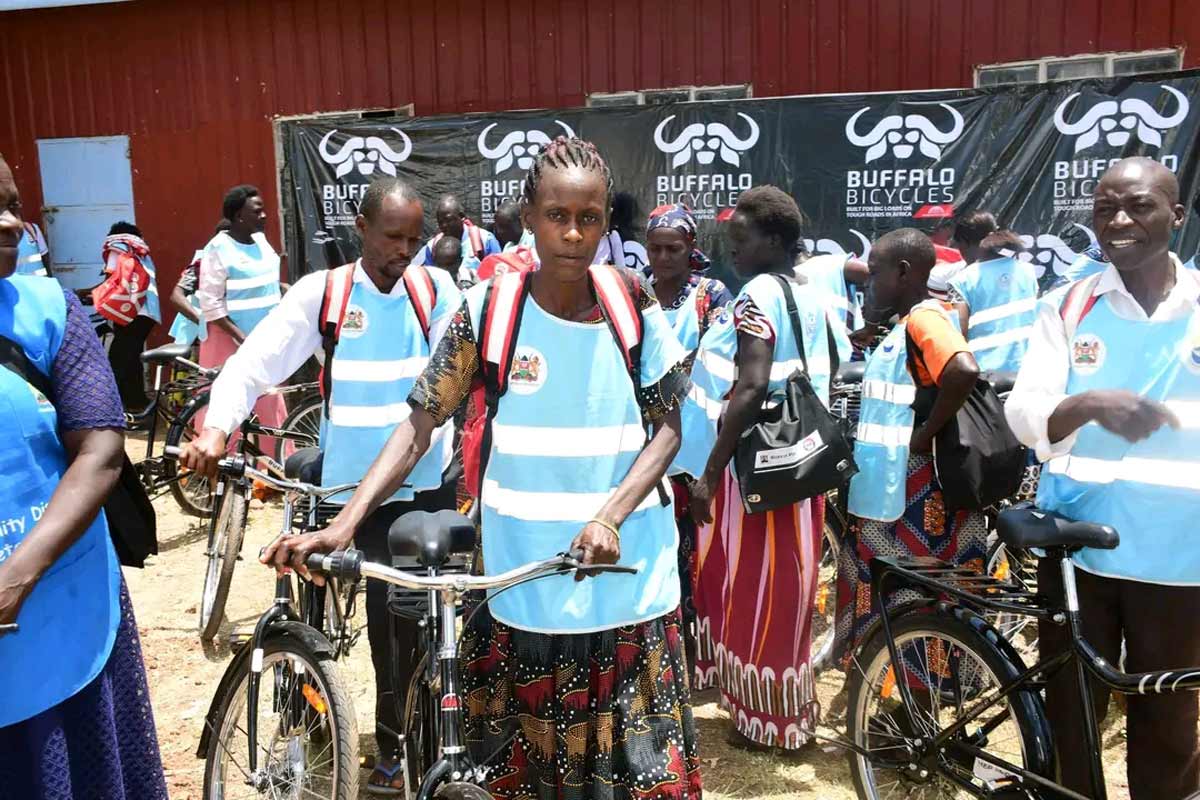
Faith Muasya, who coordinates the Boda Girls programme at the Matibabu Foundation, says the programme kickstarted in early 2023, with a first crop of just four participants enrolling in motorcycle riding classes. The programme has now trained a total of 38 young women.
The young women were then allowed to start ferrying the clients free of charge to the rural health facility.
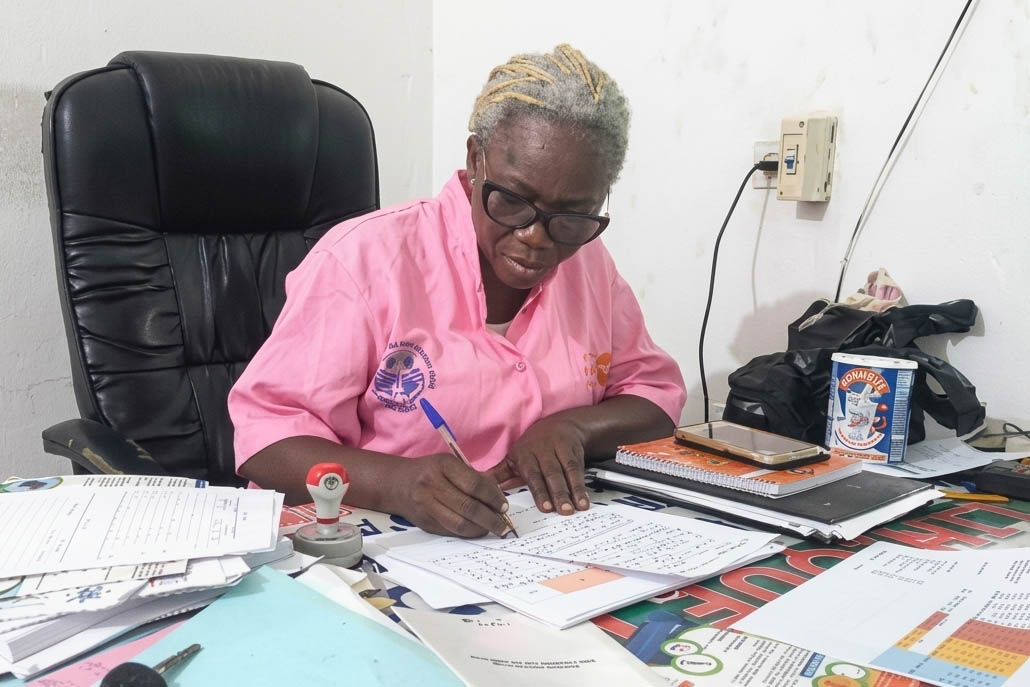
The riders are all on retainer: Muasya explains that they note down the details of the women ferried to the hospital and services rendered in a monthly report. Payment follows.
“We always verify the data received from the bikers at the end of the month using the register at the MCH clinic for accountability purposes,” says Muasya.
For each free ride to the facility, the programme pays the riders US$ 0.77 (100 Kenyan shillings).
For the first two years, the riders’ earnings go towards paying off their motorbikes.
“We always hand over the new motorcycles to the women so they can start earning from the same. Once graduated, we pay the women the accumulated amount on a monthly basis,” says Muasya.
“The programme has been doing well. In February, for instance, our data revealed that the riders were able to transport 72 women in need of skilled delivery, 229 ANC and 311 PNC clients,” says Muasya.
“The riders operate from 06:00 to 18:00 from Monday to Sunday. Whenever there are cases of women who need to deliver at night or are unable to travel on motorcycles, they reach the ambulance department for emergency services,” he adds.
Have you read?
ANC visits, hospital births on the rise
His comments are echoed by Evelyn Odero, the nursing services manager at the Matibabu Foundation Hospital, who says through the programme, the facility has been able to register a 67% increase in skilled deliveries.
“Initially, the hospital births ranged between 30 and 50 per month. Currently, the highest number we have reported is 159,” Odero says.
ANC visits, she says, have also doubled. ”In May 2025, we were registering 236 ANC visits, but come December the same year, the number had shot to 400.”
The programme has been able to help address the transport delay gap, which she says is one of the major causes of maternal child deaths. Health workers also report a rise in vaccination coverage in the area since the programme’s inception.
More than a pair of wheels
For many of the women clients, Boda Girls have turned out to offer more than a ride. Sarah Omenya recalls a time she had forgotten her ANC appointment but her Boda Girls had called right on time to issue a reminder.
In fact, Dr Edwin Ouma Oyugi, the Chief Medical Officer Matibabu Foundation Hospital, says the riders receive MCH training to enable them identify the various danger signs, and help improve pregnancy outcomes.
“Women in the community love this idea. They feel like they have companions in the female riders. Some have also revealed that they feel safer,” says Dr Oyugi.
That says, he recalls that at the programme’s outset, the young riders encountered a major challenge in convincing the women, who were used to male riders, that they knew what they were doing.
“One of the remedies we have embraced is working with male riders as allies. We engage them in training so that they do not see the women as competition, and our efforts are already bearing fruits,” he says.
The programme has expanded to the neighbouring Kisumu and Homa Bay Counties, and he says there is hope to extending to the broader 14 Lake Region counties.
More from Angeline Anyango