
Bangladesh vaccinates against cholera to stop future outbreaks
Bangladesh bears one of the highest cholera burdens in the world, but a new vaccination strategy is putting its public health system on the front foot.
- 17 September 2026
- 5 min read
- by Mohammad Al Amin
At a glance
- In a milestone moment for cholera management, Bangladesh is rolling out more than 5 million doses of oral cholera vaccine as part of a data-driven, anticipatory strategy.
- Most of the tens of millions of doses shipped each year are used reactively, to fight ongoing outbreaks. This year, improved global supply has for the first time in years freed up enough doses for planned preventive campaigns, allowing some endemic countries to get ahead of the disease.
- Health workers in the hotspot districts included in the campaign say demand for the vaccine has been enthusiastic.
This year Bangladesh, known as the “cradle of cholera” for its long endemic history with the disease, is vaccinating to get out ahead of the bug.
Since 22 August and until 21 September, the government is offering first doses of the oral cholera vaccine (OCV) to almost 5.2 million eligible people in designated parts of the country. Second doses will roll out between 26 September and 25 October.
“The cholera vaccination areas have been selected as per the prevalence of the disease. Due to global vaccine shortages, the multi-year roll-out targets highly vulnerable areas first rather than launching an immediate nationwide campaign,” explained Dr Md. Halimur Rashid, Director (Disease Control) at the Directorate General of Health Services (DGHS).
OCVs have proven a powerful tool in cholera control worldwide, with no fewer than 51 million doses leaving the shelves of the Gavi-supported global oral cholera vaccine stockpile in 2025 alone. But those doses were reactive: flying straight into outbreak zones to help quell the spread of the explosively contagious disease.
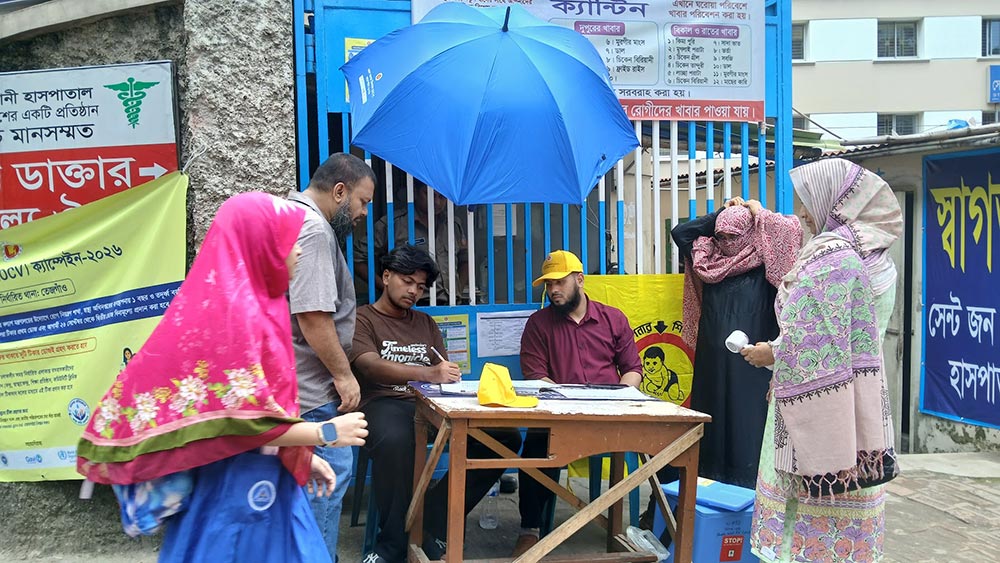
Credit: Mohammad Al Amin
High demand for firefighting vaccines has historically made it difficult for countries with a predictable cholera problem to secure enough doses for anticipatory campaigns. But that bind seems to be easing, and Bangladesh is the third country this year to deploy cholera vaccines as part of data-driven strategies to block outbreaks before they begin. “This is an important global milestone,” said Victor Raynaud, a senior manager with Gavi’s cholera team, “which marks renewed momentum for preventive cholera vaccination following several years during which vaccine supply was absorbed by emergency outbreak response activities.”
Have you read?
The DGHS says they hope to be able to expand the vaccination campaign beyond the currently included ‘hot spots’ eventually. In the meantime, Dr Md. Halimur Rashid emphasises that the vaccine is being made available at no cost at all to eligible people.
Making up the numbers
Health workers running the campaign outposts say that so far, the population seems eager to step up and do their bit to out-strategise the all-too-familiar bacterium.
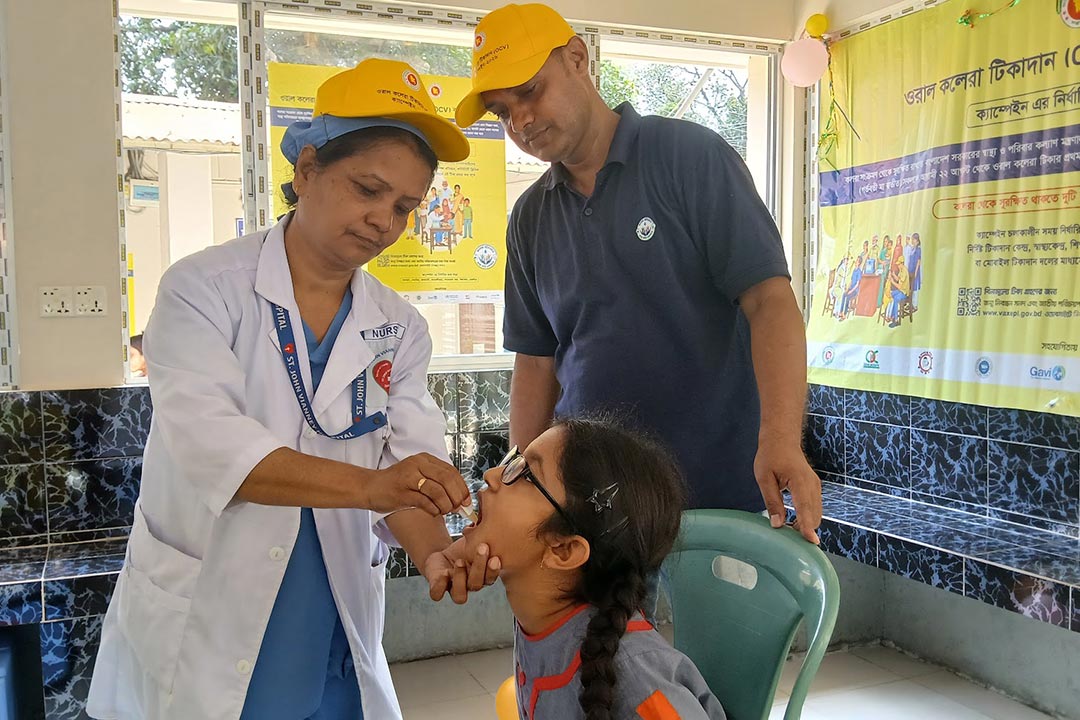
On a morning early in the campaign, the makeshift cholera vaccination site on the grounds of St John Vianney Hospital in Tejgaon area of the capital – one of 308 immunisation points in the capital – had attracted queues of people, with toddlers and the elderly and just about every age group in-between represented in the waiting crowd.
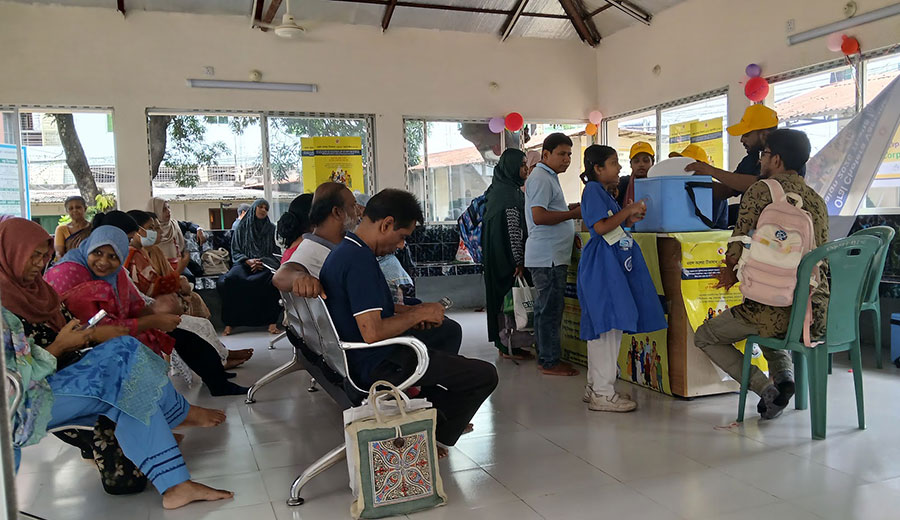
Credit: Mohammad Al Amin
“From the social media campaign of the government, we came to know that cholera vaccination is going on at this hospital centre,” said a 42-year-old self-identified housewife called Nipa Gomez. “All members of our family, including me and my child have received the vaccine here.”
Few people in Dhaka are ignorant of the dangers of diarrhoeal disease, which has been a cyclical threat here for hundreds of years. That’s made it easier for the government to communicate the value of prevention over response.
“Amid hot weather, stomach diseases have increased in our neighbouring area,” Gomez said. “That’s why we all have taken the vaccine to prevent cholera. I hope now my family is protected and safe from cholera disease.”
Familiar foe
Bangladesh carries one of the world’s highest cholera burdens, estimated at more than 100,000 cases a year and possibly several times that. Cholera is badly under-reported, so official counts capture only a fraction of the real total. In late August, the country typically finds itself on the threshold of its second seasonal spike in infection for the year, and at the Centre for Diarrhoeal Disease Research, Bangladesh (icddr,b) Hospital, many patients on the ward were being treated for symptoms of the disease.
“I came to this hospital on Wednesday [26 August] with nausea and watery stool. At first I rushed to a nearby doctor, who referred me to this hospital. I have yet to take any cholera vaccine,” said Ferdous, 30 years of age, an interior worker and a resident of the Uttar Badda area of Dhaka city.
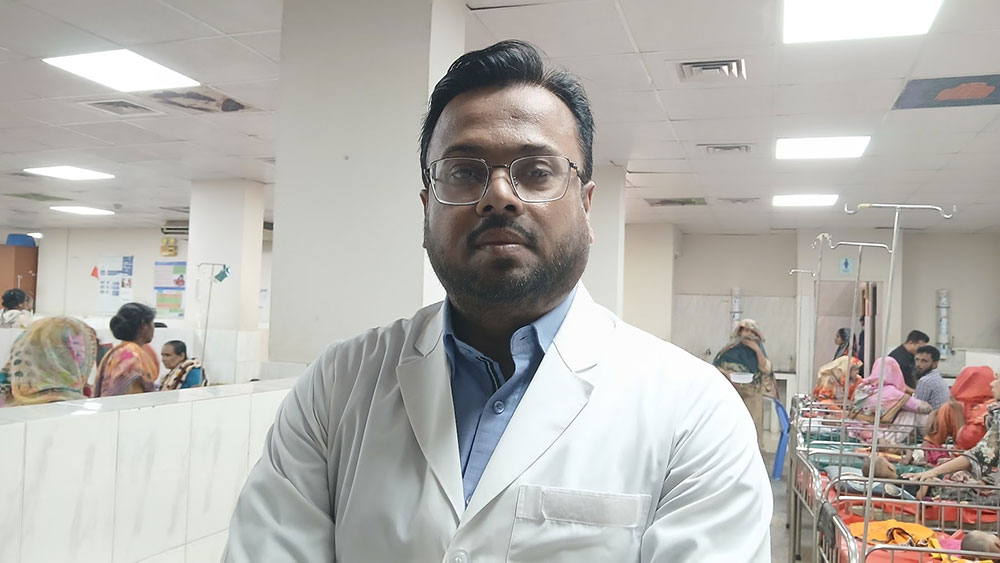
Credit: Mohammad Al Amin
Dr Shoeb Bin Islam, in-charge of the Short Stay Unit (SSU) of the icddr’b Hospital, said that in the last few days the number of patients has increased with an average of 600 patients rushing to the hospital daily. A typical daily average is 400 to 450. “Many of the patients are coming with severe dehydration, while 25% of patients are coming with cholera-like illness.”
His hope is that preventive vaccination will be able to curtail these seasonal spikes in future. “We hope that after ongoing cholera vaccination, the situation will improve,” he said.
Stepping up
Meanwhile, Mohammad Uzzal Mollah, a supervisor with the Expanded Programme on Immunization (EPI) in Zone 5 of the Dhaka North City Corporation (DNCC), is making it his business to make sure all eligible people get their chance at a dose of protection.
His team won’t be shutting their vaccination site for the evening until at least 500 people have come through for their dose of the vaccine, he says. “Though the vaccination campaign is scheduled from 8am to 5pm daily, the centres provide the vaccine until filling up the daily target,” Uzzal Mollah explained.
To make access easier for the 5 million people targeted, the campaign is open to registrations either on the spot or online.
Making target has so far not been difficult at the St John Vianney Hospital immunisation site, Lita Gomes, a vaccinator with the Dhaka North City Corporation (DNCC) said. “We are seeing enthusiasm among people of this area to receive the cholera vaccine.”
But vaccination can only be one piece of the picture. OCVs buy time and protect communities in the short term, but lasting safety depends on water, sanitation and hygiene investments to cut transmission at the source.