
Measles kills hundreds in Bangladesh, but a large-scale vaccine roll-out brings hope
Bangladesh is confronting a measles outbreak that has taken over 600 lives in the last few months. As an emergency vaccination campaign records massive reach, hopes rise that spread will slow.
- 11 June 2026
- 5 min read
- by Mohammad Al Amin
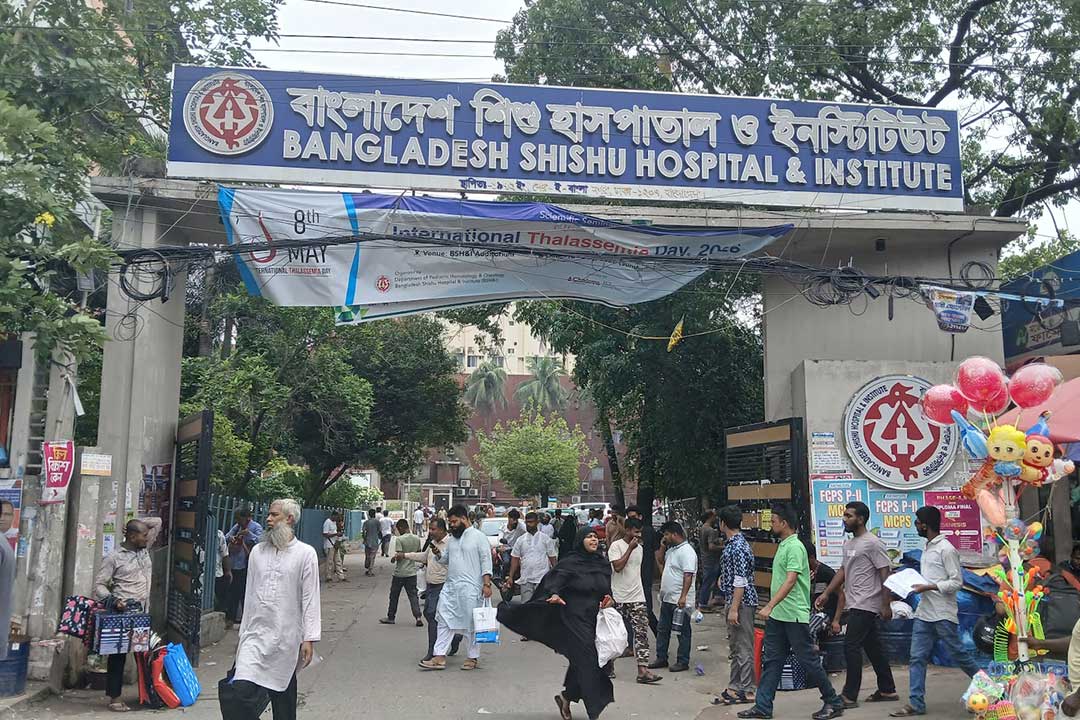
Humayra, a six-month-old baby, lay on her mother's lap with oxygen support and a feeding tube in her nose. It was late May, and the measles ward of Bangladesh Shishu Hospital & Institute (BSHI) in Dhaka was a sad place to be.
Humayra’s mother Tanjina Akter, from the village Banglabazar in Noakhali district, said she and her husband had admitted the child days earlier, on 19 May.
“After admitting in this hospital, Humayra was diagnosed with measles infection.”
Being so young, Humayra had not yet been given the measles and rubella (MR) vaccine, and was acutely vulnerable when an outbreak swept through the area. “We missed [her appointment for the] first dose of the MR vaccine due to her illness,” said her mother.
Bangladesh has been battling a large-scale measles outbreak, with 66,170 suspected measles patients admitted to hospitals across the country between 15 March and 9 June. Ninety-two people have died from confirmed measles, with an additional 539 fatalities attributed to suspected measles. Transmission continues, with 933 new patients admitted on hospital ledgers in the 24 hours to 08:00 on 9 June.
This hospital alone has treated 1,133 measles patients and lost 42 to the virus since January. More than 100 patients still occupied the ward on 9 June.
Jubayer Islam, the 14-month-old son of vehicle driver Abul Kashem from the village of Char Rashi in Noakhali district, was, like Humayra, admitted on 19 May. “My baby is suffering from measles. He missed the first dose of the MR vaccine. However, mobile vaccinators inoculated Jubayer with the second dose of the vaccine,” Kashem said.
Crowded wards
Speaking to VaccinesWork on condition of anonymity, a nurse said staff at the hospital are facing overwhelm due to the influx of measles patients.
“Patients are rushing to this hospital from different parts of the country, round the clock. Most of the patients are admitted here in critical condition,” she said.
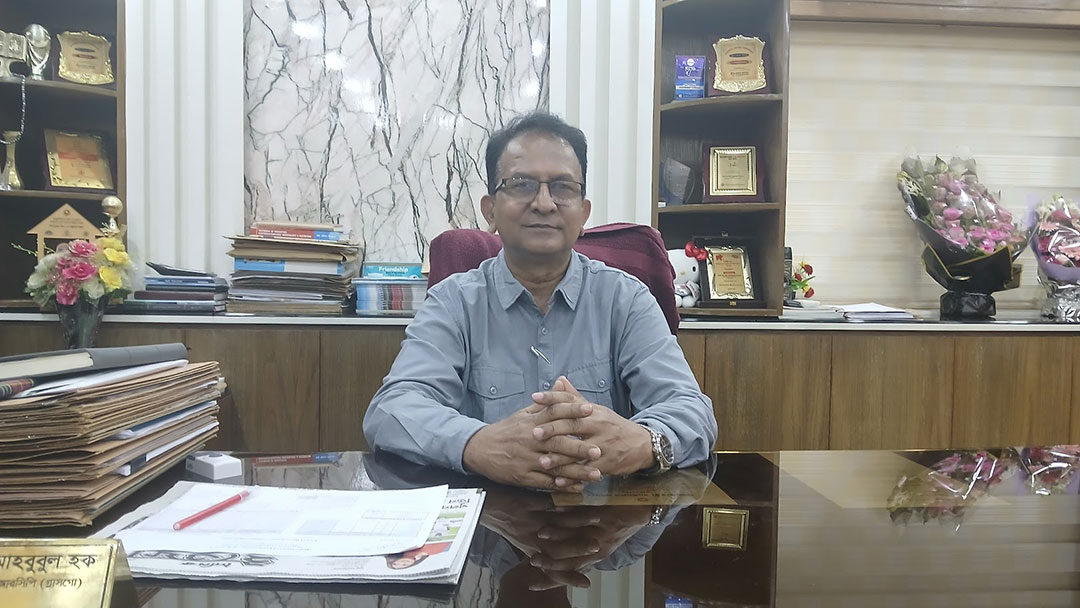
Professor Dr Mirza Md. Ziaul Islam, Director of the BSHI, said amid the ongoing nationwide outbreak, the hospital has opened three additional special wards to ensure proper treatment for the measles patients.
Credit: Mohammad Al Amin
“We have also opened a 14-bed ICU (Intensive Care Unit) to ensure proper treatment for the critical measles patients. Since it’s a tertiary-level hospital, most of the critical patients are rushing to this hospital from different parts of the country,” he said.
Ziaul Islam, who is also supervising the treatment of measles patients at the hospital as a specialist doctor, said, “Among the patients admitted to our hospital, around 60% percent [of] patients are found not inoculated with the MR vaccine. Newborns to 15-year-old children are admitted to this hospital.” A large proportion of the remainder had received just one of the two recommended doses of measles vaccine, the World Health Organization (WHO) has reported.
“We are getting the measles patients suffering from various complications, including pneumonia, diarrhoea, brain infection, sepsis and heart problems. Sometimes we get exceptional patients with different symptoms. We are giving treatment as per the national protocol approved by the government,” Ziaul Islam added.
Herd immunity lost at a mortal cost
Public health expert Dr Benazir Ahmed said the reasons for the outbreak are clear. “Due to the failure to vaccinate children with the MR vaccine in time, the herd immunity that is supposed to be created is not created, which is why this contagious disease is spreading rapidly this time. If 95% vaccination is ensured, herd immunity will be created, and the situation will gradually improve,” he said.
Talking to VaccinesWork, Dr Tajul Islam A Bari, a vaccine specialist, said, “Ninety-five percent coverage of both doses of the MR vaccine at the district or Upazila level is essential per year, and that must be maintained every year to prevent the outbreak of measles. I hope the nationwide vaccination drive will play a major role in taming the measles outbreak.”
Have you read?
Professor. Dr Md. Halimur Rashid, Director (Disease Control) of the DGHS, said, “Multisectoral reasons work behind the current measles outbreak in the country. Now, measles is a static situation in Bangladesh.”
WHO, meanwhile, linked the declines in coverage to gaps in routine immunisation and the absence of regular, nationwide supplementary MR campaigns since 2020, which were compounded by stockouts of the vaccine in the country in 2024–2025.
Fire-fighting with vaccines
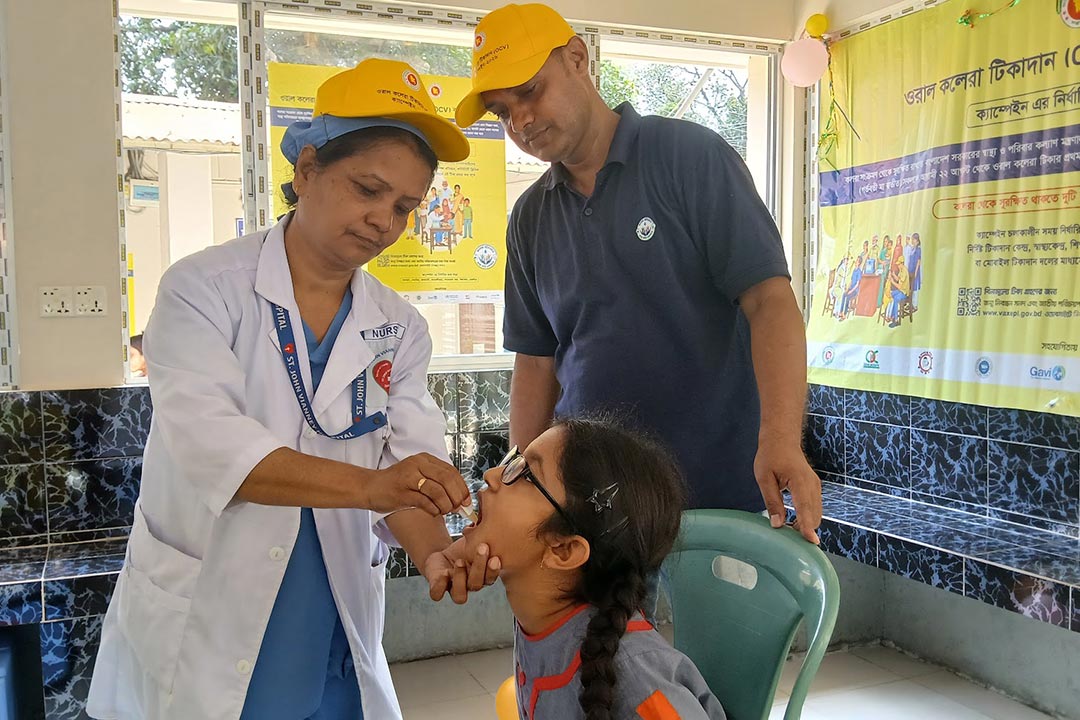
Dr Hasanul Mahmud, Assistant Director (EPI) of the DGHS, said under the directive of the health ministry the EPI mapped out a microplan for a nationwide MR vaccination drive. “We carried out an extensive campaign for the vaccination as no eligible children remain out of the vaccination coverage. We involved religious leaders and civil society members to carry out the campaign for the special vaccination campaign.
“Amid the outbreak of the measles, we started the nationwide special vaccination campaign from 5 April, which was run till 20 May in phases. However, the dropped-out children, even now, can take the vaccine from our permanent vaccination centres,” he added.
As many as 110,000 outreach centres and 700 permanent EPI vaccination centres across the country offered the vaccine to eligible children. “However, our mobile vaccination teams and evening vaccinators also worked. As a result, we have inoculated 102% of the children of our target.”
After formally receiving emergency medical supplies provided by the International Federation of Red Cross (IFRC) and Red Crescent Societies at the ministry’s Secretariat office on 23 May, Sardar Md. Sakhawat Husain confirmed, “As of 20 May, we have vaccinated 18,431,149 children, which is 2% higher than the set target."
He noted that the government initially aimed to reach 18,015,064 children during the drive.