
In DRC, a vaccination campaign is a chance to find missed-out children
Amid a combined measles-rubella and polio vaccination campaign, health workers in remote districts sought out the children who had fallen through the system's cracks, and offered them a few more doses of safety.
- 10 June 2026
- 8 min read
- by Patrick Kahondwa
At a glance
- The second part of a phased introductory measles-rubella campaign took place in the Democratic Republic of the Congo in April 2026, with children in 11 provinces offered not only the MR vaccine for the first time, but also polio immunisation.
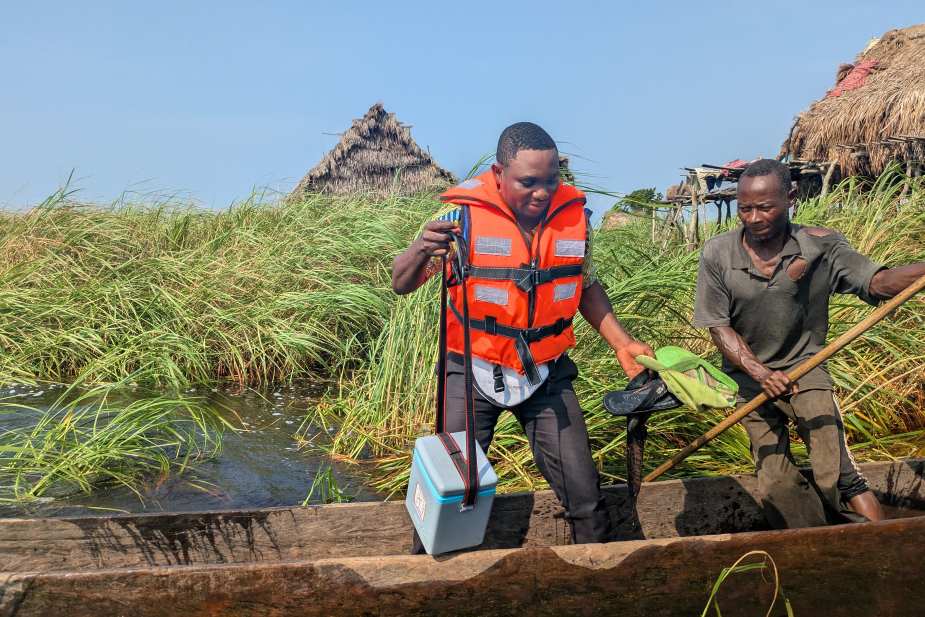
- In hard-to-reach areas like Mbusempoto Rivère Ngange, community health workers and vaccinators decided to make the difficult journey count twice, bringing other routine antigens in their cool bags to catch up missed out “zero-dose” children.
- Vaccinators in that health area noted stronger-than-usual turnout, with parents describing the panic sown by regular measles outbreaks.
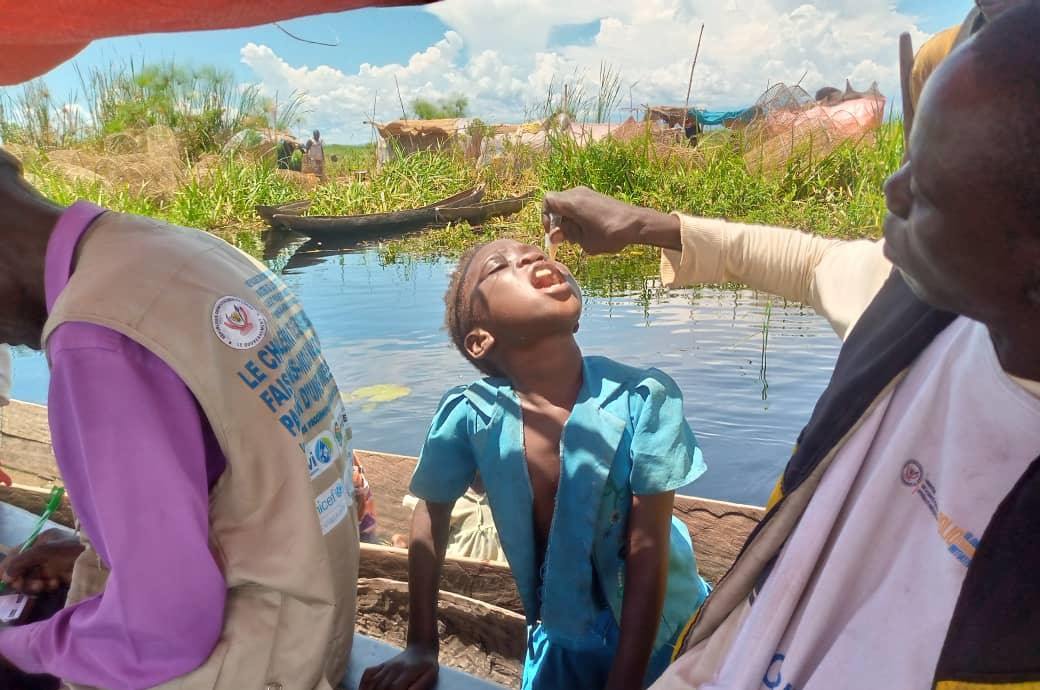
In the Mbusempoto Rivère Ngange health area, a hard-to-reach part of Maï-Ndombe province, it can take hours to reach some communities. Vaccinator Lucien Wanyate, one of the health workers deployed to the area during a recent integrated immunisation campaign, knows this only too well.
Lengthy travel times mean teams have to work quickly, talking to families, setting up vaccination sites, vaccinating children and, perhaps most importantly, identifying those who have never received a single dose, or whose vaccination schedule has been interrupted.
Here, reaching every single child remains a challenge.
Both measles and variant poliovirus continue to circulate in the Democratic Republic of the Congo (DRC). Measles causes recurring outbreaks every year, leading to many preventable child deaths. Despite the efforts of health authorities, thousands of children still fall through the cracks of the immunisation system, particularly in remote areas, among populations displaced by insecurity, and in communities where vaccine hesitancy persists.
To mark African Vaccination Week, the Ministry of Public Health, Hygiene and Social Welfare launched a second phase of the campaign to introduce the measles-rubella (MR) vaccine. During this round, in April, children in 11 provinces were offered both that vaccine and polio immunisation, which was rolling out simultaneously nationwide. The campaign also aimed to catch up children who were unvaccinated or under-vaccinated.
But on the ground, the same question remains: how can health workers reach those who are still outside the system?
Finding the children who were missed
Until recently, 18-month-old Sergine numbered among them. Since birth, she had never received a vaccine. Her mother understood the importance of vaccination, but the isolation of their village had prevented her from accessing health services regularly. On the day the health teams arrived, Sergine received not only the measles, rubella and polio vaccines, but also other routine antigens she had previously missed.
“Without community health workers, this child would probably never have been identified. Because we had travelled with other routine immunisation antigens, we were able to catch her up,” explains vaccinator Lucien Wanyate.
In several villages, teams are seeing the same pattern: some children have never started their vaccination schedule, while others have dropped out because they could not access health services regularly. The campaign is therefore much more than a one-off vaccination drive. It is also a way to find and catch up children who, until now, had remained outside the system.
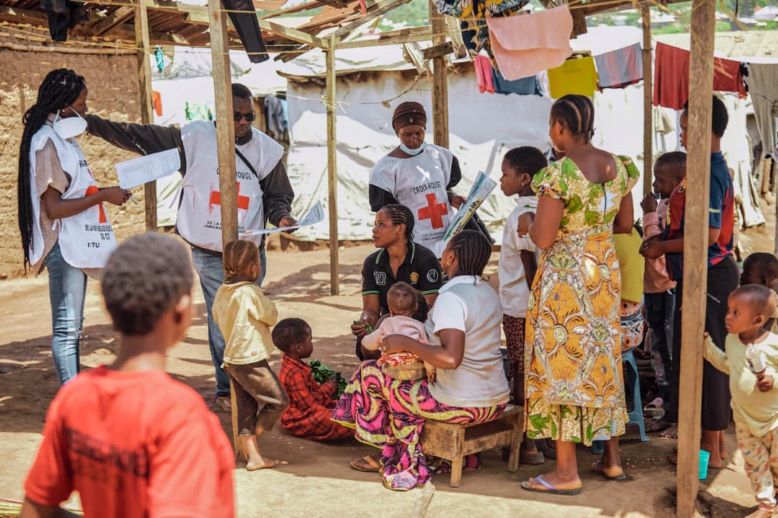
Even before the campaign began, community health workers had drawn up lists of children who were behind on their vaccinations. Their role was to locate zero-dose children in the community and flag them to vaccination teams, so they could be reached during the campaign.
An integrated campaign across the country
The measles and rubella campaign targeted children aged 6 months to 14 years in 11 provinces: Kinshasa, Kongo Central, Kwango, Kwilu, Maï-Ndombe, Équateur, Mongala, Nord-Ubangi, Sud-Ubangi, Tshuapa and Tshopo.
At the same time, polio vaccination was rolled out for children aged 0 to 59 months living anywhere in the country. This April 2026 phase was the second block of the measles-rubella vaccine introduction campaign, a follow-up to a first phase carried out in late 2025 in seven other provinces. A third block is planned to cover the remaining provinces.
Health authorities opted to deliver several vaccines at the same time in order to maximise impact.
“As part of efforts to accelerate polio eradication, the country has adopted a strategy of integrating polio vaccination into all mass vaccination activities. So, it was decided that polio vaccination would be included in these campaigns. In the current context of introducing the MR vaccine in the Block 2 provinces, it was considered better to include polio vaccination in the ongoing campaign rather than wait for separate national immunisation days,” explains Dr Trésor Madingi, deputy focal point for measles-rubella vaccination at the Expanded Programme on Immunization (EPI).
This approach not only made the campaign more efficient, but also helped reduce missed opportunities by offering several services at once. To reach as many children as possible, teams used both fixed-site and outreach strategies. They went to schools, markets, churches and other community gathering places to vaccinate children, including in the most remote villages. In areas covered by community radio stations, awareness messages were also broadcast to inform people about the importance of vaccination.
Community health workers on the front line
On the ground, community health workers play a decisive role.
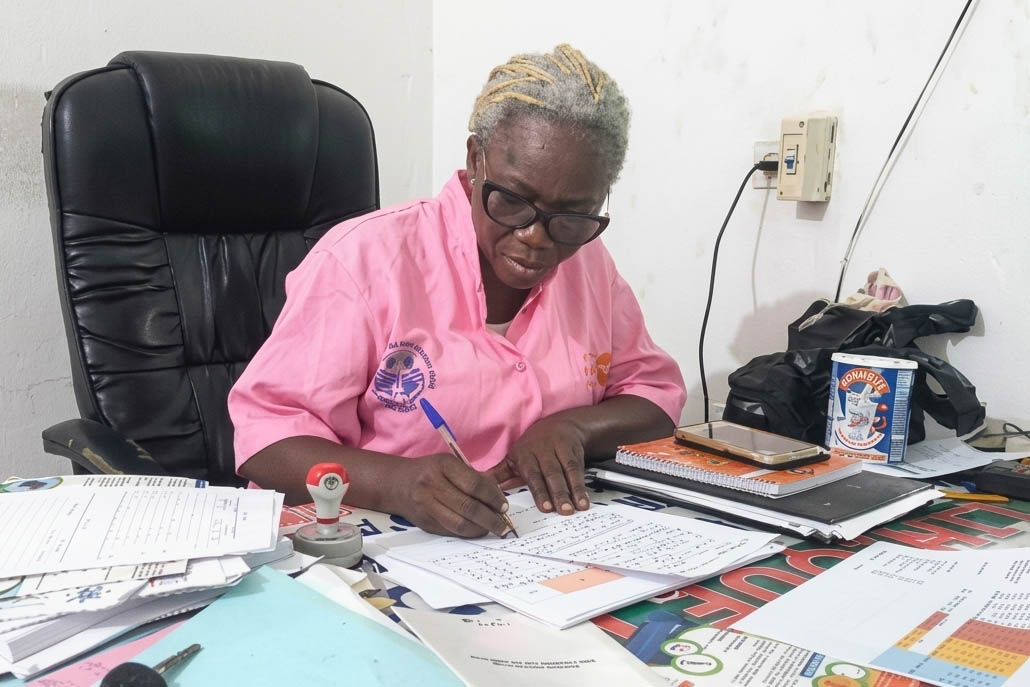
Before the campaign, they actively search for missed children within communities. They go from household to household, identifying children who have already been vaccinated and those who have not, drawing up lists, directing parents to vaccination sites and, in some cases, accompanying the children themselves.
“The campaign is an opportunity to reach all children who have never been vaccinated, as well as those who started their vaccination schedule but did not complete it. Teams were deployed in each health area to catch up these children. Community health workers had regularly carried out active searches within communities before the campaign. As a result, lists of children to be reached were already available for each health area before the launch,” explains Dr Trésor Madingi.
In several localities, this close community-level work helped to improve vaccination coverage by identifying missed children even before vaccinators arrived. It also helped to bring families on board, particularly in areas where access to health services remains limited or unreliable.
In Mbusempoto, as elsewhere, teams saw strong engagement from parents.
“Parents welcomed the arrival of vaccination teams in their villages with great enthusiasm. There was particularly strong interest because measles is a common disease in our area,” says Wanyate.
Israel Biembongo was one of the parents who brought their children out to be vaccinated. “We are truly relieved to see vaccinators reaching our village, because measles has already affected many children here. Every time there is an outbreak, we fear for our children. Today, with this vaccine, we have hope that they will be protected and grow up healthy,” he said.
Have you read?
Addressing doubts and rumours
But simply offering vaccination is not enough. Health workers also need to explain, reassure, and sometimes persuade.
In several communities, measles is well known, but rubella is much less familiar. This lack of awareness can fuel misunderstandings.
“In the community, measles and rubella are often confused. Many people do not really know what rubella is and think it is simply measles. Some even wondered whether it was a new disease. Through community engagement, we were able to explain that it was not a new disease and that a single vaccine can now protect against both diseases at the same time,” says a community health worker.
Beyond identifying children, community health workers also spoke to families to counter rumours and misunderstandings about vaccines. Although refusals remained relatively low during this campaign, certain beliefs persist in some localities.
“Some people believe these diseases are caused by sorcerers or demons. However, once we were on the ground, we found that the majority of the population was coming forward to have their children vaccinated. Since we began our campaigns, this is the first time we have seen such high participation with very little resistance,” says Lucien Wanyate.
Campaigns cannot replace routine immunisation
Despite the progress made, several challenges continue to stand in the way of eliminating these diseases completely. Mass campaigns can help to catch up some of the children who have been missed, but they are not enough on their own to stop viruses circulating over the long term if routine immunisation remains incomplete.
“When we vaccinate, we target a cohort of children, but if continuity is not ensured, it is difficult to completely eliminate diseases. Ideally, routine immunisation should function optimally, and all children should be fully vaccinated. As long as there are unvaccinated children, they create pockets of vulnerability through which diseases continue to circulate,” says Dr Trésor Madingi.
More from Patrick Kahondwa