

Gavi launches new supply chain strategy to boost vaccine availability and reach remote communities
Gavi launches new supply chain strategy to boost vaccine availability and reach remote communities
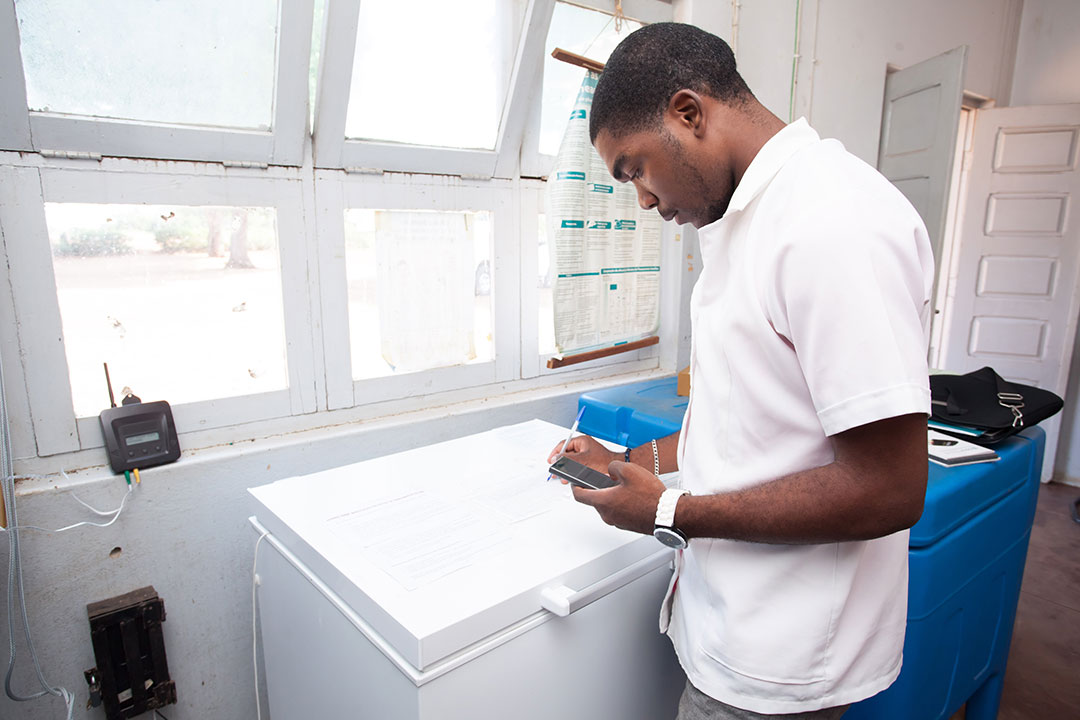
- New immunisation Supply Chain Strategy seeks to build on recent years’ momentum and help countries ensure vaccines reliably reach people safely, reliably and on time – including under-served communities.
- Efforts in areas such as real-time cold chain monitoring are helping protect more than US$ 1.7 billion worth of vaccines each year, with one in six children globally benefitting, while private sector partnerships are improving efficiency and delivery performance.
- Through closer alignment of systems and operations, Gavi and partners are implementing a “merger at the last mile,” where global health initiatives bring together their distinct activities into a unified approach.
Geneva, 1 July 2026 – Gavi, the Vaccine Alliance has unveiled a new immunisation Supply Chain Strategy to support countries in ensuring vaccines reach people, reliably and in time, especially those in under-served communities.
The strategy focuses on improving performance across the vaccine delivery system, with priorities including the minimisation of stock-outs, cold chain efficiency and equitable access.
“Vaccines only save lives when they reach people in the right place, at the right time, and in the right condition,” said Thabani Maphosa, Gavi’s Chief Country Delivery Officer. “This strategy is about delivering that consistency by strengthening the entire system, with a clear focus on availability, efficiency and equity, and by ensuring stronger integration and coordination at the last mile, where systems must come together to reach communities effectively.”
Building on momentum
Progress in recent years highlights both momentum and clear opportunities to go further. For instance, as of end of 2025, 82.5% of decentralised vaccine distribution points beyond main vaccine stores in Gavi-supported countries reported full availability of key vaccines, signalling substantial progress toward consistent coverage. Cold chain performance had also improved significantly, with the number of countries achieving over 80% cold chain functionality rising from just 3 in 2021 to 31 in 2025.
Broader supply chain maturity is also steadily advancing, with more countries reaching high Effective Vaccine Management standards.
Harnessing the power of private sector partnerships
A core pillar of the strategy will be accelerating the transition to real-time, data-driven supply chains through innovative private sector partnerships. In this aspect, technologies like Nexleaf’s ColdTrace, now used in 43 countries, provide continuous visibility into vaccine cold chains, reducing losses by up to 80%, cutting equipment downtime by 63%, and safeguarding over US$ 1.7 billion in vaccines annually. This will benefit an estimated one in six children worldwide.
Complementing this, private sector logistics models have proven effective in improving delivery: in Ethiopia, pilot programmes using optimised routing and integrated delivery achieved up to 100% vaccine availability at hubs and over 97% service coverage, demonstrating how private sector expertise can strengthen public systems by enhancing timeliness, coverage and efficiency.
Supporting fragile contexts
Over the next five years, Gavi and its partners will continue strengthening the core infrastructure, such as warehousing, that underpins countries’ capacity to improve vaccination outcomes. For instance, in South Sudan, increasing storage capacity from 2,700 m² to 4,700 m² improved efficiency and enabled better management of rising vaccine volumes.
Despite this progress, last-mile delivery remains the most persistent challenge especially in fragile and conflict-affected contexts. These require a strategic focus on flexible, partner-supported delivery models, simplified systems and targeted capacity strengthening to sustain equitable access in complex environments.
Merger at the last mile
Through deeper operational integration, Gavi and its partners are advancing a practical model often described as a “merger at the last mile,” where global health initiatives bring together their distinct activities into a unified approach. By aligning systems, data platforms and delivery routes, these efforts function as a single coordinated mechanism at the point of service delivery. Early implementation shows this model can reduce duplication, optimise resources and significantly strengthen vaccine availability where coordinated approaches are in place.
During the 2026–2030 strategic period, Gavi will work with countries and partners to continue building stronger, smarter, and more integrated supply chains as the foundation for equitable immunisation and resilient health systems.
MEDIA CONTACTS
Meg Sharafudeen
+41 79 711 55 54
msharafudeen@gavi.org
Cirũ Kariũki
+41 79 913 94 41
ckariuki@gavi.org
Laura Shevlin
41 79 529 92 87
lshevlin@gavi.org
Collins Weru Mwai
+25 078 783 66 38
cmwai@gavi.org
Eunice Kilonzo-Muraya
+41 76 424 85 03
ekilonzo@gavi.org