
Men in doctors’ rooms: Eswatini hands-on fathers defy stereotypes on child immunisation
Eswatini men rewire expectations by stepping forward to take their children for immunisation rather than deferring the task to women.
- 14 April 2026
- 6 min read
- by Zimkhitha Mbulawa
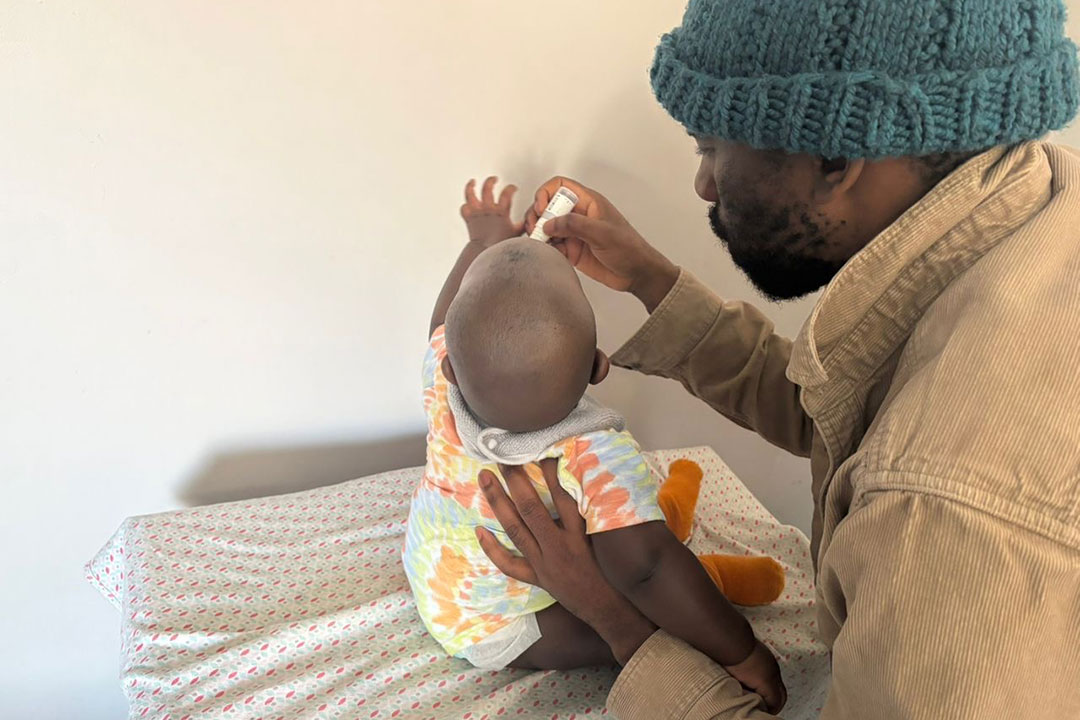
In Eswatini’s doctor rooms and public clinic halls, the dominant scene is usually that of mothers donning the traditional emahiya cloth attire and clutching fussy babies for tetanus, rubella shots or rotavirus drops – rarely fathers.
“It has always been like that since the colonial era – the task of immunising babies in Eswatini is a mum’s job,” says Vusi Simelane, 40, a mechanic who says he has convinced nearly a dozen men he works with to become active in bringing their babies and older children for immunisation rather than deferring to wives and girlfriends.
“Times have changed; we are not our grandfathers,” he says.
In their social circles, Eswatini men often mock fellow men, calling them ‘weak’ if they’re seen carrying a baby to immunizsation linics, he says.
Such men are viewed as being under the charm ‘spell’ of their wives, he says, laughing about the ridiculous social shaming.
After all, gender patriarchy expectations are entrenched in Eswatini because the kingdom operates under a dual system of Roman-Dutch Law and Swazi customary law.
But a quiet revolution is slowly taking place among in social circles among local men – with discussion starting and deepening in tribal courtyards, pubs, schools, churches, informal and formal workplaces, and even at soccer matches, Simelane says.
“oBaba,” he says, using the Siswati name for dads, are increasingly encouraging each other to be actively involved in the immunization schedules of their children.
“We are talking in pubs, churches, at soccer matches, in mechanic yards,” he says. Among the 12 mechanics he works with in Manzini, the second largest city of the kingdom, eight men have begun booking off work regularly to take their children to the doctor’s room or public clinics for immunisation.
“I lead by example when it comes to immunisation for my infant. Before, it was only me in this group doing that,” he says chuckling at the spectre of men burping to calm jittery babies in clinic wards, health cards clutched in hands, cracking jokes with nurses who are wonderfully surprised that more men are coming along with babies for essential vaccines.
Have you read?
The health ministry of the kingdom has long recognised the need to onboard men into vaccination tasks via avenues like the African Vaccination Week, Child Health Days, messaging at community football (which are overwhelmingly male events), and Saturday vaccination clinics, so that more working men can take time off work and accompany babies to the hospital, says Khanyakwezwe Mabuza, the principal secretary in the ministry.
The gendered profiles of marriages and breadwinner status have changed in the last 20 years, says Maliwa Maziya, a traditional leader in eastern Eswatini. As his court sits to weigh community matters at weekends, he routinely exhorts young men to make sure they take their babies to immunisation clinics rather than loading it on their women, and he is seeing a change of norms, he says.
“More young women are getting educated, employed and spending time out of the home in Eswatini – leaving fathers with babies. It’s men’s role to take the baby to clinics too. When women leave marriages rife with all sorts of abuse, they sometimes leave behind children with ex-husbands. In such situations, the men have absolute duty to see that the baby gets all his or her immunisation shots,” he says.
The latest Afrobarometer assessment reveals that in Eswatini women are getting close to men in education attainment, thus putting the kingdom in an impressively high rank of 47th out of 146 countries on gender equality in the Global Gender Gap Index, faring well compared to advanced economies like Luxembourg and Singapore.
“I tell them, after a bitter divorce, you can’t deliberately avoid taking your child to the clinic for required baby vaccines. That would be reckless,” he says.
As more Eswatini fathers defy patriarchy expectations and take the so-called ‘women’s domain’ of making sure babies are immunised, they are finding that nurses are some of their best cheerleaders, says Nkululeko Sikhosana, another active first-time father, 35, in Manzini. Sikhosana says he has made sure he takes his daughter personally to get all the first six-month vaccines, even when his girlfriend would insist he focuses on his work as a taxi driver.
“At our local clinic, nurses when they see it’s a man dangling a baby into the rotavirus vaccination room, they praise us loudly in public to mark us as a good example. Sometimes they clap hands for us, shouting that real fathers are more than financial providers. I feel kind of cool,” he says of the nurses’ sense of humour.
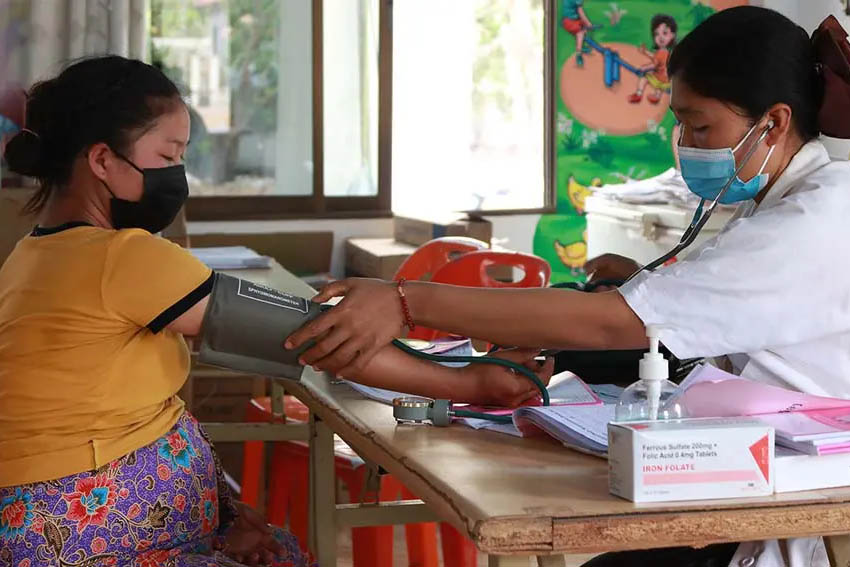
Fathers bringing babies to vaccination rooms are bringing more than just moral support; they are driving forward results in adherence to Eswatini’s baby and children national immunisation targets, says Nina Nkanyezi, a nurse at the Mbabane Government Hospital, the country’s largest.
“Beyond tetanus needle pricks or rotavirus drop-ins, the very presence of a father in the clinic has a ‘boom’ effect on the household’s health,” she says.
Fathers are considered an authority figure in Eswatini culture, so if a man is taking the lead in carrying his child to the vaccination clinic, such a household also tends to improves in eating healthily and adhering to sanitation provision, because health-conscious dads are more likely to excel in leading in these supplementary areas, she explains.
In her clinic, she chats with fathers who bypass the ‘arm’s length’ traditional parenting style. They tell her that the likelihood of a family missing follow-up shots goes down significantly when a father takes part.
“We can invest lots of money, or warehouses housing vaccines – but in remote areas – especially for sensitive clinical issues like cervical cancer, fathers can approve or block daughters from getting the HPV vaccine or getting screened. That’s how critical fathers’ participation is,” she says.
For wives with supportive husbands like Thuli Mkwanazi, 30, in Manzini, seeing her husband volunteer to be the one who takes their seven-month-old baby to the doctor’s room for vaccines has helped to greatly reduce the “mental load” on Swati women like her, she says.
“I don’t have to juggle everything – cooking, ironing, bathing the kids, gardening – and catching a taxi to the baby clinic. I pack her warm milk bottle – he drives her alone to the immunisation clinic,” she says of her husband’s leadership. It’s leading to more equitable and less stressful households, she says.
Clinical researchers affirm that children with active fathers are more likely to hit developmental milestones ahead of those whose dads are absent.
As Eswatini continues to refine its healthcare provision, understanding the “Dad Factor” is crucial, because researchers have noted that there is a direct link between male involvement and for a country to advance its national immunisation targets.