
New vaccine to stop deadly meningitis epidemics confirmed to be safe
Analysis of vaccination campaigns in Nigeria and Niger found very few serious adverse events among more than 4.8 million people immunised.
- 18 March 2026
- 5 min read
- by Linda Geddes
At a glance
- In July 2023, the World Health Organization prequalified a new meningococcal conjugate vaccine, which protects against the five main causes of epidemic meningitis in sub-Saharan Africa. Although clinical trials had already shown the Men5CV vaccine to be safe and effective, WHO advised countries introducing it to closely monitor adverse events in these real-world conditions.
- A new study, published in Vaccine, provides the first large-scale real-world safety data for the vaccine following its use in outbreak response campaigns in Nigeria and Niger in 2024.
- It confirmed the vaccine’s safety in real-world outbreak settings, with very low rates of serious adverse events and no new safety signals detected.
A new vaccine designed to stop deadly meningitis epidemics in Africa is safe when used at scale, according to the first real-world safety study conducted during its roll-out.
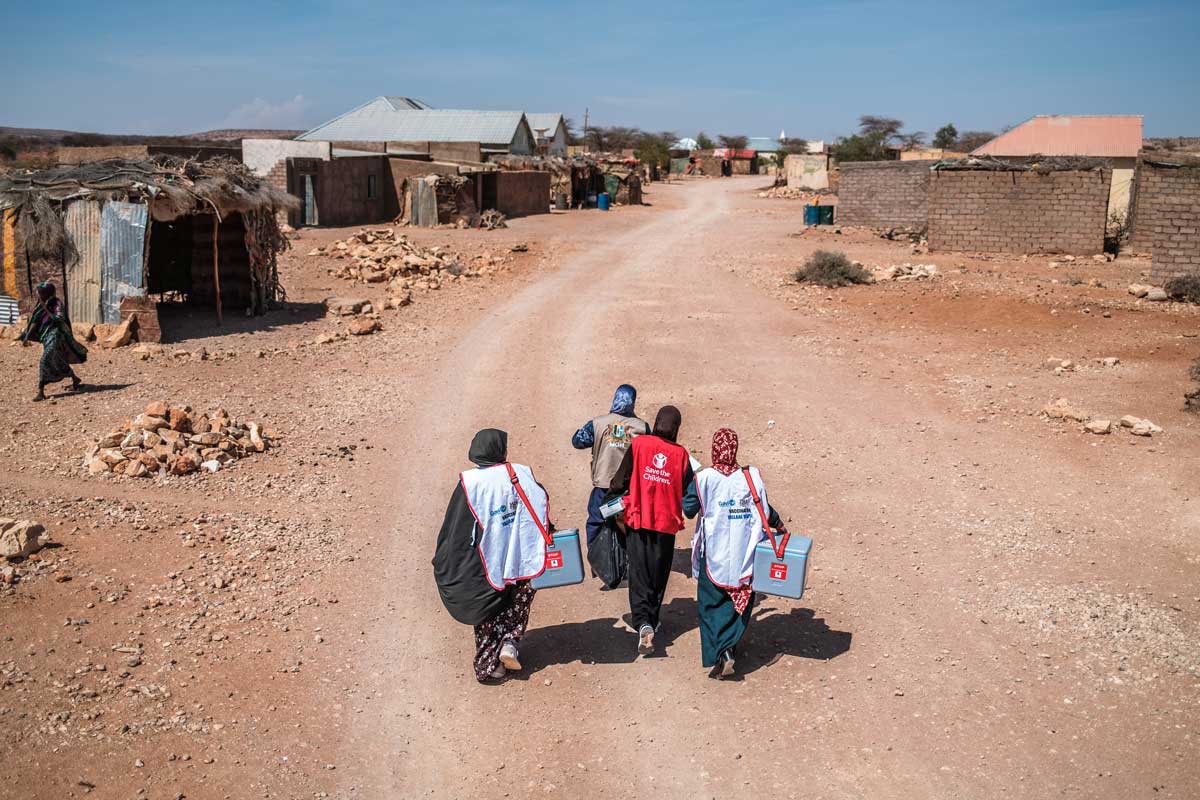
The study analysed data from more than 4.8 million people vaccinated with the new pentavalent meningococcal vaccine, Men5CV, during outbreak-response campaigns in Nigeria and Niger in 2024.
The findings confirm clinical trial safety data gathered before the approval of the vaccine, giving further reassurance as countries across Africa begin deploying the vaccine to tackle meningococcal disease, a fast-moving bacterial infection that can cause hearing loss, brain damage, limb amputations and death within hours.
What is meningococcal disease?
Neisseria meningitidis (meningococcus) is the leading cause of bacterial meningitis in Africa and a major cause of hearing loss, brain damage and limb amputations worldwide, despite the introduction of a highly effective vaccine.
A key reason is that there are around 12 different types or serogroups of this bacterium - with serogroups A, B, C, W, X and Y causing the greatest burden of disease globally.
People living in the African meningitis belt, which spans 26 sub-Saharan countries from Senegal in west Africa to Ethiopia in the east, have the highest rates of meningococcal disease, with major epidemics historically having swept through these countries every 5 to 12 years.
Since 2010, the introduction of a serogroup A meningococcal conjugate vaccine, MenAfriVac, has dramatically reduced meningitis in the African meningitis belt.
Before its roll-out, serogroup A meningococcus accounted for 85– 90% of meningitis cases in the region. Mass vaccination campaigns have since saved millions of lives and virtually eliminated large epidemics caused by serogroup A.
Following this success, broader vaccines targeting serogroups A and C (MenACV), and serogroups A, C, W and Y (MenACWY) were introduced in some settings to protect against additional meningococcal serogroups.
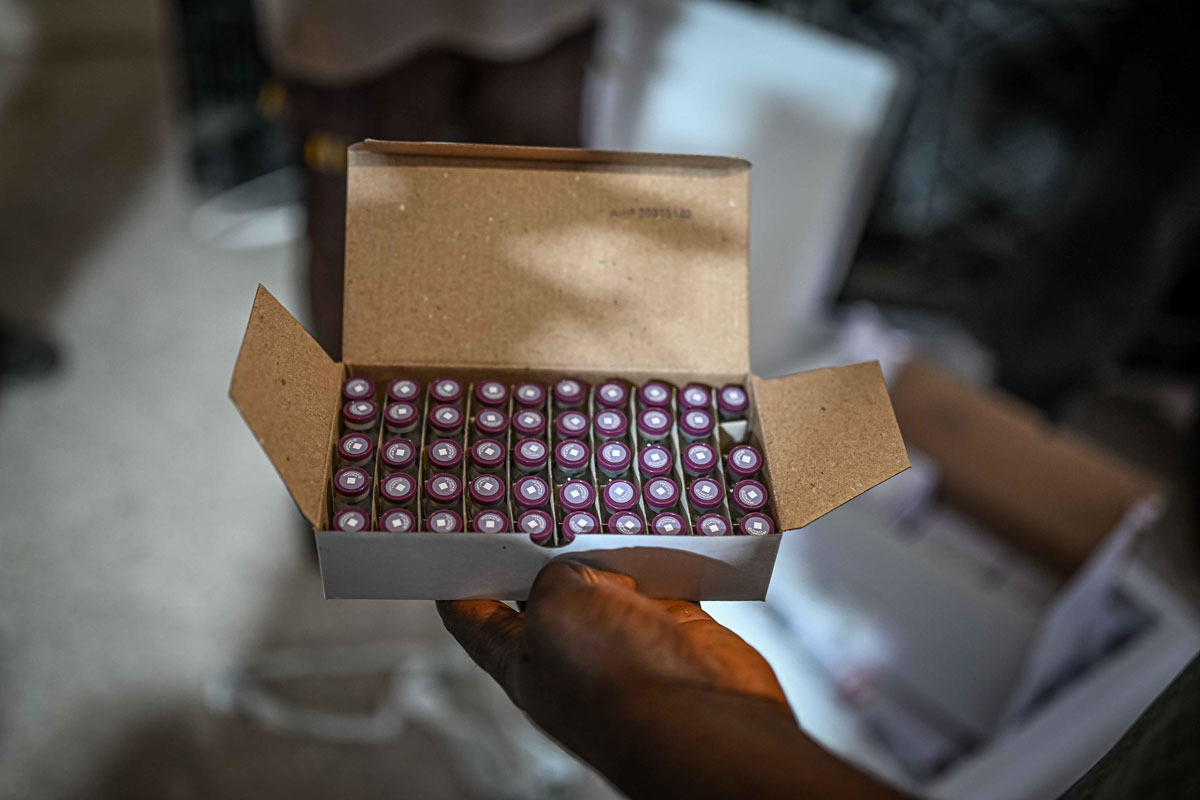
Then, in July 2023, the World Health Organization prequalified a new meningococcal conjugate vaccine, Men5CV (MenFive), which protects against five serogroups (A, C, Y, W and X) responsible for almost all epidemic meningitis in sub-Saharan Africa.
By contrast, serogroup B meningococcus typically causes smaller, sporadic outbreaks, particularly in high-income counties, rather than large epidemics in the meningitis belt.
How is the Men5CV vaccine being used?
Since 2024, Gavi has helped meningitis belt countries to deploy Men5CV for outbreak response, routine immunisation and preventive mass vaccination campaigns in high-risk countries.
In March 2024, Nigeria became the first country to receive the Men5CV vaccine from the Gavi-funded global meningitis vaccine stockpile, in response to an outbreak of serogroup C and W meningococcus in northern Nigeria.
Niger followed with a reactive campaign a few months later, after an outbreak of meningococcal disease that eventually affected more than 2,600 people.
The vaccine was also used in the first nationwide preventive mass campaign in Niger in 2025.
“The Men5CV vaccine could be game-changing for countries in the meningitis belt that have experienced devastating N. meningitidis C, Y, W and X outbreaks in recent years,” said Dr Beth Evans, Meningitis Lead at Gavi, the Vaccine Alliance.
"MenACV mass preventive campaigns, supported by Gavi, across the belt have resulted in no N. meningitidis A outbreaks since 2017. We hope to do the same with other serogroups in the future to address the current drivers of disruptive epidemics. Unfortunately, funding constraints currently severely limit the ability to do this."
Have you read?
How safe is the Men5CV vaccine?
The new study, published in Vaccine, provides the first large-scale real-world safety data for the Men5CV vaccine following its use in outbreak-response campaigns in Nigeria and Niger in 2024.
Although clinical trials had already shown the vaccine to be safe and effective, the WHO advised countries introducing it to strengthen surveillance systems and closely monitor adverse events during the first years of roll-out.
Such monitoring – known as post-marketing surveillance – is usual when new vaccines are introduced. It ensures that any side-effects that are too rare to be detected in clinical trials, which typically involve thousands of participants, are identified.
Researchers led by André Arsène Bita Fouda at WHO’s Regional Office for Africa in Democratic Republic of the Congo analysed safety data collected during vaccination campaigns in Nigeria and Niger that reached more than 4.8 million people.
Their monitoring systems recorded 1,109 reports of adverse events following immunisation, most of which were mild and occurred shortly after vaccination, such as fever, headache, injection-site reactions and joint or muscle pain.
Only 11 serious adverse events were reported – roughly 1 for every 440,000 people vaccinated.
“The introduction of [the Men5CV vaccine] in Niger and Nigeria confirmed a robust safety profile in real-world outbreak settings, with very low rates of serious adverse events and no new safety signals detected,” the researchers said.
“Enhanced passive surveillance systems, supported by digital tools and integrated supervision, enabled timely and comprehensive reporting of adverse events. The observed safety outcomes were consistent with clinical trial data and previous meningococcal vaccine introductions in the region, reinforcing the generalisability of findings.”
They added that continued investment in surveillance systems, especially in resource-limited settings, is essential to ensure accurate reporting, detect potential safety signals early and maintain public confidence in vaccination programmes.