
Zimbabwe rolls out a parenting app for caregivers craving evidence-based info
Designed to empower new parents facing down an online misinformation tsunami, the app is “more than a convenient tool”.
- 12 May 2026
- 6 min read
- by Derick Matsengarwodzi
At a glance
- A new parenting app, released by the country’s Ministry of Health in collaboration with UNICEF, makes evidence-based child health guidance easier to access for online Zimbabweans.
- Inaccurate messaging shared on social media is a direct threat to public health. Early adopters say the app is helping them navigate that digital information minefield safely.
- It’s also a convenient tracking tool, with one parent calling it a “real-time register of my child, following up on her daily needs”.
When Adelaide Kurima, 23, became a mother for the first time a year ago, she was resolved to do right by her baby. On her discharge, health workers handed her a card which they encouraged her to use to monitor the infant’s health and development.
She was glad of the guidance, but bemused by the delivery system. “I belong to a generation that spends more time using technological gadgets,” she explained.
Almost a year later, Kurima’s wishes became a reality, when the Ministry of Health and Child Care unveiled Rerai Umntwana, an evidence-based parenting app, this March.
“This is great news to all mothers and parents in Zimbabwe,” Kurima said. “It gives us scientifically verified information at the push of a button, eliminating risks of misinformation, or missing, or even completely forgetting a child’s vaccination dates. […] This application is more than a convenient tool in a world that has many sources of information that looks authentic at face value, but can be harmful.”
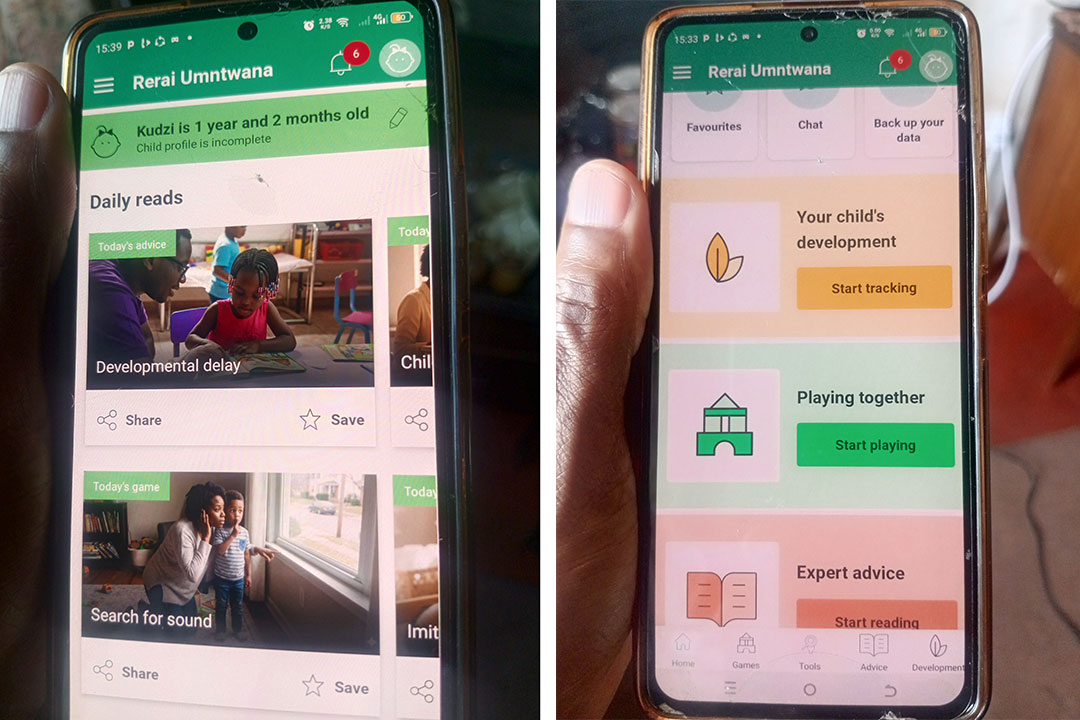
The app, now available for free for Android and Apple, offers more than a physical baby card ever could – like expert advice and games to play with children, like nursery rhyme singalongs. Since its launch, the app has recorded over 1,000 downloads.
Game-changer
Health misinformation is on the rise worldwide, and the consumption of inaccurate messaging is a direct public health threat in Zimbabwe, where reliance on social media for information is widespread.
The Rerai Umntwana app – whose name is a Shona and isiNdebele expression meaning “Nurture the child” – was developed with that context, and people like Kurima, in mind.
“Our partnership with @UNICEFZIMBABWE, has brought about the launch of Rerai Umntwana App in Zimbabwe […] designed to empower caregivers of kids 0-6 years with evidence-based information on child health, nutrition, development, and protection,” the Ministry of Health and Child Care announced on X, touting the new tool as a game-changer.
Have you read?
At the official launch in Harare in February, Deputy Minister of Health and Child Care Sleiman Kwidini mentioned that Zimbabwe was the first African country to adapt and adopt the app.
“Originally developed as Bebbo by UNICEF ECARO and partners, the application was successfully piloted across Europe and Asia, reaching more than one million users,” he said.
To land better in Zimbabwe, the app has been built out with localised, easy-to-understand content, mitigating the risk that parents will find themselves relying on unverified advice on social media, Kwidini added.
Great on paper
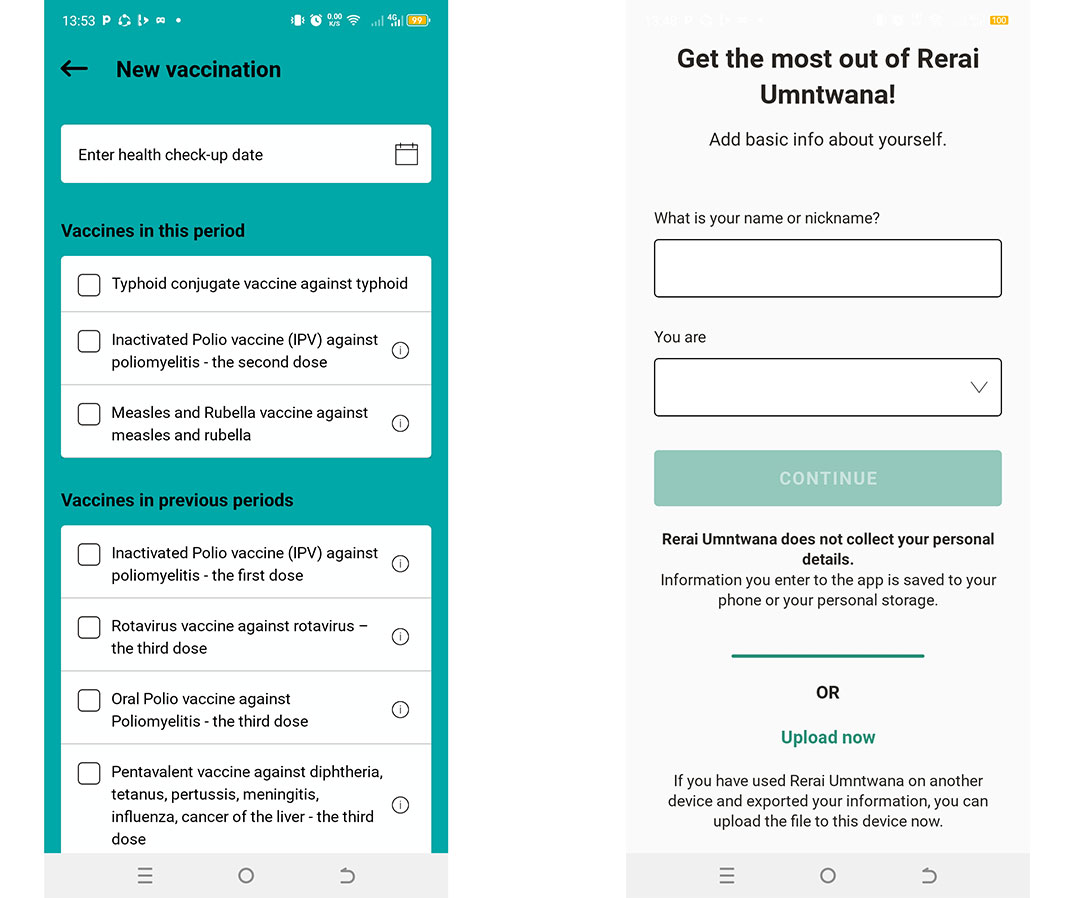
With tips on breastfeeding, weaning, and a facility for monitoring both vaccination and childhood, the app bases itself on research by healthcare professionals. It also borrows from other proven apps, with some content adapted and translated from the Raising Children Network, Real Play Coalition and Afinidata.
Not every parent in Zimbabwe is yet in a position to benefit, since the app requires internet connectivity to both download and display media content. Offline mode does permit users to navigate previously accessed features of the app in environments with limited connectivity.
Credit: Derick Matsengarwodzi
“On paper, it aligns very well with some of the needs. Effectiveness is, however, another beast altogether, which is the adoption of technology, access to smartphones, data and digital literacy to use the app efficiently and effectively,” Enock Jenandoro, a Harare-based tech expert and father said.
According to latest data reports, at the beginning of January, Zimbabwe had 6.45 million individuals using the internet, for an online penetration rate of about 38.4%. Around 2.10 million people use social media, which is 12.5% of the total population.
The drive by the government and some partners to make solar energy and internet connectivity available to remote health centres will make the app more accessible to more citizens.
Nurture the future
Early reviews of the app suggest that it’s well on its way to proving its real-world utility. Registered user Tendayi Mtoti said, “Easy to use and stores my child’s growth monitoring and vaccination information. Maybe there is a need for the app to be able to print this information.”
Denford Nhamo’s review said, “Great app, your pocket partner in parenting,” while Tichaona Mbidzo commented, “This app is exceptional, especially for us men.”
One of the apps best features its ability to engage both parents and caregivers in the growth of the child.
“The Rerai Umntwana app has a huge range of helpful features empowering parents to make the right decisions when it comes to the care and development of their child,” the app’s descriptive text claims. “Encouraging parents to engage daily with suggested articles and games that will help their little ones hit those key development milestones while growing healthy and happy.
From its diverse offerings, the app is about more than just advice. It’s a tool that empowers parents to make the right decisions regarding the care and development of their child. Each day, it suggests different articles and games and advice written by experts.
Benson Revai, a father in Harare, said that since he downloaded the app, he has become more immersed in the day-to-day activities and granular well-being of his daughter. “For me, the app is more like a real-time register of my child, following up on her daily needs, giving us more expert and proven insight into her growth, all packaged on one,” said Revai, calling it “the power to be involved in her life”.
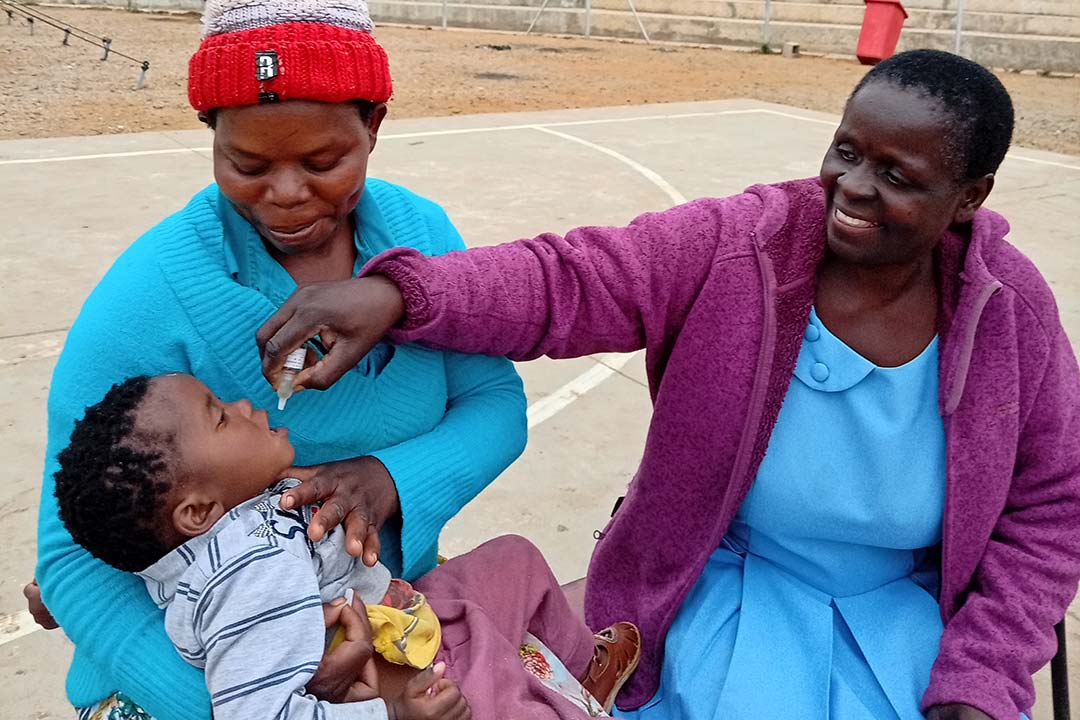
Health workers like Faith Masanga hope it might help families stay on-schedule with their child’s routine immunisations.
“In some cases, we have witnessed children who miss their vaccinations for various reasons, and mothers who are ignorant of their child’s development and health needs. In that case, the app can work in their favour, since both parents can also play a part, rather than wait for physical visits,” she said.
Kurima thinks the app will do what technology, ideally, should: make life that little bit easier. “I often hear my mother say how she had to read books and sometimes rely on people to get information on our health needs,” she told VaccinesWork. “Today, with all its limitations, technology has become a part of us and with this app, I now have almost everything I need, even when I am far away from the clinic. By the time I go for physical visits, I know exactly what to expect and where to make necessary corrections.”