
How Uganda ended its Bundibugyo Ebola outbreak
When laboratory tests confirmed cases of a rare species of the deadly ebolavirus disease in Uganda in May this year, health authorities moved fast to control the spread and save lives.
- 7 September 2026
- 11 min read
- by John Agaba
At a glance
- Uganda has confirmed the end of its Bundibugyo Ebola outbreak, which infected 21 and killed two people in the country between May and June of this year.
- Speaking to VaccinesWork, government representativesreflected on the measures that worked, both preparatory and responsive. “We wanted to plug any potential loophole,” said Dr Atek Kagirita, the Ebola Incident Commander at the Ministry of Health.
- The outbreak was connected to a large-scale epidemic that continues to spread in the neighbouring Democratic Republic of the Congo
The two years Agnes* had worked at the upscale hospital in Uganda’s capital Kampala had been professionally challenging, but never frightening.
Then, on 15 May, biological samples from a patient who had died at the hospital the previous day, tested positive for Ebola – a highly fatal epidemic virus that spreads from person to person through contact with infected bodily fluids. Anxiety rippled through almost every member of staff and all the patients at the facility.
That same day, Agnes received a phone call from the hospital’s administrative assistant asking her to self-isolate until an ambulance could transfer her to a securer facility.
"I felt my heart slam hard against my ribs," said Agnes. "Lots of things run through my head. I couldn't think clearly. I remember calling a colleague [with whom I worked at the ward], but he too, had been asked to quarantine."
“It was terrifying,” said Agnes. “Remember [health officials] were saying that [this specific species of the Bundibugyo ebolavirus] didn’t have [any approved] treatments or vaccine.”
Indeed, Agnes tested positive for the Bundibugyo virus. But, after spending almost two weeks in intensive care at the isolation unit in Kampala, she was discharged. “Just know that I went through a lot and that I am still going through a lot,” she said in a phone interview.
Agnes knows it could have been worse. Two people of the 20 alongside who she received treatment did not make it out of the ICU.
How Uganda controlled Ebola
The Bundibugyo virus outbreak in Uganda was largely an extension of the epidemic that has so far killed more than 3,000 people of the 6,186 confirmed cases reported in the Democratic Republic of the Congo (DRC), Uganda’s neighbour to the west. Uganda’s index case, as well as 15 of the 20 cases that were confirmed in Uganda, were imports from the DRC, meaning transmission within Uganda had been extremely limited.
But that doesn’t mean it didn’t take a toll on normal life in the east African country. “People can’t travel. Markets have closed,” said Amos Bwambale, a trader in Kasese town near the DRC border. “It has also disrupted tourism.”
But Uganda’s Ministry of Health had experience, and a plan, and got to work on getting things back to normal.
Uganda’s Ministry of Health had experience, however, and a plan. “Because of the several times we have experienced these outbreaks, we knew that we had to act faster to deny the epidemic oxygen and control it,” said Dr Atek Kagirita, the Ebola Incident Commander at the Ministry of Health. “We knew that the first 72 hours matter the most [in outbreak response] and that whatever we do in these initial hours will determine whether we will stop the outbreak promptly or not.”
Credit: Emmanuel Ainebyoona
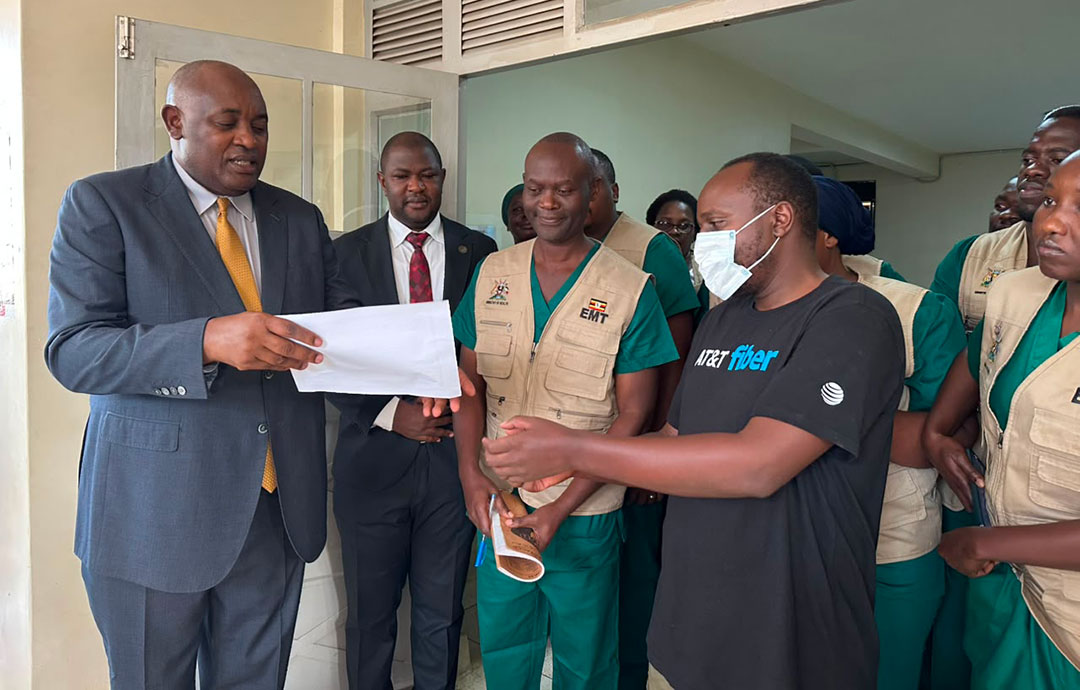
When laboratory tests confirmed the Ebola outbreak, Uganda’s ninth, the Ministry immediately convened a meeting and activated its infection prevention and control [IPC] procedures, including surveillance, laboratory, case management, risk communication and community engagement.
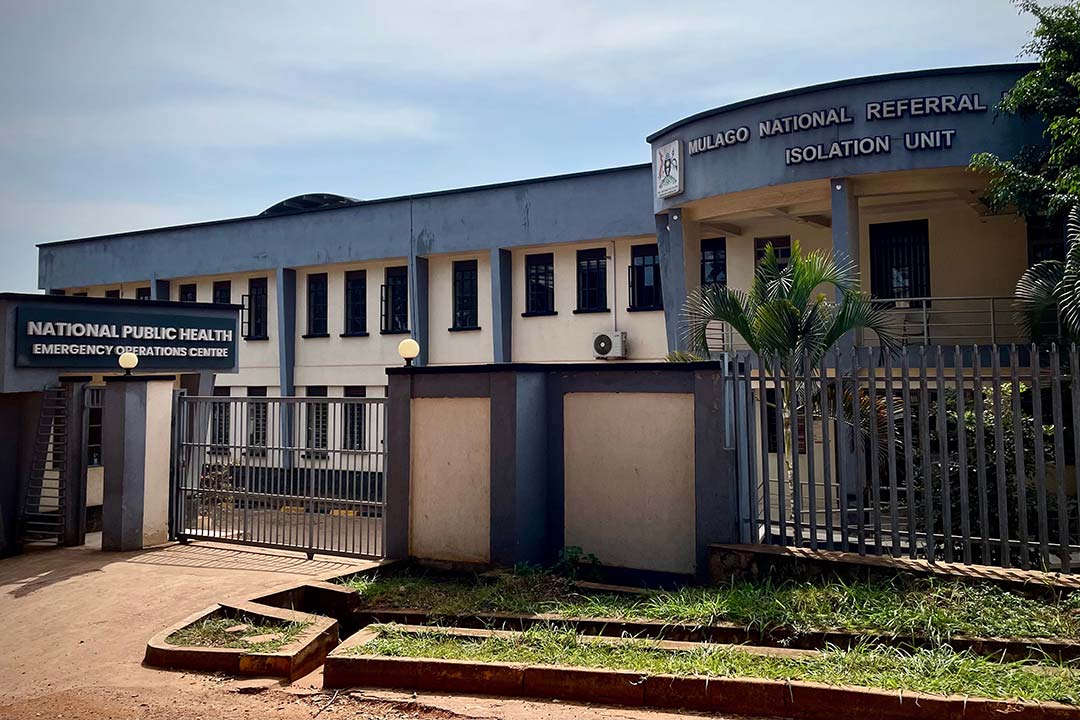
“We started from the hospital,” said Kagirita in an interview with VaccinesWork. “We informed its director that we needed to quarantine all persons that may have come into contact with the index case. After this, we prepared the isolation unit at Mulago [Hospital in Kampala]. It took us six hours to start admitting people here.”
That same day, the Ministry deployed surveillance teams in all 37 high-risk districts along the Uganda-DRC border, including at Arua, Hoima and Kasese. “The [surveillance] teams worked with local teams to set up district task forces,” said Kagirita. “Their work was to act as sniffer dogs. Sniff [out] anything that could be in the community. Also, they had to ensure that all partners, including health, defence and immigration, were aligned.”
After that, the Ministry set up transient facilities – similar to mini-isolation units – along the border, to help isolate suspect cases. Then it set up Mobile Biosafety Level 4 [BSL-4] laboratories – highly specialised units that are equipped to safely handle and test for dangerous viruses – in 24 hours in the border towns of Arua and Bwera. A central laboratory was activated in Kampala.
"We wanted to plug any potential loophole," said Kagirita. "Contact management is beyond just listing suspects. It means that I have listed you; I have given you information; I have quarantined you; and I am monitoring you. It also means that I have tested you [for Ebola] and put you on anti-malarial drugs because I don’t want you to develop any fevers that are a result of other causes."
Have you read?
“So, when we got contacts, we quarantined them and monitored them three times a day,” he said. “They get the flu, we test them [for Ebola]. They get a headache, we test them. If they test negative, we wait for 72 hours and do a separate test.”
Contacts who tested positive for Ebola were started on supportive treatment immediately, he said.
How to save an Ebola patient
“We do not have specific treatments for Ebola,” said Dr Ronny Bahatungire, Commissioner for Clinical Services at the Ministry of Health, who led the team that treated confirmed cases. “But we have learnt over time that patients do not die of the ebolavirus. They die of associated complications… of liver and kidney failures.”
“So, we had to monitor these organs and keep testing them, to understand if they are improving or failing,” he said. “If organ failure is identified early and corrected then the patient has a chance.” Bahatungire said that they saw “reduction in the viral multiplication” and “improvement in the performance of the organs” when they deployed the antiviral drug Remdesvir, approved for use under compassionate arrangements.
Apart from that, Bahatungire and team tested the patients’ viral load consistently to understand whether it was “lessening or multiplying”.
“Caring for Ebola cases can be frightening, just like is the case when soldiers are going to the frontline, because you are constantly accessing a highly infectious area of the Ebola Treatment Unit,” said Bahatungire. “But we have supervised donning and dropping sessions of PPE. And as long as healthcare providers observe the strict IPC and patient care protocols where they enter the treatment facility in pairs, that can reduce the risk of accidental exposure.”
The interventions worked. “We lost two people [out of the 20 confirmed cases], registering a case fatality rate [CFR] of 10%,” said Bahatungire. That’s significantly lower than average across Ebola outbreaks, and much lower than the 48% CFR currently estimated for the Bundibugyo Ebola outbreak raging in DRC. “We could have had an even lower CFR under normal circumstances. That is because the index case didn’t die in our care. We learnt that they had had Ebola when they had already died.”
How to be ready
Dr Richard Kabanda, commissioner for health promotion, education and communication at the Ministry, said the choice to declare an outbreak the instant that samples returned positive had been the keystone of its successful response.
“The [declaration] set the response rolling,” said Kabanda. “You cannot start listing contacts, tracing contacts, or do anything really when you have not declared [that you have an outbreak]. It also becomes difficult to increase risk perception among the public and for the international community to support the response if you delay to declare.”
In other words, the declaration meant ‘all systems go’. Not only did it publish SOPs and guidelines, but it also pumped out a range of educational materials for the communities confronting the threat.
“We developed guidelines for schools, markets, and religious institutions [in the high-risk border districts],” said Kabanda. “We trained over 10,000 community health workers [CHWs] to conduct community-based surveillance, grassroot risk-communication, and other door-to-door engagements [in the affected districts].”
The Ministry deployed a mobile cinema to teach high-risk communities near the DRC border about Ebola and how it spreads, as well as to address community concerns about the outbreak. Ministry staffers met with hotel owners, the Congolese community in Uganda, public transport owners, cultural and religious leaders to support the response.
“These activities helped to build trust and to alert the public to the fact that we were dealing with a deadly virus,” said Kabanda.
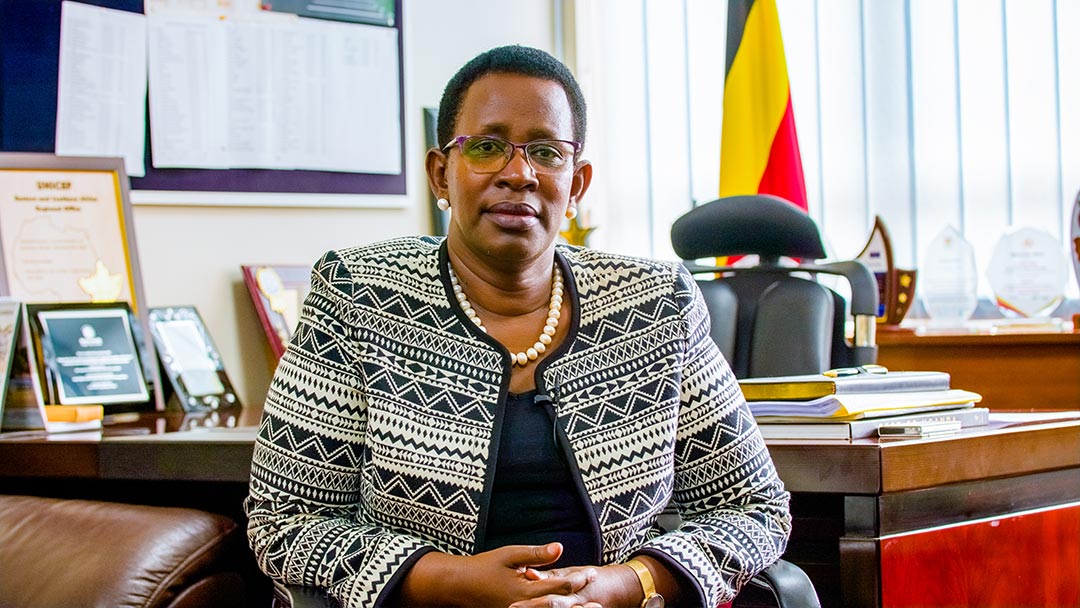
Dr Diana Atwine, Permanent Secretary at the Ugandan Ministry of Health, meanwhile, emphasised the centrality of the Ministry’s strong pre-existing infrastructure.
“Before, it took us days to test for these viruses,” she said. “Today, because of genomic sequencing and other capabilities that we have built, we were able to test the exact species of the ebolavirus that we were dealing with in less than 24 hours.”
Credit: Emmanuel Ainebyoona
Partners, including Africa CDC and the World Health Organization (WHO), helped too. Atwine said that when the Ministry announced the outbreak, these organisations rallied and championed a “one plan, one budget, one Monitoring and Evaluation framework” approach that helped them to stop the virus with limited resources.
However, to completely thwart the outbreak – and stop importation of additional Ebola cases from the DRC – the Ministry had to partially close its border with its neighbour country and allow through only essential services, such as cargo, security and health personnel. Atwine calls that a “painful decision.”
“We are cognisant of our porous borders and of the fact that our people do a lot of trade together,” said Atwine. “Remember, the last case that we registered was imported from Congo. The person concealed themselves in cargo [consignment] and crossed the border. So, we had to make these painful decisions, because we do not want a repeat of that.”
The Ministry also called a halt to local markets and similar activities that can pull crowds of people along the risky border zone. “We postponed the Martyrs’ Day [on 3 June] because we knew that the celebration would bring more than one million travellers from the DR Congo,” she said.
But a partially shut border is not a cold shoulder. The Ministry also sent a team of 58 health workers, including doctors, laboratory personnel, and other IP specialists, to support the response in the DRC. Those health workers are now in Congo’s Itruri Province, the epicentre of the ongoing outbreak.
Representatives of the Ugandan health system also met with the King and Prince of North Kivu in the DRC to discuss how the province can restructure its risk communication and community engagement (RCCE) and establish effective community-based surveillance, according to Kabanda. It also plans to send 15 experts to South Sudan to support that country’s RCCE activities.
How to help build a better arsenal
Scientists at the University of Oxford said last month that they would start a “small Ebola vaccine trial” in Uganda. “The aim of the phase one clinical study is to look for the safety of the vaccine, and also to see if we're getting a strong immune response that could be protective against the Bundibugyo species of Ebola,” Prof Teresa Lambe, who leads the Ebola vaccine team at the University of Oxford, told the BBC.
But, with a vaccine still not widely deployed, Kagirita called health teams that are battling Ebola in the DRC to prioritise conventional public health measures to stop it. “There is a lot of fear around Ebola,” he said. “But we need to start demystifying this disease. Why should one case, isolated inside a secure facility, affect the lives of 50 million Ugandans? People can’t travel, can’t work. Why do we need 200 Land Cruisers to move around because of one case, when malaria is killing 16 people in a day?”
“We know that Ebola can be stopped when detected early,” said Kagirita. “We know that we can control the virus if we deny it oxygen and suffocate it. Just like fire, when we deny it oxygen, it will extinguish by itself. So, we need to focus on these communities where people continue to wash and bury infected bodies. That’s where the oxygen that’s fuelling this outbreak is being supplied.”
“We need to focus on preventing people from getting exposed to the virus,” said Kagirita. “We need to involve church and other cultural leaders to explain how Ebola is transmitted to extinguish it. It takes between 10 and 20 days to treat one Ebola case… but just one minute of information exchange can help prevent that same case.”
* Name changed to protect her privacy