
Gavi progress report 2025
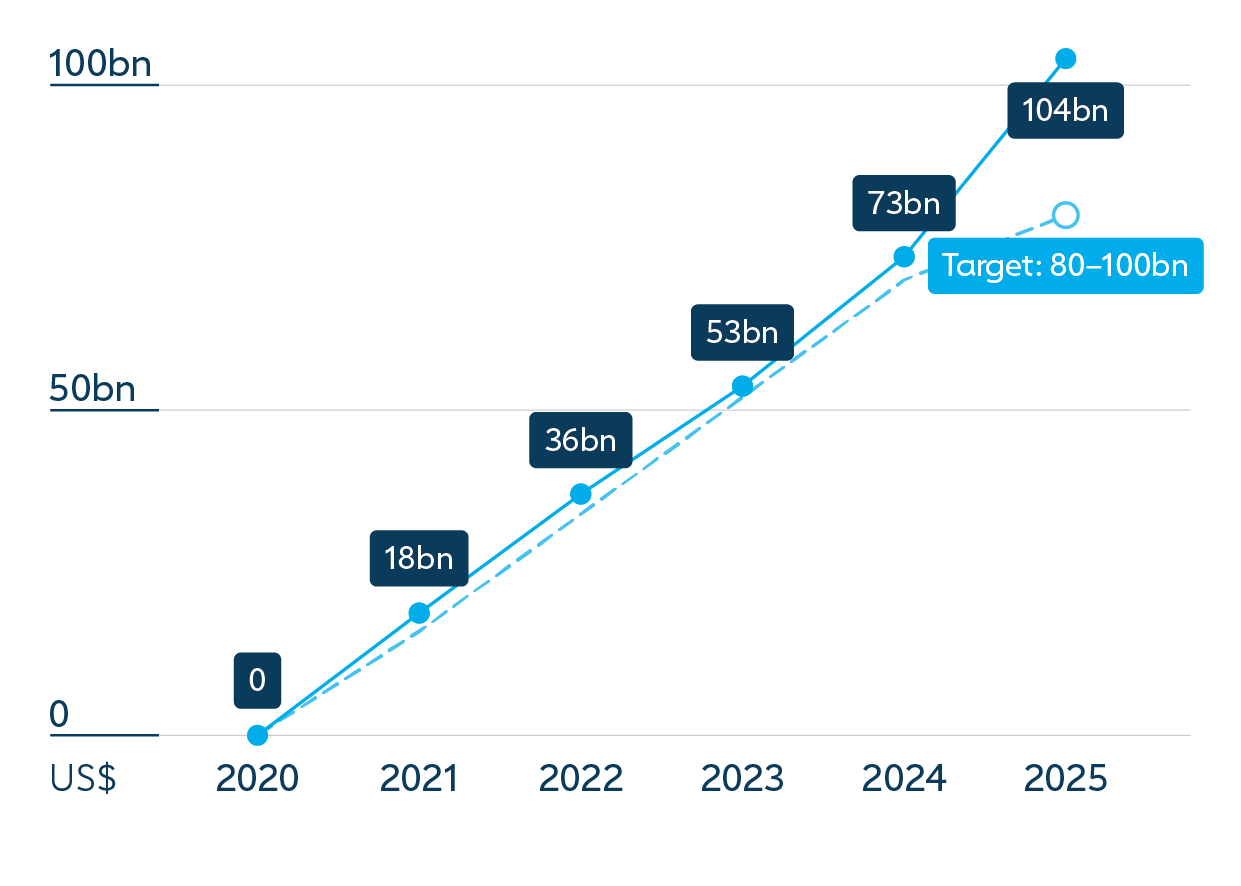
Gavi’s 2021–2025 period concluded with another record-breaking year: vaccines delivered over US$ 30 billion in economic benefits for lower-income countries in 2025
Welcome to Gavi’s 2025 Annual Progress Report, the fifth and final report of Gavi’s 2021–2025 strategic period (Gavi 5.0/5.1). After a year of challenges, Gavi can look forward with optimism; when the history of global health is written, it is likely that 2025 will be seen as a turning point.
Mission indicators
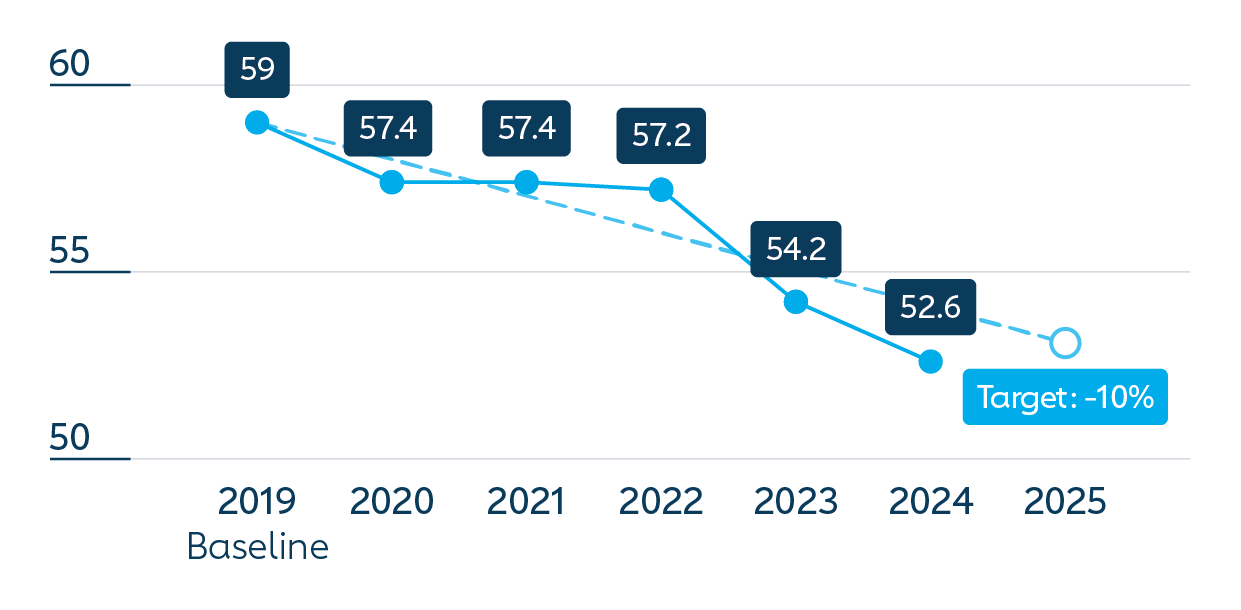
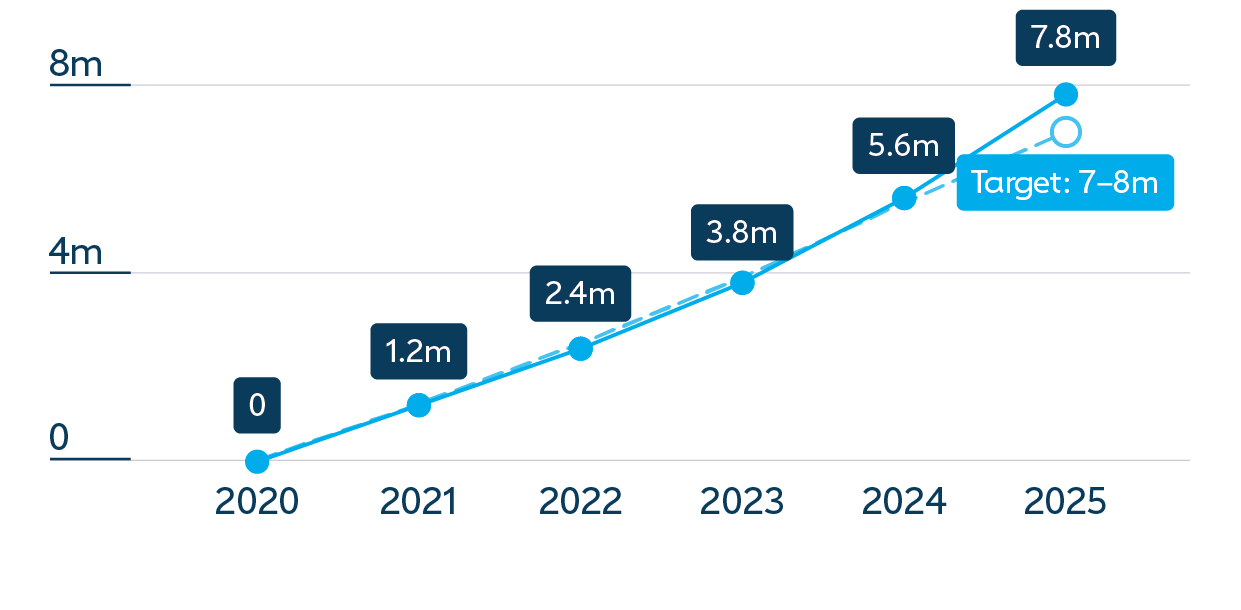
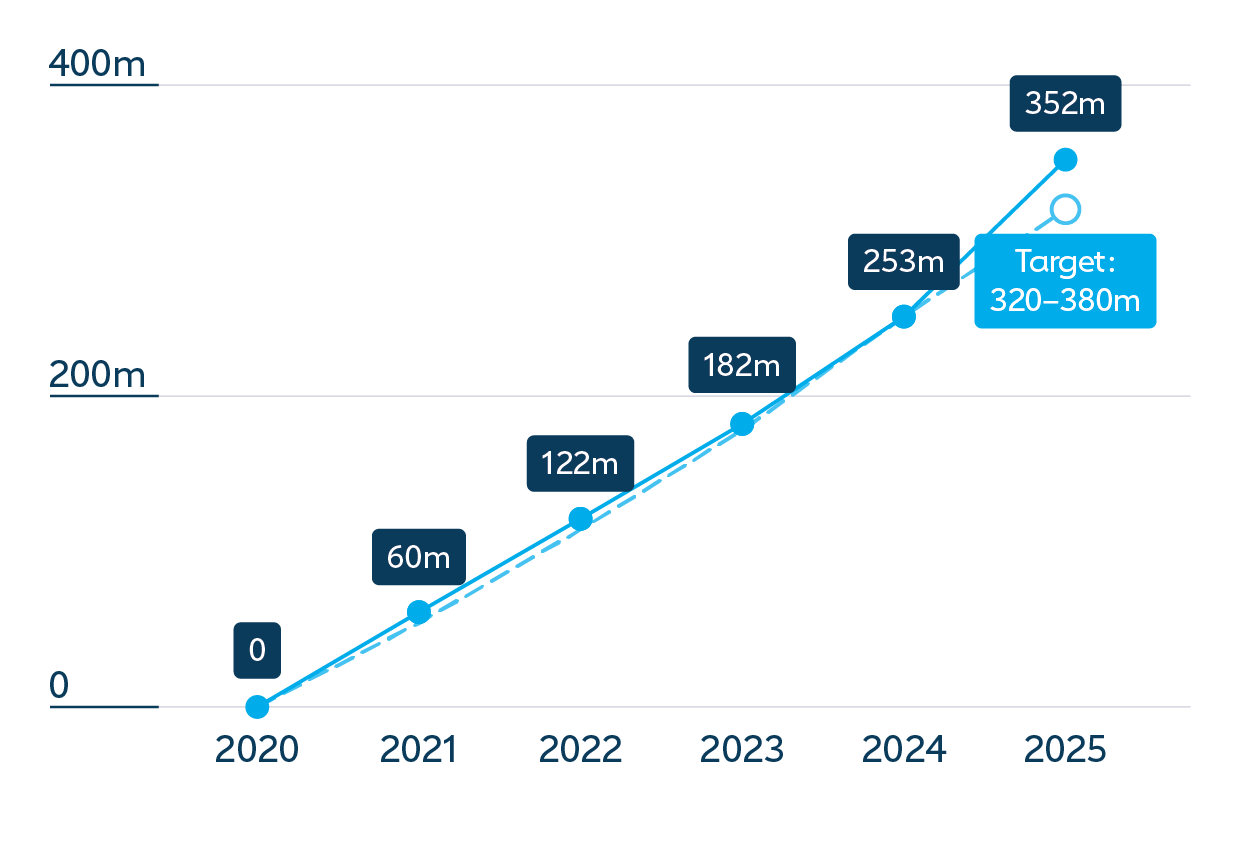
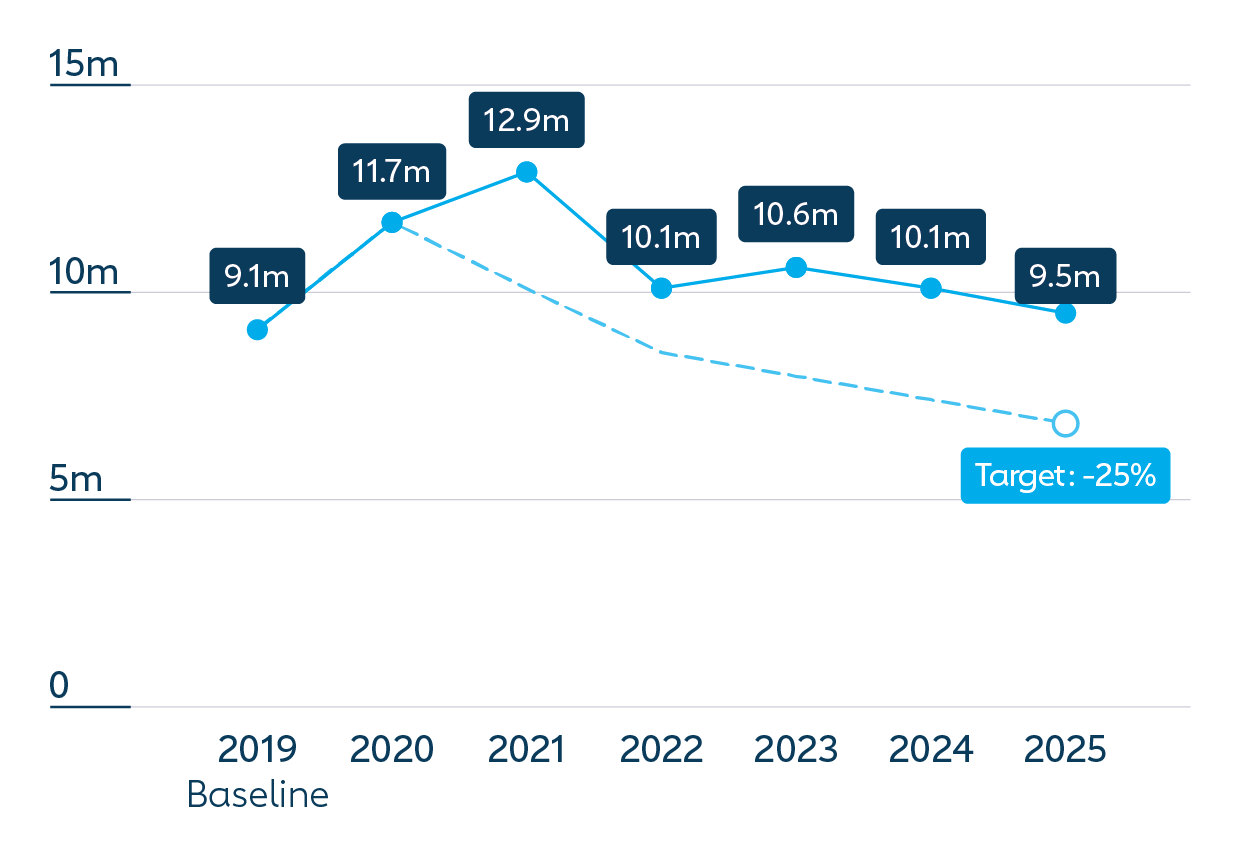
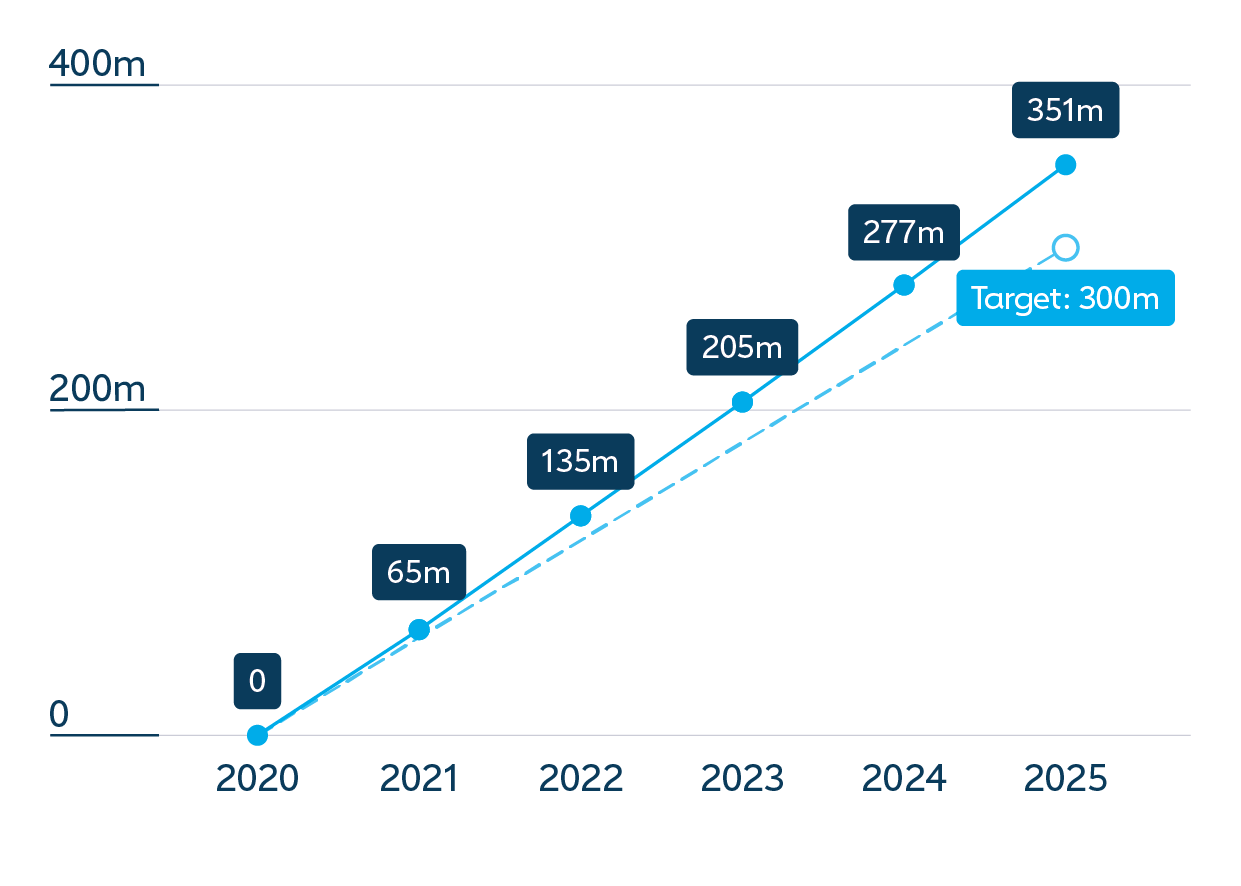
Despite the confluence of risks that the world continued to face in 2025, Vaccine Alliance partners and countries achieved most of the six mission indicators described below.

VaccinesWork 2025: our most read stories
In Nigeria, AI tools are changing how people access healthcare
They live in your pocket, and they have all the time in the world: for some worried parents, talking to healthcare bots about immunisation may be just what the doctor ordered.
Madhya Pradesh has too many unimmunised children. Here’s what’s being done to change that
India is aiming for a 30% reduction in the number of unvaccinated children living inside its borders by 2026. Large states like Madhya Pradesh will play a crucial role in the success, or failure, of that effort.
Sierra Leone health workers line up for mpox jab amid growing outbreak
Freetown’s 34 Military Hospital has seen Ebola and Lassa Fever outbreaks and now it’s at the forefront of the country’s mpox response. The opportunity to get vaccinated was not one these seasoned frontliners were going to give up.
Strategic goals
The Vaccine Alliance’s mission is: to save lives and protect people’s health by increasing equitable and sustainable use of vaccines. This mission is supported by four strategic goals, each with its own set of strategy indicators. Learn more below.
 |
The vaccine goal
Introduce and scale up vaccines
 |
The equity goal
Strengthen health systems to increase equity in immunisation
 |
The sustainability goal
Improve sustainability of immunisation programmes
 |
The healthy markets goal
Ensure healthy markets for vaccines and related products
The vaccine goal:
Introduce and scale up vaccines
Routine immunisation in 2025: a record-breaking year to conclude Gavi 5.0/5.1
The WHO/UNICEF Estimates of National Immunization Coverage (WUENIC) released in July 2026 showed that in the final year of the 2021–2025 strategic period (Gavi 5.0/5.1), Gavi-supported countries continued to protect more children, against more diseases, than ever before – and continued to increase coverage rates following declines during the COVID-19 pandemic.
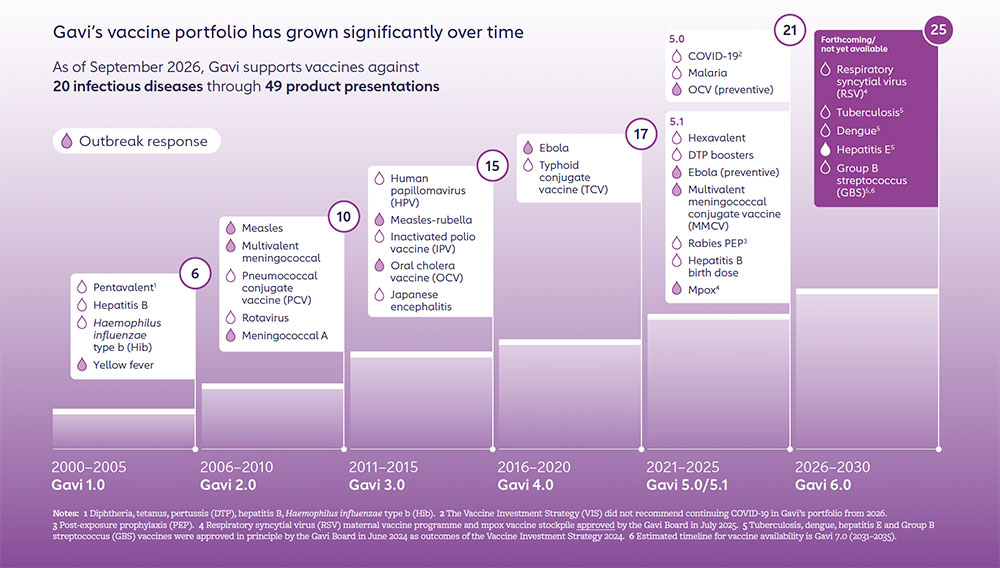
Since 2000, more than 1.3 billion children have been reached through routine immunisation with Gavi support – surpassing the Alliance goal to protect 1.1 billion children by 2025.
Vaccine focus: human papillomavirus (HPV) vaccine
Protects against the main causes of cervical cancer, which claimed the lives of more than 279,000 women in 2024, of which 90% in low- and middle-income countries.
In 2025, the Vaccine Alliance surpassed its ambitious target of reaching 86 million girls: more than 95 million girls in lower-income countries are now protected against cervical cancer with Gavi support, preventing an estimated 1.9 million future deaths. By end 2025, 53 countries had launched their human papillomavirus (HPV) vaccine national programme with Gavi support (compared with 21 countries before the COVID-19 pandemic).
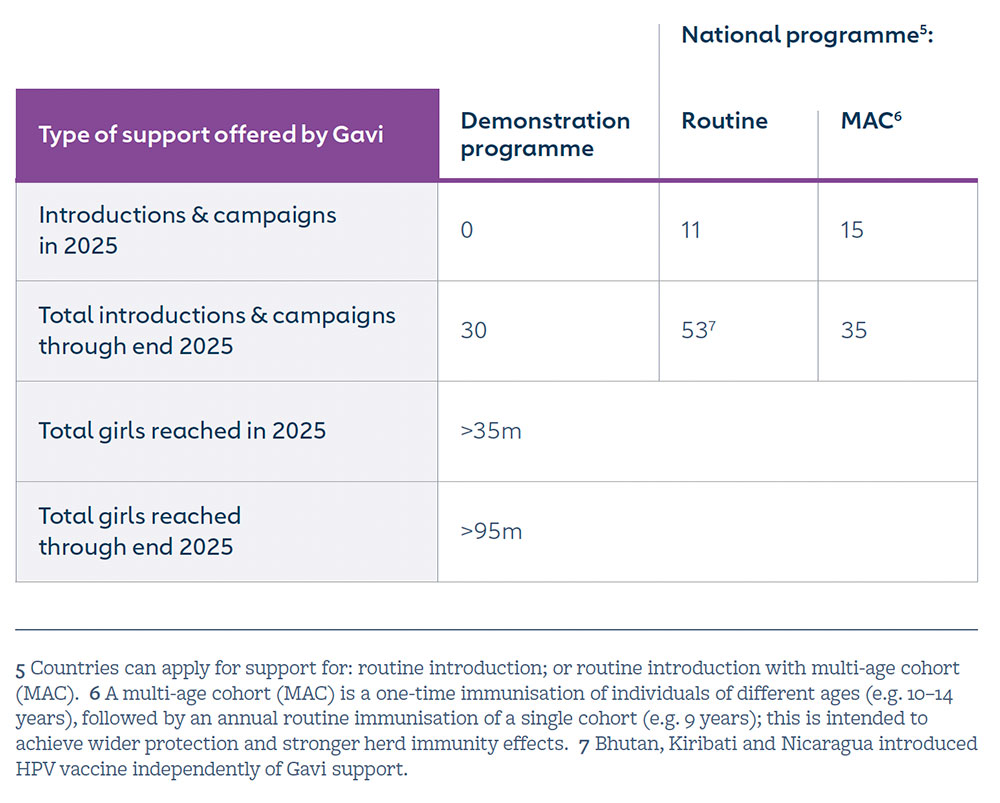
With Gavi support, lower-income countries fully immunised more than 35 million girls with HPV vaccine in 2025 alone – the highest number yet.
Vaccine focus: malaria vaccine
Malaria vaccine protects young children, who account for 75% of global deaths from the disease, primarily in Africa.
The Malaria Vaccine Programme (MVP), identified as a strategic priority under Gavi 5.1, has continued to progress in response to sustained country demand and remains broadly on track as it transitions into the Gavi 6.0 strategic period.
By end 2025, more than 44.6 million doses had been delivered to 24 countries in Africa that have introduced malaria vaccines into routine immunisation with Gavi support.
This is one of the fastest vaccine scale-ups in Gavi’s history, with 7 countries introducing in 2025: Burundi, Uganda, Mali, Guinea, Togo, Ethiopia and Zambia; 14 countries in 2024; and 3 countries in 2019 during the Malaria Vaccine Implementation Programme (MVIP).
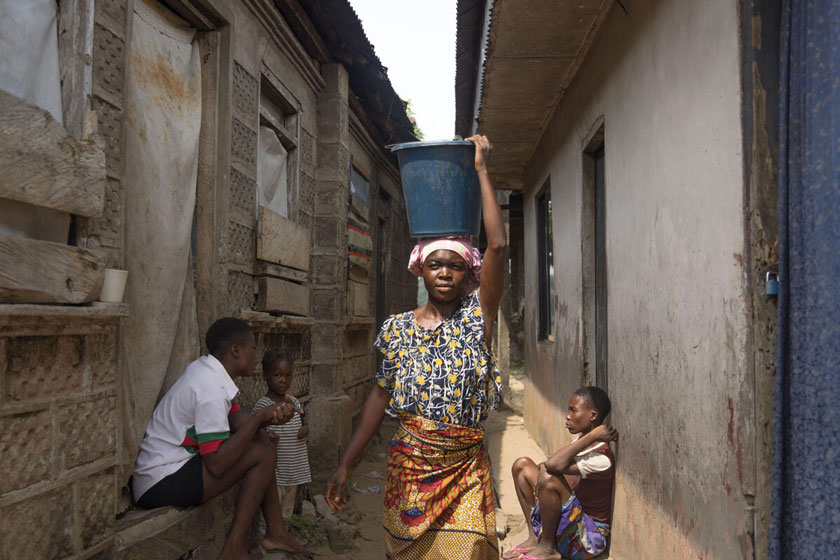
Nigeria introduces the malaria vaccine
In December 2024, Magnum photographer Jérôme Sessini traveled to Nigeria to document the historic introduction of the malaria vaccine, supported by Gavi, the Vaccine Alliance
Credit: Jérôme Sessini/ Magnum Photos
The equity goal:
Strengthen health systems to increase equity in immunisation
Progress – 2025 equity updates: In 2025, health systems reached more children with Gavi-supported routine vaccines than ever before.
With Gavi support for routine immunisation, lower-income countries protected more than 73 million children against a range of infectious diseases in 2025, more than any previous year on record.
By the end of the first quarter of 2026, the “Big Catch-up” programme by WHO, Gavi and UNICEF had helped countries reach 21 million children aged one up to five years with at least one catch-up vaccine dose (exceeding Gavi's 'must-win' target), including an estimated 14.3 million previously 'zero-dose' children who received DTP1 and 14.1 million under-vaccinated children who received DTP3.
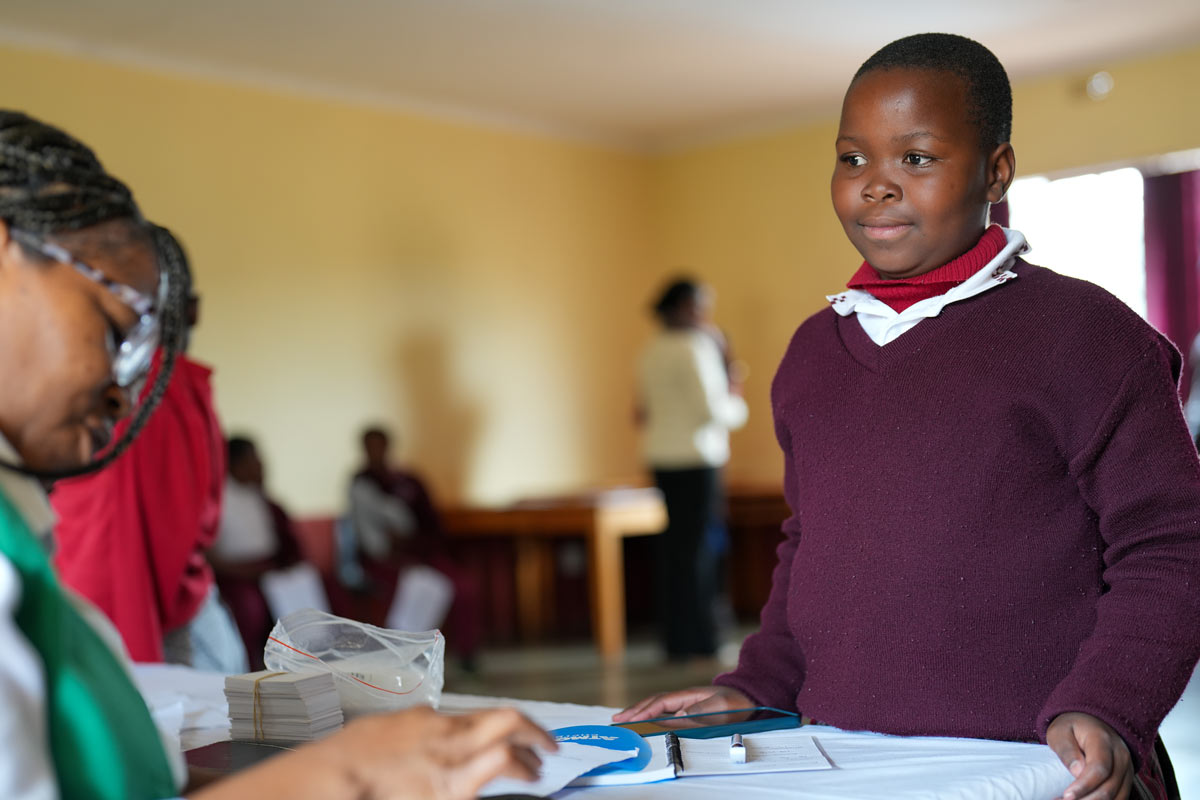
HPV vaccination session, Eswatini
New research finds HPV vaccine delivers herd immunity, protecting unvaccinated women.
Credit: Gavi/2025/Svetlomir Slavchev
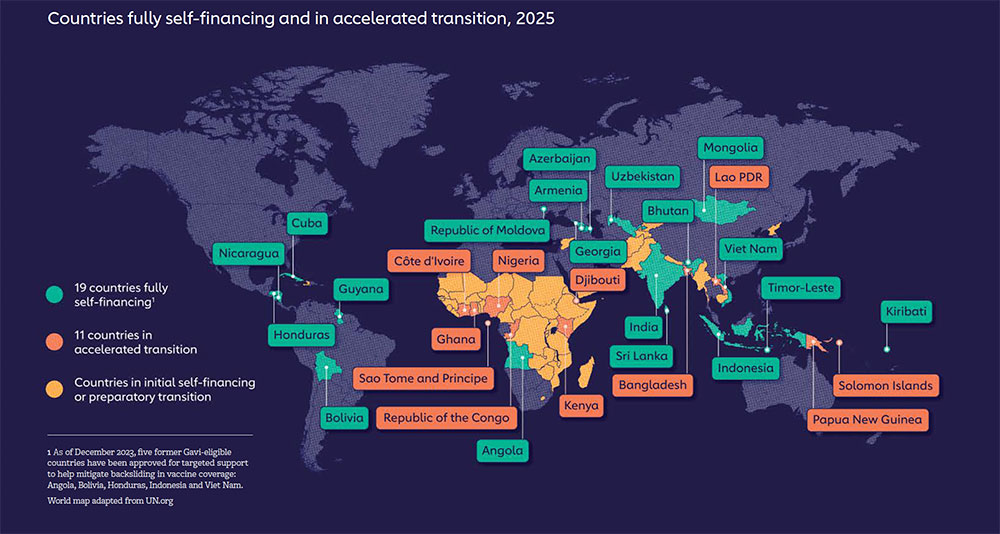
How Gavi’s co-financing model works
To bring countries on a trajectory towards financial sustainability, and to empower them to take ownership of their vaccination programmes, Gavi has pioneered an approach to co-financing and transition.
Countries share the costs of the vaccine programmes by directly co-procuring a portion of the vaccines and safe injection devices from a supplier or procurement agency to fulfil their co-financing requirements. As a country’s gross national income (GNI) per capita increases, so the level of its co-financing payments also rises. Countries are grouped under different categories according to their level of GNI per capita as a proxy of their ability to pay.
Learn more about Gavi co-financing
The sustainability goal
Improve sustainability of immunisation programmes
Progress – 2025 sustainability updates
Lower-income countries continued to prioritise immunisation investments in 2025, mobilising primarily domestic resources.
In a powerful demonstration of commitment to country ownership of immunisation and progress in strengthening sovereignty, new data released in April 2026 showed that lower-income countries supported by Gavi, the Vaccine Alliance collectively contributed US$ 301 million towards their own vaccination programmes in 2025 – setting yet another record for annual country investment in vaccines. This represents an increase of approximately 18% from 2024.
US$ 2.2bn
In the face of fiscal challenges, climate change, conflict and instability, most Gavi-supported countries maintained or increased domestic resources for co-financing of Gavi-supported vaccines in 2025, bringing to US$ 2.2 billion their total contribution since the introduction of the co‑financing policy in 2008.
The healthy markets goal
Ensure healthy markets for vaccines and related products
Through Gavi’s market shaping efforts, the number of manufacturers supplying prequalified Gavi-supported vaccines reached 19 in 2025 (with nearly half based in low- and middleincome countries) – compared with 5 in 2001.
Mpox response
On 13 August 2024, the mpox outbreak was declared a Public Health Emergency of Continental Security (PHECS) by the Africa Centres for Disease Control and Prevention (Africa CDC); and on 14 August 2024 a Public Health Emergency of International Concern (PHEIC) by the World Health Organization (WHO).
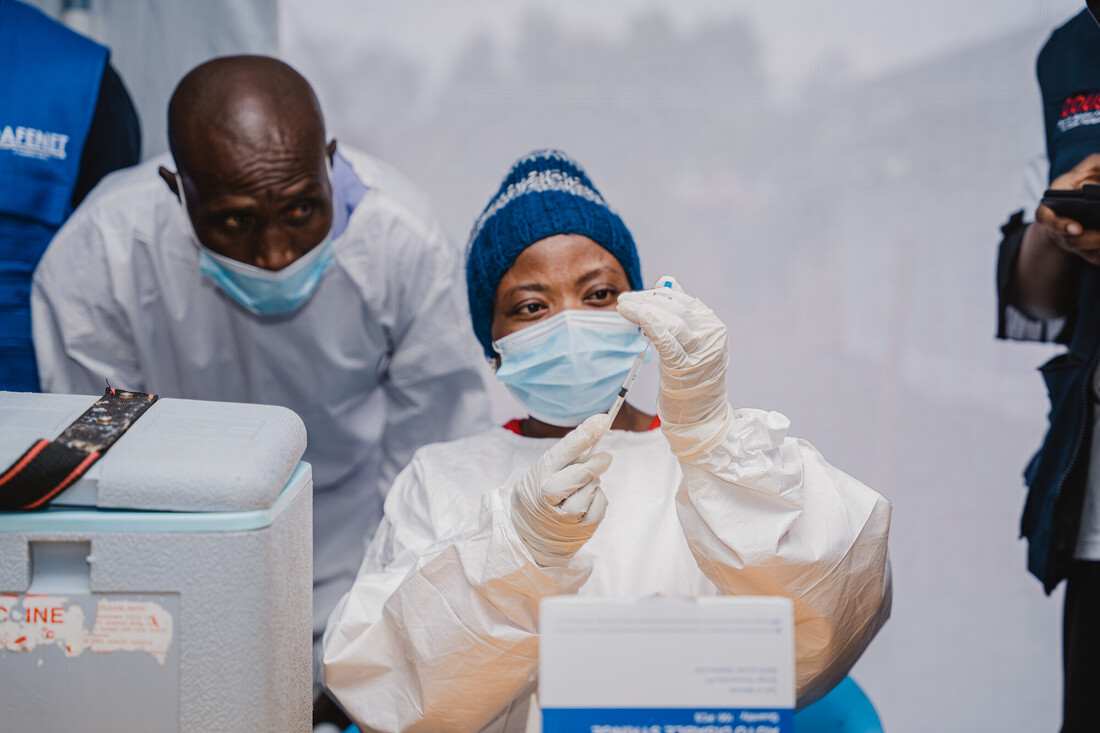
Less than 40 days later, the inaugural drawdown from Gavi's First Response Fund (FRF) of up to US$ 50 million was approved to support rapid mpox vaccine procurement and vaccination roll-out efforts in affected countries.
Healthy market dynamics
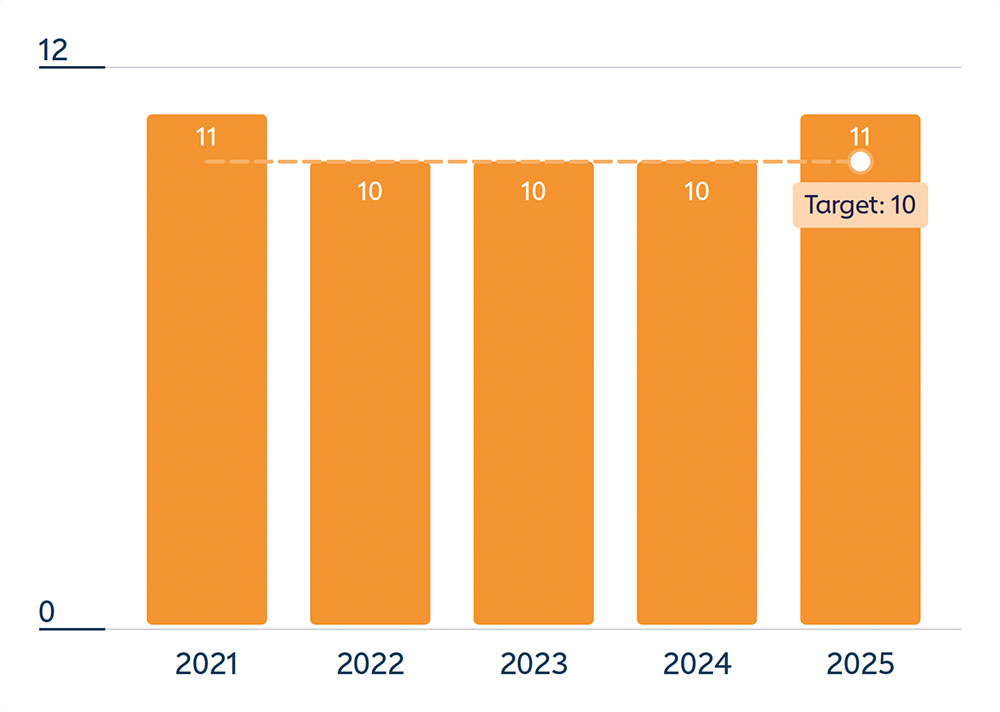
2025 progress: Gavi 5.0/5.1 target exceeded
Healthy market dynamics are assessed via analysis of fundamental market attributes: demand side dynamics, supply side dynamics and innovation. This holistic view of markets aligns market shaping activities and objectives with Gavi’s strategic goals to: introduce and scale up vaccines; and improve sustainability of immunisation programmes.
2025 progress: Gavi’s ongoing market shaping efforts and collaborations with manufacturers helped ensure that 11 vaccine markets exhibited acceptable levels of healthy market dynamics, exceeding the Gavi 5.0/5.1 target.
Data sources: vaccine procurement data: UNICEF SD Memorandum of Understanding (MoU) reports; market intelligence data: Gavi Market Shaping roadshows, Alliance partner industry engagements, 2026
Gavi's progress report 2025
Highlighting key data, partnerships and milestones, the 2025 Annual Progress Report offers insights into our progress last year, while facing the challenges ahead.
Previous progress reports
Welcome to Gavi’s 2024 Annual Progress Report, the fourth of the 2021–2025 strategic period.
Welcome to Gavi’s 2023 Annual Progress Report, the third of the 2021–2025 strategic period.