
Climate, health and immunisation
Climate, health and immunisation
Gavi’s role in response and prevention.
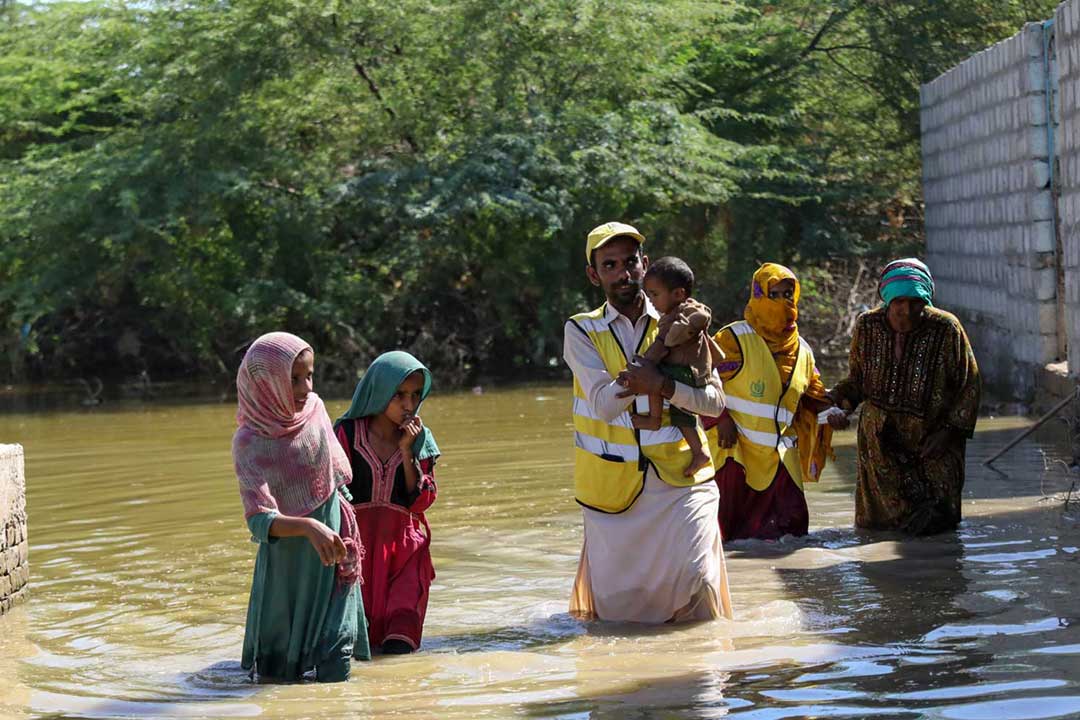
The climate crisis is a fundamental factor in the spread of vaccine-preventable diseases globally – through climate-sensitive diseases, including vectors expanding into new regions; disruption to immunisation and other essential health services; and a surge in extreme weather events. Lower-income countries, particularly those in fragile and humanitarian settings, are disproportionately affected when disaster strikes. They often have fewer resources and capacity to respond to health emergencies, and as such are at a greater risk of infectious disease spillover and outbreaks.
Publications
Gavi’s role at the crossroads of climate change and immunisation
November 2025
Climate change is a fundamental threat to human health. Gavi investments are helping countries adapt to some of the key impacts, through a range of support including for routine immunisation, emergency stockpiles against climate-sensitive diseases, health system strengthening and vaccine delivery innovations.
- Download the position paper: English
Adapting immunisation to climate realities: operational challenges and strategic responses
November 2025
Vaccines can lower the risks of individuals contracting climate-sensitive infectious diseases, help reduce people’s vulnerabilities to the hazards of disease outbreaks, and in turn reduce the strain on health systems during emergencies when their services are needed the most. This Gavi technical paper demonstrates some concrete measures and best practices to include immunisation in national and sub-national climate adaptation planning and health system preparedness.
- Download the report: English
Protecting our future: an investment framework for quantifying the climate adaptation benefits of health and immunisation investments
November 2025
Despite the urgent need to build health resilience among vulnerable populations facing escalating climate-driven threats, less than 0.5% of global climate finance currently supports human health interventions. This report, co-commissioned by Gavi and the Asian Infrastructure Investment Bank (AIIB), addresses critical gaps in tracking and assessing investments that address the health impacts of climate change. Using a new evidence-based framework, countries, global health institutions, climate funders and other development partners can better identify health investments contributing to climate adaptation and resilience.
- Download the report: English
Immunisation: a critical pillar of climate adaptation
April 2025
Immunisation prevents several climate-sensitive infectious diseases, promotes health system resilience and is an enabler of climate adaptation, particularly for vulnerable communities. This Gavi technical paper takes a deeper look at the critical role of vaccines on climate adaptation, and demonstrates how they can be integrated into national climate policies and strategies.
- Download the report: English | French | Spanish | Portuguese
Immunisation and climate adaptation
April 2025
Vaccines were recognised by the Intergovernmental Panel on Climate Change (IPCC) as a critical tool for climate adaptation strategies. Despite this recognition, most national climate adaptation policies have yet to include planning or strategy for vaccines. This Gavi insight paper provides an overview of why immunisation programmes should be explicitly integrated into national adaptation plans and Vulnerability and Adaptation Assessments.
- Read the insight paper: Immunisation and climate adaptation
Gavi-supported vaccines against climate-sensitive diseases
- Cholera – food-/waterborne: oral cholera vaccine (OCV) – emergency stockpile; preventive use. Total stockpile doses shipped to end 2024: ~202m
- Japanese encephalitis – vector-borne: Japanese encephalitis vaccine – routine; catch-up campaigns. Total reached with Gavi-supported vaccines to end 2024: >26.3m
- Malaria – vector-borne: malaria vaccine – routine. Total doses shipped to end 2024: 10.5m
- Meningitis – respiratory: meningococcal A conjugate vaccine (MenACV) – routine; outbreak response campaigns. Total reached with Gavi-supported vaccines to end 2024: 397m. Multivalent meningococcal conjugate vaccine (MMCV) – emergency stockpile. Total stockpile doses shipped to end 2023: >29.3m
- Typhoid – food-/waterborne: typhoid conjugate vaccine – routine; catch-up campaigns; outbreak response campaigns. Total reached with Gavi-supported vaccines to end 2024: >34.9m
- Yellow fever – vector-borne: yellow fever vaccine – routine; outbreak response campaigns; emergency stockpile; diagnostics. Total reached with Gavi-supported vaccines by end 2024: >505m; total stockpile doses shipped to end 2024: >87m
"In my country – where climate-change and displacement are making it harder, not easier, to deliver health services – vaccines are an essential way to manage outbreaks and save lives."
- Dr Abdelmadjid Abderahim, Minister of Public Health and Prevention, Chad
Disease outbreaks increasing
Along with droughts and floods, deforestation, earthquakes and extreme temperatures, climate-sensitive disease outbreaks continue to rise. Mass migration, urbanisation, deforestation and continued encroachment by humans into animal habitats means that diseases can spread quickly across borders and around the globe. Climate change has pushed mosquitoes that spread malaria into higher elevations, spelling trouble for the spread of infectious diseases such as malaria, yellow fever, chikungunya and dengue. Climate disasters are increasing the risk of waterborne diseases, including diarrhoea caused by cholera and typhoid.
Vaccine Alliance steps up response
Marginalised communities in fragile and conflict settings are often disproportionately affected by the impacts of climate change. In 2022, Gavi launched the Zero-Dose Immunization Programme (ZIP) across 11 countries in the Horn of Africa and the Sahel to reach children in displaced communities, and fragile and conflict settings, with adaptive and responsive immunisation service delivery models to help build their health resilience – including against the impacts of climate change. Meanwhile, in Pakistan, in response to the devastating 2022 floods, Gavi's Fragility, Emergency and Displaced Populations (FED) Policy was mobilised to provide surge support, including both additional district-level surveillance, as well as equipped rapid outbreak response teams – enabling provinces and partners to target responses quickly based on real-time information.
Last year’s first-ever Health Day 28th Conference of Parties of the UN Framework Convention on Climate Change (COP28 UAE) was of special importance, as it showed the political momentum on integrating health actors into the climate policy agenda. Gavi has also been engaging in relevant dialogues, including the Intergovernmental Negotiating Body (INB) on pandemic prevention, preparedness and response, G20, UN General Assembly, Group of Friends of Human Security and UN-Energy, to promote alignment on health equity and reaching zero-dose children and missed, marginalised communities with routine immunisation. This is key to building resilience and preparedness against health emergencies, including those related to climate change.
Pandemic prevention, preparedness and response (PPPR)
The world's ability to respond to outbreaks is a bellwether of its ability to respond to future pandemics. A key outcome of Gavi's COVAX learnings is a global health security flywheel of innovation, training and preparedness. To learn more, we invite you to explore our collection of original research reports on the Gavi website.
Gavi’s VaccinesWork platform has become a leading resource on climate, health and immunisation. Click here for the latest news and information.
Healthy environment: a cornerstone of resilient health systems
According to the World Health Organization (WHO), the direct damage costs to health from climate change are estimated to be between US$ 2–4 billion per year by 2030. Both budget cuts and climate disasters can lead to disruption of access to electricity and essential health services. Gavi's Health Systems and Immunisation Strengthening (HSIS) programmes are helping to solarise vaccine storage, reduce the carbon footprint of immunisation programmes and enable health facilities to be more resilient when disasters strike (e.g. gap in health care services due to lack of energy).
Cold chain equipment
Historically, much of the off-grid vaccine cold chain in Gavi-supported countries has been gas- or kerosene-powered – unreliable, expensive and carbon-intensive. Launched in 2015, Gavi's Cold Chain Equipment Optimisation Platform (CCEOP) pools technology demands from countries and procurement through UNICEF Supply Division, negotiating with manufacturers for better pricing and effective deployment. Climate-friendly solar-powered refrigeration technologies account for 60% of the more than 65,000 CCE units installed to date across 47 Gavi-supported countries.
Solarisation
Without stable, reliable electricity, energy-reliant medical equipment is unable to serve its purpose. Since 2021, Gavi has been working with Orange in Sierra Leone to support health facility solar electrification (HFSE) to improve immunisation and climate sustainability (see page 52 for more). And in 2022, Gavi began planning to accelerate HFSE at scale – building on CCEOP – to expand off-grid solar solutions in health facilities. Health care waste management Health care waste management (HCWM) is a growing concern across all health areas, including immunisation. Most countries have adopted WHO standards and international agreements for HCWM at the national policy level. Yet often policies are not strictly followed at subnational level. Health care waste (e.g. incineration of medical waste) has had a significant impact on climate change. To help reduce immunisation waste and promote environmentally sustainable practices, Gavi is supporting priority countries with improved technology; training; and partnerships – including with Africa CDC and the Global Fund to Fight AIDS, Tuberculosis and Malaria.
Health care waste management
Health care waste management (HCWM) is a growing concern across all health areas, including immunisation. Most countries have adopted WHO standards and international agreements for HCWM at the national policy level. Yet often policies are not strictly followed at subnational level. Health care waste (e.g. incineration of medical waste) has had a significant impact on climate change. To help reduce immunisation waste and promote environmentally sustainable practices, Gavi is supporting priority countries with improved technology; training; and partnerships – including with Africa CDC and the Global Fund to Fight AIDS, Tuberculosis and Malaria.
Read the latest on VaccinesWork
Nigeria faces the world’s highest projected death toll from super El Niño heat
The super El Niño could cause 31,400 extra heat deaths in Nigeria alone. Heat warnings, cooling centres and worker protections could help save lives.
After the flood, Nepal braces for disease outbreaks
A catastrophic flood in Nepal has killed thousands already. Now, a grave public health crisis threatens.
El Niño intensifies Indonesia wildfires, putting health at risk
Wildfires across Borneo and Sumatra are raising health risks for local populations, with some health offices reporting rising rates of respiratory disease.