

Co-financing policy
Co-financing policy
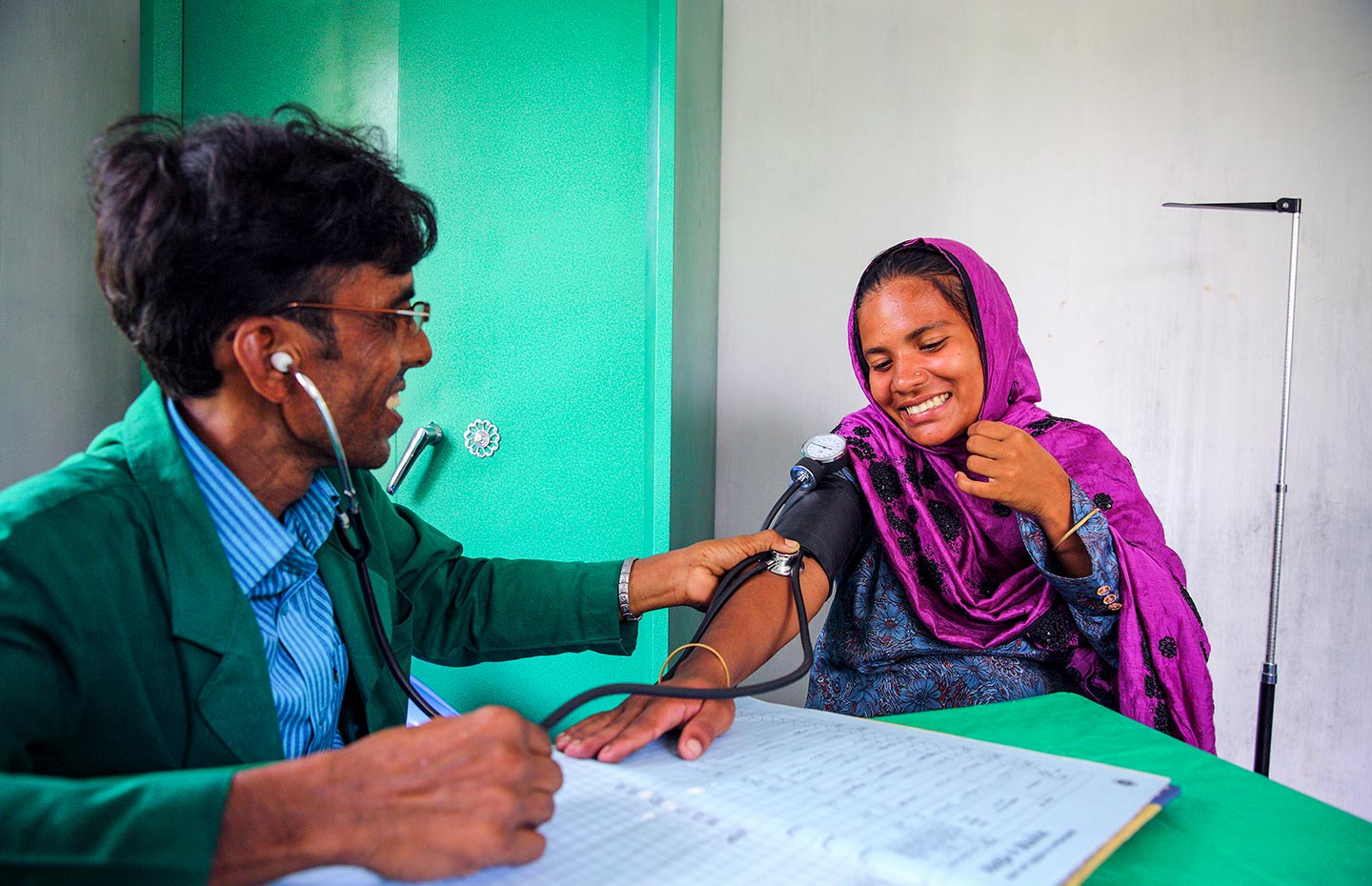
Co-financing means that countries contribute to the cost of Gavi-supported vaccines by financing some of the required vaccine doses.
What is co-financing?
Co‑financing is a core element of the Gavi model, and of Gavi’s strategic goal of improving programmatic and financial sustainability of immunisation programmes. Together with the eligibility and transition policy, Gavi’s co-financing policy supports countries to progressively increase domestic financing for immunisation as national income levels grow.
All countries receiving Gavi vaccine support are required to co‑finance a portion of their vaccine and safe injection device costs. Over time, co‑financing requirements increase in line with a country’s ability to pay, placing countries on a pathway towards full ownership of their immunisation programmes and eventual transition out of Gavi support.
Countries receiving Gavi vaccine support may procure vaccines and injection devices either through a Gavi‑approved procurement agency: UNICEF or the Pan American Health Organization (PAHO)’s Revolving Fund; or through self‑procurement, in line with Gavi’s self‑procurement policy.
What is the purpose of Gavi’s co-financing policy?
The co‑financing policy encourages governments in Gavi‑supported countries to invest in new vaccines by requiring them to contribute to vaccine costs from the outset. This approach strengthens country ownership of vaccine financing, supports longer‑term financial planning, and helps countries prepare for the gradual phasing out of Gavi support.
The ultimate objective of Gavi’s co‑financing policy is to support the financial sustainability of immunisation programmes. For lower‑income countries, this is expected to be a gradual process over many years, with interim objectives focused on steadily increasing country contributions and strengthening country ownership of vaccine financing.
When is the co-financing policy applied and how does it work?
Since 2008, all countries applying to Gavi for new vaccine support co-finance a portion of the cost. Co‑financing requirements vary by country and are determined by the country’s transition phase under the eligibility and transition policy, as well as by the characteristics of individual vaccines. Certain vaccines, such as inactivated polio vaccine (IPV), measles vaccine, measles-rubella vaccine and malaria vaccine, have bespoke rules.
In the initial self-financing phase, the government’s contribution is a flat amount: US$ 0.20 per dose of any Gavi-supported vaccine that is used in routine immunisation programmes. Exceptionally for some vaccines, including human papillomavirus (HPV) vaccine and pneumococcal conjugate vaccine (PCV), co‑financing contributions are now calculated as a share of the vaccine price rather than the flat per‑dose amount. These contributions are designed to reinforce country ownership, build procurement and budgeting capacity, and strengthen incentives for cost-effective choices, without discouraging the introduction of new vaccines.
When a country enters the preparatory transition phase, the government’s contribution increases by 15% per year, with a cap on a country’s co-financing share once it reaches 80%. In this phase, the co-financing requirement is a percentage of the price of vaccines, and the absolute amount will thus vary from vaccine to vaccine.
A country enters the accelerated transition phase when a country’s average GNI per capita over the past three years exceeds the eligibility threshold and its co-financing level has reached at least 35%. During accelerated transition, a country’s co‑financing requirement increases progressively from its existing level to 100% of vaccine costs over a period of eight years.
Co-financing is mandatory for Gavi-supported vaccines used in routine immunisation and all vaccination campaign types (except emergency and outbreak response). Further details on all other co-financing rules can be found in the Gavi 6.0 funding guidelines.
When was the co-financing policy approved and when will it be updated?
Gavi has applied a co-financing policy since 2007. The current co‑financing policy took effect on 1 January 2026, following Gavi Board decisions on the Eligibility, Transition and Co‑financing (ELTRACO) policy package in December 2024 and the subsequent Funding Policy Review decisions endorsed by the Board in July 2025.
As part of Gavi’s regular funding policy reviews, the Board periodically reviews the co‑financing policy to ensure it remains fit for purpose, aligned with country financing realities, and consistent with Gavi’s broader approach to sustainability and transition.
Co-financing news
Lower-income countries investing record amount in immunisation programmes
Against a backdrop of aid cuts, lower-income countries contributed a record US$ 302 million towards Gavi-supported vaccines for 2025.
Lower-income countries commit record US$ 250 million towards immunisation
In 2024, lower-income countries supported by Gavi, the Vaccine Alliance contributed more than US$ 250 million, a record, towards their own immunisation programmes.

1.3 million future deaths prevented by Gavi-supported vaccines in 2023
Over 1.3 million future deaths were averted in 2023 thanks to vaccination programmes supported by Gavi, the Vaccine Alliance.
