

Made in Africa: New measles rapid diagnostic tests mark breakthrough for vaccination efforts
Made in Africa: New measles rapid diagnostic tests mark breakthrough for vaccination efforts
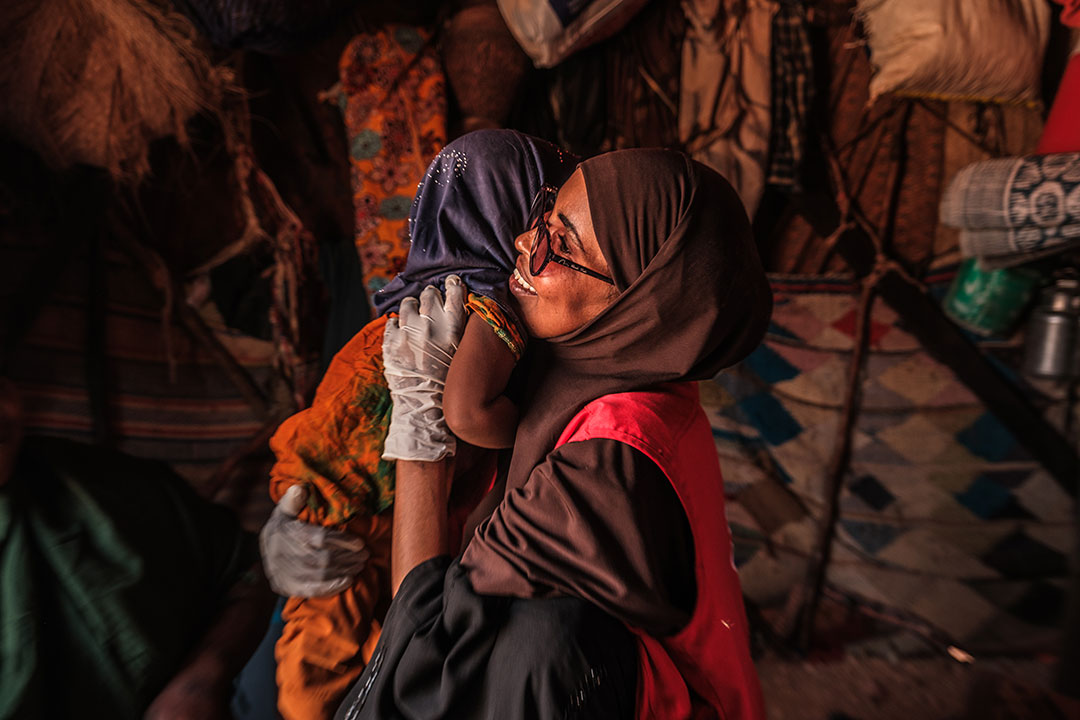
First-of-their-kind rapid measles diagnostic tests will support targeted vaccination during outbreaks and identification of priorities for preventive vaccination efforts.
Deployment of tests, financed by Gavi and manufactured by DIATROPIX in Senegal, represents an important milestone for African manufacturing.
An Vermeersch, Chief Vaccine Programmes and Markets Officer, Gavi: “By investing in local manufacturing capacity, we are not only helping to protect communities now, we are also putting in place systems that are better able to help prevent outbreaks from happening again in the future.”
Geneva, 30 September 2026 – Gavi, the Vaccine Alliance today announced a major milestone for measles surveillance with approval to deploy first-ever measles rapid diagnostic tests. The breakthrough is the result of longstanding cooperation between Gavi, the World Health Organization (WHO), UNICEF, the Gates Foundation and other partners to advance measles surveillance and support faster outbreak response.
These new measles diagnostics are the only rapid test to meet required performance criteria following a rigorous evaluation process conducted by WHO and partners. Manufactured by DIATROPIX of Institut Pasteur de Dakar, in Senegal, they represent an important technical breakthrough in the fight against measles and underscore the growing strength of African manufacturing.
Up to 500,000 tests are expected to be deployed each year once the programme is up and running, with first rollouts expected to begin in Senegal later this year. Gavi investment in these tests forms part of a larger US$43 million funding package approved by the Gavi Board in 2025 to fund diagnostic kits across a range of diseases.
“Improving the effectiveness of vaccinations, strengthening outbreak response and investing in local manufacturing are central tenets to the Gavi Leap and our efforts to build our work around the needs of countries,” said An Vermeersch, Chief Vaccine Programmes & Markets Officer, Gavi, the Vaccine Alliance. “By investing in local manufacturing capacity, we are not only helping to protect communities now, we are also putting in place systems that are better able to help prevent outbreaks from happening again in the future.”
Strengthening measles immunisation efforts
Measles vaccines have contributed to a dramatic reduction in global cases and deaths since 2000 – saving nearly 20 million lives in Africa alone. However, effective strategies for measles control must be guided by timely and reliable measles surveillance data. Surveillance supports early detection and quick response in outbreaks, and also plays a key role in providing stakeholders with the data they need to target, design, implement, and evaluate interventions. These new measles tests will therefore help fight outbreaks by enabling faster and more cost-effective case confirmation, strengthening outbreak detection and supporting more targeted and rapid response – leading to smaller outbreaks and less morbidity and mortality. They will also help in the design of targeted preventive vaccination efforts.
Measles immunity gaps remain a significant concern globally, given the high transmissibility of the virus and high risk of serious outbreaks. Despite the availability of a safe and cost-effective vaccine, populations without adequate protection fueled a resurgence of outbreaks and deaths. The number of countries facing large outbreaks has almost tripled since 2021, with 59 countries experienced large or disruptive outbreaks in 2024. In lower-income countries, coverage remained far below required levels in 2025 despite progress, with more than 15.6 million children in these countries missing a first dose of measles vaccine.
Measles also serves an early warning indicator for gaps in routine childhood immunization systems. In 2024, there were an estimated 95,000 measles deaths globally – the vast majority among zero-dose children (those who have never received a single routine vaccine) or under-immunised children under five. Measles diagnostics tests can therefore help governments and partners identify communities that have high numbers of un-imunised or under-immunised children – strengthening efforts to reach these populations with vaccines and other life-saving health interventions.
This milestone in efforts to combat measles follow years of collaboration and investment across partners. The Gates Foundation contributed approximately US$ 7 million, and Médecins Sans Frontières (MSF Foundation) contributed approximately US$ 1 million to support this process. The UK Health Security Agency and Foreign, Commonwealth & Development Office (FCDO) supported the development and validation of the test. Through successive technology transfers and technical support, completed product development, which was then independently evaluated by the Public Health Agency of Canada’s National Microbiology Laboratory under WHO’s Global Measles and Rubella Laboratory Network, with support from Gavi to coordinate these efforts.
Partner quotes
Marjorie Michel, Minister of Health, Government of Canada: “This breakthrough demonstrates what can be achieved through strong international collaboration, scientific excellence and innovation. I am proud that the Public Health Agency of Canada’s National Microbiology Laboratory played a key role in conducting the laboratory evaluation of this new test through the WHO’s Global Measles and Rubella Laboratory Network. This important global achievement will help countries detect measles cases sooner, particularly in communities where timely laboratory access is limited. Faster detection means quicker outbreak responses, stronger surveillance and, ultimately, better protection for children and communities from this preventable disease.”
Dr Ibrahima Soce Fall, CEO of Institut Pasteur de Dakar: “Health security starts with knowing where a disease is spreading and who is left unprotected. Now that the measles rapid test is made in Dakar, African countries can confirm a measles case within minutes, close to where the patient is, rather than waiting days for laboratory results. That means earlier outbreak detection, faster response and better protection for the children most at risk.”
Dr Cheikh Tidiane Diagne, Director of DIATROPIX: “This test was developed with global partners, validated in Canada, and is now being deployed across Africa. It shows that global collaboration works best when it builds local capacity, and that an African manufacturer can meet international standards and serve markets beyond its borders. Our next step is scaling up production to meet demand wherever it exists”
Dr Kate O'Brien, Director of the Department of Immunization, Vaccines and Biologicals at WHO: “The first-ever measles rapid diagnostic test is a major achievement for outbreak detection and response. By enabling fast, affordable case confirmation closer to where people live, the test has the potential to transform measles surveillance, especially in remote, fragile and emergency settings where laboratory access is limited, and accelerate efforts towards measles elimination,”
Greg Widmyer, Director, Immunization, Gates Foundation: “Measles remains one of the clearest warning signs of gaps in routine immunization. This rapid test gives countries a faster, more affordable way to identify measles cases, respond to outbreaks, and target vaccination where it's needed most. We're proud to have supported its development with partners in Senegal and the UK and we look forward to seeing country partners bring it to the communities that need it."
Ephrem Lemango, Global Chief of Immunization at UNICEF: “Every measles case is a warning that children and communities are being missed by routine immunization. UNICEF will work with governments and partners to strengthen national immunization systems, so they are more responsive and adaptive, integrating rapid diagnostic tests to identify gaps earlier and reach missed children faster.”
MEDIA CONTACTS
Meg Sharafudeen
+41 79 711 55 54
msharafudeen@gavi.org
Cirũ Kariũki
+41 79 913 94 41
ckariuki@gavi.org
Laura Shevlin
41 79 529 92 87
lshevlin@gavi.org
Collins Weru Mwai
+25 078 783 66 38
cmwai@gavi.org
Eunice Kilonzo-Muraya
+41 76 424 85 03
ekilonzo@gavi.org