

Papua New Guinea launches HPV vaccination to protect girls from cervical cancer
Papua New Guinea launches HPV vaccination to protect girls from cervical cancer
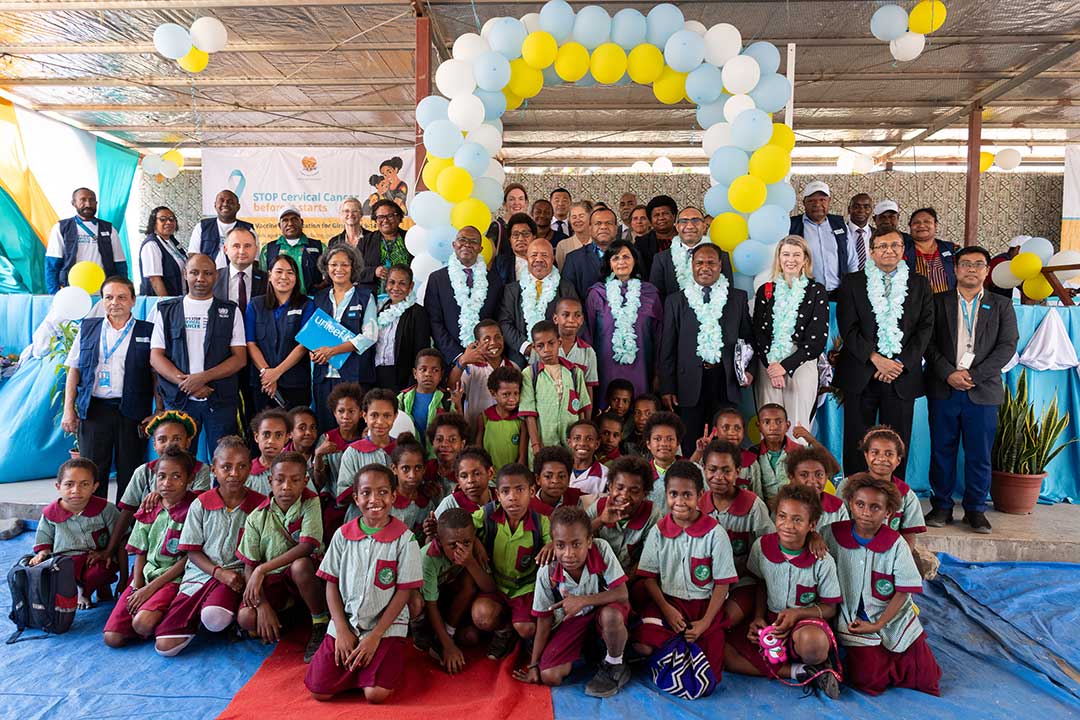

Cervical cancer remains one of the leading causes of cancer-related deaths for women in Papua New Guinea, with over 1,000 women diagnosed and ~650 deaths annually.
Port Moresby, 8 September 2026 – The Government of Papua New Guinea today introduced human papillomavirus (HPV) vaccination into its national immunization programme, taking a major step towards protecting future generations of girls and women from cervical cancer, currently the leading cause of cancer deaths among women in the country.
At a national launch at New Erima Primary School in Port Moresby, trained health workers vaccinated eligible girls aged 9–14 with the first doses. Following the launch, Phase 1 of the programme will begin free of charge across the National Capital District (NCD) and Central Province in November 2026, before gradually expanding to other provinces.
Over 1,000 women are diagnosed with the disease annually in Papua New Guinea, and approximately 650 die of it each year. Yet cervical cancer is largely preventable. More than 95 per cent of cervical cancer is caused by HPV. Vaccinating girls before exposure to the virus can protect them against HPV strains responsible for up to 90 per cent of cervical cancer cases.
The programme expects to reach about 60,000 eligible girls in the first phase of the campaign. The vaccination campaign will be implemented through school-based vaccination as well as health facilities and community outreach to ensure broader and equitable access, so that girls who are out of school or live far from services are not left behind.
Since schools are the main delivery channel, Government-led preparedness and response will be essential to keep them open. El Niño is projected to place further pressure on water supplies across Papua New Guinea. Severe shortages could disrupt learning and force schools to close. Safe water provides a healthy learning environment and reduces the spread of disease. This factor is especially important for girls, enabling them to manage menstruation with dignity, attend school and access vaccination.
The HPV vaccine is safe, effective and recommended by the World Health Organization (WHO). Beginning in 2006, more than 162 countries worldwide have introduced national HPV vaccination programmes, helping to protect millions of lives. With Gavi support, 95 million girls have been protected in lower-and middle-income countries alone, helping to avert an estimated 1.9 million future deaths from cervical cancer. In Papua New Guinea, girls aged 9–14 years will receive a single dose of the HPV vaccine, providing protection before potential exposure to the virus.
The National Department of Health is leading the vaccination programme in collaboration with the National Department of Education and Provincial Health Authorities. The introduction of the HPV vaccine is supported by the Australian Government; Gavi, the Vaccine Alliance (Gavi); WHO; and UNICEF. Schools, churches, health workers, community leaders and families will help the programme reach girls across the targeted provinces.
As the programme expands, sustained national leadership, partnership and investment will be essential. This includes reliable vaccine supplies and cold chain systems, trained health workers, effective delivery through schools and communities, trusted information, and robust data to identify girls who might otherwise be missed.
HPV vaccination remains the most effective way to prevent HPV infection, while cervical cancer screening and treatment remain essential for women across the life-cycle. Together, vaccination, screening and treatment have significantly reduced cervical cancer deaths globally.
Parents and caregivers are encouraged to follow information from schools, health facilities and outreach teams, ask trained health workers if they have questions and concerns, and make sure eligible girls are vaccinated when services reach their communities.
Quotations from participating leaders and partners
Mrs Rachael Marape, National Champion and spouse of the Prime Minister
“By choosing HPV vaccination, parents and caregivers can help protect their daughters from cervical cancer later in life. I encourage families to seek information from trained health workers and schools, and to make sure eligible girls are vaccinated when services reach their communities. Teachers, churches and community leaders also have an important role in building confidence and helping families act.”
Hon. Dr Billy Joseph, Minister for Health, Government of Papua New Guinea
“Cervical cancer is taking too many women from their families and communities. Today’s launch begins the work of making this protection available to girls across Papua New Guinea. We will start in the National Capital District and Central Province, review the data and service quality, learn from delivery and strengthen the programme as it expands.”
Mr Pascoe Kase, Secretary for Health, National Department of Health
“For the first time, girls in Papua New Guinea will have access to a vaccine that can protect them from cervical cancer later in life. Our job now is to make sure that protection reaches every eligible girl, including those who are not in school or live far from health services. This is an investment in the health of the next generation of PNG women.”
Dr Uke Kombra, Secretary, National Department of Education, Government of Papua New Guinea
“Schools can bring this protection close to most eligible girls. Teachers and school leaders will help families understand when and where vaccination is available, support safe school vaccination sessions and follow up with girls who miss the first opportunity. Our partnership with health services is essential to reaching girls in every school community.”
Hon. Powes Pakop, Governor, National Capital District
“Young people are at the heart of NCD’s future. The NCD Government has a responsibility to make sure every girl can access services that protect her health and support her future. Launching HPV vaccination here in Port Moresby puts that responsibility into action. We will work through our schools, health services and communities to build confidence and reach every eligible girl across the city, especially those who might otherwise be missed.”
H.E. Ewen McDonald AM, Australian High Commissioner to Papua New Guinea and Special Envoy for the Pacific and Regional Affairs
“Australia and Papua New Guinea are close neighbours and enduring partners. We stand together in building stronger health systems and a healthier future for the people of Papua New Guinea. The introduction of HPV vaccination reflects what this partnership can achieve. Australia remains committed to working alongside the Government and its partners over the long term to protect women and girls and strengthen the services that communities depend upon.”
Dr Sania Nishtar, Chief Executive Officer, Gavi, the Vaccine Alliance
"With just one dose of the HPV vaccine, we can give a girl lasting protection against cervical cancer and the chance of a healthier future. Today's introduction of the HPV vaccine marks an important moment of progress and, with Gavi’s support, Papua New Guinea joins a growing global effort to protect more girls and save lives.”
Dr Rajendra-Prasad Yadav, WHO Representative to Papua New Guinea
“Cervical cancer is one of the few cancers we have the tools to prevent. HPV vaccination, a proven success globally, gives Papua New Guinea an opportunity to protect its girls against cervical cancer later in life. Combined with screening and treatment for women, high vaccination coverage can put the country on the path towards eventually eliminating cervical cancer as a public health problem. WHO commends the Government of Papua New Guinea on this milestone, demonstrating foresight and commitment to strengthening health for all.”
Dr Veera Mendonca, UNICEF Representative to Papua New Guinea
“Today’s launch is only the beginning. Success will be measured by whether every eligible girl receives the vaccine safely and on time, and whether families can access accurate information. Schools are central to delivery, so Government-led preparedness and response will be essential to keep them open as El Niño places greater pressure on water supplies. Safe water and sanitation are especially important for girls’ health, dignity and attendance. UNICEF has supported the quality-assured procurement and delivery of HPV vaccines and will continue working with the Government and partners to reach girls who may be missed and sustain vaccination through routine immunisation.”
MEDIA CONTACTS
Cirũ Kariũki, Gavi
+41 79 913 94 41
ckariuki@gavi.org
Martha Pogo, NDOH
+675 79430218
martha_pogo@health.gov.pg
Susan Iroro, NDOE
+675 83474788
susan_iroro@education.gov.pg
Seru Kepa, WHO PNG
+675 7091 2859
seru.kepa@who.int
Pravaran Mahat, UNICEF PNG
+675 7979 9364
pmahat@unicef.org